

Water damage is a silent threat that can undermine the safety and value of homes across Gauteng and the Western Cape. In regions where heavy rains, coastal moisture, and unpredictable weather put constant pressure on buildings, understanding professional waterproofing services becomes vital. Protecting your property requires more than simple patchwork solutions—comprehensive waterproofing preserves your investment by blocking water at every vulnerable point. Learn how tailored waterproofing keeps your structure strong and saves you from the mounting costs of unchecked leaks.
Table of Contents
- Defining Waterproofing For South African Properties
- Key Types Of Waterproofing Solutions
- How Waterproofing Safeguards Structures
- Major Risks Of Neglecting Waterproofing
- Financial Impact And Regulatory Requirements
- Choosing Trusted Waterproofing Professionals
Key Takeaways
| Point | Details |
|---|---|
| Importance of Waterproofing | Proper waterproofing is essential for protecting South African properties against moisture, mould, and structural damage. It comprises multiple layers that work collaboratively to prevent water ingress. |
| Cost Implications of Neglect | Ignoring waterproofing can lead to significant financial losses, with repair costs escalating rapidly once water damage occurs. Initial waterproofing investments save homeowners from future liabilities. |
| Choosing the Right Solutions | Selecting appropriate waterproofing solutions is crucial and must be tailored to specific vulnerability areas of the property to ensure efficacy. |
| Professional Expertise Matters | Engaging qualified and experienced waterproofing contractors is vital; their credentials and warranties contribute significantly to the quality and longevity of the work performed. |
Defining Waterproofing for South African Properties
Waterproofing is far more than just slapping sealant on a crack. According to South African building standards, it represents a comprehensive process that prevents water from entering your building’s structure. This includes damp-proofing measures, vapour barrier installation, and protective systems designed to keep moisture out of walls, floors, basements, and other vulnerable areas.
In the South African climate, waterproofing takes on particular significance. You’re dealing with heavy summer rains in Gauteng, coastal moisture and salt spray in the Western Cape, and unpredictable weather patterns that test your home’s defences year-round. Without proper waterproofing, water doesn’t just create surface problems—it penetrates deeper into your structure, affecting everything from foundations to the interior finishes you’ve invested in.
Think of waterproofing as a layered defence system. The first layer stops water at the surface. The second layer manages water that does penetrate. A vapour barrier prevents moisture from accumulating inside walls where you can’t see it happening. Each component serves a specific purpose, and they work together to create real protection.
What makes South African waterproofing different is understanding the materials and systems suited to our specific conditions. Liquid waterproofing solutions offer flexibility for irregular surfaces and detailed coverage, whilst membrane systems provide robust protection for large flat areas. The choice depends on where the water vulnerability exists in your home.
The key distinction between waterproofing and damp-proofing matters too. Damp-proofing prevents moisture vapour and capillary moisture from rising through materials. Waterproofing goes further—it stops liquid water under pressure from getting through. Your home needs both working together to stay truly protected.
Pro tip: Document the current condition of your property’s exterior with photographs before any water issues appear. This baseline helps you spot new water problems quickly and provides evidence of the property’s state when discussing repairs or insurance claims.
Key Types of Waterproofing Solutions
South African homes require different waterproofing approaches depending on where water threatens to penetrate. You cannot use a one-size-fits-all solution and expect reliable protection. Each waterproofing system has distinct strengths, weaknesses, and ideal applications based on the specific vulnerability you’re addressing.
Cementitious waterproofing works by creating a chemical reaction that blocks water at the source. This system bonds directly to concrete and masonry surfaces, filling microscopic voids that water exploits. It’s particularly effective for basement walls and below-ground structures exposed to persistent moisture. The main limitation is flexibility—cementitious coatings can crack if the substrate shifts or settles.
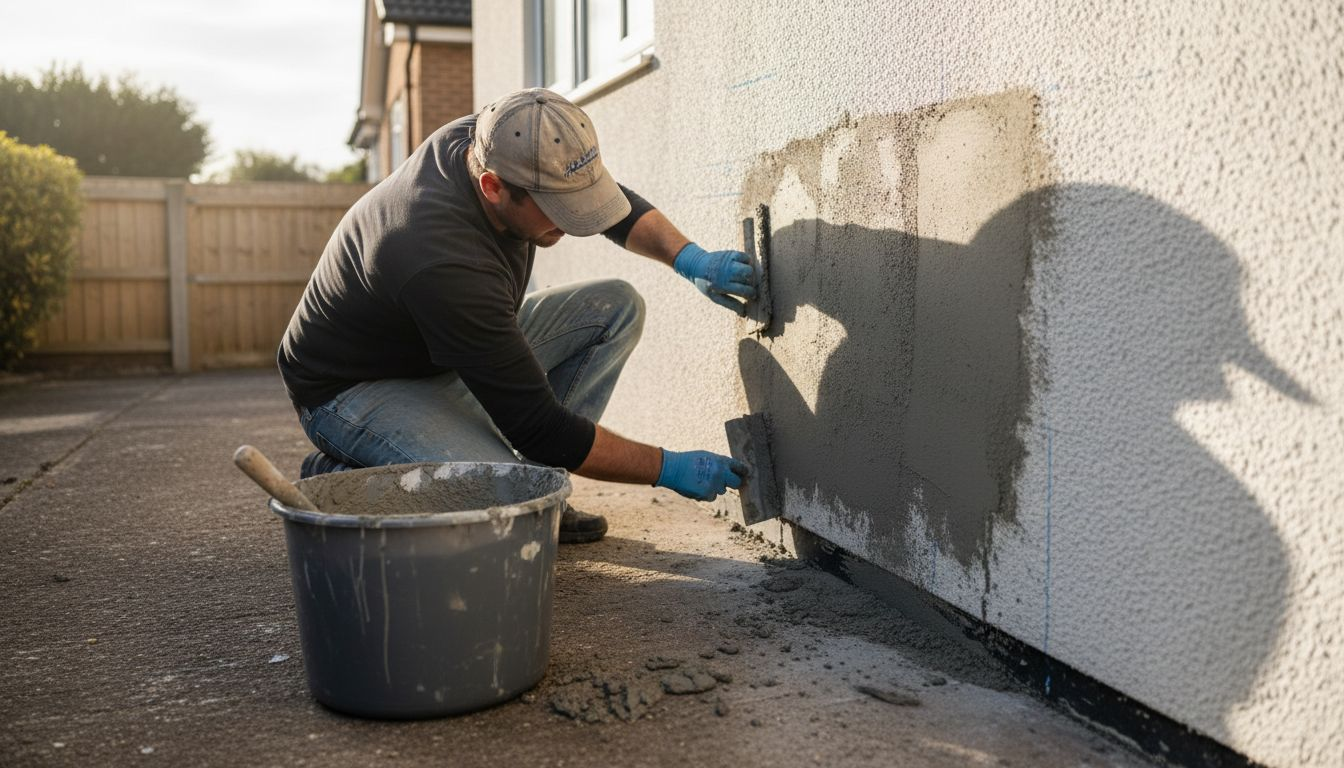
Liquid-applied membranes offer flexibility that cementitious systems lack. These coatings cure to form a seamless protective layer, which means no joints or seams where water can sneak through. Liquid waterproofing solutions work exceptionally well on irregular surfaces, pipes, and detailed roof configurations. They adapt to substrate movement without cracking, making them ideal for dynamic environments.
Bituminous membranes remain popular for large flat surfaces, particularly roofs and concrete decks. These thick, tar-based systems provide robust protection and excellent durability under South African weather conditions. They’re cost-effective for extensive areas but less flexible on surfaces prone to movement.
According to common waterproofing system standards, polyurethane membranes represent a premium option offering superior flexibility and chemical resistance. They accommodate substrate movement better than most alternatives and withstand exposure to oils and certain chemicals. The trade-off is higher cost and more specialised installation requirements.
Choosing the right system depends on three factors: the location (below-ground, above-ground, or wet areas), the substrate material (concrete, brick, or tile), and expected movement or settling. A basement floor demands different protection than a roof edge or a bathroom wall.
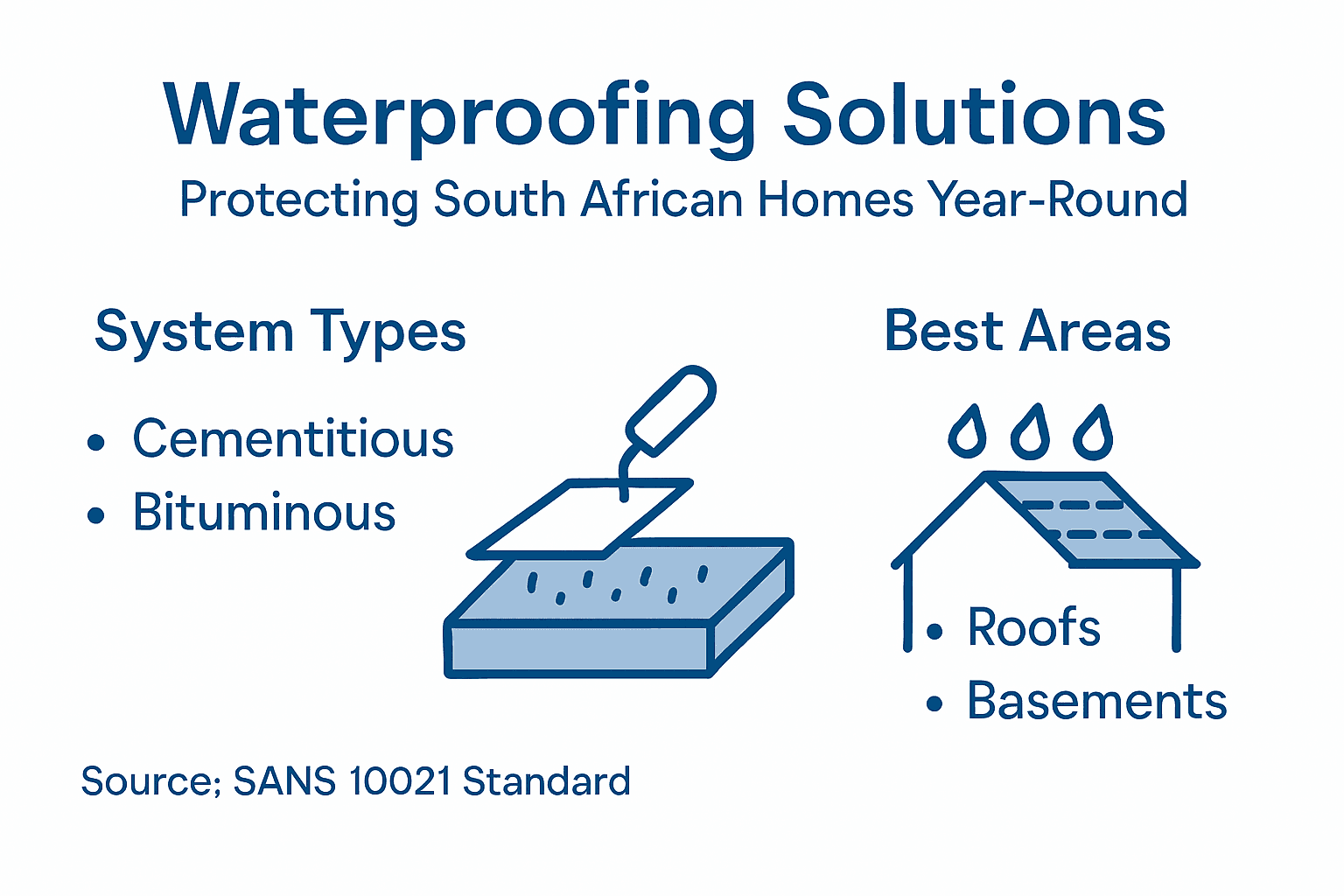
To help compare the main waterproofing solutions for South African homes, see the summary below:
| System Type | Best Use Areas | Key Strength | Major Limitation |
|---|---|---|---|
| Cementitious | Basements, foundation walls | Strong substrate bond | Limited flexibility |
| Liquid-Applied Membrane | Irregular roofs, pipes, wet rooms | Seamless, flexible | Needs careful application |
| Bituminous Membrane | Large flat roofs, concrete decks | Durable, cost-effective | Less movement tolerance |
| Polyurethane Membrane | Exposed roofs, chemical-prone areas | Highly flexible, resilient | Higher cost, specialist needed |
Pro tip: Ask your waterproofing contractor why they recommend a specific system for your particular problem rather than accepting a standard recommendation—the best solution matches your property’s unique challenges, not just the installer’s preferred product.
How Waterproofing Safeguards Structures
Without waterproofing, your home’s structure faces relentless attack from moisture. Water penetrates concrete, corrodes steel reinforcement, and creates conditions where decay accelerates. Proper waterproofing acts as a protective barrier that stops this damage before it starts.
The first line of defence is preventing water ingress itself. When protective barriers block water penetration, moisture never gets the chance to damage what lies beneath. This is particularly critical in South African climates where heavy seasonal rains saturate soil around foundations and coastal properties face constant salt spray exposure.
Once water breaches your exterior surfaces, it attacks the structural materials directly. Concrete and masonry contain microscopic pores that absorb moisture like a sponge. Steel reinforcement inside concrete begins oxidising when moisture reaches it, creating rust that expands and cracks the concrete from within. A single waterproofed surface prevents this entire cascade of failure.
Moisture damage extends beyond visible structural cracks. When water sits inside walls and cavities, it creates the perfect environment for mould growth and efflorescence (white salt deposits on masonry). These conditions compromise air quality, damage interior finishes, and accelerate material deterioration. Waterproofing eliminates the moisture source entirely.
The stakes are highest in basements and below-ground structures. Water pressure against foundation walls increases with depth, pushing moisture through even tiny cracks. Structural waterproofing protection keeps basements dry and prevents foundation compromise that could affect your entire home’s stability.
Think of waterproofing as an investment in longevity. Structures without proper protection deteriorate noticeably within 5 to 10 years. Properly waterproofed buildings remain sound for decades, protecting your property value and your family’s safety.
Pro tip: Have your foundation inspected for water stains or efflorescence at least annually—these early warning signs indicate that waterproofing may be failing before visible structural damage occurs.
Major Risks of Neglecting Waterproofing
Skipping waterproofing feels like saving money until the bills arrive. Water damage costs multiply exponentially once it takes hold, transforming a preventable problem into a financial catastrophe that affects your home’s value, safety, and your family’s wellbeing.
Structural damage begins quietly and accelerates fast. Water penetration causes severe structural harm to concrete, masonry, and steel reinforcement. Rust formation inside concrete weakens the structural integrity from within, whilst dampness promotes rot in timber components. What started as moisture behind a wall becomes a foundation crisis within years.
Health problems emerge from persistent moisture. Mould thrives in damp environments, releasing spores that trigger respiratory issues, allergies, and asthma attacks in occupants. Children and elderly family members face heightened risks. These health impacts carry ongoing medical costs and diminished quality of life that no homeowner anticipates when they defer waterproofing.
Repair costs explode when water damage spreads unchecked. Early intervention might cost a few thousand rands. Comprehensive remediation after structural compromise runs into tens of thousands, sometimes hundreds of thousands of rands. You end up replacing walls, floors, and foundations instead of preventing damage with waterproofing.
Legal compliance matters too. The South African National Standard SANS 10021 mandates proper waterproofing for buildings. Failure to comply creates liability exposure, particularly if someone is injured due to water-related structural failure. When selling your property, buyers discover compliance gaps during inspections, affecting valuation and marketability.
Water damage to interior finishes compounds financial loss. Waterlogged plasterboard, stained carpets, warped timber, and ruined electrical systems require complete replacement. Insurance often denies claims related to preventable water damage, leaving you to cover costs alone. Understanding waterproofing failure signs early helps you catch problems before they spiral.
Pro tip: Document your home’s condition with photos and videos before water problems emerge; if damage occurs later, this evidence helps establish whether the issue was preventable through proper waterproofing.
Financial Impact and Regulatory Requirements
Waterproofing costs money upfront. Compliance carries expenses. Yet ignoring both leads to exponentially larger financial losses that dwarf the investment required to do things correctly from the start. The maths is straightforward when you look at real numbers instead of short-term budgets.
A professional waterproofing installation for a typical Gauteng or Western Cape home ranges from 8,000 to 25,000 rands depending on scope and materials. This protects your investment for 10 to 20 years. Water damage remediation after penetration occurs costs 50,000 to 500,000 rands or more. Insurance rarely covers these expenses because they stem from negligence rather than sudden catastrophe.
Property valuations drop significantly when buyers discover water damage or waterproofing failures. A home that would sell for 2.5 million rands might fetch only 2.1 million rands with visible water damage. Your property becomes harder to sell, and you carry the cost of remediation before you can even list it. That damage could have been prevented for the price of a decent holiday.
South African regulations exist for compelling reasons. Stricter government regulations now mandate waterproofing compliance to ensure construction durability and reduce economic losses from water damage. These standards specify materials, application methods, and inspection requirements tailored to our diverse climates. Non-compliance creates liability exposure if someone is injured or if structural failure occurs.
When selling your property, buyers conduct inspections and obtain professional reports. Non-compliance with waterproofing standards raises red flags that reduce offers or kill deals entirely. New mortgage lenders require evidence of proper waterproofing before approving finance. You cannot hide these issues in today’s transparent property market.
The financial incentive cuts both ways. Proper waterproofing protects your investment and maintains property value. It demonstrates responsible ownership to future buyers. Combined with reduced repair costs and avoided water damage, the initial investment pays for itself many times over.
Below is a snapshot of the financial and compliance impact of waterproofing decisions:
| Scenario | Upfront Cost Range | Long-term Financial Impact | Compliance Result |
|---|---|---|---|
| Professional waterproofing (initial) | R8,000–R25,000 | Prevents costly damage, savings | Meets SANS, aids resale |
| Remedial repairs after failure | R50,000–R500,000+ | High restoration costs | Legal risk, property value drops |
| No waterproofing or non-compliance | Low immediate expense | Severe future losses | Fails standards, insurance issues |
Pro tip: Request proof of waterproofing compliance and warranties from any contractor you hire; written guarantees backed by insurance provide financial protection if the work fails prematurely.
Choosing Trusted Waterproofing Professionals
Not all waterproofing contractors are created equal. The difference between skilled professionals and shortcuts operators determines whether your home stays protected for decades or develops problems within months. Selecting the right contractor matters more than almost any other decision in your waterproofing project.
Start by verifying credentials and registration. Professional membership in regulatory bodies ensures standards compliance and accountability. Contractors affiliated with organisations like PRAWA (Professional Roof Repair and Waterproofing Association) have undergone training, hold valid insurance, maintain tax clearance, and comply with legislation. These aren’t just administrative boxes to tick—they protect you legally and guarantee workmanship standards.
Licensing tells you a contractor operates legitimately. Unlicensed operators disappear when problems emerge, leaving you without recourse. Request proof of company registration, tax clearance, and professional indemnity insurance before signing any agreement. If a contractor cannot produce these documents, move on immediately.
Experience in South African conditions matters significantly. Contractors familiar with Gauteng’s intense summer storms and Western Cape’s coastal salt spray understand material selection and application techniques suited to your specific region. Ask how long they have operated locally and request references from similar projects. Contact those references directly rather than relying on testimonials provided by the contractor.
Warranties separate professionals from cowboys. Reputable contractors offer written guarantees covering labour and materials for specified periods (typically 5 to 10 years). These warranties should be transferable if you sell your property. A contractor unwilling to warranty their work for reasonable periods is signalling they lack confidence in their own standards.
Price comparison requires careful analysis. The cheapest quote is rarely the best value. Compare detailed specifications of materials, application methods, and project scope across multiple quotes. A professional contractor explains why their approach costs more and what additional benefits justify the investment.
Pro tip: Always request itemised quotations breaking down labour costs, material costs, and specific product brands; this transparency helps you compare contractors fairly and understand where your money is going.
Protect Your South African Home with Expert Waterproofing Solutions
Understanding why waterproofing matters for South African homes is just the first step towards safeguarding your property against costly water damage and structural failure. The challenges of heavy rains, coastal moisture and substrate movement require tailored solutions that combine damp-proofing, vapour barriers and flexible membranes. If you want to avoid the dangers of mould, rust and foundation cracks described in this article, it is critical to act now and select the right system for your unique needs.
Explore how Pro Waterproofing can help you protect your investment with specialised residential waterproofing techniques designed for South African conditions. Visit our Uncategorized section to learn more about effective solutions or start your journey with a free consultation at https://prowaterproofing.co.za. Don’t wait until water damage threatens your home’s stability—contact trusted professionals who prioritise quality, compliance and lasting warranties today.
Frequently Asked Questions
What is the difference between waterproofing and damp-proofing?
Waterproofing stops liquid water under pressure from entering a structure, while damp-proofing prevents moisture vapour and capillary moisture from rising through materials. Both methods work together for full protection against water damage.
How can I tell if my home needs waterproofing?
Signs that your home may need waterproofing include visible water stains, efflorescence on walls, mould growth, or any signs of dampness in the basement or around the foundation. Regular inspections can help identify these issues early.
What are the different types of waterproofing solutions available?
Common types of waterproofing solutions include cementitious waterproofing, liquid-applied membranes, bituminous membranes, and polyurethane membranes. The right choice depends on the specific vulnerabilities in your home, such as the location and substrate material.
How often should I inspect my waterproofing systems?
It’s recommended to inspect your waterproofing systems at least once a year, especially after heavy rains or significant weather changes. Look for signs of wear, damage, or any new moisture ingress to ensure the system continues to function properly.