
Moisture intrusion can quietly undermine the strength and comfort of your South African home. From bubbling paint to persistent musty smells, signs may seem small at first but often reveal far deeper problems with waterproofing and structural integrity. If ignored, these issues can threaten your property’s value and the health of your family.
This list shows exactly what you need to watch for and explains how these warning signals appear. You will learn to spot key symptoms early so you act before damage spreads. Get ready to discover practical checks and expert insights that help you protect your home from moisture threats.
Table of Contents
- 1. Persistent Damp Marks on Walls
- 2. Peeling Paint or Bubbling Plaster
- 3. Musty Smells Indoors
- 4. Visible Mould Growth
- 5. Rust Stains or Corroded Fixtures
- 6. Pooling Water on Roofs or Floors
- 7. Cracks in Walls or Foundations
Quick Summary
| Takeaway | Explanation |
|---|---|
| 1. Inspect for Damp Marks | Regularly check for persistent damp marks indicating potential structural issues that require immediate attention. |
| 2. Monitor Peeling Paint | Look for peeling paint or bubbling plaster to catch moisture problems early before they escalate. |
| 3. Address Musty Smells Promptly | Musty odours signal possible hidden moisture and require immediate assessment to protect health and value. |
| 4. Act on Visible Mould Growth | Visible mould requires rapid intervention to prevent health risks and structural damage in your home. |
| 5. Evaluate Cracks in Walls | Regularly inspect for cracks that may indicate significant water-related damage, needing expert assessment immediately. |
1. Persistent Damp Marks on Walls
Persistent damp marks on interior or exterior walls are more than just an aesthetic concern – they signal serious potential structural issues that demand immediate attention. These telltale watermarks often indicate underlying moisture problems that can compromise your home’s integrity and potentially lead to extensive damage.
Understanding wall moisture dynamics is crucial. In South African homes, particularly across regions like Gauteng, common causes of damp walls typically stem from:
- Structural cracks allowing water penetration
- Ineffective external wall waterproofing
- Groundwater seepage through foundation walls
- Plumbing leaks hidden within wall cavities
- Inadequate roof drainage systems
These persistent damp marks represent more than cosmetic blemishes. They potentially indicate serious moisture intrusion that can lead to:
- Structural weakening of wall materials
- Potential mould and mildew growth
- Reduced thermal insulation effectiveness
- Accelerated deterioration of paint and plasterwork
- Potential health risks from fungal proliferation
Damp walls are a warning signal your property’s waterproofing needs professional assessment.
Homeowners should conduct regular visual inspections, checking for discolouration, saltpetre deposits, or bubbling paintwork. Professional diagnostic techniques can precisely determine moisture sources and recommend targeted interventions.
Pro tip: Use a moisture metre to accurately track wall dampness levels and identify potential problem areas before they escalate into major structural issues.
2. Peeling Paint or Bubbling Plaster
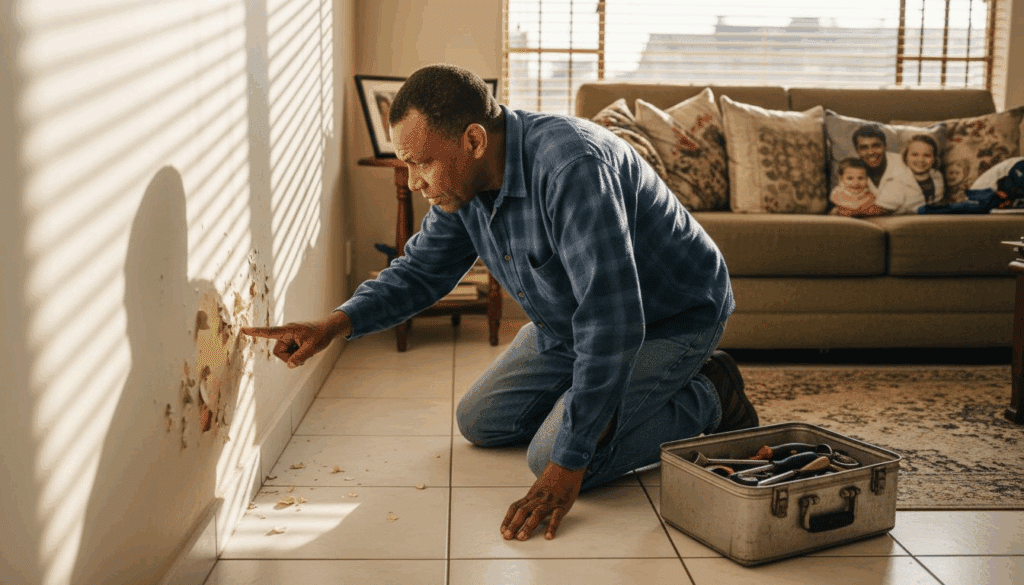
Peeling paint and bubbling plaster are not just cosmetic annoyances but critical indicators of serious underlying moisture problems in your home. These surface imperfections signal that water is penetrating your walls in ways that compromise their structural integrity.
Understanding moisture damage mechanisms is crucial. Water supply standards mandate effective waterproofing to prevent these destructive processes. When water infiltrates wall surfaces it causes:
- Paint layers to separate from underlying surfaces
- Plaster to lose adhesion and develop unsightly bubbles
- Potential structural weakening of wall materials
- Increased risk of mould and fungal growth
- Reduced thermal and moisture resistance
The causes of paint and plaster degradation typically include:
- Chronic water seepage from external walls
- Inadequate initial waterproofing during construction
- Plumbing leaks hidden within wall cavities
- Poor ventilation creating condensation issues
- Ground moisture penetration through foundations
Paint peeling and plaster bubbling are your walls’ distress signals – ignore them at your own risk.
Homeowners should conduct regular inspections looking for subtle changes in wall surfaces. Early detection can prevent extensive and costly repairs.
Pro tip: Conduct a moisture metre test on suspicious wall areas to quantify hidden water damage and guide targeted remediation efforts.
3. Musty Smells Indoors
A musty odour lurking inside your home is more than just an unpleasant sensation – it is a critical warning signal of potential moisture and structural problems. These distinctive smells often indicate hidden moisture issues that can compromise your property’s integrity and your family’s health.
Southern African water experts highlight that indoor musty odours typically stem from:
- Chronic water seepage through wall structures
- Inadequate building envelope waterproofing
- Poor ventilation and high humidity levels
- Hidden mould and mildew growth
- Undetected plumbing leaks
The potential consequences of persistent musty smells extend far beyond mere inconvenience:
- Accelerated structural deterioration
- Potential respiratory health risks
- Reduced property market value
- Increased risk of allergic reactions
- Compromised indoor air quality
Musty smells are your home’s silent distress call – listen carefully and act promptly.
Professional moisture assessments can pinpoint the exact sources of these odours. Homeowners should pay particular attention to areas with poor ventilation such as basements, crawl spaces, and bathrooms.
Pro tip: Use a dehumidifier in moisture-prone areas and conduct annual professional inspections to catch potential water intrusion issues before they become expensive problems.
4. Visible Mould Growth
Visible mould growth is more than an unsightly inconvenience – it is a clear warning sign of serious moisture problems that demand immediate attention. Those fuzzy patches of green, black, or white growth are not just aesthetic issues but potential health hazards for your household.
National building standards mandate robust waterproofing to prevent fungal colonisation. Mould typically emerges in environments with:
- Persistent moisture levels above 55% humidity
- Poor ventilation
- Hidden water leakage
- Inadequate building envelope protection
- Compromised structural waterproofing
The potential consequences of unchecked mould growth include:
- Respiratory health complications
- Structural material degradation
- Reduced property market value
- Potential allergic reactions
- Compromised indoor air quality
Mould is not just an aesthetic problem. It is a structural warning signal that requires professional intervention.
Homeowners should conduct regular visual inspections in moisture-prone areas like bathrooms, kitchens, and basement spaces. Early detection can prevent extensive damage and costly remediation.
Pro tip: Invest in a digital humidity metre to monitor indoor moisture levels and take preventative action before visible mould establishes itself.
5. Rust Stains or Corroded Fixtures
Rust stains and corroded metal fixtures are not merely cosmetic problems – they are critical indicators of underlying moisture damage that can compromise your property’s structural integrity. These reddish-brown discolourations and deteriorating metal surfaces signal significant waterproofing failures that demand immediate attention.
Home builders recommend regular inspections to prevent corrosion-related damage. Rust typically emerges when metal fixtures are exposed to:
- Chronic moisture penetration
- High humidity environments
- Undetected water leakage
- Poor ventilation
- Compromised building envelope protection
The potential consequences of unchecked metal corrosion include:
- Structural weakening of metal components
- Expensive fixture replacements
- Reduced property market value
- Potential plumbing system failures
- Increased risk of electrical hazards
Rust is not just a surface problem. It is a symptom of deeper moisture intrusion that threatens your home’s fundamental infrastructure.
Homeowners should conduct thorough visual inspections of metal fixtures in bathrooms, kitchens, and utility areas. Early detection can prevent extensive and costly repairs.
Pro tip: Apply rust-inhibiting primers and regularly inspect metal fixtures in moisture-prone areas to mitigate potential corrosion risks.
6. Pooling Water on Roofs or Floors
Pooling water on roofs or floors is a serious red flag indicating potential structural vulnerabilities and critical waterproofing failures. These stagnant water formations are not merely unsightly inconveniences but harbingers of potential extensive property damage.
National standards mandate proper drainage to prevent water accumulation. Pooling typically occurs due to:
- Inadequate roof or floor gradient
- Blocked drainage points
- Compromised waterproofing membranes
- Structural settlement issues
- Poor initial construction techniques
The potential consequences of persistent water pooling include:
- Accelerated structural material degradation
- Increased risk of water penetration
- Potential foundation weakening
- Mould and mildew proliferation
- Reduced property structural integrity
Standing water is not just an inconvenience. It is a silent destroyer of building infrastructure.
Homeowners should conduct regular inspections after rainfall to identify and address potential drainage problems. Professional assessment can help diagnose underlying issues before they become catastrophic.
Pro tip: Invest in professional drainage assessments and ensure your property maintains appropriate slope gradients to prevent water accumulation.
7. Cracks in Walls or Foundations
Cracks in walls or foundations are more than cosmetic blemishes – they are critical warning signals of potential structural compromise that demand immediate professional attention. These fracture lines represent your home’s distress communication, revealing underlying moisture and stability challenges.
Building codes emphasise foundation protection against water-related damage. Structural cracks typically emerge from:
- Chronic water infiltration
- Soil movement and erosion
- Inadequate initial waterproofing
- Unmanaged ground moisture
- Improper drainage systems
The potential consequences of untreated foundation cracks include:
- Progressive structural weakening
- Reduced property market value
- Risk of complete structural failure
- Increased repair complexity
- Potential safety hazards
Foundation cracks are not cosmetic issues. They are critical structural warnings requiring immediate professional intervention.
Homeowners should conduct regular visual inspections and monitor crack progression. Professional geotechnical assessments can provide detailed insights into underlying causes and recommended remediation strategies.
Pro tip: Photograph and measure foundation cracks during inspections to track their development and provide precise information to waterproofing professionals.
Below is a comprehensive table summarising the primary topics, causes, and recommended responses to moisture-related structural concerns as detailed in the article.
| Issue | Causes | Consequences | Recommendations |
|---|---|---|---|
| Persistent Damp Marks | Structural cracks, inadequate waterproofing | Compromised integrity, mould proliferation | Conduct moisture diagnostics immediately |
| Peeling Paint | External damp, flawed construction measures | Paint damage, risk of structural deterioration | Inspect and address sources of water intrusion |
| Musty Smells | Insufficient ventilation, hidden damp areas | Mould growth, health issues | Employ dehumidifiers and schedule professional surveys |
| Visible Mould Growth | Excessive indoor humidity, compromised barriers | Degraded indoor air quality, increased health risks | Ensure adequate ventilation and routine inspections |
| Rust Stains | High humidity, hidden leaks | Corrosion, weakening of support structures | Apply preventative treatments and assess metals |
| Pooling Water | Poor drainage, structural settlement | Accelerated building deterioration, weakened foundations | Improve drainage systems and monitor water flow |
| Foundation Cracks | Prolonged exposure to water, soil movement | Serious structural issues, possible collapse | Monitor crack development and seek expert consultation |
Protect Your Home from Hidden Moisture Damage Today
If you have noticed damp marks, peeling paint, or musty smells in your home it is a clear sign that professional waterproofing is essential. These problems highlight serious risks such as structural weakening, mould growth, and health hazards that require immediate attention to preserve your property’s value and safety. By understanding these warning signs you take the first step towards preventing costly repairs and ensuring a dry secure home environment.
Explore expert waterproofing insights to learn more about recognising and tackling moisture issues.

Do not wait until small signs like rust stains or cracks turn into major damage. Connect with trusted specialists at Pro Waterproofing who offer tailored solutions backed by experience, quality standards, and warranties. Visit our homepage now and take the next step towards safeguarding your home with expert waterproofing before the problem worsens.
Frequently Asked Questions
What are the signs that my home needs waterproofing?
Persistent damp marks on walls, peeling paint, musty smells, visible mould, rust stains, pooling water, and cracks in walls or foundations are all signs that indicate your home may require waterproofing. Conduct a thorough inspection of these areas to identify potential moisture issues promptly.
How can I prevent mould growth in my home?
To prevent mould growth, ensure adequate ventilation, control indoor humidity levels, and address any water leaks immediately. Consider using a dehumidifier in moisture-prone areas, and conduct regular visual inspections to catch issues early.
What should I do if I find cracks in my foundations?
If you discover cracks in your foundations, you should contact a professional as soon as possible to assess the situation. Document the size and progression of the cracks to provide detailed information for the inspection and potential remediation.
How often should I inspect my home for moisture issues?
You should inspect your home for moisture issues at least twice a year, especially after heavy rainfall or storms. Regular checks will help you catch potential problems early, potentially saving you from costly repairs down the line.
What are the best methods for waterproofing my home?
Effective waterproofing methods include applying waterproof membranes, ensuring proper drainage systems, and sealing any cracks in walls or foundations. Assess your property for specific issues and choose suitable methods to address them promptly.
Why is it important to address damp marks on walls?
Addressing damp marks on walls is crucial as they can indicate serious moisture intrusion that may lead to structural damage and health risks. Take action by identifying the source of the dampness and seeking professional help to rectify the situation before it worsens.