
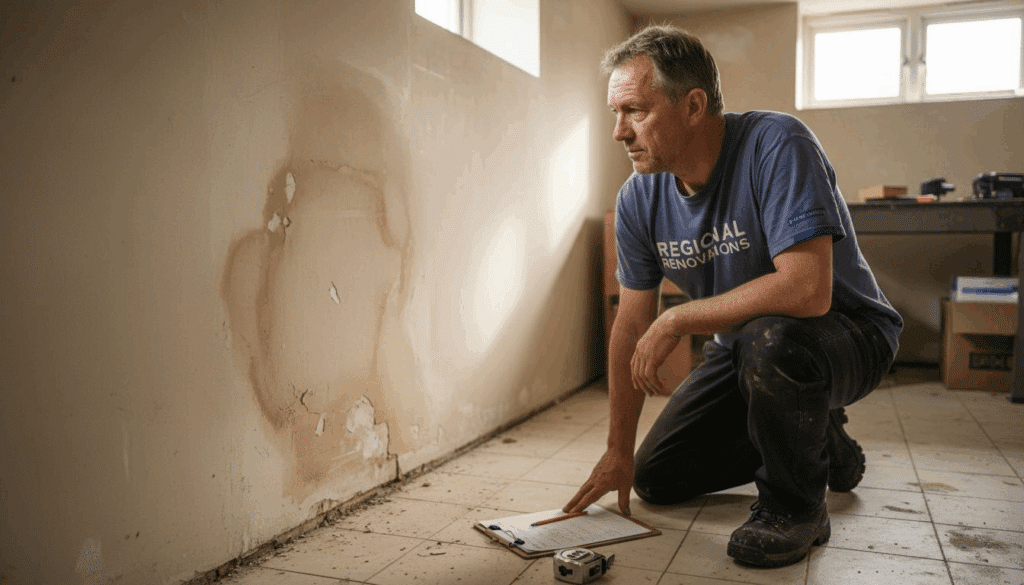
Water stains creeping across your wall, damp patches in corners, or the musty smell after rain often signal the start of costly water damage. For homeowners in Gauteng and the Western Cape, recognising these early warning signs can make all the difference in protecting your property and avoiding insurance complications. This guide will help you spot critical problems, choose reputable contractors, and safeguard your home with solutions tailored for local challenges. For peace of mind, focus on proactive waterproofing assessment before minor issues become major headaches.
Table of Contents
- Step 1: Assess Your Waterproofing Needs
- Step 2: Research Reputable Local Contractors
- Step 3: Verify Credentials and Experience
- Step 4: Request Detailed Quotations and References
- Step 5: Inspect Previous Work and Guarantees
- Step 6: Validate Final Selections Before Signing
Quick Summary
| Key Point | Explanation |
|---|---|
| 1. Identify waterproofing needs early | Look for signs like damp patches or peeling paint to prevent serious water damage before it starts. |
| 2. Research local contractors thoroughly | Use verified registries and check qualifications to ensure you hire experienced professionals for waterproofing. |
| 3. Verify qualifications and experience | Ensure contractors possess trade certifications and insurance to guarantee their expertise and reliability. |
| 4. Gather detailed quotations | Collect comprehensive quotes that include price breakdowns and specific methodologies to inform your decision-making. |
| 5. Inspect previous work and warranties | Review completed projects and warranty details to confirm the contractor’s capability and commitment to quality service. |
Step 1: Assess your waterproofing needs
Identifying whether your property requires professional waterproofing is the crucial first step in protecting your home from potential water damage. Understanding the specific signs and conditions that indicate waterproofing needs will help you take proactive measures before minor issues escalate into significant structural problems.
To effectively assess your waterproofing requirements, start by thoroughly examining your property for telltale indicators. Key warning signs include:
- Visible damp patches on walls or ceilings
- Paint bubbling or peeling in specific areas
- Unexplained musty odours
- White, powdery salt deposits (efflorescence) on walls
- Recurring water stains
Professional waterproofing experts recommend recognising critical warning signs early to prevent extensive damage. Pay special attention to areas prone to moisture accumulation, such as basements, foundations, and exterior walls.
Carefully document any observed issues by taking photographs and noting their location, size, and frequency. This documentation will be invaluable when consulting with waterproofing professionals, enabling them to provide targeted solutions tailored to your specific property requirements.
Here is a summary of areas in a property and their typical waterproofing challenges:
| Property Area | Common Challenge | Potential Impact |
|---|---|---|
| Basement | Chronic dampness | Mould growth and odour |
| Foundation | Rising groundwater | Structural weakening |
| Exterior walls | Wind-driven rain | Surface degradation |
| Roof terraces | Pooling water | Leak ingress and staining |
| Bathrooms | Plumbing leaks | Tile and grout failure |
Expert advice: Create a comprehensive property moisture map highlighting all problematic areas to streamline your waterproofing assessment process.
Step 2: Research reputable local contractors
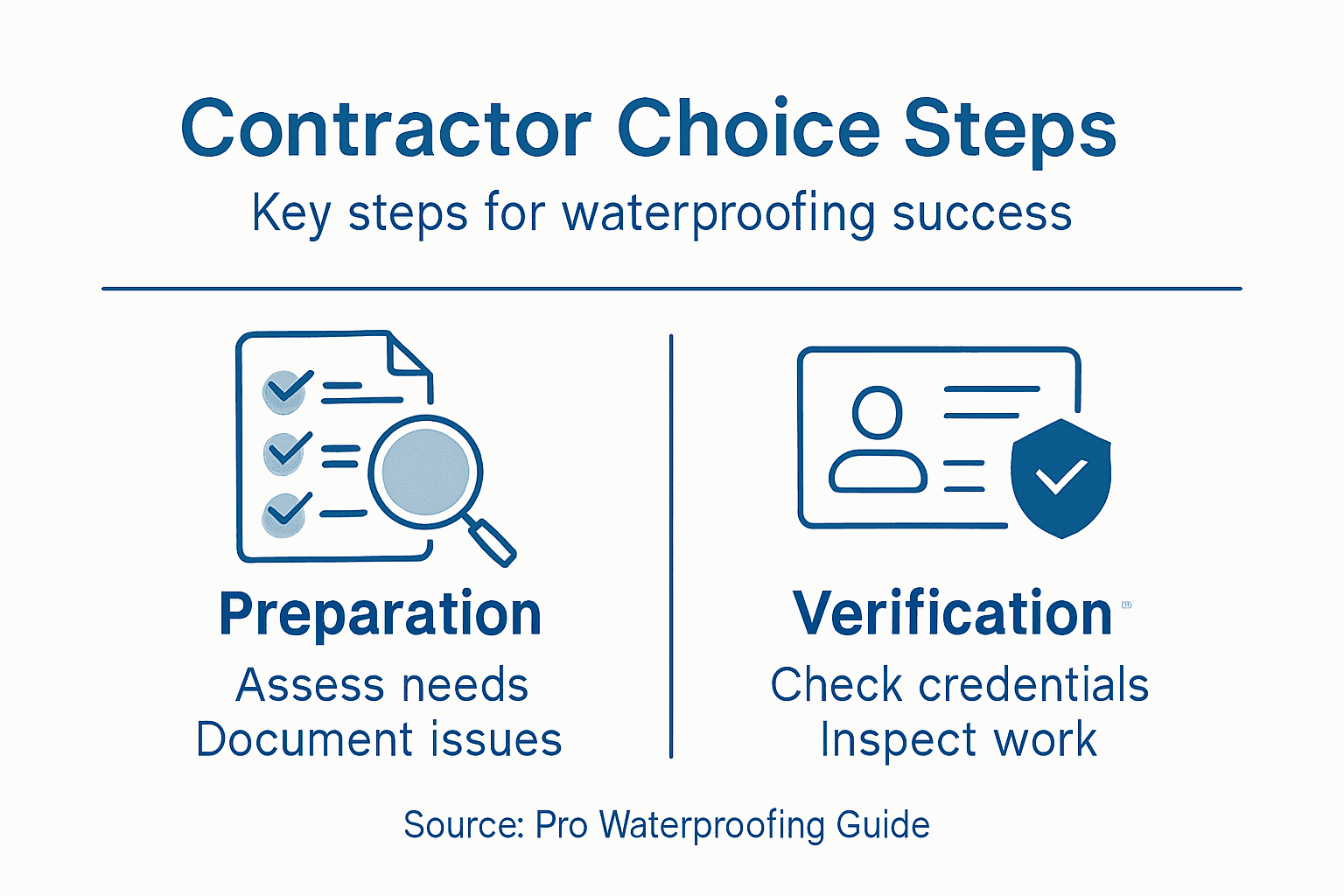
Finding the right waterproofing contractor requires careful research and strategic evaluation. Your goal is to identify professionals who not only understand the technical complexities of waterproofing but also have a proven track record of successful local projects.
Begin your research by exploring verified contractor registries that document contractors’ capabilities and compliance. Key steps in your research process include:
- Check the Construction Industry Development Board (cidb) registry
- Review professional licensing credentials
- Examine contractor insurance documentation
- Investigate past project portfolios
- Read client testimonials and independent reviews
Reliable contractors demonstrate transparency about their qualifications and are willing to provide comprehensive documentation of their professional standing.
Pay special attention to contractors with specific experience in your property type, whether residential, commercial, or industrial. Request detailed references and proof of previous successful waterproofing projects in similar environments. Local experience matters significantly, as understanding regional construction challenges and moisture patterns is crucial for effective waterproofing solutions.
Expert advice: Request at least three detailed quotes from different contractors to compare expertise, pricing, and proposed approaches comprehensively.
Step 3: Verify credentials and experience
Validating a waterproofing contractor’s credentials is a critical step in protecting your property investment. Your thorough investigation will help ensure you select a professional with genuine expertise and a proven track record of successful waterproofing projects.
When verifying credentials, focus on these essential elements:
- Formal trade certifications
- Professional liability insurance
- Valid business registration
- Documented industry experience
- Technical training credentials
A reputable contractor will be transparent and readily provide comprehensive documentation of their professional qualifications.
Start by requesting detailed documentation that demonstrates their professional standing. Comprehensive contractor verification involves more than just checking paperwork. Engage in direct conversations to assess their technical knowledge, ask about specific waterproofing challenges they’ve resolved, and request concrete examples of similar projects in your region.
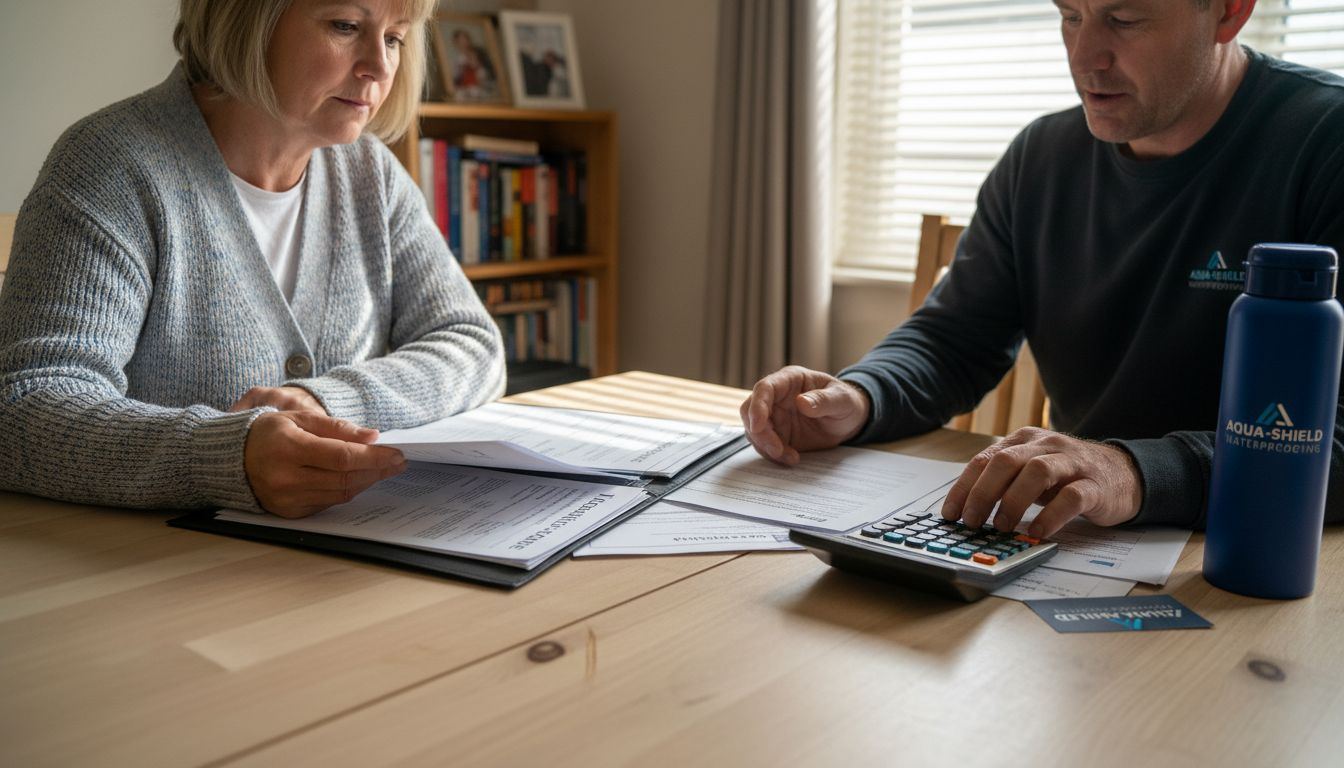
Carefully review their portfolio, paying close attention to projects comparable to your specific waterproofing requirements. Look for evidence of ongoing professional development, memberships in recognised industry associations, and a history of successful local installations.
Expert advice: Cross-reference a contractor’s claims by contacting their previous clients and requesting photographic evidence of completed projects.
Step 4: Request detailed quotations and references
Obtaining comprehensive quotations and references is a crucial step in selecting the right waterproofing contractor. This process will help you understand the full scope of proposed work, compare pricing, and validate the contractor’s professional capabilities.
When requesting quotations, focus on gathering detailed documentation that includes:
- Comprehensive price breakdown
- Specific waterproofing methodology
- Materials to be used
- Estimated project timeline
- Warranty and post-installation support
A professional quotation should provide complete transparency about expected costs, processes, and potential challenges.
Utilise official quotation submission guidelines to ensure you receive thorough and professional responses. Request quotations on official company letterhead, which should include B-BBEE certification details, comprehensive pricing structures, and clear compliance documentation.
Ensure you obtain at least three separate quotations to enable meaningful comparison. Each quotation should include contact details of previous clients, allowing you to independently verify the contractor’s track record and quality of work. Pay close attention to the level of detail, professionalism, and transparency demonstrated in each submission.
Expert advice: Request contractors provide a written breakdown of potential additional costs to avoid unexpected expenses during the waterproofing project.
Step 5: Inspect previous work and guarantees
Carefully examining a waterproofing contractor’s previous projects and understanding their warranty provisions are essential steps in making an informed hiring decision. Your goal is to gain confidence in their technical expertise and long-term commitment to quality workmanship.
When inspecting previous work, pay attention to these critical aspects:
- Quality of materials used
- Precision of installation techniques
- Evidence of lasting waterproofing solutions
- Structural integrity of completed projects
- Visual condition of older installations
Genuine professional contractors will welcome scrutiny and provide transparent documentation of their past achievements.
Seek out comprehensive warranty documentation that protects your investment. Understanding the National Home Builders Registration Council (NHBRC) warranty provisions can help you evaluate the contractor’s confidence in their work and provide legal protection against potential structural defects.
Request site visits to previously completed projects similar to your waterproofing requirements. During these inspections, observe the condition of existing installations, ask detailed questions about challenges encountered, and assess the durability of their solutions. Look for signs of long-term performance, such as consistent water resistance and minimal maintenance requirements.
Expert advice: Document all visual observations and take photographs during site inspections to create a comprehensive reference for comparing potential contractors.
Step 6: Validate final selections before signing
Before committing to a waterproofing contractor, conducting a comprehensive final validation is crucial to protecting your property investment and ensuring a successful project outcome. This critical step involves meticulous review and confirmation of all project details.
Prepare for final validation by focusing on these essential elements:
- Detailed contract specifications
- Comprehensive written scope of work
- Precise payment terms
- Material quality guarantees
- Specific project timeline
- Clearly defined warranty conditions
A professionally prepared contract protects both the homeowner and the contractor by establishing clear expectations and responsibilities.
Verify all contractual documentation carefully, ensuring every aspect of the proposed waterproofing project is transparently outlined. Scrutinise each clause, paying particular attention to potential additional costs, project milestones, and remediation processes for unexpected complications.
Before making a final contractor selection, consider this comparison of essential contract elements and their importance:
| Contract Element | Why It Matters | Risks If Absent |
|---|---|---|
| Scope of work | Ensures all tasks covered | Missed or poorly completed work |
| Payment schedule | Clarifies when to pay | Disputes or cash flow issues |
| Warranty details | Protects against defects | Costly repairs later |
| Project timeline | Sets clear expectations | Delays and unplanned overruns |
Conduct a final personal interview with your selected contractor to confirm mutual understanding of project requirements. Discuss potential contingencies, clarify any remaining questions, and establish clear communication channels throughout the project duration. Ensure all verbal agreements are documented in writing to prevent future misunderstandings.
Expert advice: Request a comprehensive written summary of project expectations, including precise start and completion dates, to maintain clear project boundaries.
Secure Lasting Waterproofing Success with Trusted Professionals
Choosing the right waterproofing contractor can feel overwhelming when faced with doubts about credentials, warranties and quality workmanship. This article highlights common worries such as verifying credentials, inspecting previous work and requesting detailed quotations. These challenges often leave property owners uncertain about how to confidently protect their homes or commercial buildings from water damage. At Pro Waterproofing, we understand these concerns deeply and offer expert guidance combined with proven local experience to help you make informed decisions.
By exploring our resources at Pro Waterproofing you will find vital questions to ask contractors and clear steps to secure reliable service tailored for South African residential, commercial or industrial properties. See real examples showcasing professional solutions that prevent costly repairs and preserve your property’s integrity.
Don’t leave your waterproofing success to chance. Act now to access trusted advice and obtain tailored quotes from accredited specialists. Visit How to Choose Contractor for Waterproofing Success for expert insights then connect with dependable professionals ready to safeguard your property. Your peace of mind starts with informed choices – get started today at Pro Waterproofing.
Frequently Asked Questions
How do I know if I need professional waterproofing services?
Identifying signs of water damage is essential. Look for visible damp patches, unexplained musty odours, or water stains in your property. Inspect potential problem areas like basements and foundations for these indicators to determine if you need professional assistance.
What should I look for in a waterproofing contractor?
You should prioritise contractors with relevant experience, licensing, and insurance. Research their past projects and read client testimonials to ensure they have a solid track record. Request references from similar projects to validate their expertise.
How can I compare quotations from different waterproofing contractors?
Gather detailed quotations that include a comprehensive breakdown of costs and methodologies. Look for transparency in pricing, materials used, and estimated timelines. By requesting at least three separate quotes, you’ll be able to make informed comparisons and decisions.
What references should I ask a waterproofing contractor for?
Request detailed references from past clients and ask for examples of their previous work. It’s important to verify that these projects are similar to your waterproofing needs, allowing you to assess the contractor’s capability to deliver quality results.
How can I validate a waterproofing contractor’s credentials?
Request documentation of their formal trade certifications, insurance, and business registration. Engage in direct conversations to gauge their technical knowledge and past project experiences, ensuring they have the expertise needed for your specific situation.
What details should I include in the final contract with a waterproofing contractor?
Your contract should clearly define the scope of work, payment terms, and warranty details. Ensure it specifies the project timeline and material quality guarantees to protect your interests and clarify expectations for both parties.