

Persistent stains and wall cracks signal deeper troubles for many South African homes each year, and nearly 40 percent of property insurance claims relate to water damage. For homeowners in Gauteng and Western Cape, ignoring these warning signs risks costly structural repairs and long-term health concerns. Whether you own a classic British-style house or a modern build, understanding what causes structural water damage lets you act before small issues escalate. This guide clarifies the key risks and steps you can take to protect your property and peace of mind.
Table of Contents
- What Is Structural Water Damage?
- Types Of Structural Water Damage In Homes
- Key Warning Signs To Recognise Early
- Local Factors Affecting South African Properties
- Practical Steps For Inspection And Action
- Risks Of Delayed Response And Common Mistakes
Key Takeaways
| Point | Details |
|---|---|
| Understanding Structural Water Damage | Prolonged moisture infiltration can progressively weaken foundational elements and compromise a building’s stability, especially in diverse climates like South Africa. |
| Early Warning Signs | Homeowners should recognise indicators such as wall cracks, mould growth, and unexplained utility increases to address potential damage before it escalates. |
| Inspection Importance | Regular, comprehensive moisture assessments are crucial for detecting hidden problems, utilising tools like moisture metres and thermal imaging cameras. |
| Risks of Neglect | Delayed responses to minor water issues can lead to severe structural failures, emphasising the need for proactive maintenance and timely professional evaluations. |
What Is Structural Water Damage?
Structural water damage represents a serious and progressive form of building deterioration caused by prolonged moisture infiltration into critical structural components. This type of damage occurs when water penetrates foundational elements, walls, roofing, or supporting structures, gradually weakening their physical integrity and compromising the entire building’s stability.
In the South African context, structural water damage is particularly complex due to diverse environmental conditions ranging from coastal humidity to inland temperature variations. Best practices for design and construction of liquid-retaining structures indicate that water seepage can systematically undermine building materials, creating long-term risks that extend far beyond surface-level moisture problems.
The mechanisms of structural water damage typically involve multiple interconnected processes. Water infiltration can cause concrete degradation, metal corrosion, timber rotting, and foundation shifting. These problems often develop silently, with visible symptoms emerging only after significant underlying damage has already occurred. Drainage and plumbing standards outlined in SANS 10400-Part P emphasise the critical importance of proper water management systems to prevent such insidious structural deterioration.
Critical warning signs of potential structural water damage include:
- Unexplained wall cracks
- Persistent musty odours
- Visible mould growth
- Warped or buckled flooring
- Discolouration of walls and ceilings
- Unexplained increases in utility bills
Pro tip: Conduct a comprehensive moisture assessment of your property at least annually, paying special attention to areas prone to water exposure like basements, crawl spaces, and external wall junctions.
Types Of Structural Water Damage In Homes
Structural water damage in residential properties manifests through several distinct and potentially devastating categories that compromise building integrity. Drainage and structural regulations in South Africa highlight the complexity of water-related structural challenges that homeowners must understand and address proactively.

The primary types of structural water damage include foundation water damage, which occurs when groundwater or surface water seeps into foundational structures, causing potential soil erosion, concrete weakening, and structural instability. Water infiltration mechanisms documented by research reveal that such damage often develops gradually, with significant risks emerging over extended periods.
Additional critical types of structural water damage encompass:
- Wall moisture deterioration: Caused by rising damp, persistent leaks, or inadequate waterproofing
- Roof water infiltration: Leading to timber decay, ceiling damage, and potential electrical hazards
- Drainage system failures: Resulting in water pooling near structural foundations
- Plumbing-related water damage: Stemming from pipe leaks, burst connections, or systemic infrastructure weaknesses
Each damage type presents unique challenges, requiring specialised diagnostic approaches and targeted remediation strategies. Concrete structures might experience different degradation patterns compared to timber or masonry, necessitating nuanced understanding and professional assessment.
The following table compares different structural water damage types by typical sources and recommended diagnostic approaches:
| Damage Type | Typical Source | Diagnostic Approach |
|---|---|---|
| Foundation Water Damage | Rising groundwater | Soil and concrete moisture tests |
| Wall Moisture Deterioration | Poor waterproofing | Thermographic wall scans |
| Roof Water Infiltration | Damaged roofing materials | Roof inspection, ceiling checks |
| Drainage System Failure | Blocked drains or pipes | CCTV pipe survey, site grading |
| Plumbing-Related Damage | Leaking pipes/connections | Pressure tests, leak detection |
Pro tip: Invest in regular professional moisture inspections, focusing on hidden areas like crawl spaces, basement corners, and wall junctions to detect potential structural water damage early.
Key Warning Signs To Recognise Early
Recognising early warning signs of structural water damage is crucial for preventing extensive and costly repairs. Drainage and structural regulations in South Africa emphasise the importance of vigilant monitoring to protect residential properties from progressive moisture-related deterioration.
Visual indicators are often the first line of defence in identifying potential structural water damage. Visible wall cracks, particularly those appearing near windows, doors, or foundation lines, can signify underlying moisture stress. Unexplained discolouration, damp patches, and persistent moisture stains represent critical red flags that warrant immediate investigation. Professional water damage assessment guidelines recommend paying special attention to subtle changes in your property’s structural appearance.
Comprehensive warning signs include:
- Unexplained musty or mouldy odours
- Persistent damp spots on walls or ceilings
- Peeling paint or wallpaper
- Warped or buckled flooring
- White, chalky mineral deposits on walls (efflorescence)
- Sudden increases in utility bills
- Visible mould growth
- Unusual water accumulation around foundations
Beyond visual symptoms, homeowners should remain alert to less obvious indicators of potential structural water damage. Changes in indoor humidity, unexplained respiratory issues, and unusual sounds like dripping or water movement within walls can signal hidden moisture problems that require professional assessment.
Pro tip: Conduct quarterly visual inspections of your property, using a high-powered torch to examine hidden corners, basement areas, and less-frequented spaces for early signs of moisture intrusion.
Local Factors Affecting South African Properties
Stormwater management challenges represent a critical consideration for understanding structural water damage risks in South African properties. The diverse geographical landscape and complex climatic conditions create unique environmental challenges that significantly impact building integrity and water management strategies.
South Africa’s regional variations present multiple structural water damage risk factors. Coastal regions experience high humidity and salt-laden atmospheres, which accelerate material corrosion, while inland areas contend with expansive clay soils that shift dramatically during wet and dry seasons. These geological complexities directly influence foundation stability and water absorption rates in building materials.
Key local factors affecting property water damage include:
- Varied soil composition across different provinces
- Extreme seasonal rainfall patterns
- Urban infrastructure drainage limitations
- Regional temperature fluctuations
- Geological instability in certain areas
- Proximity to water bodies and underground water tables
Structural failure incidents demonstrate that inadequate understanding of local environmental conditions can lead to catastrophic consequences. The interaction between geological characteristics, construction practices, and environmental stressors creates a complex landscape of potential water-related structural risks unique to South African contexts.
This table summarises how South African regional factors can influence water damage risks for homes:
| Region Type | Key Environmental Factor | Impact on Structural Integrity |
|---|---|---|
| Coastal Areas | High humidity, salt air | Accelerated material corrosion |
| Inland Areas | Expansive clay soils | Increased foundation movement |
| Urban Locations | Poor drainage infrastructure | Risk of water accumulation |
| Mountainous Regions | Variable rainfall patterns | Unpredictable soil saturation |
Pro tip: Consult local geological surveys and engineering reports specific to your property’s region to understand precise environmental water damage risks.
Practical Steps For Inspection And Action
Drainage system inspection techniques are fundamental for identifying potential structural water damage risks in residential properties. Systematic and thorough examination requires a methodical approach that combines visual assessment, specialised equipment, and comprehensive understanding of potential moisture intrusion points.
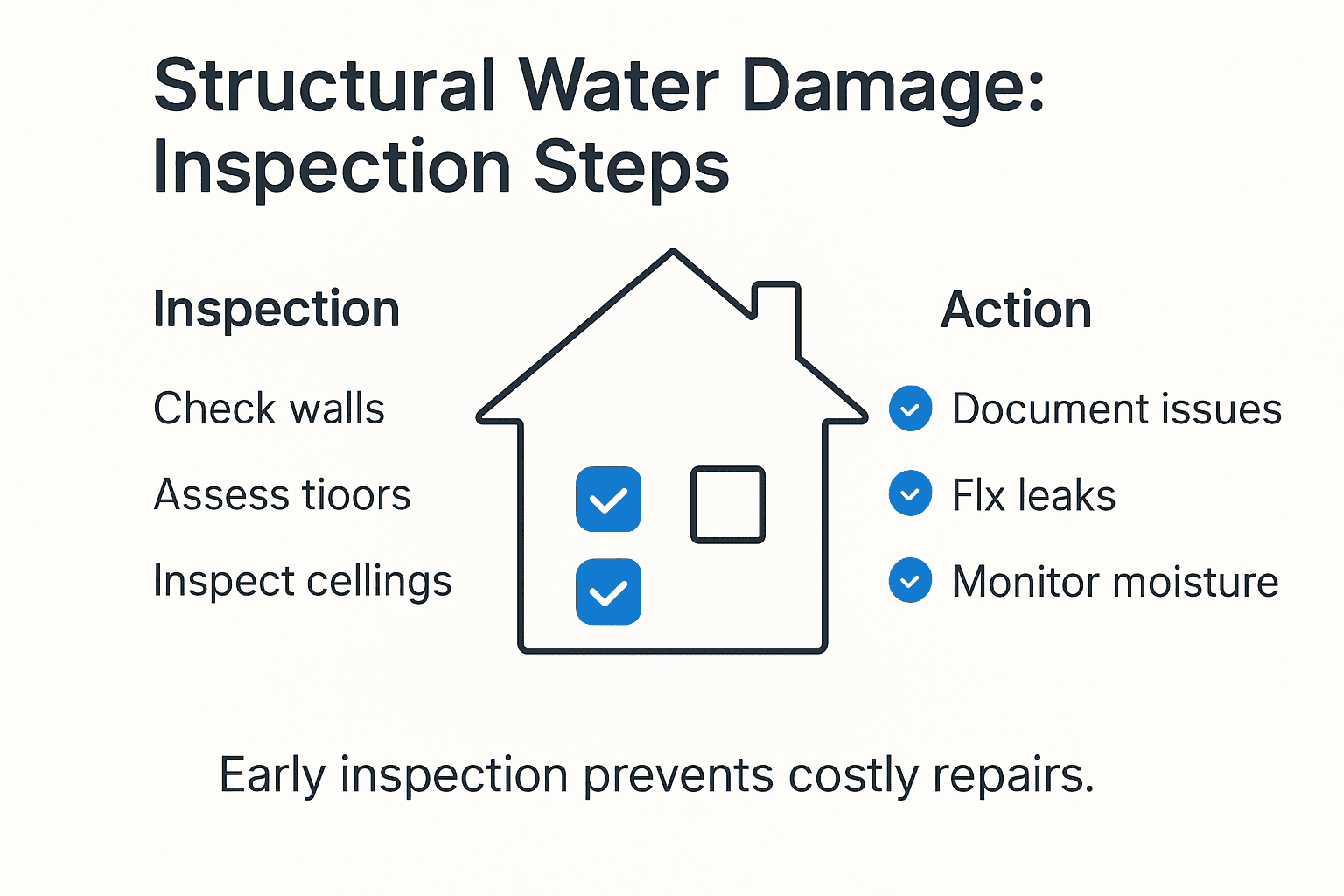
Professional property inspections typically involve multiple diagnostic strategies. Moisture mapping becomes critical, utilising electronic moisture metres to detect hidden water accumulation within walls, floors, and foundational structures. Water leak management protocols recommend comprehensive assessments that go beyond surface-level observations.
Detailed inspection steps include:
- Checking external wall surfaces for hairline cracks
- Examining roof edges and guttering systems
- Testing wall and floor moisture levels
- Investigating potential underground water table interactions
- Assessing drainage pipe conditions
- Evaluating landscaping slopes near property foundations
- Reviewing historical maintenance records
- Identifying potential internal plumbing leak sources
Each inspection should document findings systematically, creating a comprehensive record that enables tracking potential structural water damage progression. Understanding the nuanced interactions between building materials, environmental conditions, and water infiltration mechanisms allows for more precise diagnostic approaches.
Pro tip: Invest in a professional-grade moisture metre and thermal imaging camera to conduct thorough, non-invasive structural water damage assessments.
Risks Of Delayed Response And Common Mistakes
Structural instability warnings demonstrate the catastrophic consequences of ignoring early water damage indicators. Delayed responses can transform minor moisture issues into complex, expensive structural failures that compromise building safety and substantially increase repair costs.
The progression of water damage follows a predictable yet dangerous trajectory. Initially subtle problems like minor wall dampness or hairline cracks can rapidly evolve into significant structural compromises. Drainage and water management standards emphasise that each unaddressed moisture intrusion exponentially increases potential long-term damage risks.
Common mistakes property owners frequently make include:
- Dismissing small water stains as cosmetic issues
- Applying temporary patch repairs instead of comprehensive solutions
- Neglecting regular property moisture inspections
- Failing to maintain drainage and guttering systems
- Ignoring persistent musty odours
- Overlooking subtle foundation shifts
- Delaying professional assessments
- Underestimating the speed of structural deterioration
Understanding these risks requires recognising that water damage operates as a progressive, cumulative process. Microscopic moisture infiltration can weaken concrete, corrode metal reinforcements, and create ideal conditions for mould proliferation, ultimately threatening the entire structural integrity of a property.
Pro tip: Develop a proactive maintenance calendar that schedules professional moisture inspections every six months to catch potential water damage risks before they become catastrophic.
Protect Your Home From Structural Water Damage With Expert Waterproofing Solutions
Structural water damage poses a silent yet serious threat to your property’s stability and safety. Early action is vital to stop issues like foundation weakening, wall moisture deterioration, and hidden leaks from escalating into costly repairs. At Pro Waterproofing, we understand these challenges and offer specialised waterproofing services designed to safeguard your home against persistent water infiltration and structural decay.
Don’t wait for visible cracks or mould to worsen. Visit our Uncategorized – Pro Waterproofing page to explore practical solutions and learn how professional interventions can halt damage progression. Act now to schedule a comprehensive moisture inspection and secure your property’s future with trusted experts. Start your journey to a dry, strong, and resilient home today at Pro Waterproofing.
Frequently Asked Questions
What are the common signs of structural water damage?
Common signs include unexplained wall cracks, persistent musty odours, visible mould growth, warped or buckled flooring, discolouration of walls and ceilings, and sudden increases in utility bills.
How can I prevent structural water damage in my home?
Preventing structural water damage can be achieved through regular moisture assessments, maintaining drainage systems, ensuring proper waterproofing, and addressing leaks promptly.
Why is early detection of water damage important?
Early detection of water damage is crucial as it helps prevent minor issues from escalating into significant structural problems that require costly repairs and can compromise safety.
What steps should I take if I suspect structural water damage?
If you suspect structural water damage, you should conduct a comprehensive inspection of visible areas, engage a professional for a thorough moisture assessment, and address any identified issues without delay.