
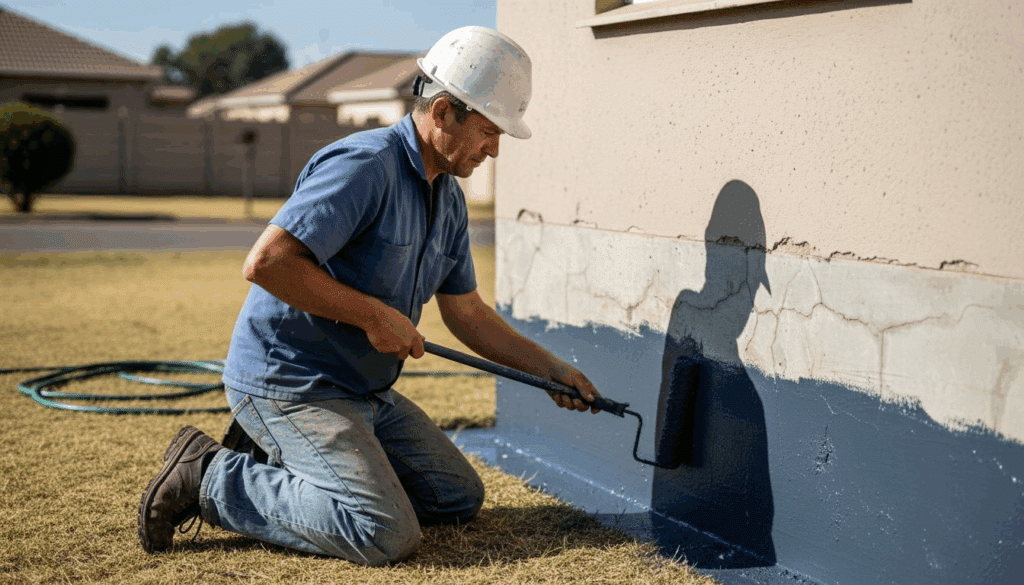
Watermarks on your ceiling and dampness creeping along your walls signal a problem many Gauteng homeowners recognise all too well. Keeping water out is no trivial task with shifting temperatures and unpredictable rainfall common to the region. Liquid membrane waterproofing delivers a flexible, seamless defence by creating a continuous barrier that adapts to complex surfaces while stretching up to 280 percent. Discover how this advanced system addresses local waterproofing challenges and what to look for in a trustworthy contractor.
Table of Contents
- Liquid Membrane Waterproofing Defined Clearly
- Key Types And Material Distinctions Explained
- How Liquid Membrane Systems Are Applied
- Benefits Versus Limitations For Property Owners
- Risks, Costs, And Common Mistakes To Avoid
- Selecting Contractors And Quality Assurance In South Africa
Key Takeaways
| Point | Details |
|---|---|
| Liquid Membranes Offer Superior Protection | These waterproofing systems form seamless, flexible barriers, capable of adapting to structural movements while preventing moisture infiltration. |
| Proper Application is Critical | A meticulous, multi-stage application process is imperative for effectiveness, including surface preparation and multi-layer coating. |
| Material Selection Matters | The type of liquid membrane—be it polyurethane, bitumen, acrylic, or elastomeric—should be chosen based on specific environmental conditions and substrate compatibility. |
| Professional Expertise Required | Engaging professional applicators ensures compliance with best practices, mitigating risks of improper installation that can lead to significant property damage. |
Liquid membrane waterproofing defined clearly
Liquid membrane waterproofing is an advanced protective coating technology designed to prevent moisture penetration across various surfaces. These sophisticated waterproofing solutions transform liquid coatings into seamless, flexible barriers that shield properties from water damage.
At its core, liquid membrane waterproofing represents a fully bonded elastomeric coating system capable of creating continuous protection. Unlike traditional waterproofing methods, liquid membranes offer remarkable advantages:
- Seamless application without joints or seams
- Exceptional flexibility and elongation capacity
- Rapid curing times
- Ability to adapt to complex surface geometries
- Strong adhesion to multiple substrate types
The application process typically involves carefully preparing the surface and applying multiple layers – usually a primer followed by two protective top coats. Professional applicators can use various techniques including spraying, rolling, or trowelling to ensure complete surface coverage.
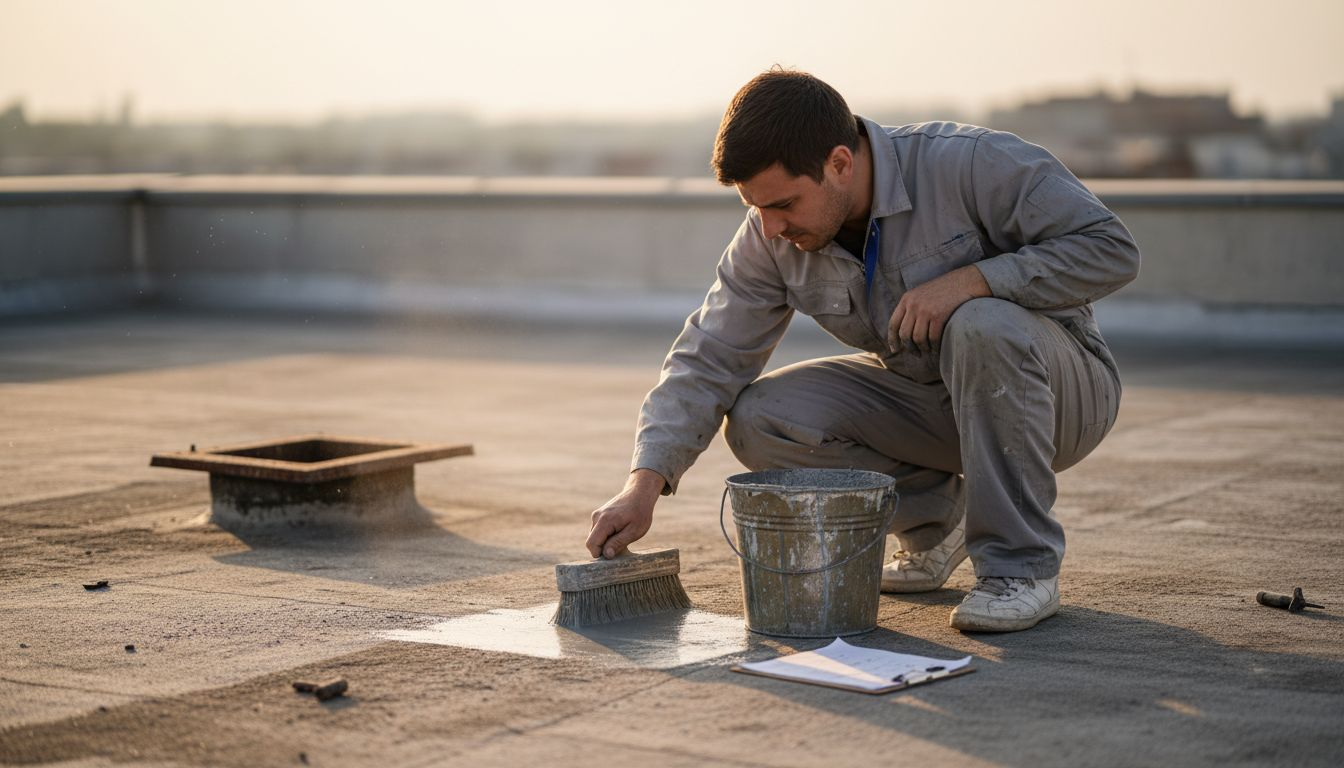
Unlike rigid waterproofing systems, liquid membranes can stretch and move with structural movements, providing superior protection against potential cracking or separation. These membranes can elongate up to 280%, making them particularly effective for surfaces experiencing thermal expansion or structural shifts.
Pro tip: Always ensure professional assessment and application of liquid membrane waterproofing to guarantee maximum effectiveness and long-term protection for your property.
Key types and material distinctions explained
When exploring liquid membrane waterproofing, understanding the primary categories of waterproofing membranes becomes crucial for effective property protection. Two fundamental types emerge: sheet membranes and liquid membranes, each offering unique characteristics suited to different environmental challenges.
Sheet membranes represent pre-manufactured waterproofing solutions characterised by:
- Rigid, pre-cut material configurations
- Sealed joints between membrane sections
- Limited flexibility compared to liquid alternatives
- Typically used in specific structural applications
Liquid membranes, by contrast, provide a more dynamic and adaptable waterproofing approach. These sophisticated systems include multiple material compositions:
- Polyurethane-based liquid membranes
- Bitumen-based liquid membranes
- Acrylic liquid membrane systems
- Elastomeric coating technologies
Each liquid membrane variant offers distinct performance characteristics. Polyurethane membranes, for instance, excel in environments requiring high chemical resistance and extreme flexibility. Bitumen-based solutions provide robust protection particularly suited to challenging South African climate conditions.
Selecting the appropriate liquid membrane depends critically on substrate composition, anticipated environmental stress, and specific waterproofing requirements.
Material composition plays a pivotal role in determining membrane performance. Factors like elongation capacity, adhesive strength, and chemical resistance directly influence the membrane’s effectiveness in preventing moisture infiltration.
Here’s a concise comparison of sheet membranes versus liquid membrane waterproofing types:
| Attribute | Sheet Membranes | Liquid Membranes |
|---|---|---|
| Flexibility | Limited, mostly rigid | Highly flexible and stretchable |
| Installation complexity | Requires exact joint sealing | Adapts to irregular surfaces easily |
| Durability in Gauteng climate | Moderate, prone to joint failure | Excellent, handles temperature changes well |
| Typical application areas | Flat roofs, tunnels | Basements, balconies, irregular shapes |
Pro tip: Consult professional waterproofing specialists to determine the most appropriate liquid membrane type for your specific property and environmental conditions.
For quick reference, here are the main material types of liquid membrane systems and their optimal use cases:
| Material Type | Best Use Case | Notable Strength |
|---|---|---|
| Polyurethane | Chemical plants, high movement zones | Extreme flexibility and chemical resistance |
| Bitumen | Outdoor surfaces, exposed to harsh weather | Robust, withstands UV and temperature shifts |
| Acrylic | Residential interiors, moderate climates | Easy to apply, good adhesion |
| Elastomeric | Areas with frequent structural movement | Superior elongation and crack bridging |
How liquid membrane systems are applied
Professional application of liquid membrane waterproofing involves a meticulous, multi-stage process designed to ensure comprehensive surface protection. The waterproofing application method requires precise preparation and execution to guarantee optimal performance.
Before membrane application, critical surface preparation steps must be completed:
- Thoroughly clean and remove all debris
- Repair existing surface cracks or imperfections
- Ensure surface is completely dry
- Check surface structural integrity
- Assess substrate compatibility
Surface priming represents the crucial initial stage of liquid membrane installation. Professional applicators typically follow a structured approach:
- Select an appropriate primer matching the substrate material
- Apply primer evenly using rollers or specialised spraying equipment
- Allow primer to dry completely according to manufacturer specifications
- Inspect primer coverage for uniformity
Membrane application requires precision and expertise. Technicians use multiple techniques depending on surface requirements:
- Roller application for flat, consistent surfaces
- Spray application for complex geometrical areas
- Trowel application for targeted, thick coating requirements
- Brush application for detailed, intricate sections
Proper application technique directly influences the membrane’s long-term performance and durability.
Multiple coating layers are typically applied, with each layer requiring specific drying times and thickness measurements. Professional waterproofing teams use specialised measuring equipment to ensure consistent membrane thickness and complete coverage.
Pro tip: Always request detailed documentation of the application process, including primer type, membrane layers, and curing conditions to ensure warranty compliance.
Benefits versus limitations for property owners
Liquid membrane waterproofing offers Gauteng homeowners a sophisticated solution for protecting their properties, with significant advantages and nuanced considerations that demand careful evaluation.
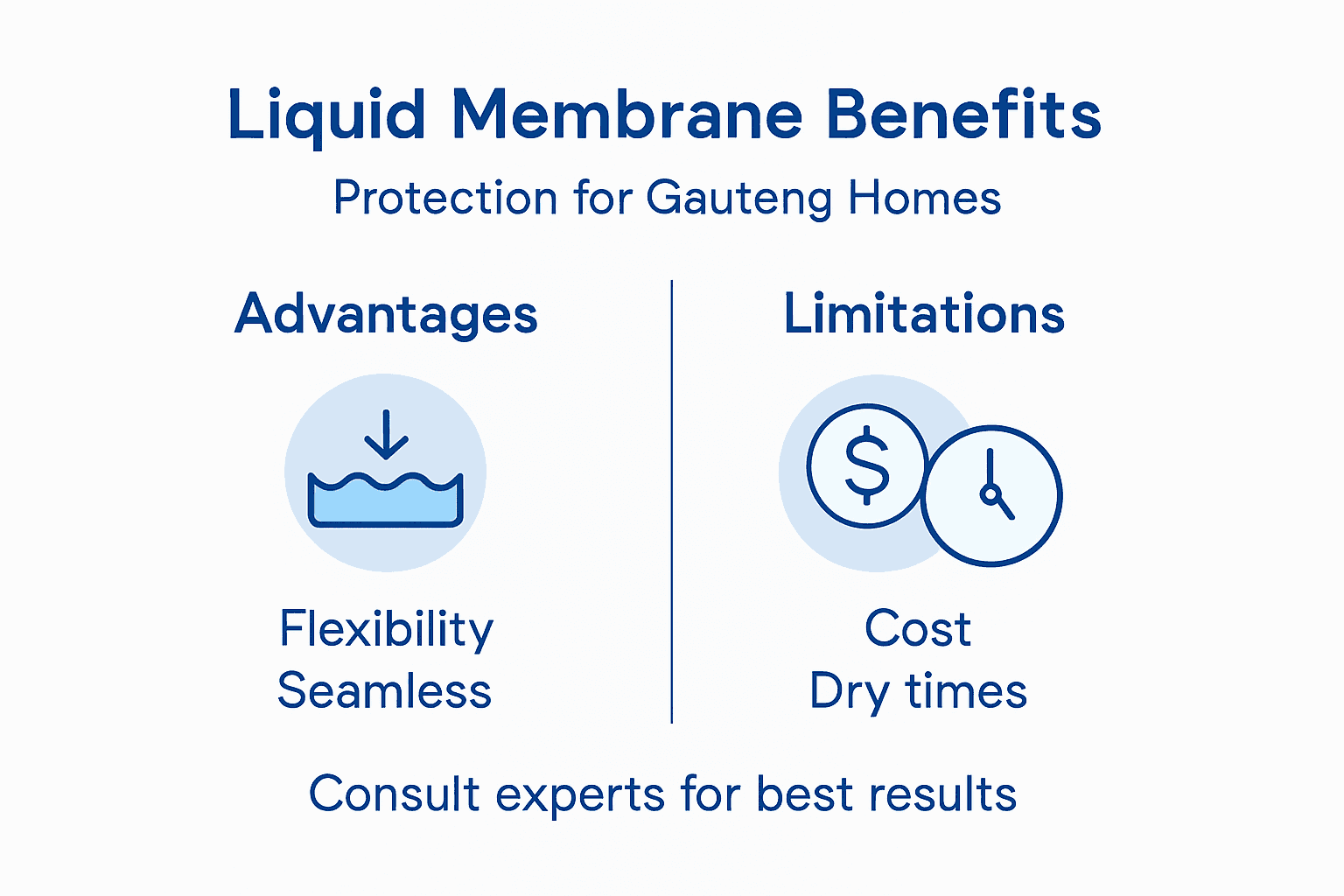
Key benefits of liquid membrane waterproofing include:
- Exceptional elasticity up to 280% elongation
- Seamless coverage across complex surface geometries
- Superior crack bridging capabilities
- Rapid application process
- Minimal structural disruption during installation
- Enhanced moisture resistance
- Adaptability to various substrate types
However, property owners must also understand potential performance limitations:
- Requires precise environmental application conditions
- Potential durability challenges under direct sunlight
- Professional installation essential for optimal performance
- Higher initial investment compared to traditional methods
- Need for periodic professional inspection
- Sensitivity to temperature variations
Successful liquid membrane waterproofing depends on understanding both its remarkable strengths and inherent technical constraints.
The performance of liquid membrane systems varies significantly based on specific environmental factors prevalent in Gauteng. Factors such as temperature fluctuations, UV exposure, and substrate condition dramatically influence long-term effectiveness. Professional assessment becomes crucial in navigating these technical nuances and selecting the most appropriate waterproofing strategy.
Pro tip: Consult multiple waterproofing specialists to obtain comprehensive assessments and comparative recommendations for your specific property requirements.
Risks, costs, and common mistakes to avoid
Navigating the complexities of liquid membrane waterproofing requires understanding the potential risks and costly errors that can compromise project effectiveness and long-term property protection.
Major financial risks associated with liquid membrane waterproofing include:
- Initial installation costs ranging from R150-R500 per square metre
- Potential additional expenses for surface preparation
- Future maintenance and reapplication expenses
- Costs of rectifying improper initial installation
- Potential structural damage from inadequate waterproofing
Common mistakes property owners frequently encounter:
- Neglecting comprehensive surface evaluation
- Choosing inappropriate membrane types
- Attempting do-it-yourself applications
- Ignoring manufacturer’s specific application guidelines
- Skipping professional pre-installation assessment
- Underestimating complexity of detailed areas
Proper planning and professional consultation can mitigate up to 80% of potential waterproofing project risks.
Technical risks extend beyond financial considerations. Incorrect application can lead to catastrophic moisture penetration, potentially causing structural degradation, mould growth, and significant property damage. These risks are particularly pronounced in Gauteng’s variable climate, where temperature fluctuations and occasional extreme weather conditions challenge waterproofing systems.
Pro tip: Request detailed written documentation of application methodology, product specifications, and warranty terms before commencing any liquid membrane waterproofing project.
Selecting contractors and quality assurance in South Africa
Choosing the right waterproofing contractor involves a strategic approach to evaluating professional credentials and ensuring comprehensive quality assurance across liquid membrane projects in South Africa.
Critical contractor evaluation criteria include:
- Verified professional certifications
- Minimum of 5 years specialised waterproofing experience
- Comprehensive liability insurance
- Proven track record in liquid membrane applications
- Current membership of professional industry associations
- Available references from previous projects
Documentation requirements property owners should request:
- Detailed written project proposal
- Comprehensive materials specification sheet
- Exact warranty terms and conditions
- Professional indemnity insurance certificates
- Contractor’s technical qualifications
- Detailed project timeline and milestones
Professional waterproofing contractors in South Africa must demonstrate technical competence and accountability beyond basic installation skills.
Regional considerations specific to Gauteng demand contractors with intimate understanding of local environmental challenges. Temperature variations, potential ground movement, and unique substrate conditions require specialised knowledge that goes beyond standard waterproofing techniques.
Pro tip: Request multiple quotes, compare detailed specifications, and personally inspect previous contractor projects before making a final selection.
Protect Your Gauteng Property with Expert Liquid Membrane Waterproofing Solutions
Facing challenges like moisture penetration and structural movement in Gauteng homes calls for a waterproofing solution that offers seamless protection and remarkable flexibility. Liquid membrane waterproofing provides superior crack bridging and adapts to complex surfaces, making it ideal for the variable climate conditions discussed in this article. Whether concerned about durability, application precision, or selecting the right material type, these are critical factors to safeguard your property’s integrity.
Discover how Pro Waterproofing can help you address these specific challenges with professional, certified services tailored to South African environmental demands. Visit our Uncategorized – Pro Waterproofing page to learn more about liquid membrane applications and expert guidance.
Don’t risk costly damage from improper waterproofing. Take action now by exploring our comprehensive solutions at Pro Waterproofing. Get in touch today to request a quote, benefit from skilled contractor selection advice, and secure long-lasting protection for your home with trusted waterproofing experts.
Frequently Asked Questions
What is liquid membrane waterproofing?
Liquid membrane waterproofing is a protective coating technology that creates a seamless, flexible barrier to prevent moisture penetration across various surfaces, safeguarding properties from water damage.
What are the advantages of using liquid membranes over traditional waterproofing methods?
Liquid membranes offer several advantages including seamless application, exceptional flexibility, rapid curing times, adaptation to complex shapes, and strong adhesion to multiple substrate types, providing superior protection against water damage.
How is liquid membrane waterproofing applied?
The application involves thorough surface preparation, applying a primer, and then adding multiple layers of liquid membrane using techniques such as spraying, rolling, or trowelling to ensure complete coverage and optimal effectiveness.
What are the key types of liquid membranes?
The primary types of liquid membranes include polyurethane, bitumen, acrylic, and elastomeric systems. Each type possesses distinct performance characteristics suited for different environmental conditions and substrate types.