
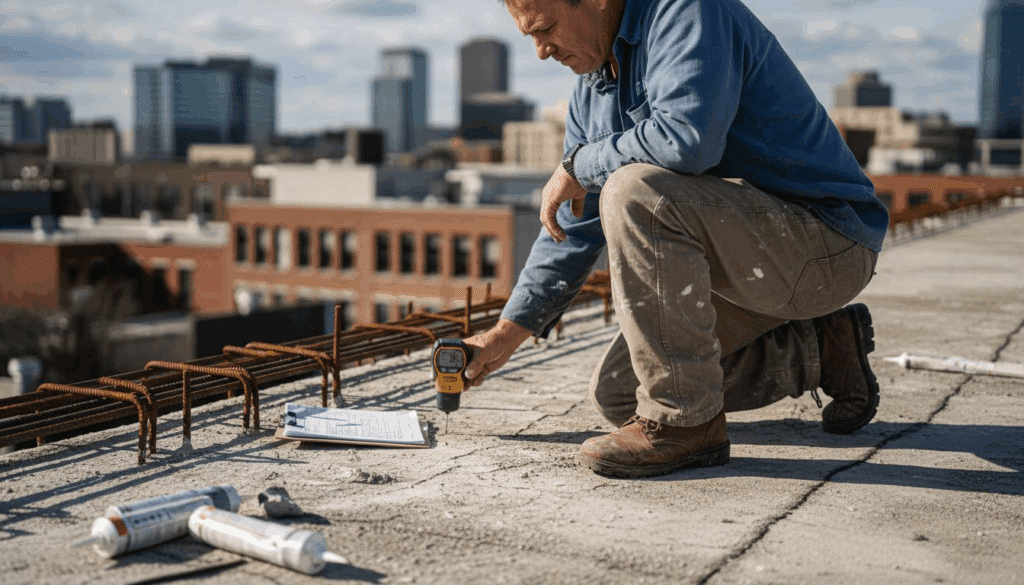
Most waterproofing failures in South Africa stem from poor surface preparation, with studies finding up to 60 percent of membrane issues linked to contaminated or uneven substrates. For homeowners and property managers in Gauteng and Western Cape, understanding how british standards influence local waterproofing protocols makes all the difference when protecting buildings from moisture damage. This guide uncovers tested techniques and expert tips that improve adhesion, reduce risk, and boost the lifespan of every waterproofing system.
Table of Contents
- Defining Surface Preparation In Waterproofing
- Types Of Substrates And Preparation Methods
- Essential Processes And Key Characteristics
- Common Mistakes And Risks To Avoid
- Legal Requirements And Industry Standards
Key Takeaways
| Point | Details |
|---|---|
| Surface Preparation is Essential | Effective waterproofing relies on thorough surface preparation, including cleaning, assessing moisture content, and repairing defects to ensure optimal adhesion. |
| Tailored Approaches to Substrates | Different substrate types, such as concrete and metal, require specific preparation methods to address their unique challenges and characteristics. |
| Common Mistakes to Avoid | Insufficient cleaning, ignoring moisture levels, and skipping repairs can lead to significant waterproofing failures; thorough preparation is critical. |
| Adherence to Standards | Compliance with South African National Standards ensures professional competence in waterproofing practices, mitigating risks and ensuring quality outcomes. |
Defining surface preparation in waterproofing
Surface preparation represents the critical foundation for successful waterproofing, involving comprehensive assessment and modification of substrate conditions before applying protective membranes or treatments. In the context of South African construction environments, surface preparation techniques are essential for ensuring long-term structural integrity and preventing moisture penetration.
Professional waterproofing involves systematically evaluating and treating various substrates such as concrete, masonry, and metal surfaces to create an optimal foundation for waterproofing systems. This process includes multiple strategic steps: thoroughly cleaning surfaces, removing contaminants, repairing structural defects, and creating appropriate surface profiles that enable strong adhesion of waterproofing materials. The goal is to establish a clean, stable, and receptive substrate that maximises the performance and durability of protective treatments.
Key objectives of surface preparation encompass eliminating potential barriers to proper membrane adhesion, including dust, grease, loose particles, existing coatings, and structural irregularities. Professional waterproofing experts typically employ techniques like mechanical abrasion, chemical cleaning, moisture assessment, and substrate profiling to prepare surfaces effectively. Precision in this preliminary stage directly influences the waterproofing system’s ability to resist moisture intrusion and maintain structural protection over extended periods.
Pro tip: Always conduct a comprehensive moisture content assessment of surfaces before initiating any waterproofing preparation to prevent future adhesion and performance complications.
Types of substrates and preparation methods
Waterproofing professionals encounter diverse substrate types that require nuanced and tailored preparation strategies. Substrate preparation techniques vary significantly depending on the material composition, structural condition, and intended waterproofing application, with South African construction standards mandating precise methodological approaches.
The primary substrate categories in waterproofing include concrete, masonry, metal surfaces, and composite materials. Each substrate demands specific preparation protocols: concrete surfaces typically require mechanical abrasion to remove weak surface layers, create appropriate surface profiles, and eliminate contaminants. Masonry substrates often need careful cleaning, filling of mortar joints, and potentially applying specialised primers to ensure optimal membrane adhesion. Metal surfaces demand thorough degreasing, rust removal, and application of compatible primer systems to prevent future corrosion and ensure waterproofing membrane performance.
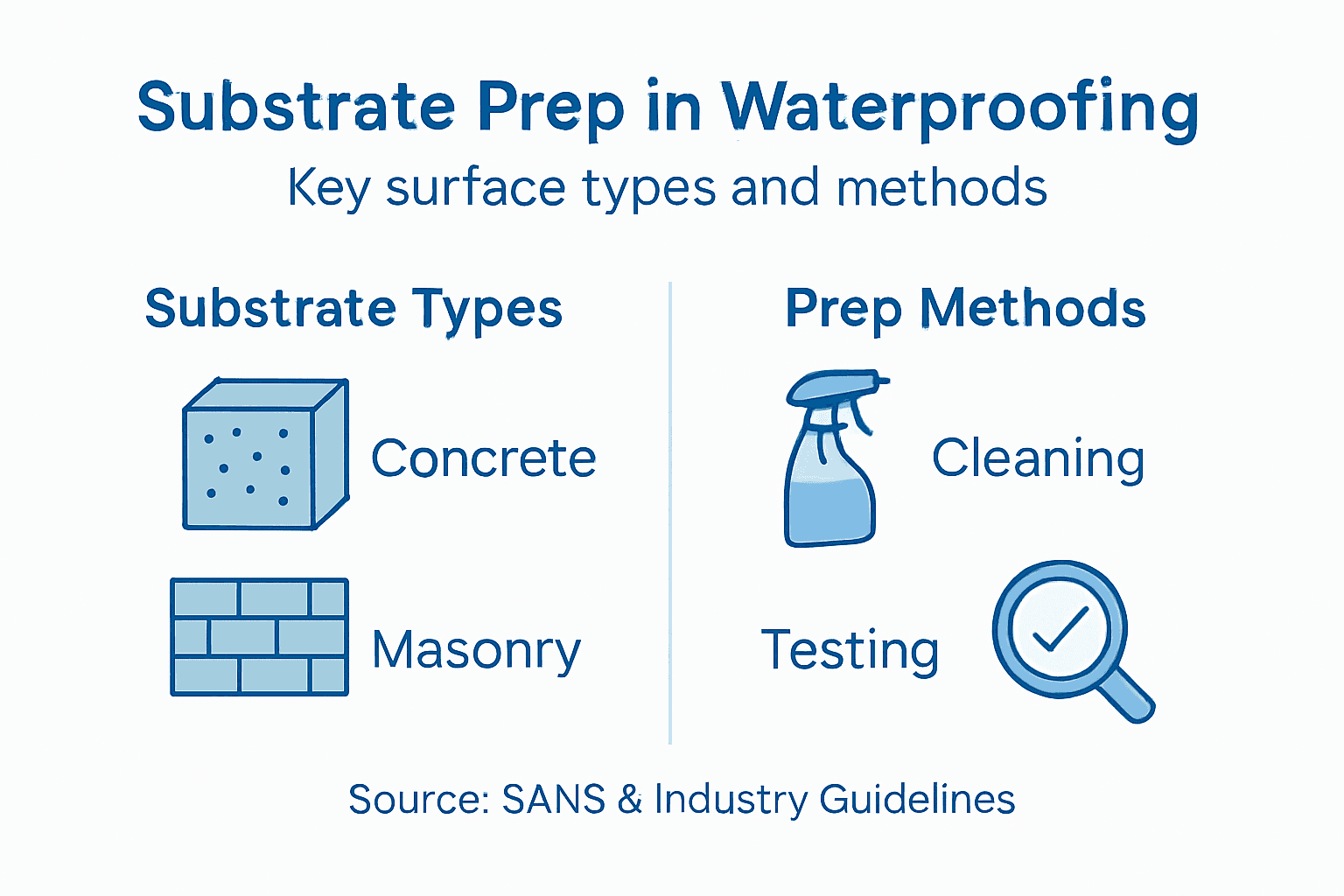
Preparation methods are systematically selected based on substrate characteristics, including surface porosity, existing damage, moisture content, and environmental exposure. Professionals employ techniques such as shot blasting, diamond grinding, chemical etching, and high-pressure water cleaning to create ideal surface conditions. These methods not only clean and prepare surfaces but also help assess underlying structural integrity, identifying potential defects that might compromise waterproofing effectiveness.
Pro tip: Always conduct a comprehensive substrate compatibility test before selecting final preparation techniques to ensure maximum adhesion and long-term waterproofing performance.
The following table summarises substrate types and the key challenges faced during surface preparation in waterproofing:
| Substrate Type | Main Challenges | Preparation Focus |
|---|---|---|
| Concrete | Surface porosity, laitance removal | Achieving uniform profile |
| Masonry | Dust, loose mortar, joint gaps | Ensuring stable joints |
| Metal | Rust, oil, variable adhesion | Degreasing and priming |
| Composite | Mixed materials, uneven surfaces | Ensuring compatibility |
Essential processes and key characteristics
Surface preparation involves a complex series of systematic processes critical to achieving robust waterproofing outcomes. Procedural guidelines for surface preparation emphasise meticulous inspection, targeted remediation, and precise surface conditioning to ensure optimal membrane performance and long-term structural protection.
The essential processes in waterproofing surface preparation encompass multiple interconnected stages. Initial substrate assessment involves comprehensive visual and instrumental evaluation to identify existing defects, moisture levels, and surface irregularities. Professional waterproofing technicians systematically document surface conditions, measuring parameters such as concrete carbonation depth, surface profile roughness, moisture content, and potential contamination. These detailed assessments inform subsequent preparation strategies, enabling tailored approaches that address specific substrate characteristics and potential vulnerabilities.
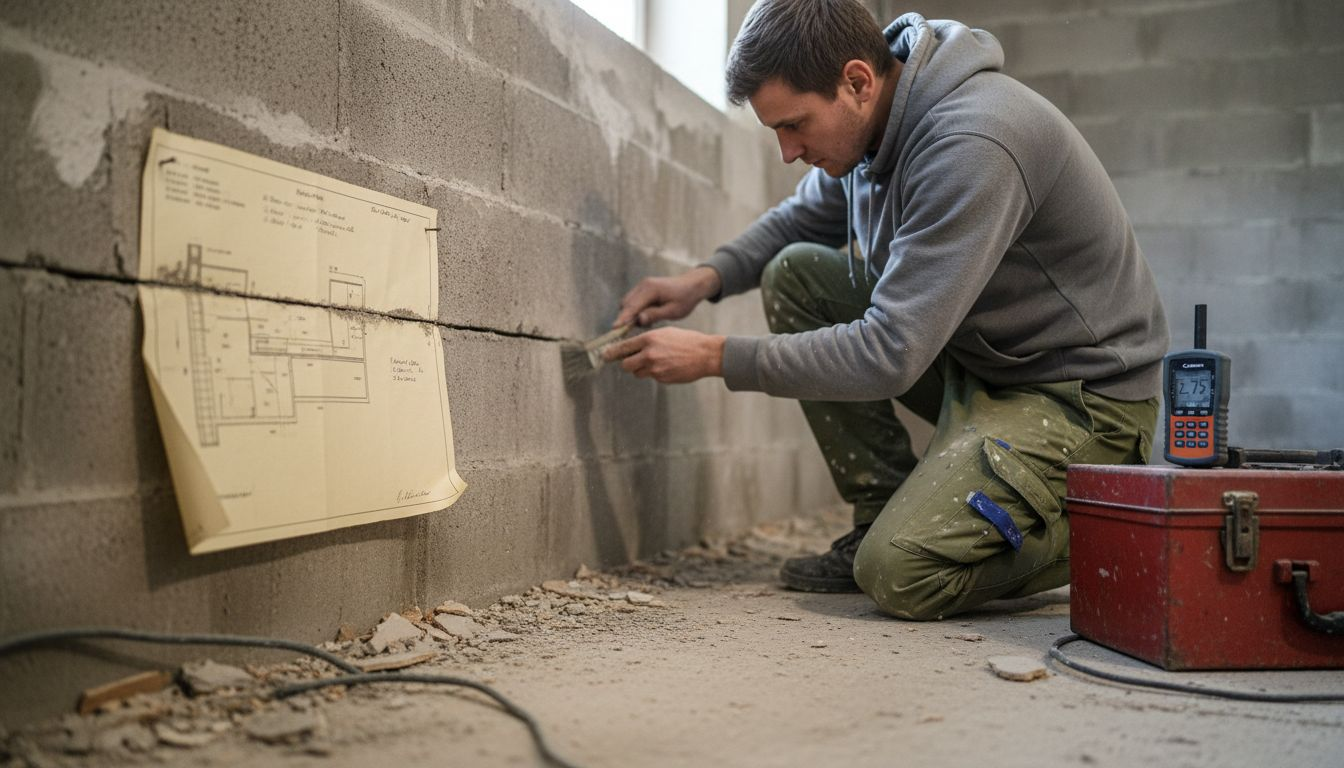
Key characteristics determining successful surface preparation include surface cleanliness, mechanical integrity, moisture equilibrium, and chemical compatibility. Professionals must achieve specific surface profile roughness measurements, typically ranging between 75-125 microns, to guarantee optimal membrane adhesion. Critical evaluation parameters include surface porosity, structural soundness, ambient temperature, humidity levels, and potential chemical interactions between substrates and waterproofing materials. Precise control of these characteristics ensures minimal risk of future membrane failure and maximises the durability of waterproofing installations.
Pro tip: Invest in professional surface roughness measurement tools to objectively quantify substrate conditions and validate preparation effectiveness before membrane application.
Common mistakes and risks to avoid
Waterproofing professionals must be vigilant about potential pitfalls that can compromise system integrity. Surface preparation risks represent critical areas where inadequate attention can lead to catastrophic membrane failures and substantial financial losses in construction projects.
One of the most prevalent mistakes involves insufficient surface cleaning and preparation. Contractors frequently underestimate the importance of comprehensive substrate evaluation, neglecting critical steps such as removing contaminants, addressing microscopic surface irregularities, and ensuring complete moisture elimination. Common errors include applying waterproofing membranes over dusty or greasy surfaces, failing to repair structural cracks, or overlooking subtle surface degradation that can prevent proper membrane adhesion. These oversights create potential pathways for moisture penetration, dramatically reducing the waterproofing system’s expected operational lifespan.
Risks associated with improper surface preparation extend beyond immediate application challenges. Inadequate substrate assessment can lead to premature membrane detachment, accelerated material degradation, and compromised structural integrity. Professional waterproofing technicians must meticulously evaluate surface conditions, accounting for factors like ambient temperature, humidity levels, substrate porosity, and potential chemical interactions. Comprehensive risk mitigation requires thorough diagnostic assessments, precise surface profiling, and strategic preparation techniques that address substrate-specific vulnerabilities.
Below is a reference table outlining common surface preparation mistakes and their long-term impacts:
| Mistake | Potential Consequence | Suggested Preventive Action |
|---|---|---|
| Inadequate cleaning | Membrane detachment, leaks | Implement thorough chemical cleaning |
| Ignoring moisture levels | Reduced adhesion, blistering | Use moisture meters before sealing |
| Skipping crack repairs | Rapid structural deterioration | Fill and reinforce all defects |
| Poor substrate profiling | Uneven membrane application | Achieve specified roughness range |
Pro tip: Always document your surface preparation process with detailed photographic evidence and comprehensive measurement records to support quality assurance and potential future warranty claims.
Legal requirements and industry standards
The waterproofing industry in South Africa operates under rigorous regulatory frameworks designed to ensure professional competence and structural safety. Waterproofing professional standards are meticulously governed by national qualifications and comprehensive legislative requirements that mandate specific technical competencies and compliance protocols.
South African National Standards (SANS) provide the primary legislative framework for waterproofing practices, establishing precise technical requirements for surface preparation, material selection, application techniques, and quality assurance. These standards comprehensively define acceptable methodologies, specifying detailed parameters for substrate assessment, membrane installation, and performance evaluation. Professionals must demonstrate compliance through documented evidence, including detailed surface preparation records, material certifications, and post-installation testing documentation that validates adherence to prescribed technical specifications.
Legal requirements extend beyond technical standards to encompass broader professional accountability mechanisms. Waterproofing practitioners must possess appropriate qualifications registered with the South African Qualifications Authority (SAQA), ensuring they have undergone rigorous training and assessment. Compliance involves maintaining current certifications, understanding evolving regulatory landscapes, and implementing best practices that meet both technical standards and legal obligations. These requirements protect consumers by establishing minimum competency levels, creating accountability mechanisms, and ensuring systematic approaches to waterproofing that prioritise structural integrity and long-term performance.
Pro tip: Maintain a comprehensive professional portfolio documenting your qualifications, training certificates, and compliance records to demonstrate ongoing professional competence.
Secure Your Property with Expert Surface Preparation and Waterproofing Solutions
Understanding the critical role of thorough surface preparation in waterproofing is the first step to ensuring lasting protection against moisture and structural damage. The challenges of dealing with substrate contaminants, moisture content, and achieving the correct surface profile can be daunting. At Pro Waterproofing, we specialise in addressing these specific issues to help South African property owners safeguard their homes, commercial spaces, and industrial sites.
Do not let poor substrate readiness threaten your waterproofing investment. Visit our Uncategorized – Pro Waterproofing page to learn more about tailored solutions backed by industry standards and legal compliance. Take control of your waterproofing project today by contacting us through https://prowaterproofing.co.za and secure professional guidance that guarantees system longevity and peace of mind.
Frequently Asked Questions
What is surface preparation in waterproofing?
Surface preparation in waterproofing involves evaluating and modifying the conditions of substrates like concrete, masonry, and metal before applying waterproofing membranes or treatments. This critical step ensures proper adhesion and long-term structural protection against moisture intrusion.
Why is surface cleanliness important in waterproofing?
Surface cleanliness is vital as it eliminates contaminants such as dust, grease, and loose particles that can hinder the adhesion of waterproofing materials. A clean substrate maximises the performance and durability of the waterproofing system.
What are some common mistakes in surface preparation for waterproofing?
Common mistakes include inadequate cleaning of the surface, neglecting to assess moisture levels, skipping repairs for structural cracks, and poor substrate profiling. These oversights can lead to ineffective waterproofing and costly repairs due to leaks and membrane failures.
How can I ensure proper adhesion of a waterproofing membrane?
To ensure proper adhesion, it’s essential to conduct a thorough assessment of the substrate for moisture content, surface irregularities, and cleanliness. Achieving the recommended surface roughness (typically between 75-125 microns) and using compatible primers where necessary will also enhance adhesion effectiveness.