

Most homeowners in Gauteng and Western Cape are surprised to learn that nearly half of local water damage claims stem from poor or outdated waterproofing. Understanding the british approach to moisture protection helps reveal why simple fixes often fail. For those living in these regions, knowing the real process and avoiding common myths means safeguarding your home from expensive repairs while preserving its value well into the future.
Table of Contents
- Defining Waterproofing and Common Myths
- Key Waterproofing Methods in South Africa
- Step-by-Step Waterproofing Process Explained
- Legal and Safety Standards for Waterproofing
- Costs, Contractors, and Common Pitfalls
Key Takeaways
| Point | Details |
|---|---|
| Importance of Waterproofing | Waterproofing is essential for preventing moisture infiltration and protecting structure longevity. |
| Myths and Misconceptions | Waterproofing is not a one-time fix; it requires ongoing assessment and maintenance for effectiveness. |
| Tailored Methods in South Africa | Regional climate and geological factors dictate specific waterproofing solutions to address unique moisture challenges. |
| Avoiding Common Pitfalls | Proper surface preparation and professional assessments are crucial to avoid costly long-term consequences in waterproofing projects. |
Defining Waterproofing and Common Myths
Waterproofing is a critical construction technique designed to prevent moisture infiltration and protect structures from potential water damage. Moisture protection strategies involve specialised methods that create barriers against water penetration in buildings, ensuring structural integrity and longevity.
At its core, waterproofing addresses multiple sources of potential moisture intrusion, including groundwater, rainwater, condensation, and ambient humidity. Different environments require tailored approaches to prevent water-related deterioration. Residential properties in regions like Gauteng and Western Cape face unique challenges due to variable rainfall patterns and soil conditions, making professional waterproofing techniques essential for maintaining building quality.
Numerous misconceptions persist about waterproofing that can lead property owners to make costly mistakes. Some believe waterproofing is a one-time solution, while professionals understand it requires periodic assessment and maintenance. Another prevalent myth suggests that visible waterproofing treatments are sufficient, when in reality, comprehensive protection involves multiple layers and strategic application across vulnerable structural points.
Pro Tip: Always consult a professional waterproofing specialist who understands local environmental conditions before implementing any moisture protection strategy.
Key Waterproofing Methods in South Africa
South Africa’s diverse climate and geological conditions demand sophisticated waterproofing approaches tailored to specific regional challenges. Waterproofing systems encompass a range of techniques designed to protect structures from moisture intrusion in environments ranging from coastal regions to inland areas with variable rainfall patterns.
The primary waterproofing methods used in South African construction include liquid membrane applications, cementitious coatings, bituminous treatments, and advanced polymer-based solutions. Liquid waterproofing techniques are particularly effective for surfaces like roofs, balconies, and external walls, providing a seamless protective layer that adapts to structural movements and temperature variations. Cementitious coatings offer robust protection for basement areas and underground structures, creating a rigid barrier against groundwater penetration.
Regional considerations play a crucial role in selecting appropriate waterproofing methods. Coastal properties in areas like Cape Town require marine-grade treatments resistant to salt spray and high humidity, while inland regions such as Gauteng demand solutions that can withstand intense seasonal rainfall and potential ground moisture fluctuations. Professional waterproofing specialists assess specific site conditions, including soil composition, drainage patterns, and structural design, to recommend the most suitable protection strategy.
Pro Tip: Conduct a comprehensive site assessment before selecting a waterproofing method to ensure maximum protection against local moisture challenges.
Here is a concise summary comparing main waterproofing methods used in South Africa:
| Method | Typical Application Area | Key Strengths |
|---|---|---|
| Liquid Membrane | Roofs, balconies, external walls | Seamless layer, flexible, durable |
| Cementitious Coating | Basements, underground structures | Rigid, effective against groundwater |
| Bituminous Treatment | Foundations, car parks | Strong adhesion, chemical resistant |
| Polymer-Based Solutions | Exposed roofs, wet areas | UV stable, withstands movement |
Step-by-Step Waterproofing Process Explained
Successful waterproofing requires a methodical approach that begins with comprehensive surface preparation and assessment. Waterproofing application techniques demand meticulous attention to detail, ensuring each stage is executed with precision to create an effective moisture barrier.
The waterproofing process typically involves several critical stages. Initial preparation includes thorough surface cleaning, removing debris, filling existing cracks, and ensuring structural surfaces are completely dry and structurally sound. Professionals inspect the area for potential moisture entry points, assessing surface conditions, identifying structural vulnerabilities, and determining the most appropriate waterproofing method for specific environmental conditions.
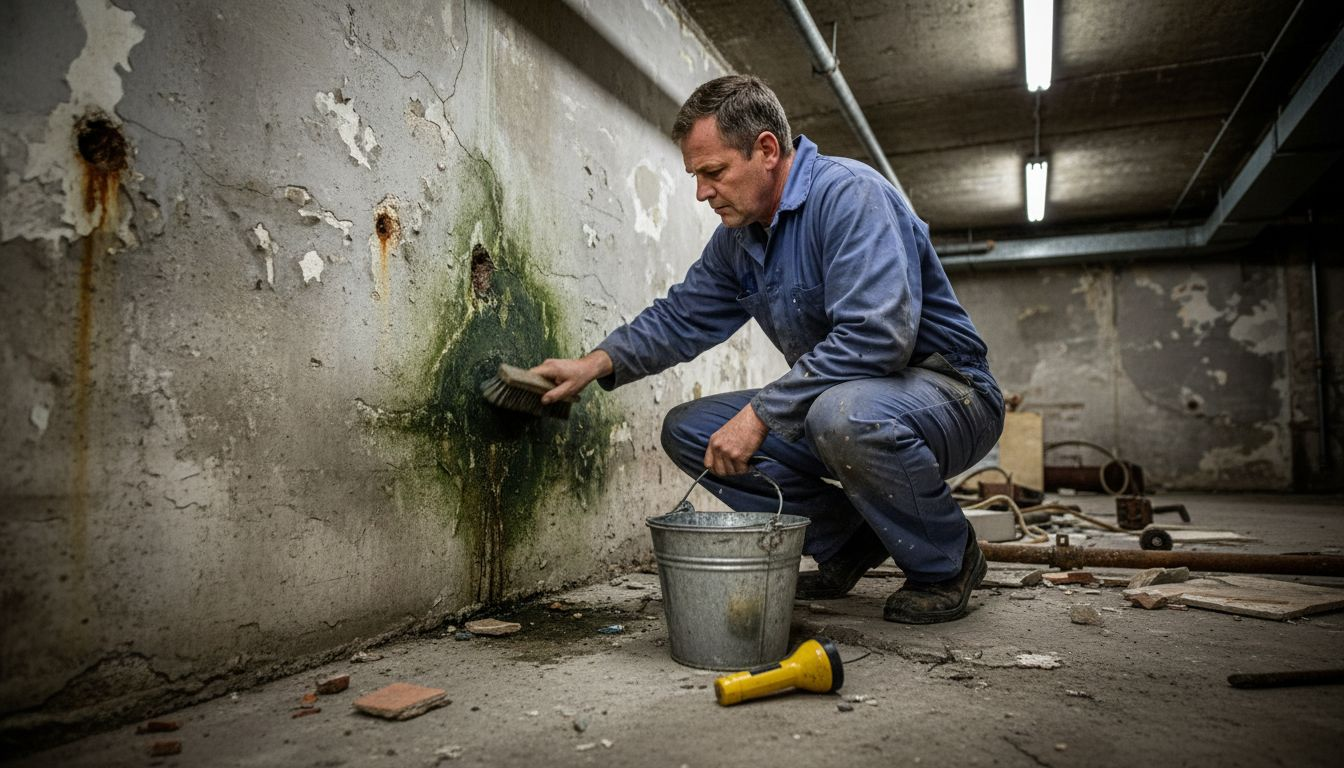
Application of waterproofing treatments requires careful product selection and precise implementation. Different surfaces demand unique approaches: concrete surfaces might require cementitious coatings, while external walls could benefit from liquid membrane applications. Technicians must apply products uniformly, ensuring complete coverage without gaps or thin spots that could compromise the protective barrier. Proper technique involves multiple layers, strategic overlap, and careful attention to joint connections, corners, and potential stress points that might experience differential movement.
Pro Tip: Always conduct a moisture metre test before and after waterproofing to validate the effectiveness of your protective treatment.
Legal and Safety Standards for Waterproofing
Waterproofing in South Africa operates under stringent regulatory frameworks designed to ensure structural integrity and public safety. Waterproofing regulations establish comprehensive guidelines that govern material selection, application techniques, and performance standards for construction projects across residential, commercial, and industrial sectors.
The National Building Regulations and South African National Standards (SANS) 10400 provide detailed specifications for waterproofing practices. These standards mandate that waterproofing materials must withstand complex environmental challenges, including temperature variations, UV radiation, chemical exposure, and mechanical stress. Critical requirements specify that waterproofing systems must demonstrate a minimum functional lifespan of 10 years, with more complex installations expected to maintain protective capabilities for up to 20 years.
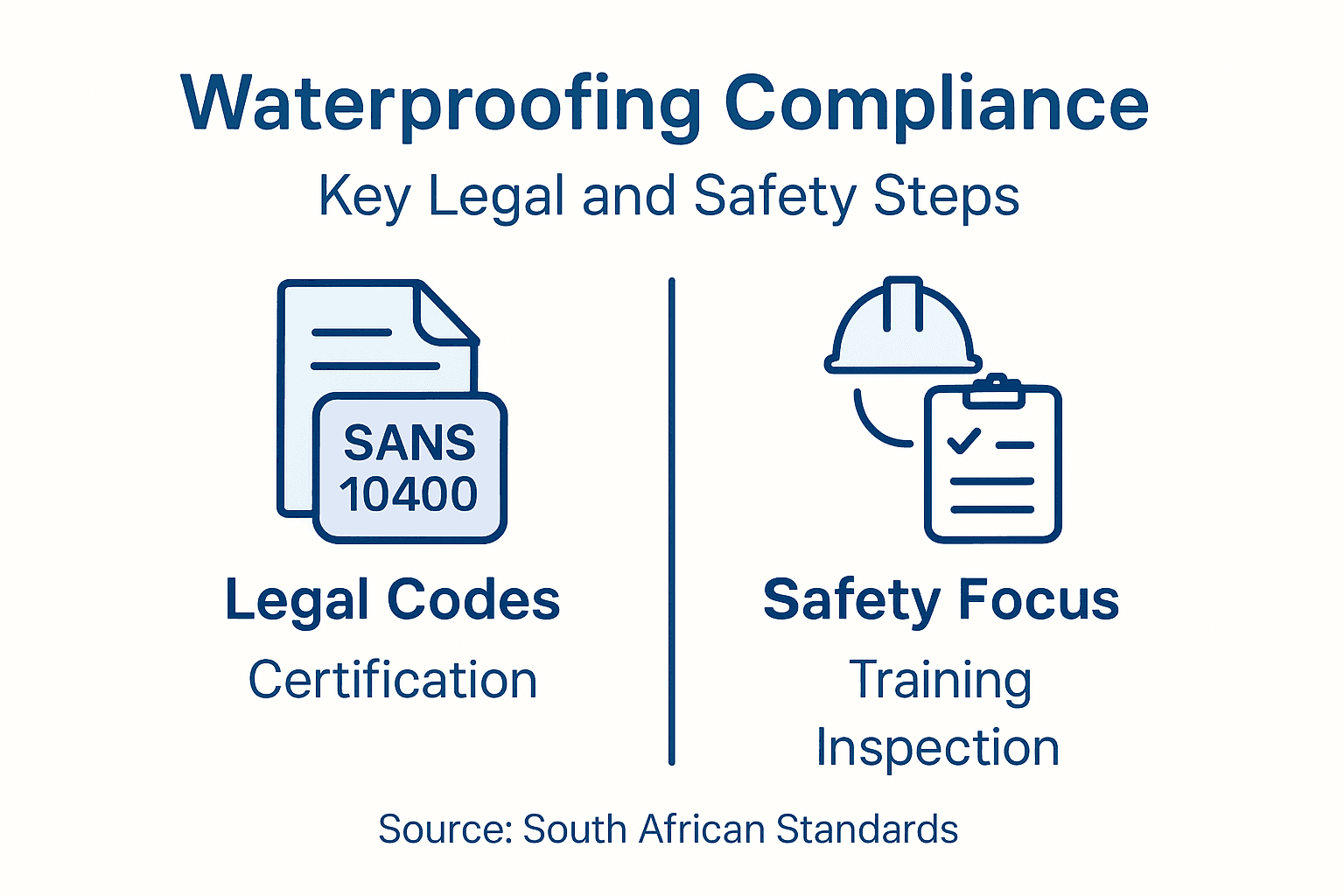
Certification and compliance represent crucial elements in the legal landscape of waterproofing. Professional contractors must demonstrate technical competence, adhere to prescribed installation protocols, and provide comprehensive documentation proving their work meets national safety standards. This includes detailed risk assessments, material performance declarations, and post-installation verification processes that protect both property owners and construction professionals from potential structural failures caused by inadequate moisture protection.
Pro Tip: Always request formal certification and compliance documentation from waterproofing contractors to validate the technical integrity of their proposed solutions.
Costs, Contractors, and Common Pitfalls
Navigating waterproofing projects requires careful consideration of financial investment and professional expertise. Selecting waterproofing contractors involves understanding complex pricing structures, technical capabilities, and potential long-term implications for property protection.
Cost considerations extend beyond initial installation expenses. Professional waterproofing interventions typically range between R5,000 to R50,000, depending on property size, complexity, and chosen treatment method. Factors influencing pricing include surface area, existing structural conditions, moisture severity, and selected waterproofing technology. Homeowners should prioritise comprehensive solutions over cheaper alternatives that might compromise long-term structural integrity.
Common pitfalls in waterproofing projects include inadequate surface preparation, inappropriate material selection, and poor application techniques. Inexperienced contractors might underestimate environmental challenges specific to South African regions, leading to premature treatment failure. Critical mistakes include insufficient crack repair, improper substrate priming, inadequate membrane overlap, and neglecting proper drainage considerations. Property owners must demand detailed project specifications, comprehensive material warranties, and post-installation inspection protocols.
The following table highlights common waterproofing mistakes and their long-term consequences:
| Mistake | Potential Long-Term Impact |
|---|---|
| Inadequate surface preparation | Early membrane failure, leaks recur |
| Poor material selection | Lower durability, costly repairs |
| Insufficient drainage provision | Persistent dampness, rising moisture |
| Skipping professional assessment | Missed risks, ineffective protection |
Pro Tip: Request multiple detailed quotes, compare comprehensive project scopes, and verify contractor certifications before committing to any waterproofing intervention.
Take Control of Your Waterproofing Project with Expert Guidance
Understanding the detailed waterproofing project steps is essential to ensure lasting protection against moisture damage that can threaten your property’s structure. The article highlights the importance of thorough surface preparation, precise application techniques, and professional assessment to avoid costly mistakes such as early membrane failure or persistent dampness. If you want to navigate these challenges confidently, access trusted resources and certified contractors who follow South African legal standards and use proven methods.
Discover how Uncategorized – Pro Waterproofing connects you with expert advice and reliable waterproofing specialists across South Africa. Visit Pro Waterproofing today to request a personalised quote and gain peace of mind knowing your property’s moisture protection is handled with care and technical excellence. Don’t wait until water damage becomes a costly problem – take the first step towards secure, professional waterproofing now.
Frequently Asked Questions
What are the essential steps in the waterproofing process?
The waterproofing process involves several critical stages: surface preparation, material selection, application of the waterproofing treatment, and post-application testing. Each step requires careful execution to ensure an effective moisture barrier.
How do I prepare a surface for waterproofing?
Surface preparation includes thorough cleaning, removing debris, filling existing cracks, and ensuring that surfaces are completely dry and structurally sound before applying any waterproofing treatments.
What types of waterproofing methods are available for different surfaces?
Common waterproofing methods include liquid membrane applications for roofs and walls, cementitious coatings for basements, bituminous treatments for foundations, and polymer-based solutions for exposed areas. Each method has unique strengths tailored to specific surfaces.
Why is professional assessment important before waterproofing?
A professional assessment is crucial to identify potential moisture entry points, evaluate structural vulnerabilities, and recommend the most suitable waterproofing method based on site-specific environmental conditions.