
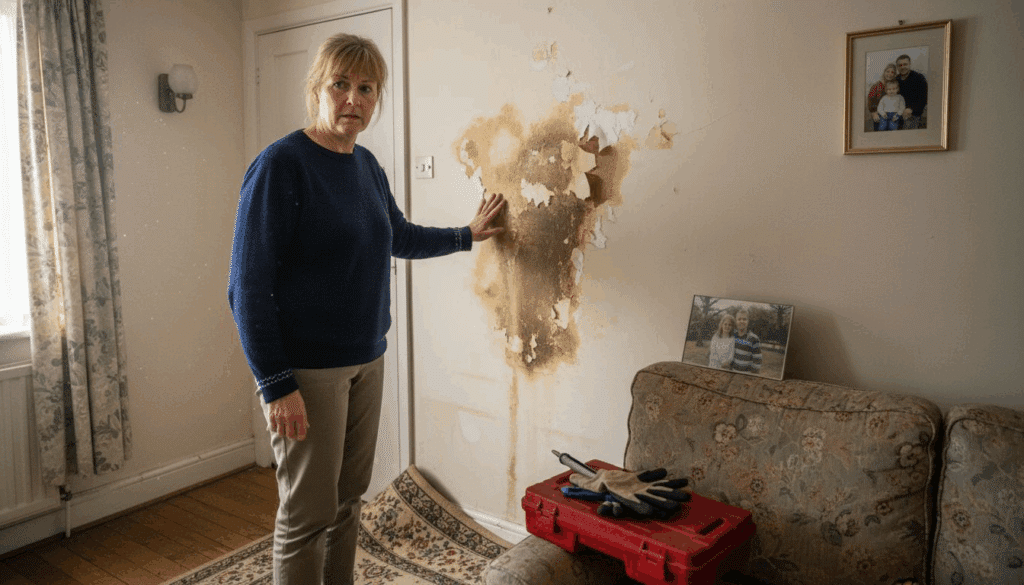
Spotting patches of discolouration or a stubborn musty smell can make any homeowner in Gauteng or the Western Cape worry about hidden water damage. Damp walls are not just unsightly—they often signal deeper problems that threaten your property’s structure and value. Understanding the different causes of moisture accumulation is the crucial first step to avoiding wasted money on ineffective fixes and protecting your family’s health and investment.
Table of Contents
- Defining Damp Walls And Key Misconceptions
- Types Of Damp Affecting South African Walls
- Major Causes: Water Sources And Poor Drainage
- How Damp Harms Health And Home Value
- Prevention, Remediation And When To Call Experts
Key Takeaways
| Point | Details |
|---|---|
| Understanding Damp Types | Recognising the differences between Rising, Penetrating, and Condensation damp is crucial for effective treatment. Each type requires a unique solution to prevent worsening conditions. |
| Common Misconceptions | Homeowners often make the mistake of treating symptoms rather than addressing the underlying cause of damp issues, leading to ineffective solutions. |
| Health and Structural Risks | Damp environments can lead to serious health issues and significantly weaken a property’s structure, making early intervention essential. |
| Prevention and Maintenance | Regular property maintenance, especially drainage management, is vital to prevent damp rather than relying solely on repairs after the fact. |
Defining Damp Walls And Key Misconceptions
Damp walls occur when moisture accumulates within building materials, creating visible discolouration, peeling paint, or that unmistakable musty smell in your home. But damp isn’t just one problem—it’s several different problems that often get confused.
The confusion starts because people see moisture on walls and assume the cause is obvious. It rarely is. Understanding the distinction between different types of damp is crucial because the solution for one type may actually worsen another.
Types of Damp Explained
Rising damp travels upwards through walls from the ground, like water being drawn up a paper towel. It typically appears as a dark stain on lower walls, often with a tide mark.
Penetrating damp enters from the outside inward—through cracks, damaged pointing, or faulty guttering. This appears wherever water can breach your exterior.
Condensation damp forms when warm, moist air meets cold surfaces. Bathrooms and kitchens are prime culprits, especially in winter.
Leaks and burst pipes cause localised damp that spreads rapidly if not stopped. These demand immediate action.
Each type has distinct causes and requires completely different solutions. Treating them generically wastes money and frustration.
Common Misconceptions That Cause Harm
The biggest mistake homeowners make is treating symptoms instead of causes. You see damp, so you paint over it with waterproof paint. Then the moisture gets trapped behind the paint and the problem worsens. This happens far more often than you’d expect.
Another widespread myth is that all damp problems respond to the same fix. They don’t. What works for condensation can trap moisture from rising damp, causing structural damage over time.
Moisture problems such as rising damp, penetrating damp, condensation, and leaks each require distinct approaches to resolve effectively.
People also assume damp is purely cosmetic. It’s not. Untreated damp compromises structural integrity, reduces your home’s market value, and creates ideal conditions for mould that affects your family’s health.
Common false beliefs also include:
- Painting over damp is a permanent fix
- All damp requires the same treatment
- Damp only affects older homes
- Increasing ventilation alone will always solve condensation
- Damp walls are just an inconvenience, not a serious issue
Identifying the specific type of damp affecting your walls determines whether your solution will succeed or fail.
In Gauteng and Western Cape properties, damp manifests differently depending on climate, building age, and construction methods. A problem in a 1970s brick home looks different from damp in a modern townhouse, but the underlying causes may be identical.
The path forward requires accurate diagnosis first. Once you understand what’s actually causing the moisture, effective treatment becomes straightforward. Most homeowners rush to solutions before understanding the problem—that’s where thousands of rands get wasted on ineffective repairs.
Pro tip: Photograph your damp area from multiple angles, noting where it appears (bottom, middle, or top of walls) and whether it occurs seasonally, as this information helps identify the specific type affecting your home.
Types Of Damp Affecting South African Walls
South Africa’s diverse climate creates unique damp challenges that differ significantly from colder regions. Your home in Gauteng faces different moisture pressures than a property in the Western Cape, yet both regions experience the same four primary damp types.
Understanding which type affects your walls determines your entire remediation strategy. Misdiagnosis leads to wasted money and worsening conditions.
Rising Damp In South African Homes
Rising damp is groundwater travelling upwards through masonry, defying gravity through capillary action. Think of it like moisture climbing a sponge from a glass of water.
This damp typically appears on ground floors and basement walls, creating a dark tide mark that stops roughly one metre high. The affected area often feels damp to touch, and plaster may crumble when pressed.
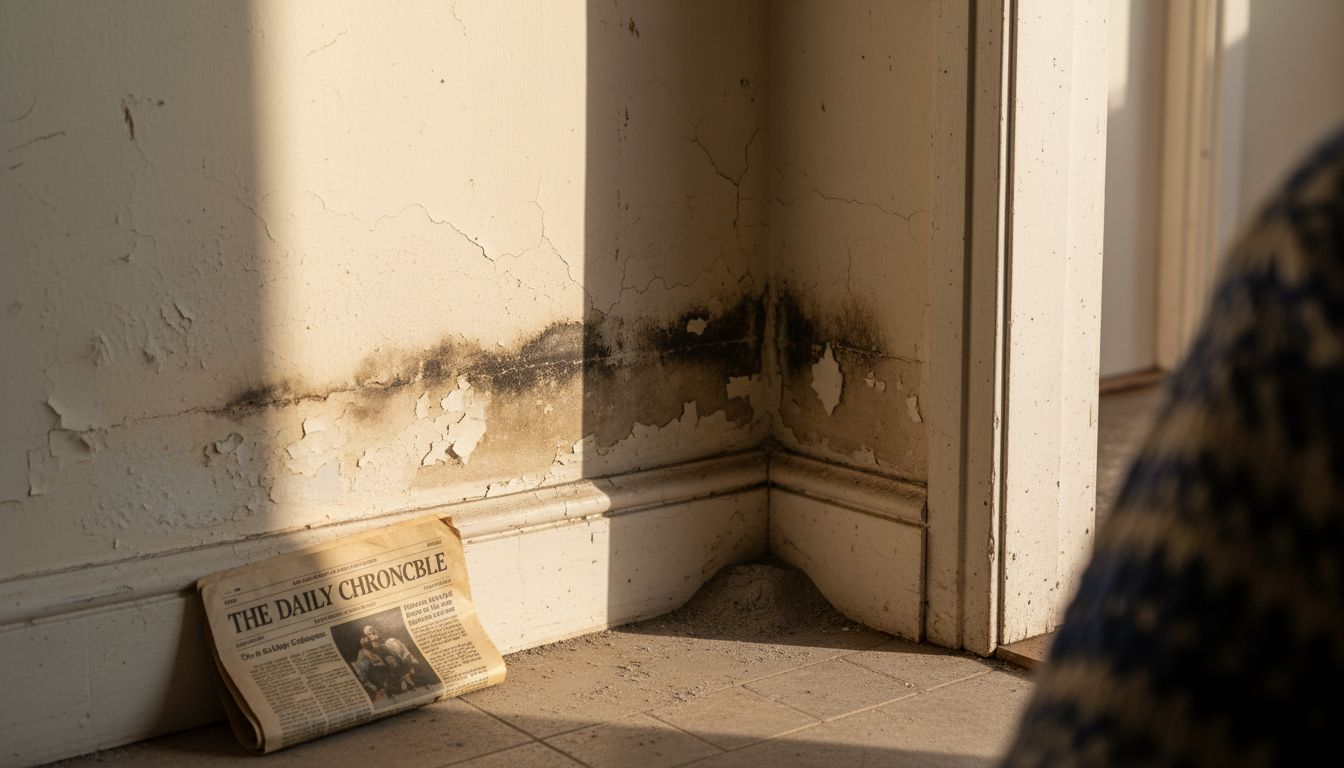
Rising damp occurs when homes lack proper damp proof courses (DPCs) or when existing DPCs fail. Many older South African properties were built without adequate moisture barriers, making this type extremely common in established suburbs.
You’ll notice:
- Dark staining on lower walls
- Crystalline salt deposits (efflorescence)
- Peeling wallpaper or paint
- Musty odours near affected areas
- Structural weakening over time
Penetrating Damp From External Water
Penetrating damp enters from outside, forcing its way through walls when they’re compromised. Unlike rising damp’s steady climb, penetrating damp follows the path of least resistance.
Common causes in South African homes include:
- Damaged or missing roof tiles
- Leaking gutters and downpipes
- Cracked external walls
- Failed mortar joints
- Faulty brickwork pointing
- Poor window and door sealing
This damp appears wherever water can breach your exterior. You might see it on upper walls, around windows, or near roof lines. During heavy rain seasons, the problem worsens dramatically.
Common causes of damp walls vary depending on your home’s age, construction method, and maintenance history.
Condensation Damp
Condensation damp forms when warm, humid air meets cold surfaces. Your bathroom after a hot shower is the classic example.
This type is increasingly common in modern, well-insulated South African homes where ventilation is poor. Winter months bring the highest risk, particularly in bathrooms, kitchens, and bedrooms.
Signs include:
- Moisture on windows and mirrors
- Damp patches on external walls
- Mould growth in corners
- Musty smells
Condensation responds to increased ventilation and temperature control, not structural waterproofing.
Plumbing Leaks And Burst Pipes
Leak-related damp comes from failed water pipes, burst connections, or faulty plumbing. This creates localised, concentrated moisture that spreads quickly through walls and ceilings.
Unlike other damp types, leaks demand immediate action. Water pressure forces moisture deep into structures, and delay costs thousands in repairs.
South African climate variations mean your damp type likely differs from properties in other regions; accurate identification is non-negotiable.
Each damp type requires distinct solutions. Rising damp needs chemical treatments or physical barriers. Penetrating damp requires external repairs and sealants. Condensation responds to ventilation. Leaks need immediate pipe repair.
Here is a summary of common damp types and the most effective professional solution for each:
| Damp Type | Typical Location | Best Long-term Solution |
|---|---|---|
| Rising damp | Lower walls, ground floor | Chemical DPC or physical barrier |
| Penetrating damp | Exterior walls, upper areas | External repairs and sealants |
| Condensation | Bathrooms, cold bedrooms | Improved ventilation and airflow |
| Leak-related damp | Near plumbing, localised | Immediate plumbing repair |
Pro tip: Check your home’s age and construction records—this reveals whether rising damp is likely and helps pinpoint which damp type you’re dealing with, saving time and money on diagnosis.
Major Causes: Water Sources And Poor Drainage
Most damp problems trace back to water that shouldn’t be there and drainage systems that aren’t working properly. These two factors account for the vast majority of moisture problems in South African homes.
Water always finds a way in. Your job is to stop it before it reaches your walls.
Inadequate Drainage Around Your Property
Poor drainage is perhaps the most common culprit behind rising and penetrating damp. When water pools around your home’s foundation instead of flowing away, it creates constant pressure against your walls.
Gauteng and Western Cape properties often suffer from:
- Blocked or missing gutters
- Downpipes discharging directly onto soil near foundations
- Sloping ground directing water towards the house
- Insufficient surface drainage away from walls
- Compacted soil preventing water absorption
- Damaged or absent soakaways
Each of these issues allows water to accumulate where it shouldn’t. Over time, that water finds cracks, gaps, and weaknesses in your masonry.
Leaking Gutters And Downpipes
Leaking gutters deliver water directly onto exterior walls instead of away from them. A small crack in guttering becomes a constant moisture source that saturates brick and mortar.
Downpipes matter equally. Many homes have downpipes that discharge water directly onto the ground beside the foundation. During heavy rain, this creates pools that seep into walls through foundation cracks.
The solution is straightforward: gutters must be intact and sloping correctly, downpipes must discharge at least 1.5 metres from the house, and ideally into proper drainage systems.
Groundwater And Rising Damp
Rising damp occurs when groundwater climbs through masonry due to capillary action. Your soil acts like a wick, drawing moisture upwards indefinitely.
This happens because:
- Soil around foundations remains perpetually saturated
- Masonry contains tiny pores that conduct water upward
- No physical barrier stops the water’s progress
- Older homes lack proper damp proof courses
Understanding how to identify waterproofing failures helps you spot rising damp before it causes structural damage.
Surface Water And Poor Site Grading
Site grading determines whether water flows away from or towards your home. If your property slopes towards the house, every rainfall deposits water against your foundations.
Proper grading should:
- Slope away from the building at least 1 in 20 gradient
- Direct water towards drainage channels or storm drains
- Prevent pooling anywhere near walls
- Account for soil settlement over time
Burst Pipes And Internal Leaks
Plumbing failures create concentrated moisture that spreads rapidly through walls. A burst pipe inside your wall cavity can cause extensive damage before you notice it.
Common culprits include:
- Corroded copper pipes
- Frozen pipes (less common in South Africa, but possible in winter)
- Poor installation with stress points
- Age-related degradation
Poor drainage is the root cause of approximately 60 percent of damp problems in South African homes; fix drainage first, then address symptoms.
The relationship between drainage and damp is direct and unavoidable. Without proper water management around your property, damp will persist regardless of internal treatments.
Pro tip: Inspect your gutters and downpipes quarterly, especially before winter rains, and ensure downpipes discharge at least 1.5 metres from your house’s foundation to prevent water accumulation against walls.
How Damp Harms Health And Home Value
Damp isn’t just an aesthetic problem or a minor inconvenience. It actively damages your health, weakens your property’s structure, and decimates its market value. Understanding these impacts motivates action.
The consequences of ignoring damp are far more costly than treating it early.
Health Risks From Damp And Mould
Mould and mildew thrive in damp environments, releasing spores into your home’s air. These spores trigger serious health problems, particularly for vulnerable people.
Common health effects include:
- Respiratory infections and asthma exacerbation
- Allergic reactions and hay fever symptoms
- Skin irritation and dermatitis
- Persistent coughing and wheezing
- Headaches and fatigue
- Weakened immune response
Mould and mildew growth creates respiratory problems and allergies, especially in susceptible individuals including children, elderly residents, and those with existing respiratory conditions.
Children exposed to damp homes develop respiratory issues at higher rates. Elderly family members face pneumonia risk. Asthma sufferers experience more frequent attacks. These aren’t minor health concerns—they’re serious medical consequences.
Structural Damage That Accelerates Over Time
Dampness systematically weakens your home’s structure. Plaster crumbles, brickwork deteriorates, and timber rots. The damage accelerates as years pass without treatment.
Structural harm includes:
- Plaster deterioration and crumbling
- Paint bubbling and peeling
- Wallpaper warping and separation
- Timber rot in floorboards and joists
- Weakened brickwork and mortar
- Foundation compromise in severe cases
Each of these represents expensive repairs. A small damp patch today becomes structural failure tomorrow. The cost multiplies exponentially with delay.
Impact On Home Market Value
Property buyers recognise damp instantly. The moment they see water stains, smell mustiness, or notice mould, they see expensive repairs ahead. This perception destroys market value.
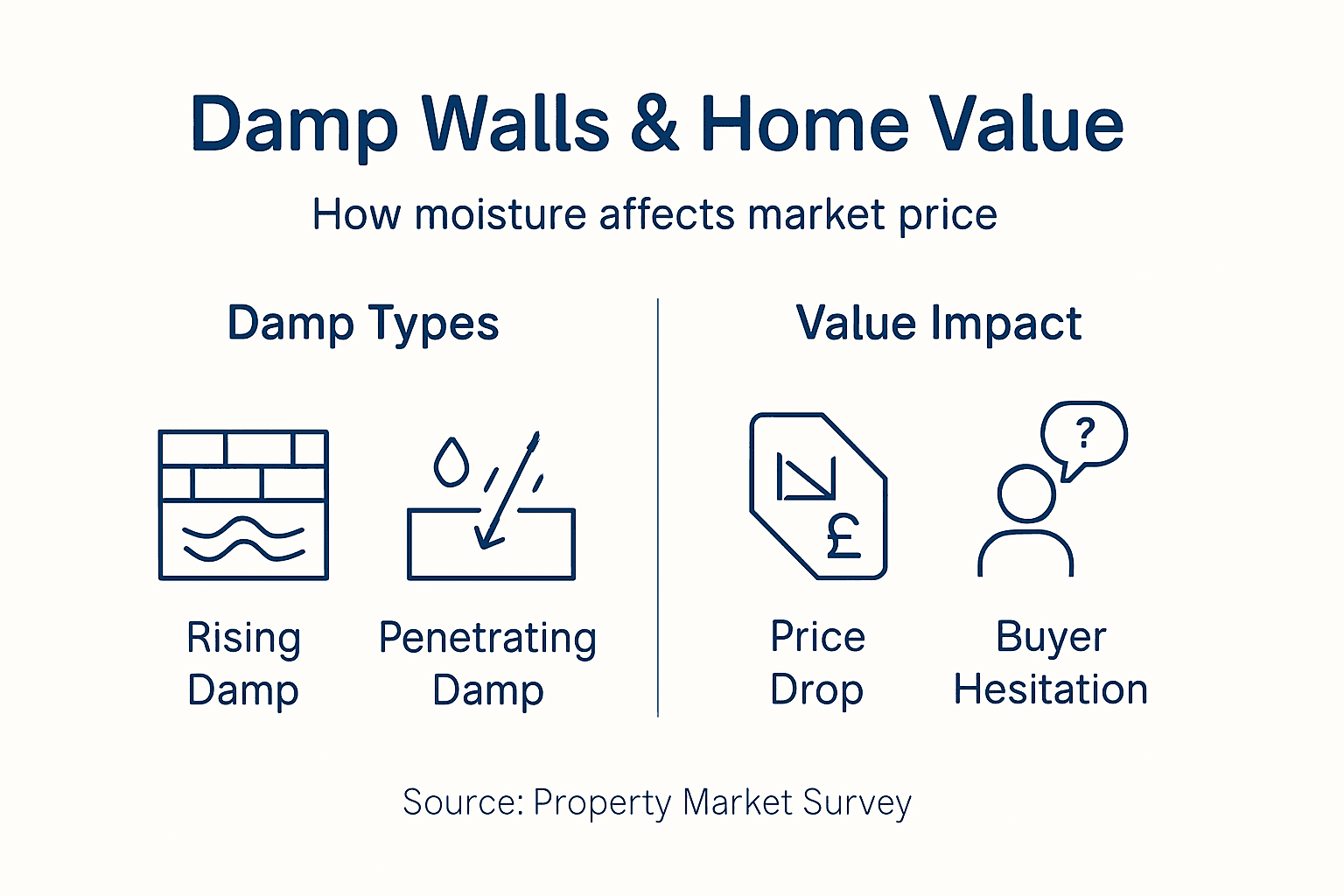
Buyers typically reduce offers by 15 to 25 percent when damp is present. Some refuse to proceed altogether, viewing damp as a sign of neglect and poor maintenance. Estate agents struggle to market damp properties, sitting on the market 30 to 40 percent longer than comparable homes.
The impact on resale extends beyond price reduction. Insurance becomes problematic. Mortgage lenders hesitate. Inspection reports flag structural concerns. What started as a maintenance issue becomes a comprehensive property liability.
Financial Reality Of Delayed Treatment
Treating damp early costs significantly less than addressing structural damage. A waterproofing intervention at year one costs a fraction of repairing rotted timber at year five.
Consider this scenario: ignoring rising damp for three years might increase treatment costs from £2,000 to £8,000. Add structural repairs and the bill escalates to £15,000 or more.
Damp reduces home value by 15-25 percent and extends selling time by 30-40 percent; early treatment is an investment, not an expense.
The financial argument is straightforward. Every month of delay increases risk and costs. Your property’s value deteriorates continuously. Structural damage compounds. Health risks accumulate.
To help prioritise home improvement, compare how delayed damp treatment impacts your property:
| Impact Area | Early Action (Year 1) | Delayed Response (Year 5+) |
|---|---|---|
| Repair costs | £2,000–£4,000 | £8,000–£15,000+ |
| Home resale value | Market price maintained | 15–25% value reduction |
| Structural integrity | No major weakening | Risk of timber/brick failure |
| Health risk | No significant impact | Respiratory and allergy issues |
Pro tip: Document any damp damage with photographs and dates, then obtain quotes for remedial treatment immediately—having professional assessments strengthens your negotiating position if selling and demonstrates responsible property stewardship.
Prevention, Remediation And When To Call Experts
Preventing damp is infinitely cheaper than fixing it. The strategy involves controlling moisture sources, maintaining proper drainage, and addressing problems before they escalate. Some interventions you can manage yourself; others demand professional expertise.
Knowing the difference between DIY maintenance and expert work saves thousands of rands.
Prevention Strategies You Can Implement
Prevention begins with drainage maintenance. Clean gutters quarterly, ensuring water flows freely away from your property. Check downpipes are discharging at least 1.5 metres from foundations.
Simple prevention steps include:
- Clearing blocked gutters and leaf debris
- Ensuring ground slopes away from the house
- Sealing cracks in external walls and foundations
- Checking mortar joints for damage
- Installing or repairing soakaways
- Maintaining external waterproof coatings
- Improving ventilation in bathrooms and kitchens
- Fixing leaking taps and pipes immediately
These actions address the root causes of damp rather than treating symptoms. Consistent maintenance prevents most moisture problems from developing.
When DIY Efforts Fall Short
Rising damp and penetrating damp cannot be resolved with paint or sealant alone. These conditions require systematic intervention that homeowners typically cannot undertake safely.
You need professional help when:
- Damp appears on ground floors or lower walls
- Water stains persist despite improved drainage
- Mould returns repeatedly after cleaning
- Structural materials show deterioration
- Damp affects multiple rooms or large areas
- You cannot identify the damp source
Attempting chemical damp-proof courses yourself risks injecting products incorrectly, trapping moisture and worsening conditions. External waterproofing requires working at height and understanding structural engineering principles.
Professional Remediation Approaches
Specialist waterproofers diagnose accurately before recommending solutions. They assess whether you need chemical treatments, physical barriers, external sealing, or comprehensive solutions combining multiple approaches.
Remedial waterproofing addresses existing damp damage through targeted interventions tailored to your specific damp type and property characteristics.
Professional solutions include:
- Chemical damp-proof course injection
- Physical membrane installation
- External wall sealing and rendering
- Internal moisture barriers
- Structural repairs to compromised areas
- Comprehensive drainage system installation
Each solution requires specific expertise, equipment, and materials. Waterproofing specialists understand South African climate conditions and regional building practices that DIY approaches miss entirely.
Finding And Vetting Professionals
Choose contractors carefully. Verify licensing, insurance, and warranties. Request references and check previous work. Obtain multiple quotes to compare approaches and pricing.
Key evaluation criteria include:
- Current licensing and professional registration
- Comprehensive public liability insurance
- Written warranty on work and materials
- Detailed diagnostic assessment before quoting
- Clear explanations of recommended solutions
- Transparent pricing with no hidden costs
Professional assessment typically costs £150 to £300 but saves thousands by identifying actual problems rather than guessing at solutions.
Professional diagnosis prevents costly mistakes; a £200 assessment prevents £5,000 in wasted treatments on incorrect damp identification.
Delaying professional intervention while attempting DIY solutions often worsens structural damage. Early professional diagnosis catches problems when treatment costs are lowest.
Pro tip: Obtain written assessments from three different waterproofing specialists, comparing their diagnoses and recommended solutions—disagreement between professionals indicates complexity requiring additional investigation before committing to expensive treatments.
Protect Your Home’s Value by Tackling Damp Walls Today
Damp walls cause more than unsightly stains and musty odours—they threaten your property’s structural integrity, reduce resale value by up to 25 percent, and create serious health risks for your family. Understanding whether your home suffers from rising damp, penetrating damp, or condensation is the first step toward a lasting solution. The costly consequences of untreated moisture make early intervention essential.

At Pro Waterproofing, we specialise in diagnosing and resolving all types of damp issues affecting South African homes. Our professional waterproofing services ensure effective remediation tailored to your specific problem so you can prevent further damage and protect your investment. Don’t let damp walls jeopardise your home’s future. Visit our official website now to request a quote, explore expert advice, and connect with trusted waterproofing specialists who prioritise quality, experience, and warranties. Act today to safeguard your home and health before the costs multiply.
Frequently Asked Questions
What are the main causes of damp walls?
Damp walls are primarily caused by rising damp, penetrating damp, condensation damp, and leaks or burst pipes. Each type has distinct causes, such as groundwater rising through masonry for rising damp, external water breaching walls for penetrating damp, and humidity in the air for condensation damp.
How does damp affect the value of my home?
Damp can significantly reduce your home’s market value by 15 to 25 percent and extend the time it takes to sell. Buyers typically perceive damp as a sign of neglect, leading to lower offers or withdrawal from the buying process altogether.
Can I repair damp walls myself?
While minor issues like improving ventilation may be managed through DIY methods, serious damp problems, especially rising or penetrating damp, require professional help to ensure proper diagnosis and treatment. Attempting to fix these issues without expertise can lead to further damage.
What are the health risks associated with damp walls?
Damp walls can foster mould growth, which releases spores into the air and can trigger respiratory infections, allergies, and skin irritation. Vulnerable populations, including children and the elderly, are especially at risk for health complications related to damp environments.
Recommended
- Why Walls Get Damp – Impact on South African Homes
- Common Causes of Damp Walls – Impact on Gauteng Homes
- Preventing & Treating Damp in Internal Walls
- Damp Proofing Walls – Ensuring Healthy South African Homes
- Scheuren in binnenmuren repareren als een professional
- Meble Na Wymiar – Jak Zwiększają Wartość Mieszkania – Emmi Kuchnie – meble kuchenne na wymiar, szafy komandor, kuchnie bydgoszcz, meble na wymiar bydgoszcz, stolarz bydgoszcz
- 6 Crucial Property Viewing Tips for First-Time UK Buyers – Kefihub