

Every year, Gauteng and Western Cape homeowners spend millions repairing water damage that could have been prevented with advanced liquid waterproofing. While the british approach to architecture has left its mark across South Africa, unpredictable rainfall and shifting temperatures continually test the limits of traditional construction. If you want to protect your property’s value and avoid costly repairs, discover how liquid waterproofing delivers seamless, flexible defence against persistent leaks and moisture problems.
Table of Contents
- What Is Liquid Waterproofing And How Does It Work
- Types Of Liquid Waterproofing Systems Compared
- Key Benefits For South African Properties
- How Liquid Options Outperform Torch-On Systems
- Installation Factors And Common Pitfalls
- Maintenance, Lifespan And Cost Insights
Key Takeaways
| Point | Details |
|---|---|
| Liquid Waterproofing Provides Optimal Protection | This method creates a seamless membrane that effectively resists moisture and is adaptable to various surfaces, crucial for South African climates. |
| Two Main Systems Offer Unique Benefits | Modified Bitumen Rubber excels in water retention, while Elastomeric Acrylic prioritises aesthetics and UV resistance, catering to different needs. |
| Proper Installation is Critical | Engaging certified professionals ensures meticulous surface preparation and avoids common pitfalls that can compromise waterproofing effectiveness. |
| Maintenance Extends Lifespan and Value | Regular inspections and prompt repairs can prolong the durability of liquid waterproofing systems, enhancing property value over time. |
What Is Liquid Waterproofing and How Does It Work
Liquid waterproofing represents an advanced protective technique designed specifically for safeguarding residential structures against moisture penetration and water damage in South Africa’s variable climate conditions. This innovative approach involves applying specialised liquid membrane systems directly onto surfaces like roofs, walls, and foundations to create a seamless, continuous protective barrier.
The waterproofing process begins with a comprehensive surface preparation that involves thorough cleaning and inspection. Liquid waterproofing for flat roofs is a multi-step process that requires meticulous attention to detail. Technicians first assess the surface for any existing damage, repairing cracks or imperfections before applying a specialised primer that enhances material adhesion. This preparatory stage is critical in ensuring the liquid membrane will bond effectively and provide long-lasting protection.
Once the surface is prepared, professional waterproofing specialists apply multiple coats of liquid membrane, which can be rolled, sprayed, or brushed depending on the specific surface requirements. The liquid membrane cures and transforms into a fully integrated, joint-free protective layer that can flex and move with building structures. This flexibility is particularly advantageous in regions like the Western Cape and Gauteng, where temperature variations and ground movements can stress traditional waterproofing methods.
Key characteristics of liquid waterproofing include its ability to create a monolithic barrier without seams or joints, which significantly reduces potential water entry points. The method works effectively on various surfaces including concrete, metal, fibreglass, and traditional roofing materials. By forming a continuous membrane, liquid waterproofing provides superior protection against rainfall, humidity, and potential structural water damage.
Pro tip: When considering liquid waterproofing, always request detailed surface preparation documentation and verify the installer’s professional certification to ensure optimal protection for your property.
Types of Liquid Waterproofing Systems Compared
Liquid waterproofing systems in South Africa offer diverse solutions tailored to different architectural requirements and environmental challenges. Two main types of liquid applied flexible waterproofing are particularly popular across residential and commercial properties: Modified Bitumen Rubber and Elastomeric Acrylic Waterproofing. Each system presents unique characteristics designed to address specific waterproofing needs.
Modified Bitumen Rubber waterproofing delivers exceptional performance for water retention areas such as concrete slabs and reservoirs. This robust system creates thick, highly flexible membranes that provide superior protection against moisture penetration. Its seamless application ensures comprehensive coverage, making it ideal for structures requiring maximum water resistance. The material’s inherent elasticity allows it to accommodate structural movements and temperature fluctuations typical in South African building environments.
Elastomeric Acrylic waterproofing, by contrast, offers superior aesthetic qualities and performs optimally on free-draining surfaces like sloped roofs and exterior walls. This lighter-weight system provides excellent UV resistance and can be applied in various colours, allowing property owners to maintain architectural aesthetics while ensuring comprehensive moisture protection. The acrylic-based formulation enables faster curing times and greater versatility across different surface types, from concrete and metal to fibreglass and traditional roofing materials.
When selecting a liquid waterproofing system, property owners must consider critical factors including surface type, expected environmental stress, desired longevity, and aesthetic requirements. Understanding waterproofing system selection involves evaluating each system’s specific performance characteristics against the unique demands of the South African climate.
Pro tip: Always consult professional waterproofing specialists who can conduct a comprehensive site assessment and recommend the most appropriate liquid waterproofing system for your specific property requirements.
Here is a side-by-side comparison of the two main liquid waterproofing systems discussed:
| Characteristic | Modified Bitumen Rubber | Elastomeric Acrylic |
|---|---|---|
| Best for | Flat roofs, concrete, reservoirs | Sloped roofs, exterior walls |
| UV Resistance | Moderate | Excellent |
| Membrane Thickness | Thicker, highly flexible | Lighter, faster curing |
| Aesthetic Options | Limited, mostly black or grey | Multiple colour choices |
| Typical Lifespan | 15–20 years | 10–15 years |
| Application Method | Rolled, sometimes sprayed | Brushed, rolled, or sprayed |
| Key Advantage | Superior for water retention | Enhanced appearance and UV defence |
Key Benefits for South African Properties
Key benefits of liquid waterproofing in South Africa demonstrate why this innovative solution has become increasingly popular among property owners confronting challenging environmental conditions. Liquid waterproofing offers remarkable advantages that extend far beyond traditional protection methods, addressing the unique architectural and climatic demands of South African residential and commercial structures.
The primary advantages include exceptional durability and versatility. Liquid waterproofing systems excel in withstanding harsh ultraviolet radiation and extreme temperature variations characteristic of regions like the Western Cape and Gauteng. Unlike traditional waterproofing techniques, these advanced systems provide a continuous, flexible membrane that can be applied across multiple substrate types including concrete, metal, wood, and fibreglass. This adaptability ensures comprehensive moisture protection while reducing long-term maintenance requirements.

Economic benefits are equally compelling for South African property owners. The ease of application significantly reduces labour costs, with professional installations completing faster than conventional waterproofing methods. These systems offer excellent adhesion properties, preventing moisture ingress that could potentially lead to structural damage, mould growth, and concrete deterioration. Additionally, many liquid waterproofing solutions support aesthetic customisation, allowing property owners to integrate protective coatings that complement existing architectural designs and colour schemes.
Moreover, professional waterproofing solutions provide long-term protection that can substantially increase property value. By preventing water-related structural damages, these systems offer a proactive approach to building maintenance, potentially saving property owners significant repair expenses over time. The ability to refurbish older membranes and apply coloured coatings further enhances both the protective and aesthetic qualities of liquid waterproofing systems.
Pro tip: Prioritise professional assessment and installation to maximise the effectiveness and longevity of your liquid waterproofing investment.
How Liquid Options Outperform Torch-On Systems
Traditional torch-on waterproofing systems have long been the standard for property protection in South Africa, but liquid waterproofing represents a significant technological advancement that addresses many limitations of older membrane techniques. Understanding waterproofing system selection reveals crucial differences that make liquid systems increasingly preferable for modern South African properties.
Unlike torch-on systems that require intense heat application and create potential fire risks during installation, liquid waterproofing offers a seamless, safer application process. The liquid membrane creates a completely continuous protective layer without the overlapping seams typical of traditional torch-applied membranes. This eliminates potential weak points where water might penetrate, providing superior moisture protection. The flexible nature of liquid systems allows them to accommodate structural movements and temperature variations more effectively, reducing the likelihood of cracking or membrane separation that commonly occurs with rigid torch-on alternatives.
Economic advantages further distinguish liquid waterproofing from conventional methods. Installation requires significantly less labour time, reducing overall project costs. The ability to apply the membrane across complex surface geometries – including vertical surfaces, irregular shapes, and intricate architectural details – provides unparalleled versatility. Liquid systems can also be easily repaired and maintained, unlike torch-on membranes that often require complete replacement when damaged. Additionally, many liquid waterproofing solutions offer aesthetic customisation options, allowing property owners to integrate protective coatings that complement existing architectural designs.
The long-term performance benefits of liquid waterproofing are particularly compelling for South African properties. These advanced systems demonstrate superior resistance to ultraviolet degradation, extreme temperature fluctuations, and environmental stressors prevalent in regions like the Western Cape and Gauteng. The materials’ inherent flexibility ensures continued protection over extended periods, potentially extending the structural integrity of buildings by preventing moisture-related deterioration.
Pro tip: Always request a comprehensive comparative assessment from professional waterproofing specialists to understand the specific advantages liquid systems can offer for your unique property requirements.
Installation Factors and Common Pitfalls
Liquid waterproofing installation requires meticulous attention to detail to ensure optimal performance and long-term protection for South African properties. Professional application involves numerous critical considerations that can significantly impact the effectiveness of the waterproofing membrane, making it essential for property owners to understand potential challenges and best practices.
Primary installation factors demand careful substrate preparation and material selection. Surface readiness is paramount, requiring thorough cleaning, drying, and potential repairs before membrane application. The surface must be free from dust, debris, oil, and previous incompatible coatings that could compromise adhesion. Technicians must carefully profile the substrate, ensuring a clean, stable foundation that allows proper membrane bonding. Selecting the correct liquid waterproofing product matched to specific surface types and environmental exposure conditions becomes crucial for achieving comprehensive moisture protection.
Common pitfalls in liquid waterproofing often stem from environmental and application errors. Applying membranes during adverse weather conditions like high humidity, extreme temperatures, or imminent rainfall can compromise material performance. Insufficient coat thickness, improper joint treatments, and inconsistent application techniques frequently lead to membrane failures. Understanding waterproofing system selection helps property owners recognise that each surface demands a tailored approach, with precise primer selection, appropriate curing times, and careful layer application being critical to successful waterproofing.
Technical nuances further distinguish successful liquid waterproofing installations. Professionals must carefully manage membrane thickness, ensuring consistent coverage and addressing potential weak points around architectural features like joints, corners, and penetration points. Compatibility between primers, base coats, and topcoats requires expert knowledge, as mismatched products can lead to premature membrane degradation. Regular post-installation maintenance and periodic professional inspections help identify and address potential issues before they escalate into significant structural problems.
Pro tip: Always engage certified waterproofing specialists who can conduct comprehensive surface assessments and recommend the most appropriate installation strategy for your specific property requirements.
Maintenance, Lifespan and Cost Insights
Liquid waterproofing systems represent a strategic investment for South African property owners, offering comprehensive protection that balances initial expenditure with long-term economic advantages. Understanding waterproofing system selection reveals that lifecycle cost considerations extend far beyond the initial installation expenses.
The maintenance profile of liquid waterproofing distinguishes it from traditional membrane systems. Professional-grade liquid membranes typically demonstrate remarkable durability, with expected lifespans ranging between 10 to 25 years depending on environmental conditions and installation quality. Regular professional inspections every two to three years can substantially extend the membrane’s operational integrity. These assessments help identify potential minor issues before they escalate into significant structural vulnerabilities, thereby protecting the property owner’s initial investment and preventing costly remedial work.
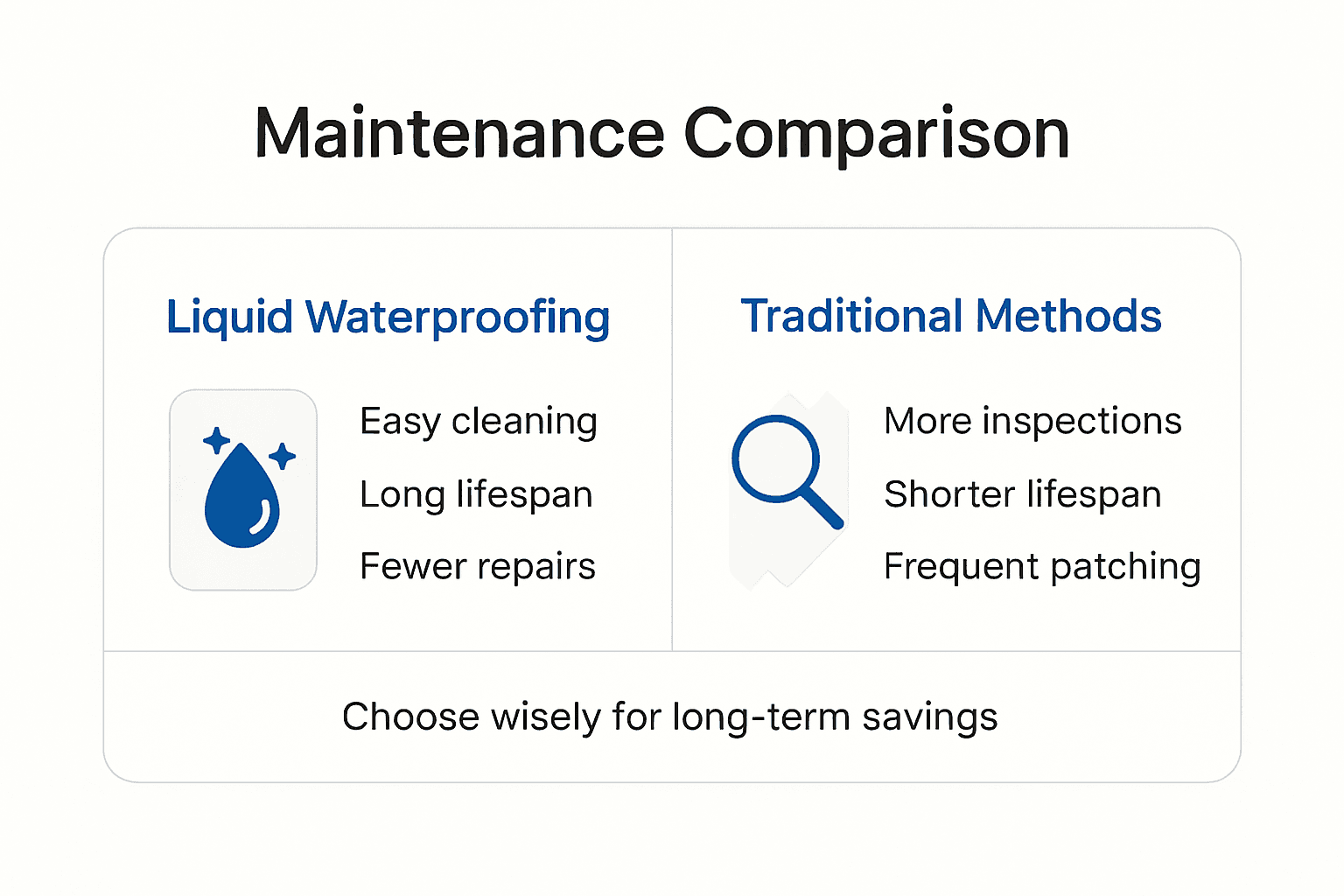
Economic insights demonstrate that whilst liquid waterproofing might present slightly higher upfront costs compared to conventional methods, the long-term financial benefits are substantial. The seamless application reduces labour expenses, minimises future repair requirements, and provides superior protection against moisture-related structural damage. Factors influencing overall cost include surface area, complexity of the architectural design, specific environmental challenges, and the selected liquid waterproofing technology. Property owners in regions like the Western Cape and Gauteng, characterised by extreme temperature variations and significant rainfall, will find these systems particularly cost-effective.
Maintenance requirements for liquid waterproofing systems are relatively straightforward. Periodic cleaning to remove debris, annual visual inspections, and addressing any localised damage promptly can preserve the membrane’s protective capabilities. Professional waterproofing specialists recommend documenting installation details, maintaining manufacturer warranties, and scheduling professional assessments to ensure optimal performance. These proactive strategies not only extend the waterproofing system’s lifespan but also provide critical documentation for potential property valuations and insurance purposes.
Pro tip: Request a comprehensive lifecycle cost analysis from your waterproofing specialist, comparing initial installation expenses against potential long-term maintenance and potential structural damage prevention.
For quick reference, here are essential maintenance and cost insights for liquid waterproofing:
| Aspect | Liquid Waterproofing | Conventional Methods |
|---|---|---|
| Typical Lifespan | 10–25 years with inspections | 5–10 years with repairs |
| Maintenance | Easy cleaning, periodic inspections | Frequent repairs, more disruption |
| Upfront Cost | Slightly higher | Lower, but higher long-term expense |
| Long-Term Value | Reduces major repair risk | Increased chance of future leaks |
| Inspection Cycle | Every 2–3 years recommended | On signs of damage only |
Protect Your South African Home with Expert Liquid Waterproofing Solutions
The challenges of maintaining a secure, moisture-free home in South Africa can feel overwhelming. From fluctuating temperatures to seasonal rains, your property needs a flexible, durable shield against water damage. This article highlights why liquid waterproofing is the smart choice for creating an unbroken barrier that adapts to these stresses. If you are concerned about preventing costly repairs, avoiding mould growth, or simply extending the lifespan of your roof and walls, understanding these advanced systems is key.
Take control today by partnering with professionals who prioritise thorough surface preparation, certified installation, and tailored waterproofing strategies. At Pro Waterproofing, we specialise in bringing the benefits of liquid waterproofing to South African residential and commercial properties. Whether you need comprehensive advice or a detailed quote, start by exploring our Uncategorized – Pro Waterproofing resources for trusted insights. Don’t wait for water damage to undermine your investment. Visit our main site and connect with experienced contractors ready to safeguard your property now.
Frequently Asked Questions
What is liquid waterproofing and how does it work?
Liquid waterproofing is a protective technique that involves applying specialised liquid membranes onto surfaces to create a seamless barrier against moisture penetration. The process includes thorough surface preparation, followed by multiple coats of the liquid membrane that cure to form a continuous, flexible layer.
What are the advantages of using liquid waterproofing compared to traditional methods?
Liquid waterproofing offers superior flexibility, seamless coverage, and enhanced UV resistance. Unlike traditional torch-on systems, it creates fewer weak points and accommodates structural movements better, which reduces the risk of cracking and separating over time.
How long does liquid waterproofing last?
The typical lifespan of liquid waterproofing systems ranges from 10 to 25 years, depending on factors such as the quality of installation, environmental conditions, and regular maintenance, which includes periodic inspections and prompt repairs of any damage.
What factors should be considered when selecting a liquid waterproofing system?
Key factors include the type of surface to be waterproofed, expected environmental stressors, desired longevity, and aesthetic requirements. Consulting professional waterproofing specialists can help property owners choose the most suitable system for their specific needs.
Recommended
- What Is Liquid Waterproofing and How It Protects Properties
- Understanding the Importance of Waterproofing in South Africa – Pro Waterproofing
- Why Waterproofing Matters for South African Properties
- Role of Waterproofing Coatings – Protecting South African Property
- Water Leak Detection In Sacramento: Expert Guide For Homeowners | Legacy Plumbing & Drain