

Water damage is now one of the fastest-growing threats for homeowners in Gauteng and Western Cape, with repairs climbing every year. When leaks strike, even british building standards recommend strong multi-layer waterproofing systems to safeguard concrete and timber structures. Understanding the core elements behind effective waterproofing can help you defend your property from costly structural deterioration and hidden mould outbreaks. Discover practical strategies proven to reduce risk and boost long-term value in South African homes.
Table of Contents
- Core Elements Of A Waterproofing System
- Types Of Waterproofing Materials Used
- Layer Structure And How It Functions
- Typical Installation Methods Explained
- Risks Of Poor Or Incomplete Systems
Key Takeaways
| Point | Details |
|---|---|
| Comprehensive Systems Are Essential | A robust waterproofing system combines multiple layers to effectively prevent moisture intrusion and protect structural integrity. |
| Material Selection Matters | Different waterproofing materials cater to specific substrates and environmental conditions, influencing long-term performance. |
| Proper Installation Is Crucial | Accurate installation methods, including heat fusion and adhesive bonding, are vital for achieving effective waterproofing and preventing system failures. |
| Annual Assessments Recommended | Regular evaluations of waterproofing systems can help identify vulnerabilities, preventing costly repairs associated with inadequate moisture protection. |
Core Elements Of A Waterproofing System
A comprehensive waterproofing system represents a multi-layered defence mechanism designed to protect structures from moisture penetration. At its core, these systems encompass several critical components that work synergistically to prevent water intrusion and potential structural damage. Key waterproofing terminology involves understanding the intricate relationship between different protective layers and application techniques.
The primary elements of an effective waterproofing system typically include substrate preparation, membrane application, and protective layers. Substrate preparation involves creating a clean, stable surface that allows optimal adhesion of waterproofing materials. This might require repairing surface imperfections, removing loose debris, and ensuring proper gradient and smoothness. The membrane layer constitutes the primary water-resistant barrier, which can be composed of synthetic materials like heat-fused membranes or reinforced waterproofing compounds designed to create an impermeable seal.
Additional critical components include drainage systems, sealants, and protective top coats that enhance the overall performance and longevity of the waterproofing solution. These elements help manage water runoff, seal potential micro-cracks, and provide additional resistance against environmental stressors. Different substrates such as concrete surfaces, balconies, terraces, and below-ground structures require tailored waterproofing approaches that consider specific environmental conditions and structural characteristics.
Pro tip: Always conduct a comprehensive site assessment before selecting your waterproofing system to ensure you choose materials perfectly matched to your specific structural requirements and environmental challenges.
Types Of Waterproofing Materials Used
Waterproofing materials represent a critical defence against moisture infiltration, with each type offering unique characteristics tailored to specific structural requirements. Materials selection varies significantly depending on substrate conditions, environmental challenges, and architectural specifications across South African properties.
The primary categories of waterproofing materials include bituminous membranes, liquid applied membranes, sheet membranes, and cementitious coatings. Bituminous membranes, composed of modified asphalt compounds, provide excellent waterproofing for flat roofs and underground structures. Liquid applied membranes offer seamless protection and can be easily applied to complex surface geometries, making them ideal for areas with irregular contours or multiple penetration points. Sheet membranes, typically manufactured from synthetic polymers, deliver robust, pre-fabricated barriers that can be mechanically fastened or heat-welded onto surfaces.
Cementitious coatings represent another crucial waterproofing material, particularly effective for concrete structures and below-ground applications. These mineral-based compounds create a rigid, protective layer that integrates directly with the substrate, offering exceptional resistance to water pressure. Comprehensive waterproofing material guides highlight the importance of selecting materials compatible with specific environmental conditions, substrate types, and anticipated structural movements.
Pro tip: Conduct thorough substrate analysis and moisture testing before selecting waterproofing materials to ensure optimal compatibility and long-term performance.
The following table compares common waterproofing materials by application area, durability, and typical usage:
| Material Type | Best Application Area | Average Durability | Typical Usage Scenario |
|---|---|---|---|
| Bituminous Membrane | Flat roofs, basements | 15-20 years | Commercial and residential flat roofs |
| Liquid Applied Membrane | Balconies, irregular surfaces | 10-15 years | Complex architectural contours |
| Sheet Membrane | Underground structures | 20+ years | Retaining walls, tunnels |
| Cementitious Coating | Concrete surfaces | 10-12 years | Lift pits, water tanks, foundations |
Layer Structure And How It Functions
Waterproofing systems are engineered with a sophisticated multi-layer structure designed to provide comprehensive moisture protection. Technical specifications detail the precise compositional requirements for creating an effective barrier against water infiltration across diverse structural environments.
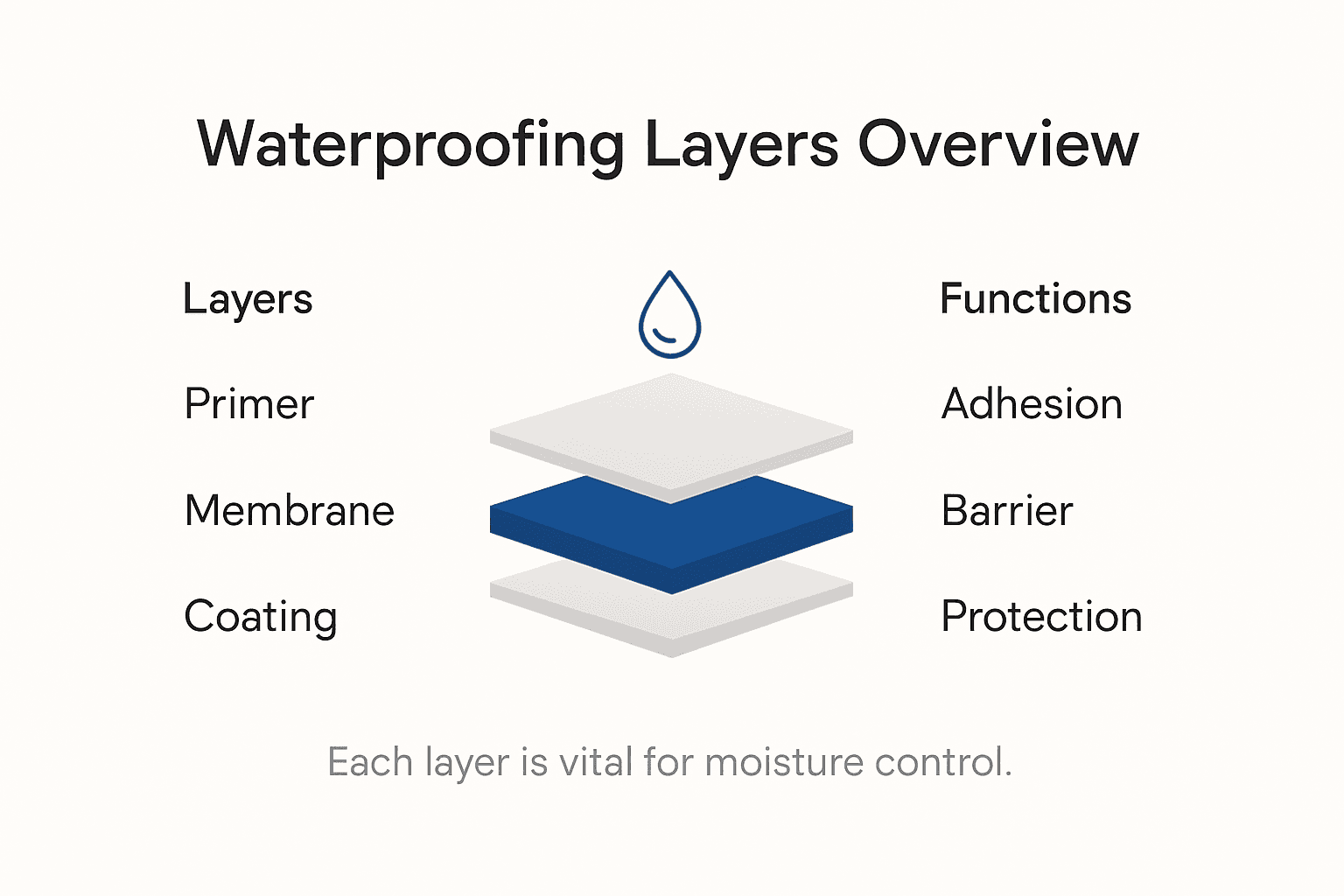
The typical waterproofing layer structure comprises three primary components: primer layer, waterproof membrane, and protective surfacing. The primer layer serves as a critical foundation, ensuring optimal adhesion between the substrate and subsequent waterproofing materials. This initial layer prepares the surface by addressing micro-irregularities and creating a receptive interface for the waterproof membrane. The membrane itself represents the primary defence mechanism, constructed to provide absolute impermeability and resist water penetration under various pressure conditions.
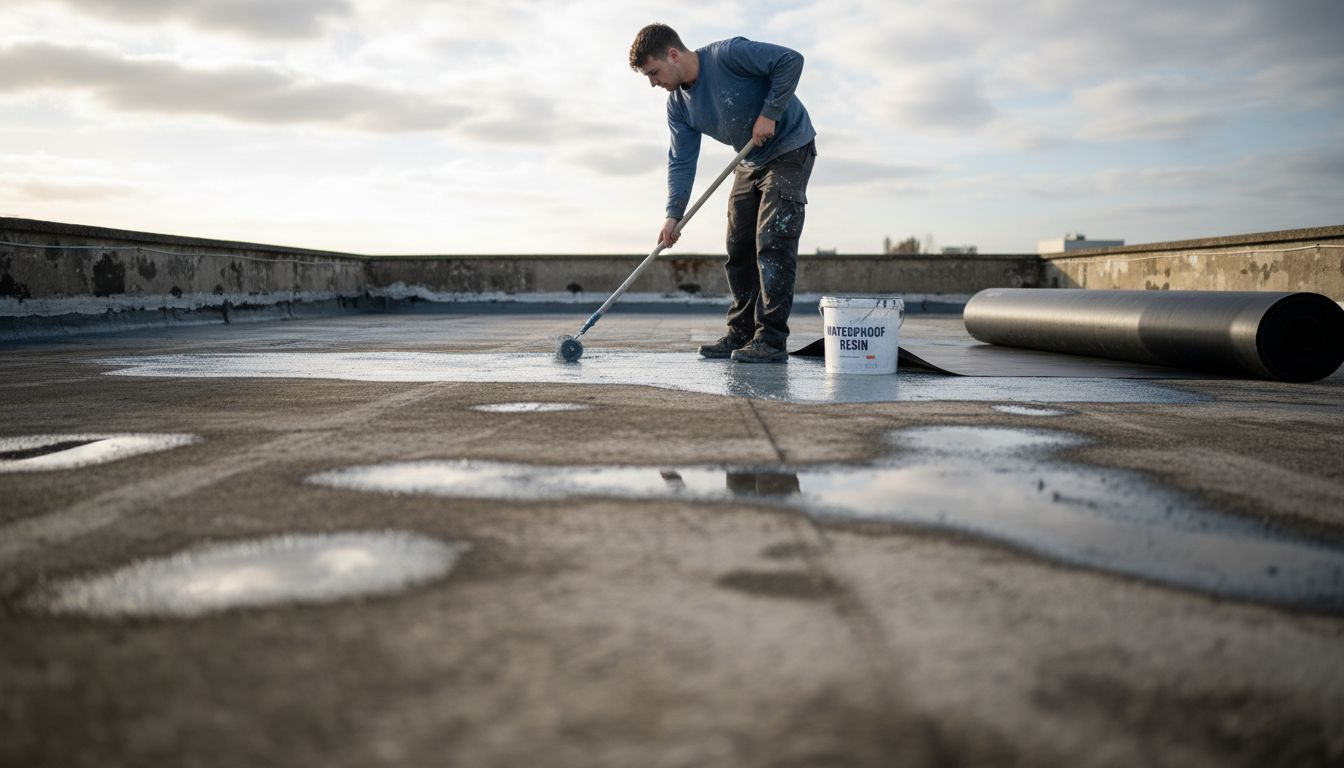
The protective surfacing represents the final strategic layer, designed to shield the underlying membrane from mechanical damage, ultraviolet degradation, and environmental stressors. South African National Standards specify that this top layer must maintain structural integrity for a minimum design life of 10 years, ensuring long-term protection. Different substrate materials require tailored layer compositions, with variations in material thickness, composition, and application techniques to address specific environmental challenges encountered in regions like coastal areas, industrial zones, and high-moisture environments.
Pro tip: Ensure each waterproofing layer is professionally installed with precise overlap and seamless integration to prevent potential moisture infiltration points.
Typical Installation Methods Explained
Waterproofing installation represents a precise and methodical process requiring specialised technical expertise and meticulous attention to detail. Installation techniques vary significantly depending on substrate characteristics, environmental conditions, and specific structural requirements across different South African environments.
The primary installation methods include heat fusion, adhesive bonding, and mechanical fastening. Heat fusion techniques involve carefully melting membrane edges to create seamless, watertight connections, particularly effective for synthetic polymer-based materials. Adhesive bonding utilises specialised chemical compounds to secure waterproofing membranes directly onto prepared surfaces, ensuring maximum surface contact and eliminating potential water infiltration points. Mechanical fastening involves systematically attaching membranes using mechanical anchors, which proves especially useful for surfaces with challenging structural configurations or those experiencing significant thermal expansion.
Comprehensive installation protocols mandate rigorous preparation stages that include thorough substrate cleaning, precise surface profiling, and application of specialised primer layers. These preparatory steps are critical for ensuring optimal membrane adhesion and long-term performance. Different installation approaches are tailored to specific environments such as coastal regions with high salt exposure, industrial zones with chemical challenges, and urban settings with complex architectural requirements.
Pro tip: Always conduct comprehensive substrate moisture testing and surface evaluation before commencing waterproofing installation to prevent potential adhesion failures.
Here’s a summary of installation methods and their suitability for different structures:
| Installation Method | Ideal Structure Type | Pros | Common Limitation |
|---|---|---|---|
| Heat Fusion | Large flat surfaces | Seamless joins, robust seal | Requires specialised equipment |
| Adhesive Bonding | Complex geometries | Flexible application | Sensitive to substrate moisture |
| Mechanical Fastening | Thermal expansion areas | Easy retrofit capability | Potential for leak at anchor points |
Risks Of Poor Or Incomplete Systems
Inadequate waterproofing systems present substantial risks that extend far beyond superficial moisture problems, potentially compromising entire structural integrity and creating significant financial liabilities for property owners. The consequences of poorly executed waterproofing can manifest through progressive and often hidden damage that accumulates silently within building structures.
The primary risks associated with incomplete waterproofing systems include structural deterioration, mould proliferation, and accelerated material degradation. Moisture infiltration initiates a cascade of destructive processes, beginning with subtle surface damage and progressing to comprehensive structural compromises. Water penetration can cause concrete reinforcement to corrode, wooden structural elements to rot, and create ideal environments for fungal growth that poses serious health risks to occupants. In coastal and high-humidity regions of South Africa, these risks are dramatically amplified by environmental conditions that accelerate material breakdown and moisture-related structural challenges.
Water Research Commission studies highlight that incomplete waterproofing systems can lead to exponential repair costs, with potential damages often exceeding ten times the original waterproofing installation expense. Critical failure points include inadequate membrane sealing, poor substrate preparation, inappropriate material selection, and installation errors that create microscopic pathways for water penetration. These vulnerabilities can result in comprehensive structural damage, reducing building lifespan and creating potentially dangerous living or working environments.
Pro tip: Invest in professional comprehensive moisture diagnostics and waterproofing assessments annually to identify and address potential system vulnerabilities before they escalate into major structural problems.
Protect Your Property with Expert Waterproofing Solutions
Understanding the critical components of a waterproofing system is essential to safeguard your home or business from costly moisture damage and structural risks. If you are facing challenges such as ineffective membrane application or poor substrate preparation, it is vital to work with specialists who understand key waterproofing terminology and provide tailored, multi-layered defence systems designed for South African conditions. Proper installation and material selection are crucial to avoid issues like mould proliferation and structural deterioration.
Take the next step towards comprehensive moisture protection by exploring professional services that prioritise quality, experience, and proven installation methods. Discover how our expert team at Pro Waterproofing can help you navigate these challenges and secure your property with confidence. Brighten your knowledge with our detailed articles and practical guidance available through our Uncategorized – Pro Waterproofing section.
Ready to protect your property from water damage before it escalates? Visit Pro Waterproofing today to request a tailored waterproofing assessment and engage with trusted South African specialists who deliver durable results. Your building deserves a waterproofing solution designed with precision and care.
Frequently Asked Questions
What are the core elements of a waterproofing system?
The core elements typically include substrate preparation, membrane application, and protective layers, all of which work together to prevent moisture penetration and structural damage.
What types of waterproofing materials are commonly used?
Common types of waterproofing materials include bituminous membranes, liquid applied membranes, sheet membranes, and cementitious coatings, each offering unique benefits suited to various applications.
How does the layer structure of a waterproofing system function?
A waterproofing system generally consists of a primer layer for adhesion, a waterproof membrane for impermeability, and a protective surfacing layer that shields the membrane from damage and environmental stressors.
What are the risks associated with poor waterproofing?
Poor waterproofing can lead to structural deterioration, mould proliferation, and accelerated material degradation, ultimately resulting in costly repairs and compromised safety for occupants.