

Water damage can turn a dream home in Gauteng into a nightmare if waterproofing is misunderstood or neglected. With the region’s mix of heavy summer downpours and shifting clay soil, trusted solutions for leaks and dampness truly matter. Many homeowners believe waterproofing is just a cosmetic fix or lasts forever, but South African standards highlight that only a combination of durable materials and regular maintenance prevents long-term damage. Discover how separating myth from fact helps you protect your investment and choose reliable contractors who deliver real results.
Table of Contents
- Understanding Waterproofing and Common Myths
- Main Waterproofing Methods and Price Ranges
- Essential Features of Professional Waterproofing
- Factors That Influence Waterproofing Cost
- Mistakes to Avoid and How to Compare Quotes
- Selecting Reliable Waterproofing Contractors
Key Takeaways
| Point | Details |
|---|---|
| Myth: Waterproofing is a one-time fix. | Waterproofing systems require reassessment every 5 to 10 years due to degradation from environmental factors. |
| Myth: All waterproofing products are the same. | Different waterproofing methods serve distinct purposes, with varying applications and lifespans. |
| Professional assessment is crucial. | Reliable contractors perform thorough site evaluations to identify and address specific water management needs. |
| Don’t compromise on quality for cost. | Cheaper options often lead to expensive remediations; invest in professional waterproofing for lasting results. |
Understanding Waterproofing and Common Myths
Waterproofing is one of those home maintenance topics where myths run deeper than the water damage itself. You’ve probably heard claims like “waterproofing is just cosmetic,” or “once sealed, it lasts forever.” These misconceptions can cost you thousands in preventable damage. Understanding what waterproofing actually does, and what it doesn’t, puts you in control of protecting your Gauteng home from the relentless humidity, summer rains, and occasional flooding that characterise our region.
Let’s start with the fundamentals. Waterproofing is not a single product or process. It’s a comprehensive strategy that prevents water from entering your building structure. Unlike simple sealants that only surface coat, proper waterproofing addresses water penetration pathways through multiple layers and methods, as outlined in South African building standards. This means combining materials, design techniques, and installation methods that work together. Think of it like an umbrella with multiple layers rather than a single sheet. The complexity is exactly why many homeowners get confused about what they’re actually paying for and what results they should expect.
Here are the most damaging myths we encounter regularly:
-
Myth 1: Waterproofing is a one-time fix. Reality: Waterproofing systems degrade over time. Membranes crack, sealants shrink, and adhesives fail. In Gauteng’s climate with extreme temperature fluctuations, most waterproofing applications need reassessment every 5 to 10 years, depending on the system type and environmental exposure.
-
Myth 2: All waterproofing products are the same. Reality: There’s enormous variation. Liquid membranes, sheet membranes, cementitious coatings, and bituminous systems each have different applications, durability periods, and costs. What works for a basement doesn’t necessarily work for a roof. This is why different waterproofing systems serve different purposes.
-
Myth 3: Waterproofing will stop all water ingress forever. Reality: Even properly installed waterproofing requires maintenance. Cracks in structural elements can propagate beyond the membrane. Drainage systems can block. Water always finds routes if given enough time and pressure. Waterproofing dramatically reduces water penetration, but it’s part of a broader moisture management strategy.
-
Myth 4: You don’t need waterproofing if you have good drainage. Reality: Drainage and waterproofing work together, not as substitutes. Good drainage channels water away from your home, whilst waterproofing stops any water that does reach your walls or foundation. Both are essential. Missing either one leaves you vulnerable.
-
Myth 5: Waterproofing costs are excessive. Reality: Costs vary enormously based on area, system type, and property condition. A small bathroom might cost R2,500 to R5,000, whilst a full basement waterproofing could range from R15,000 to R50,000 or more. The actual expense depends on your specific situation, not on a fixed idea of what waterproofing “should” cost.
Understanding these myths helps you ask better questions when getting quotes. Rather than assuming waterproofing is a permanent solution or that all contractors offer the same thing, you’ll know to discuss expected lifespan, specific system types, and maintenance requirements. You’ll also understand why a basement waterproofing approach differs from roofing or external wall waterproofing.
Here’s a summary comparing common waterproofing myths with the reality behind each:
| Myth Description | Reality Explained |
|---|---|
| Waterproofing is only cosmetic | It protects against structural water damage |
| Works forever after one application | Systems require periodic reassessment |
| All products are alike | Each type suits different situations |
| Good drainage means no need for waterproofing | Both are essential for full protection |
| Waterproofing is always too expensive | Cost depends on area, method, and condition |
Many of these misconceptions stem from conflating waterproofing terminology. Waterproofing, damp proofing, and water resistance are different things serving different purposes. A complete explanation of key waterproofing terminology clarifies these distinctions, helping you navigate contractor conversations with confidence.
The research from institutions like the Washcentre at the University of KwaZulu-Natal emphasises that effective waterproofing relies on scientific and engineering-based practices tailored to South African climates. This means the best waterproofing solution for your Johannesburg home accounts for local rainfall patterns, soil conditions, foundation type, and existing damage. Generic solutions rarely deliver expected results.
Pro tip: When requesting quotes, ask contractors specifically about the expected lifespan of their proposed waterproofing system, what maintenance it requires, and whether they provide warranties covering water ingress for at least two years after completion.
Main Waterproofing Methods and Price Ranges
Waterproofing isn’t a one-size-fits-all solution. Your Gauteng home might need liquid membrane applied to a basement wall, whilst your neighbour requires sheet membrane for their roof. Each method has distinct advantages, limitations, and costs. Understanding what separates these approaches helps you avoid overpaying for unnecessary features or worse, choosing an unsuitable system that fails within years.
Let’s examine the main waterproofing methods available in South Africa and what you can expect to pay. The reinforced and non-reinforced waterproofing methods specified in South African building standards provide the technical foundation for these approaches, with variations in complexity directly affecting your final costs.
Liquid Membrane Waterproofing
Liquid membranes are applied as viscous coatings that cure into flexible, protective layers. They work exceptionally well on complex surfaces with irregular shapes, corners, and penetrations. Contractors spray, brush, or roll these products onto walls, foundations, and wet areas. The flexibility means they accommodate minor structural movement without cracking.
Price range for liquid membranes typically runs between R150 and R400 per square metre, depending on the product quality, number of coats required, and site accessibility. A standard 20-square-metre basement wall might cost R3,000 to R8,000 including labour. The main advantage is their adaptability to existing structures. The drawback involves longer cure times before the area can be used or finished.
Sheet Membrane Waterproofing
Sheet membranes are pre-manufactured roll materials installed across surfaces to create continuous protective barriers. They come as bituminous sheets, synthetic polymer sheets, or rubber membranes. Installation involves rolling them out, securing them with adhesives or mechanical fasteners, and overlapping seams.
Sheet membranes cost between R80 and R300 per square metre for the material alone, with installation labour adding R200 to R400 per square metre depending on complexity. A full basement installation covering 50 square metres might total R14,000 to R35,000. These systems excel on flat surfaces and large roof areas. They’re less suitable for heavily textured or curved surfaces where membranes struggle to maintain contact.
Cementitious Waterproofing
Cementitious systems are rigid, mineral-based coatings that bond directly to concrete and masonry. They work by blocking water pathways through the substrate itself, making them particularly effective for new construction or areas where flexibility isn’t critical. They’re also breathable, allowing trapped moisture to escape whilst preventing new water entry.
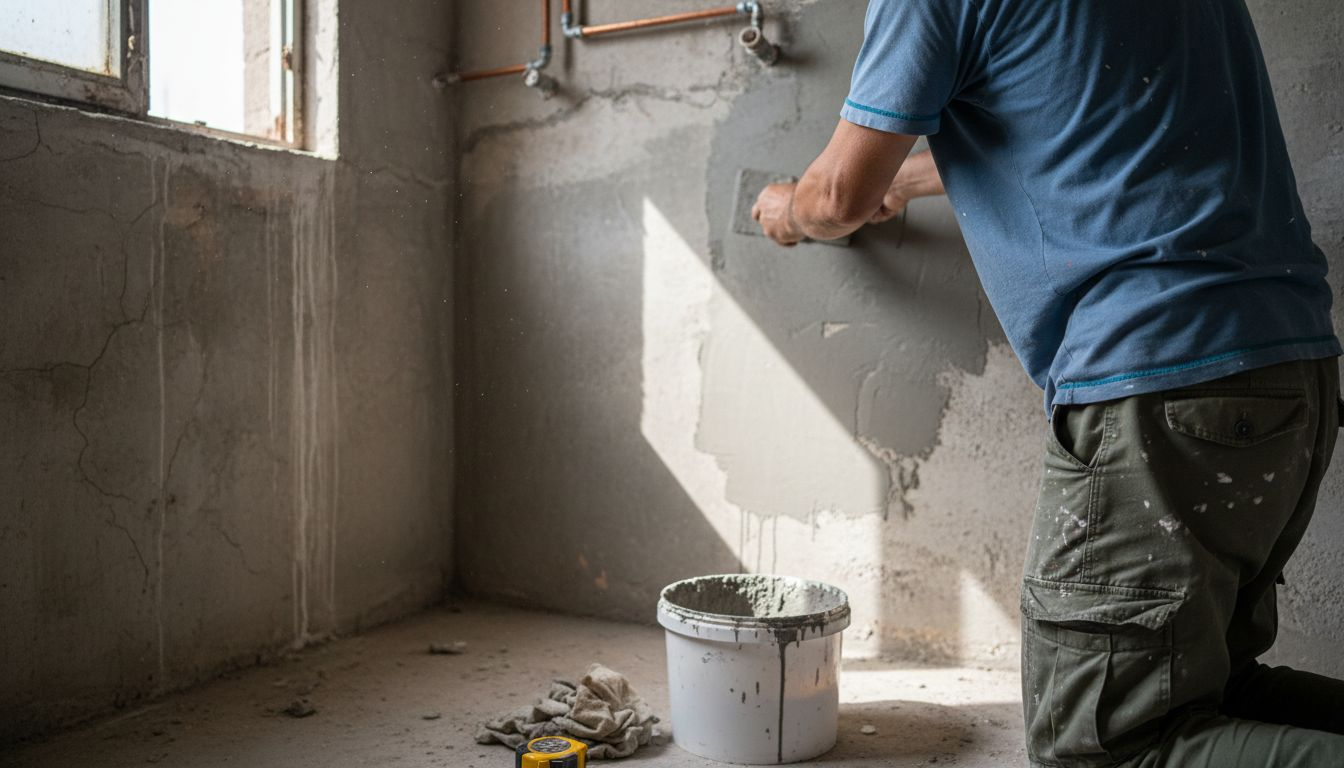
Expect to pay R80 to R200 per square metre for materials and labour combined. A bathroom renovation using cementitious waterproofing on 15 square metres costs roughly R1,200 to R3,000. These systems are affordable and straightforward but cannot bridge cracks larger than a few millimetres. If your concrete has significant structural cracks, you’ll need repair work first.
Bituminous Waterproofing
Bituminous membranes are the workhorse of South African waterproofing. They’re durable, affordable, and proven over decades. These are typically hot-applied or self-adhesive sheet systems that stick directly to substrates. They’re particularly common for foundation waterproofing and basement applications.
Bituminous systems range from R60 to R250 per square metre installed. Full foundation waterproofing for an average Gauteng home often falls between R8,000 and R25,000. The lifespan typically extends 15 to 20 years in our climate. One limitation is their reduced flexibility in extreme cold, though Gauteng rarely experiences this issue.
Comparison Table: Methods Side-by-Side
| Method | Cost Per m² | Typical Application | Durability | Best For |
|---|---|---|---|---|
| Liquid Membrane | R150-R400 | Bathrooms, complex surfaces | 10-15 years | Irregular shapes |
| Sheet Membrane | R280-R700 | Roofs, large areas | 15-20 years | Flat surfaces |
| Cementitious | R80-R200 | Interior walls, bathrooms | 10-12 years | New work, budget solutions |
| Bituminous | R60-R250 | Foundations, basements | 15-20 years | Below-ground structures |
Your actual costs depend heavily on site conditions. If your foundation requires cleaning, crack repair, or surface preparation, add R30 to R100 per square metre. Difficult access, complex geometry, or weather delays all increase final expenses. A contractor working on a straightforward basement faces different challenges than one navigating multiple roof angles and skylights.
When comparing quotes, ensure contractors specify which method they’re recommending and why. Different properties genuinely benefit from different approaches. A modern townhouse with clay brick walls needs different consideration than a 1980s double-storey with foundation cracks. The cheapest quote isn’t always the best value. A R3,000 foundation waterproofing that fails within five years costs considerably more than a R6,000 system lasting fifteen.
Understanding common waterproofing materials helps you evaluate whether contractors are recommending appropriate products for your specific situation. Each material class serves distinct purposes with measurable performance differences.
Pro tip: Request itemised quotes showing material costs separately from labour costs, application methods, and expected warranty periods, allowing you to compare contractors fairly rather than just accepting the lowest total figure.
Essential Features of Professional Waterproofing
There’s a significant difference between basic waterproofing and professional waterproofing. Not all contractors deliver the same standard of work. When you hire a professional, you’re not just paying for materials and labour. You’re paying for expertise, quality assurance, compliance with standards, and accountability. Understanding what separates genuine professionals from weekend warriors helps you distinguish between contractors worth hiring and those who’ll leave you with costly problems.
Professional waterproofing incorporates several non-negotiable features that amateur work simply lacks. First, proper site assessment. A professional contractor examines your property thoroughly, identifying water entry points, existing damage, structural issues, and environmental factors specific to your location. They ask detailed questions about previous water damage, drainage patterns, and your property’s history. This assessment determines the appropriate method and materials for your situation. Second, surface preparation. This cannot be overstated. Poor preparation ruins even premium materials. Professionals clean substrates thoroughly, repair cracks, remove loose material, and create proper adhesion surfaces. This phase often takes longer than the actual waterproofing application, yet many budget contractors skip or rush through it. Third, material standards and application techniques that comply with Gauteng regulations and industry specifications ensure your waterproofing actually works as intended rather than becoming a temporary cosmetic fix.
Professional waterproofing also means proper documentation and warranties. Reputable contractors provide written specifications detailing exactly what they’re doing, which materials they’re using, application methods, and expected outcomes. They offer warranties typically covering 2 to 10 years depending on the system, guaranteeing their work against leaks caused by faulty installation. This warranty provides peace of mind and recourse if problems emerge. Amateur installers rarely offer warranties because they lack the financial backing and accountability to honour them.
Quality control is another hallmark of professional work. Experienced contractors conduct multiple inspections throughout the project. They test membranes for adhesion, check coating thickness, verify overlaps are correct, and ensure curing times are met before subsequent work begins. They photograph each stage for documentation purposes. This meticulous approach prevents the common scenario where waterproofing appears complete but fails months later due to application errors. Professional contractors also understand maintenance requirements. They explain how to care for your waterproofing system, what warning signs indicate problems, and when professional inspection becomes necessary. Contractors affiliated with industry bodies like the Waterproofing Association of Gauteng meet strict membership criteria related to workmanship quality and ethical conduct, giving you assurance that they operate to recognised standards.
Key Features to Look For
- Full site assessment before quoting indicating the contractor understands your specific situation
- Written specifications detailing materials, methods, timelines, and warranty terms
- Proper surface preparation consuming a meaningful portion of the project timeline
- Licensed and insured contractors protecting you against liability claims
- Verifiable references from previous Gauteng clients with similar properties
- Transparent pricing showing material and labour costs separately rather than vague single figures
- Maintenance guidance explaining how to preserve your waterproofing investment
- Project management including weather planning, access arrangements, and completion timelines
Professional waterproofing also accounts for your property’s specific environmental context. Gauteng experiences particular challenges: intense summer rains, significant temperature variations, clay-based soils that retain water, and varied property ages from Victorian properties to modern townhouses. A professional contractor adjusts their approach accordingly. They know which methods work best for your specific soil conditions, which materials resist Gauteng’s temperature extremes, and how to handle the structural variations between 1920s properties and 2000s constructions. They’ve likely completed dozens of projects in your area and understand local conditions that imported contractors miss entirely.
The cost of professional waterproofing appears higher than amateur alternatives. A professional job costs 20 to 40 percent more than the cheapest quote you’ll receive. However, that premium delivers systems lasting 15 to 20 years rather than 3 to 5 years. The warranty provides legal recourse if water damage occurs. The documentation creates an asset record for insurance purposes. Most importantly, professional waterproofing actually stops water. Amateur work often fails, requiring expensive remedial work that ultimately costs far more than investing in professionalism from the start.
Understanding why professional waterproofing matters helps you evaluate contractor claims and make decisions that protect your investment rather than gambling on budget alternatives that frequently disappoint.
Pro tip: Request proof of professional membership, insurance certificates, and references from at least three previous clients in Gauteng with similar properties, then actually contact those references to ask specifically about whether water ingress occurred after completion.
Factors That Influence Waterproofing Cost
Waterproofing costs vary wildly across Gauteng, and there’s usually a good reason behind price differences. You might receive quotes ranging from R2,000 to R15,000 for what appears to be the same project. The variation isn’t random or exploitative. It reflects genuine differences in project complexity, site conditions, material choices, and contractor expertise. Understanding these cost drivers prevents you from making poor decisions based on comparing incomparable quotes. A cheap quote often reflects shortcuts you’ll regret within years, whilst a high quote might simply reflect unnecessary work or premium materials you don’t actually need.
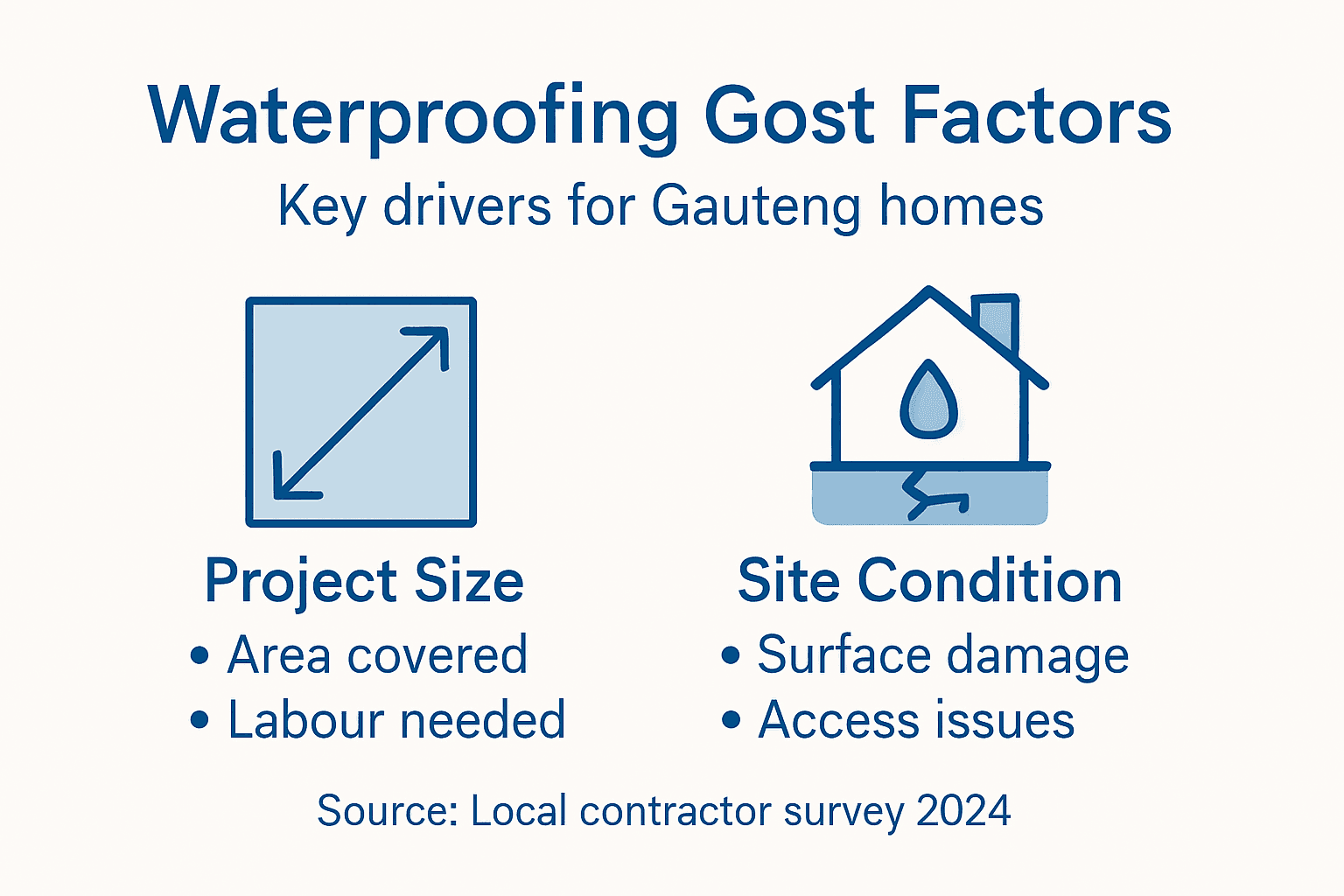
The largest cost influence is your property’s surface condition. If your concrete is clean, structurally sound, and relatively new, waterproofing costs sit at the lower end of ranges. Add cracks, spalling, crumbling mortar, or previous failed waterproofing, and costs jump significantly. A contractor must remove old failed membranes, repair structural damage, clean contaminated surfaces, and sometimes rebuild sections entirely. A basement wall requiring crack injection before waterproofing costs 40 to 60 percent more than one requiring only basic cleaning. Surface preparation frequently represents 20 to 40 percent of total project cost, yet homeowners often assume it’s included in material costs. When contractors provide low quotes, they’re usually cutting preparation time, which guarantees future problems. The cost determinants for waterproofing including surface condition and accessibility directly influence whether your final bill sits at R70 or R500 per square metre.
Key Cost Influencing Factors
Property Size and Area
Larger projects typically cost less per square metre due to economies of scale. A 10-square-metre bathroom waterproofing might cost R300 to R400 per square metre, whilst a 100-square-metre roof project could cost R150 to R250 per square metre. Fixed costs like site setup, material delivery, and contractor travel spread across more area on larger projects.
Accessibility and Location
Projects requiring scaffold hire, rope access, or specialised equipment cost substantially more. A ground-floor bathroom costs far less than roof waterproofing or a fourth-storey exterior wall. Inner-city properties where parking is difficult and site access limited add labour costs. Rural properties requiring longer travel time from contractor bases increase expenses. A straightforward basement in a suburban Johannesburg home costs significantly less than similar work in a Sandton high-rise or a remote Bronkhorstspruit property.
Material Selection
Premium membranes cost more than budget alternatives. Liquid polyurethane membranes outperform cheap bituminous products but cost triple the price. Contractors cannot honestly quote identical prices for completely different material grades. A contractor offering budget bituminous and another quoting premium liquid membrane will differ substantially in price. This difference reflects genuine quality variation. However, comparing quotes using identical materials allows you to evaluate contractor pricing more fairly.
Existing Water Damage
Properties with existing damp patches, mould growth, or visible seepage require additional remedial work. Treating black mould before waterproofing adds R500 to R2,000 to costs. Removing water-damaged plasterboard, treating affected timber, or addressing structural moisture adds time and materials. A property with no water damage history costs considerably less than one requiring damage remediation alongside waterproofing.
Method Complexity
Complex geometries cost more than simple flat surfaces. A straightforward basement wall costs less than a roof with multiple angles, skylights, roof vents, and chimneys. Irregular shapes, curved surfaces, or numerous penetrations require more careful installation and additional materials for overlaps and transitions.
Structural Repairs Required
If cracks exceed 5 millimetres, spalling is extensive, or concrete is severely deteriorated, contractors must repair before waterproofing. These repairs consume project time and materials. A structurally sound property requires minimal intervention. One requiring significant concrete repair becomes substantially more expensive.
Labour Costs and Contractor Overhead
Experienced contractors with established businesses, proper insurance, and reliable reputations typically charge more than less established operators. This reflects their higher overhead costs, better quality outcomes, longer-lasting workmanship, and warranty backing. Cheaper operators often lack insurance, proper licensing, or business stability. Their lower costs come from cutting corners, not superior efficiency.
Seasonal and Weather Factors
Waterproofing during summer’s heavy rain season requires weather protection and extended drying times. Winter works face cold temperatures affecting material cure times. Summer offers faster curing but potential weather delays. Projects scheduled during ideal conditions cost less than those competing against weather challenges.
Understanding the impact of key cost drivers can guide expectations:
| Factor Affecting Cost | Impact on Project |
|---|---|
| Property surface condition | Major repairs increase total price |
| Accessibility challenges | Raises labour and equipment expenses |
| Material quality chosen | Premium options cost significantly more |
| Existing water damage | Requires additional remedial steps |
Understanding Price Variation
When evaluating waterproofing quotes, ensure contractors are quoting identical conditions. Request specifications stating exactly which factors drive their pricing. A quote should itemise surface condition assessment, necessary repairs, preparation costs, material selection, application method, and labour separately. This transparency reveals whether price differences reflect genuine variations or quote padding. Two quotes differing by 30 percent might reflect different material grades or surface condition assessments. Quotes differing by 100 percent warrant serious questioning about what each contractor is actually including.
Your Gauteng location, specific property type, and existing conditions create your unique cost scenario. A quote appropriate for your neighbour’s identical property might be completely wrong for yours if underlying conditions differ. Professional contractors assess your specific situation thoroughly before quoting. Those offering quick estimates over the phone without site visits are signalling that they’re not performing proper evaluations.
Pro tip: Request three quotes from different contractors for the exact same scope of work, then ask each contractor to explain specifically why their quote differs from the others rather than assuming the cheapest option represents the best value.
Mistakes to Avoid and How to Compare Quotes
Comparing waterproofing quotes feels straightforward until you actually start gathering them. Three different contractors provide three wildly different numbers, specifications, and timelines. One mentions materials you’ve never heard of. Another includes work the first contractor didn’t mention. A third comes in at half the price but offers minimal detail about what that covers. Most homeowners make critical errors at this stage, selecting contractors based on incomplete information or mismatched comparisons. These mistakes lead to poor outcomes: inadequate waterproofing that fails within years, unexpected cost overruns mid-project, or discovering too late that your contractor lacks proper licensing and insurance.
The most common mistake is accepting vague quotes without detailed scope documentation. A contractor quoting “R8,000 for basement waterproofing” provides no useful information. Does this include surface preparation? Which materials? How many coats? What’s the warranty? What happens if unexpected repairs become necessary? Vague quotes prevent meaningful comparison. When problems arise post-completion, vague documentation becomes your enemy. You cannot hold a contractor accountable for unspecified work. Professional contractors provide written specifications detailing exactly what they’ll do, which materials they’re using, application methods, expected timeline, and warranty terms. If a contractor resists providing detailed specifications in writing, that’s a red flag. They’re either disorganised, inexperienced, or deliberately keeping details vague to avoid accountability.
Common Comparison Mistakes
Comparing Incomparable Quotes
You cannot fairly compare quotes using different materials or methods. Contractor A quoting liquid membrane at R250 per square metre and Contractor B quoting bituminous sheet at R120 per square metre appear different in price but serve different purposes and have different lifespans. Request identical specifications from all contractors so you’re genuinely comparing like with like. Ask each contractor to quote using the same material grade, application method, and scope of work. Only then can price differences reveal genuine variations in contractor efficiency or overhead costs.
Ignoring Credential Verification
A low quote from an unlicensed, uninsured contractor carries hidden risks. If water damage occurs post-completion, you cannot claim against their professional indemnity insurance because they don’t have any. If a worker gets injured on your property, you’re liable. Some contractors operate legally and transparently. Others operate in grey areas, avoiding proper registration and insurance to undercut licensed competitors. Request proof of business registration, liability insurance, professional indemnity insurance, and any relevant waterproofing certifications. Legitimate contractors provide this documentation readily. Those who hesitate or refuse are signalling trouble ahead.
Missing Warranty Details
Common waterproofing mistakes including failing to verify contractor credentials highlights how homeowners overlook essential protections. Warranties matter tremendously. A contractor offering a 2-year guarantee against water ingress provides recourse if leaks occur. One offering no warranty accepts no responsibility for outcomes. Warranty terms should specify exactly what’s covered. Does it cover leaks caused by structural movement? Does it cover damage caused by poor drainage? What about leaks from neighbouring properties? Does the warranty transfer to future owners? These details separate meaningful protection from worthless promises.
Not Assessing Site Conditions Equally
Two contractors quoting the same property can reach completely different conclusions about required preparation work. One assesses your basement wall as relatively clean and quotes minimal cleaning. Another discovers underlying dampness, mould, and previous failed waterproofing, recommending extensive remedial work. The second contractor’s higher quote reflects their honest assessment. Comparing these quotes fairly requires understanding why they differ. Ask each contractor to explain their assessment of your property’s condition. Are they recommending the same level of preparation? If not, why? This conversation reveals whether one contractor is cutting corners or whether they’ve identified issues the other missed.
Overlooking Labour Cost Breakdown
When reviewing quotes, request labour costs separated from material costs. Comparing detailed quotes by reviewing labour costs and material specifications helps you identify genuine cost drivers. A contractor charging R200 per hour for three weeks of work differs significantly from one charging R150 per hour for five weeks. The second might appear cheaper overall but represents slower progress or less experienced workers. Labour cost breakdown reveals whether contractors are quoting similar timelines and productivity. It also helps you understand value. Experienced contractors typically work faster than inexperienced ones, completing projects in fewer hours despite potentially higher hourly rates.
How to Compare Quotes Effectively
- Request written specifications from all contractors detailing identical scope of work, materials, methods, and warranty
- Verify each contractor’s licensing, insurance, and professional credentials before accepting their quote
- Understand why quotes differ by asking each contractor to explain their assessment and recommendations
- Review labour costs and material costs separately rather than comparing total figures alone
- Assess warranty terms carefully, ensuring they provide meaningful protection against water ingress
- Check references from previous clients in Gauteng with similar properties, asking specifically about post-completion water issues
- Request itemised quotes showing surface preparation costs, material costs, labour costs, and contingency buffers separately
- Avoid selecting based purely on lowest price, instead focusing on value relative to contractor qualifications and warranty strength
The mistake that costs most is selecting a contractor based on lowest price without considering qualifications, warranty, and scope clarity. You’ll regret this decision within months when water returns and your cheap contractor vanishes or blames external factors they excluded from their scope.
Pro tip: Create a comparison spreadsheet listing each contractor’s material specification, labour rate, timeline, warranty period, and total cost, then add a final column scoring overall value considering these factors holistically rather than fixating on the lowest total price.
Selecting Reliable Waterproofing Contractors
Selecting the right waterproofing contractor determines whether your investment protects your home for decades or fails within years. This decision deserves more thought than simply calling three companies and choosing the cheapest quote. The contractor you hire will access your property, apply products that affect your home’s structural integrity, and provide warranties you may need to rely upon. A poor choice creates expensive problems. A good choice delivers peace of mind and genuine protection. Reliable contractors share identifiable characteristics that distinguish them from less scrupulous operators. Learning these characteristics helps you identify trustworthy professionals among the numerous options available in Gauteng.
Experience matters tremendously in waterproofing. This isn’t like painting where mistakes merely look untidy. Waterproofing errors lead to structural damage, mould growth, and costly remedial work. Contractors with 10 to 20 years of experience have encountered Gauteng’s varied property types, challenging soil conditions, and climate extremes. They’ve learned what works and what fails. They understand the specific challenges facing 1920s Victorian properties versus modern townhouses. Experienced contractors can diagnose water entry problems accurately and recommend appropriate solutions. When interviewing potential contractors, ask specifically about their experience with properties similar to yours. A contractor experienced in commercial roof waterproofing may lack the detailed knowledge required for residential basement work. Specialisation indicates deeper expertise in specific applications.
Key Selection Criteria
Professional Credentials and Licensing
Reliable contractors maintain proper business registration, appropriate licensing, and professional insurance. Request proof of business registration with the Companies and Intellectual Property Commission. Verify their liability insurance covers waterproofing work. Professional indemnity insurance protects you if mistakes cause damage. Ask about any professional memberships with industry bodies. Contractors affiliated with organisations like the Waterproofing Association of Gauteng meet recognised standards and maintain professional conduct. Those unwilling to provide credential documentation are signalling problems. Legitimate contractors keep these documents readily available and discuss them openly.
Site Assessment and Diagnostic Approach
A reliable contractor performs thorough site assessment before quoting. They examine your property carefully, asking detailed questions about water damage history, drainage patterns, previous repair attempts, and environmental factors. This assessment typically takes 30 to 60 minutes for residential projects. Contractors rushing through assessments or quoting over the phone without visiting your property are cutting corners. Their rushed approach suggests they may cut corners during installation too. Detailed assessment demonstrates professionalism and ensures appropriate recommendations for your specific situation.
Reference Verification from Previous Clients
Request references from at least five previous clients with similar properties in Gauteng. Contact those references directly. Ask specifically whether water ingress occurred after completion, whether the contractor responded to problems, and whether they’d hire the same contractor again. References provide genuine insight into actual outcomes. A contractor unwilling to provide references is hiding something. Many reliable contractors have worked on projects throughout Gauteng and can connect you with satisfied customers in your area.
Written Specifications and Transparent Pricing
Reliable contractors provide written specifications before work begins. These documents detail exactly what they’ll do, which materials they’re using, application methods, expected timeline, and warranty terms. They separate material costs from labour costs, allowing you to understand pricing. They explain why certain methods or materials are appropriate for your situation. Contractors providing clear written documentation demonstrate professionalism and create accountability. Vague, verbal quotes from contractors who avoid documentation are major red flags.
Warranty and Guarantee Commitments
Reliable contractors stand behind their work with meaningful warranties. A 2 to 10-year guarantee against water ingress caused by faulty installation demonstrates confidence in their work and provides you with recourse if problems emerge. Read warranty terms carefully. What exactly is covered? What situations are excluded? Does the warranty transfer to future owners? A contractor offering genuine warranty protection has confidence their work will perform as promised. Those offering no warranty accept no responsibility for outcomes.
Quality Control and Documentation Practices
During project discussions, ask how contractors ensure quality control. Do they conduct inspections at multiple stages? Do they test membranes for proper adhesion? Do they verify coating thickness and overlaps? Do they photograph project stages for documentation? These practices demonstrate professionalism. Contractors who answer vaguely or seem unconcerned about quality control may cut corners during installation. Professional contractors document their work thoroughly, creating records you can reference if problems emerge and providing evidence of proper installation.
Evaluation criteria for appointing waterproofing contractors
Gauteng Province’s government guidance outlines technical capability and compliance evaluation criteria for selecting contractors. These official standards cover experience, technical knowledge, safety compliance, and quality assurance. Using government-recognised evaluation criteria helps you assess contractor suitability objectively rather than relying solely on gut feeling.
Red Flags to Avoid
Certain characteristics should eliminate a contractor from consideration entirely:
- Pressure to decide quickly or pay upfront before work begins
- Unwillingness to provide written specifications or detailed quotes
- No insurance or liability coverage documentation
- Reluctance to provide references or proof of previous work
- Vague answers about materials, methods, or warranties
- Significantly lower pricing than other qualified contractors
- Negative online reviews mentioning water damage post-completion
- Operators working from vehicles without established offices or phone numbers
These red flags indicate contractors cutting corners or operating without proper accountability. Avoid them regardless of quoted price. The cheapest option frequently delivers the most expensive problems.
Pro tip: Contact each contractor’s references and specifically ask whether water ingress occurred after completion and how long ago they completed the project, as recent work with satisfied clients provides better assurance than testimonials from years earlier.
Protect Your Gauteng Home with Expert Waterproofing Solutions
Understanding waterproofing costs and methods is only the first step towards safeguarding your property from costly water damage. At Pro Waterproofing, we know the frustration homeowners face when confronting myths, unclear quotes, and unreliable contractors. If you are grappling with questions about the best waterproofing approach for your foundation, walls, or roof, it is time to trust professionals who prioritise quality, transparency, and lasting results.
Avoid expensive mistakes and insecure warranties by choosing experts who conduct thorough site assessments, use industry-approved materials, and offer clear maintenance guidance. Whether you need liquid membrane, bituminous systems, or cementitious coatings, our specialists tailor solutions to Gauteng’s unique climate and soil conditions. Learn more about how to evaluate contractors and waterproofing options on our Uncategorized – Pro Waterproofing page.
Take control of your home’s moisture management today. Visit https://prowaterproofing.co.za to request a detailed quote backed by professional warranties and expert advice. Protect your investment now by connecting with trusted specialists who stand behind their work every step of the way.
Frequently Asked Questions
What factors influence the cost of waterproofing a home?
The cost of waterproofing can vary based on several factors including the property’s size, accessibility, the condition of the surfaces, material choices, existing water damage, and the complexity of the waterproofing method selected.
How often should waterproofing systems be reassessed or replaced?
Waterproofing systems generally need reassessment every 5 to 10 years. Environmental factors and the type of system used can affect how long the waterproofing remains effective.
What are the main types of waterproofing methods, and how do their costs compare?
The primary waterproofing methods include liquid membranes, sheet membranes, cementitious waterproofing, and bituminous waterproofing. Costs typically range from R60 to R700 per square metre, depending on the method and material selected.
Is professional waterproofing worth the investment over amateur options?
Yes, professional waterproofing typically lasts longer and comes with warranties, ensuring better protection against water damage. Although it may cost more upfront, it prevents costly repairs and failures that can occur with amateur work.