

Property owners across South Africa lose thousands of Rands annually repairing water damage that could have been prevented. Roof waterproofing offers a strategic solution, protecting structures from moisture infiltration whilst delivering substantial long-term savings. Investing early in quality waterproofing systems costs far less than reactive repairs, making it essential for safeguarding property value and avoiding escalating maintenance expenses.
Table of Contents
- Introduction To Roof Waterproofing In South Africa
- How Waterproofing Protects Roofs And Structures
- Types Of Roof Waterproofing Systems And Their Suitability
- Cost Considerations And Investment Value Of Roof Waterproofing
- Energy Efficiency And Additional Benefits Of Waterproofing
- Legal And Regulatory Framework For Roof Waterproofing In South Africa
- Common Misconceptions And Mistakes In Roof Waterproofing
- Practical Steps To Invest In Roof Waterproofing Successfully
- Protect Your Property With Expert Roof Waterproofing Solutions
- Frequently Asked Questions
Key takeaways
| Point | Details |
|---|---|
| Cost prevention | Water damage repairs typically cost three to five times more than initial waterproofing investment. |
| System variety | Torch-on bitumen, liquid membranes, and cool roof systems offer different durability levels and pricing. |
| Energy savings | Proper waterproofing reduces heat absorption, lowering cooling costs and improving thermal comfort. |
| Regulatory compliance | Adhering to SANS 10400-L standards ensures legal safety, insurance validity, and market value. |
| Maintenance value | Regular inspections every few years extend waterproofing lifespan and catch issues before costly failures. |
Introduction to roof waterproofing in South Africa
Roof waterproofing creates a protective barrier preventing water from penetrating roofing materials and underlying structures. This process involves applying specialised membranes or coatings designed to repel moisture whilst withstanding environmental stresses. For South African property owners, understanding roof waterproofing basics becomes crucial given the country’s diverse climate patterns.
South Africa experiences intense rainfall during summer months in many regions, combined with harsh UV exposure and temperature fluctuations. Coastal areas face additional challenges from salt-laden air accelerating material degradation. These conditions create perfect scenarios for water infiltration through compromised roof surfaces, leading to structural damage, mould growth, and deteriorating building materials.
Without adequate waterproofing, property owners face numerous consequences:
- Structural weakening from moisture seeping into concrete, timber, and steel components
- Interior damage to ceilings, walls, and furnishings from persistent leaks
- Health hazards arising from mould and mildew thriving in damp environments
- Decreased property values due to visible water damage and maintenance neglect
- Escalating repair costs as problems compound over time
The benefits of professional waterproofing extend beyond mere leak prevention. Early investment in quality waterproofing systems functions as preventive maintenance, addressing vulnerabilities before they evolve into expensive emergencies. This proactive approach saves property owners substantial amounts whilst maintaining structural integrity and occupant comfort.
How waterproofing protects roofs and structures
Waterproofing systems work by creating impermeable barriers that block moisture penetration at multiple levels. Modern membranes bond directly to roof substrates, forming seamless protective layers that redirect water away from vulnerable areas. This barrier prevents moisture from reaching underlying materials where it would otherwise cause progressive deterioration.
Once water infiltrates roofing materials, it initiates destructive processes. Moisture causes concrete to crack through freeze-thaw cycles, rusts steel reinforcements, rots timber structures, and degrades insulation effectiveness. Waterproofing membranes halt these processes by keeping water on the roof surface where drainage systems can manage it safely.
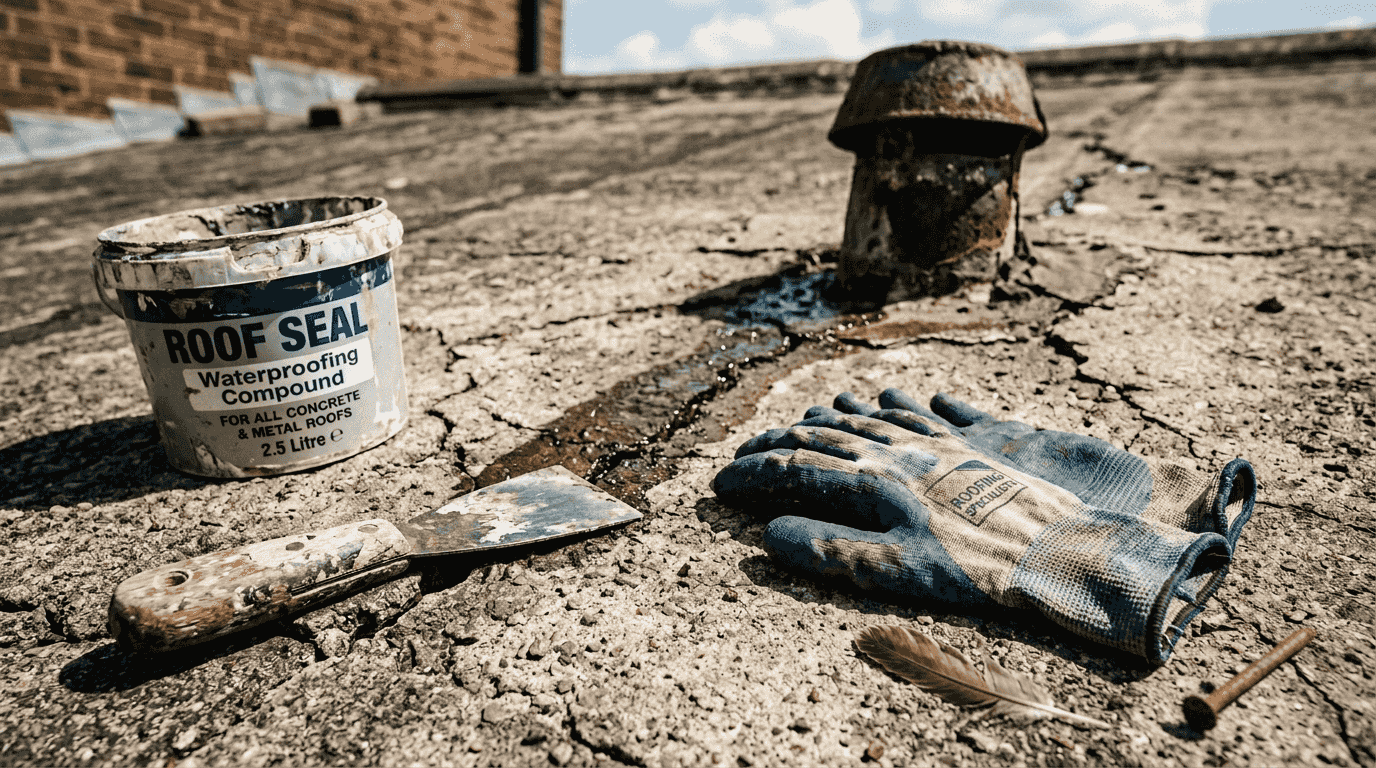
Proper waterproofing extends roof lifespan by 10-20 years depending on materials and installation quality. This extension represents enormous value considering replacement costs for entire roofing systems. By protecting the substrate and structural components, waterproofing preserves the roof’s load-bearing capacity and overall functionality.
Key protective mechanisms include:
- Preventing capillary action that draws moisture into porous materials
- Blocking pathways for water migration through joints, seams, and penetrations
- Resisting UV degradation that compromises membrane integrity over time
- Maintaining flexibility to accommodate thermal expansion and structural movement
- Providing redundant protection layers in critical high-risk zones
Quality waterproofing transforms roofs from vulnerable surfaces into robust protective shells, dramatically reducing repair frequency and associated costs throughout the building’s lifespan.
Choosing appropriate waterproofing materials matched to your roof type ensures optimal protection. Different systems offer varying degrees of flexibility, UV resistance, and adhesion characteristics suited to specific applications and environmental exposures.
Types of roof waterproofing systems and their suitability
South African property owners can choose from several established waterproofing technologies, each offering distinct advantages depending on roof configuration and budget constraints.
Torch-on bitumen membranes represent traditional, proven solutions involving layered sheets bonded using heat application. These systems typically last 15 to 20 years with proper installation and maintenance. They excel on flat or low-slope roofs, providing robust protection against standing water. Installation requires experienced contractors due to fire safety considerations during torch application.
Liquid-applied membranes offer seamless coverage ideal for complex roof geometries with numerous penetrations, parapets, and irregular surfaces. Applied as liquids that cure into flexible, monolithic barriers, these systems eliminate seam vulnerabilities present in sheet membranes. They accommodate structural movement better than rigid alternatives and typically deliver 10 to 15 years of service. Application simplicity makes them suitable for maintenance and repair projects.
Cool roof waterproofing technologies incorporate reflective coatings that deflect solar radiation whilst providing moisture protection. These systems reduce surface temperatures substantially, lowering cooling loads and extending membrane lifespan by reducing thermal stress. They prove particularly valuable in hot interior regions where cooling costs represent significant operational expenses.
| System Type | Lifespan | Cost Range (R/m²) | Best Applications |
|---|---|---|---|
| Torch-on bitumen | 15-20 years | R150-R300 | Flat roofs, large commercial buildings |
| Liquid membranes | 10-15 years | R200-R400 | Complex geometries, residential properties |
| Cool roof coatings | 10-12 years | R100-R250 | High UV exposure, energy efficiency priority |
| Polyurethane systems | 12-18 years | R250-R500 | Premium applications, extreme durability needs |
When choosing the best waterproofing type, consider these factors:
- Roof slope and drainage characteristics affecting water accumulation patterns
- Substrate condition and compatibility with different membrane adhesion requirements
- Expected foot traffic and maintenance access needs
- Budget constraints balanced against desired lifespan and performance
- Local climate factors including UV intensity, rainfall patterns, and temperature ranges
Pro Tip: Select waterproofing systems with proven track records in your specific climate zone rather than choosing based solely on initial cost, as regional performance varies significantly.
Cost considerations and investment value of roof waterproofing
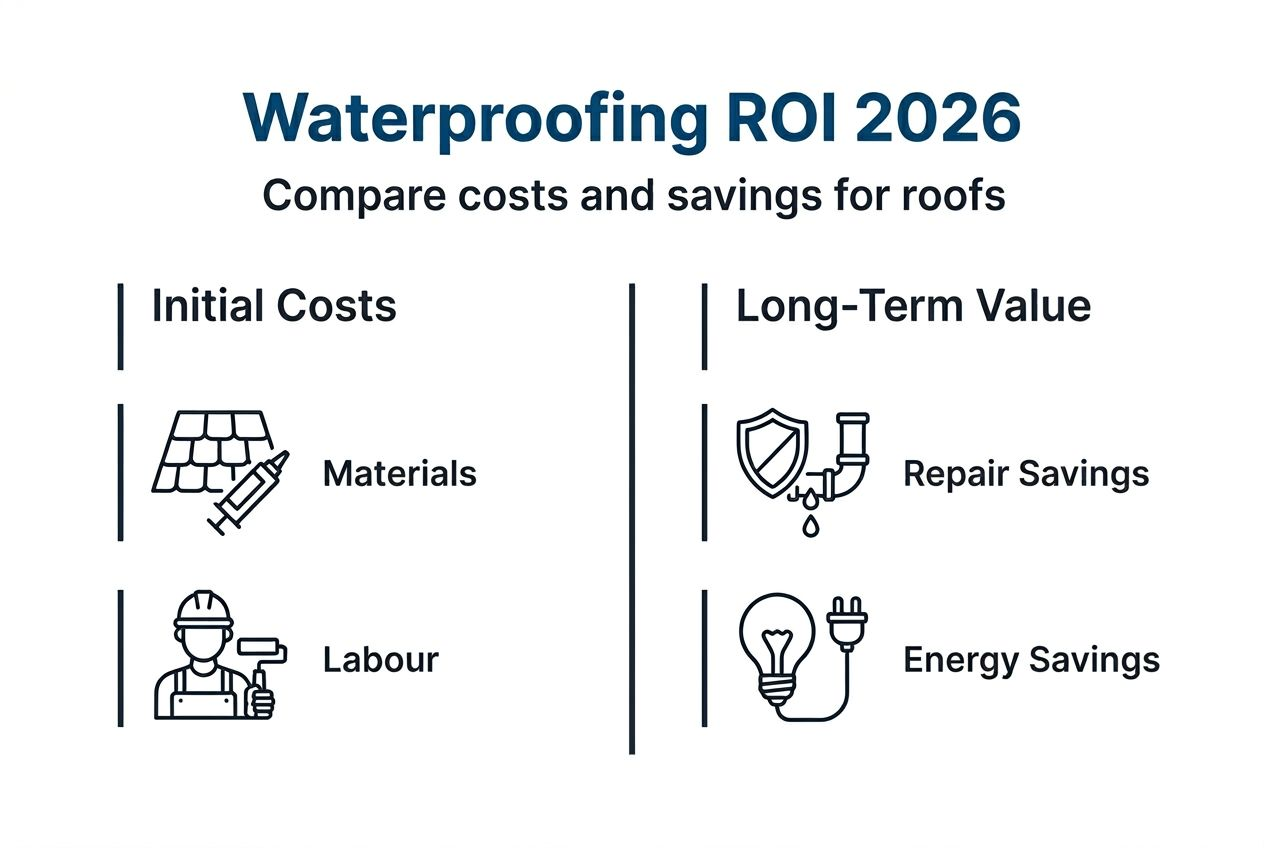
Understanding waterproofing costs requires examining both immediate expenses and long-term financial implications. In 2026, roof waterproofing costs range between R75 and R500 per square metre depending on materials and roof condition. This variance reflects system quality, roof accessibility, preparation requirements, and labour complexity.
The true value emerges when comparing waterproofing investment against repair costs. Water damage repairs typically cost three to five times more than proactive waterproofing. A leak causing ceiling damage, structural repairs, and mould remediation can easily exceed R50,000, whilst preventing that same leak through quality waterproofing might cost R15,000 for a typical residential roof section.
| Scenario | Waterproofing Cost | Potential Repair Cost | Net Savings |
|---|---|---|---|
| 100m² flat roof | R20,000-R35,000 | R80,000-R150,000 | R45,000-R115,000 |
| Complex residential | R30,000-R50,000 | R120,000-R200,000 | R70,000-R150,000 |
| Commercial building | R60,000-R100,000 | R250,000-R500,000 | R150,000-R400,000 |
Several factors influence final pricing:
- Roof condition requiring extensive preparation or substrate repairs before waterproofing
- System selection balancing upfront cost against expected lifespan and warranty coverage
- Roof complexity involving multiple levels, penetrations, or difficult access
- Professional assessment identifying hidden issues that must be addressed
- Seasonal demand fluctuations affecting contractor availability and pricing
Pro Tip: Request detailed quotes breaking down material and labour costs separately, allowing you to understand where your investment goes and compare proposals accurately.
Investing in durable, properly installed waterproofing delivers compounding returns through reduced maintenance, extended roof life, lower energy costs, and preserved property values. The initial expense transforms from a cost into a strategic investment protecting your most valuable asset.
Energy efficiency and additional benefits of waterproofing
Beyond moisture protection, quality roof waterproofing contributes significantly to energy efficiency and occupant health. Cool roof waterproofing systems reduce heat absorption by reflecting solar radiation rather than absorbing it. Surface temperatures can drop by 20 to 30 degrees Celsius compared to traditional dark membranes, substantially lowering heat transfer into building interiors.
This thermal regulation translates directly into reduced cooling costs. Properties with reflective waterproofing systems experience lower air conditioning loads, cutting electricity consumption during hot months. For commercial buildings and larger residential properties, these savings accumulate to thousands of Rands annually whilst reducing carbon footprints and environmental impact.
Waterproofing prevents moisture accumulation that creates ideal conditions for mould and mildew growth. These biological contaminants release spores and mycotoxins causing respiratory issues, allergic reactions, and other health problems. By maintaining dry conditions, waterproofing protects occupant health and eliminates costly remediation projects.
Additional benefits include:
- Reduced maintenance frequency as waterproofing protects substrate materials from deterioration
- Improved indoor air quality through elimination of dampness and associated odours
- Extended intervals between major roof repairs or replacement projects
- Enhanced property marketability as buyers value well-maintained, protected structures
- Lower insurance premiums in some cases due to reduced water damage risk
These compound advantages demonstrate how waterproofing investment delivers value across multiple dimensions beyond simple leak prevention. Property owners gain financial, health, and comfort benefits that justify initial costs many times over throughout the system’s lifespan.
Legal and regulatory framework for roof waterproofing in South Africa
South African building regulations mandate specific waterproofing standards ensuring structural safety and longevity. The SANS 10400-L standard governs waterproofing requirements for buildings, specifying performance criteria, installation methods, and material specifications.
Compliance with these standards carries legal weight. Non-compliant waterproofing can void insurance coverage, create liability for property owners, and result in enforcement actions requiring expensive corrective work. Municipalities may refuse occupancy certificates or building approvals if waterproofing fails to meet regulatory requirements.
Proper compliance delivers several advantages:
- Insurance validity ensuring claims for water damage receive proper consideration and payment
- Legal protection against liability claims from tenants or occupants suffering damage
- Enhanced property values as buyers and valuers recognise compliant, professionally installed systems
- Peace of mind knowing your property meets safety and durability standards
Understanding waterproofing regulations helps property owners make informed decisions and avoid costly mistakes. Professional contractors familiar with current standards ensure installations meet all requirements whilst providing documentation supporting compliance.
Regulatory frameworks also protect consumers by establishing minimum quality thresholds and professional accountability. Licensed contractors must demonstrate competence and maintain standards, giving property owners confidence in service quality and long-term performance.
Common misconceptions and mistakes in roof waterproofing
Several persistent myths undermine effective waterproofing decisions, leading property owners toward costly mistakes and inadequate protection.
Many believe waterproofing becomes necessary only after leaks appear. This reactive approach ignores the preventive nature of waterproofing and often means addressing damage alongside waterproofing installation. By the time leaks manifest, underlying damage may already compromise structural integrity, multiplying repair costs substantially.
Another error involves neglecting roof condition assessment before waterproofing application. Applying membranes over deteriorated substrates, standing water, or existing damage guarantees premature failure. Professional preparation including repairs, cleaning, and surface treatment proves essential for long-term performance.
Underestimating system lifespan and maintenance requirements creates unrealistic expectations. All waterproofing systems eventually degrade and require reapplication or maintenance. Ignoring manufacturer recommendations for inspections and minor repairs accelerates deterioration and shortens effective lifespan.
Common mistakes include:
- Selecting contractors based solely on lowest quotes without verifying qualifications or references
- Choosing products incompatible with roof materials or local climate conditions
- Skipping proper surface preparation to reduce initial costs
- Failing to address underlying drainage issues causing water accumulation
- Neglecting warranties and documentation that support future claims
Pro Tip: Verify contractor credentials, request references from similar projects, and insist on detailed specifications and warranties before committing to any waterproofing project.
Avoiding these pitfalls requires education, professional guidance, and realistic expectations about waterproofing as an ongoing investment rather than a one-time fix.
Practical steps to invest in roof waterproofing successfully
Implementing effective roof waterproofing follows a structured process ensuring optimal results and long-term value.
-
Commission a professional roof assessment identifying current condition, existing damage, drainage issues, and substrate suitability for different waterproofing systems.
-
Review assessment findings with qualified contractors to determine appropriate waterproofing solutions matching your roof type, budget, and performance expectations.
-
Obtain detailed quotes from multiple licensed waterproofing specialists, comparing system specifications, warranties, timelines, and total costs including preparation work.
-
Verify contractor credentials including licensing, insurance coverage, relevant experience, and customer references from comparable projects.
-
Review and understand warranty terms covering both materials and workmanship, noting coverage duration, exclusions, and maintenance requirements.
-
Schedule installation during favourable weather conditions allowing proper application and curing without rain or extreme temperatures.
-
Inspect completed work with the contractor, documenting the installation and obtaining all warranty certificates and maintenance guidelines.
-
Establish a routine inspection schedule every two to three years, checking for wear, damage, or areas requiring minor repairs before major failures occur.
-
Address any identified issues promptly through qualified professionals to maintain warranty validity and prevent minor problems escalating.
-
Plan for eventual reapplication based on system lifespan, budgeting accordingly to maintain continuous protection.
Understanding how to waterproof your roof and implementing essential waterproofing methods ensures you approach projects with realistic expectations and proper knowledge.
Successful waterproofing investment combines informed decision-making, professional execution, and ongoing maintenance commitment. This integrated approach delivers maximum protection and value throughout your property’s lifespan.
Protect your property with expert roof waterproofing solutions
Navigating waterproofing decisions requires balancing technical knowledge, cost considerations, and quality assurance. Professional expertise ensures compliance with South African standards whilst delivering durable protection tailored to your specific property and climate conditions.
Pro Waterproofing specialises in comprehensive roof waterproofing solutions designed for South African properties. Our experienced team conducts thorough assessments, recommends optimal systems for your roof type and budget, and executes installations meeting rigorous quality standards. We provide transparent pricing, comprehensive warranties, and ongoing support ensuring your investment delivers lasting value and peace of mind. Protect your property from water damage whilst reducing long-term costs through professional waterproofing services you can trust. Visit Pro Waterproofing to request a detailed assessment and discover how expert waterproofing protects your most valuable asset.
Frequently asked questions
How long does roof waterproofing typically last in South Africa?
Most waterproofing systems last between 10 and 20 years depending on material quality and installation standards. Torch-on bitumen membranes generally provide 15 to 20 years of protection, whilst liquid membranes typically deliver 10 to 15 years. Regular maintenance including inspections and minor repairs extends lifespan significantly, maximising your investment value.
What are the main costs involved in roof waterproofing?
Costs vary from R75 to R500 per square metre depending on system type, roof condition, and installation complexity. Basic liquid membranes start around R100 per square metre, whilst premium polyurethane systems reach R500 per square metre. Professional assessment fees, substrate preparation, and labour represent additional factors influencing total project costs.
Is professional installation necessary for effective waterproofing?
Professional installation ensures compliance with building standards, proper surface preparation, and warranty validity. Poor DIY applications often fail prematurely due to inadequate preparation, incorrect product selection, or improper application techniques. These failures lead to costly water damage exceeding the savings from avoiding professional services, making expert installation essential for reliable protection.
How often should roof waterproofing be inspected and maintained?
Routine inspections every two to three years identify wear, damage, or areas requiring attention before failures occur. After severe weather events, immediate inspections help detect damage early when repairs remain simple and inexpensive. Timely maintenance including seam repairs, coating touch-ups, and drainage clearing extends waterproofing lifespan and prevents premature system replacement.