
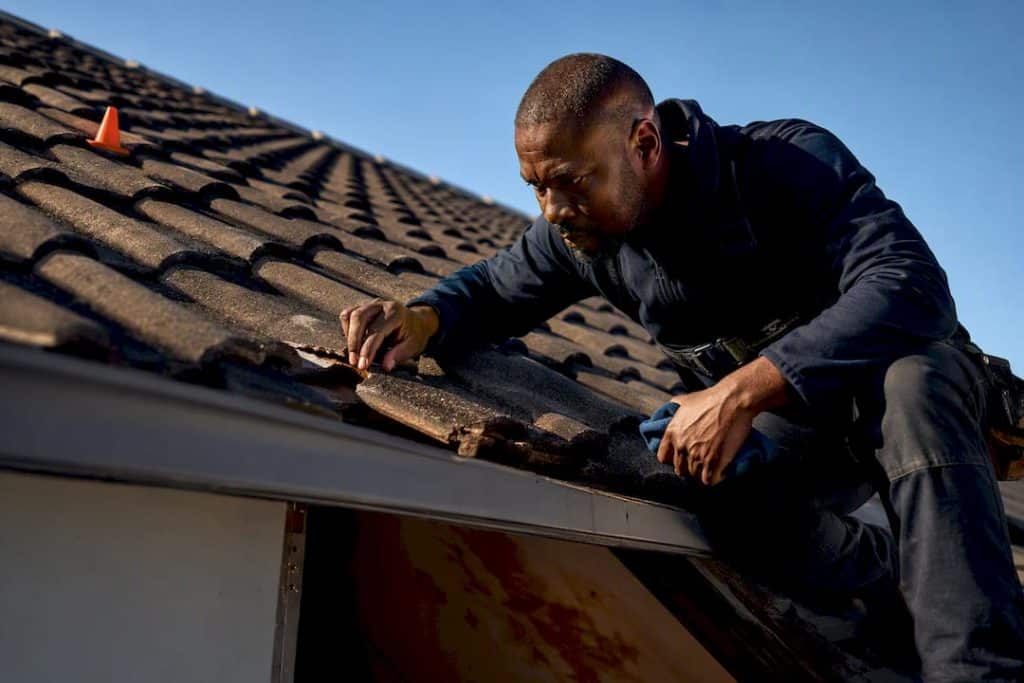
If water is coming through your ceiling right now, contain it, protect the space beneath it, and stop guessing about the cause. Set out buckets, move anything valuable, and only step onto the roof if it’s dry, daylight, and safe to do so. Once the immediate mess is under control, inspect and photograph the damage before anyone touches a tile or a tube of sealant. If you see structural sagging, exposed timber, or daylight through the roof deck, call a professional before doing anything else.
TL;DR:
- Most roof issues can be identified externally through missing tiles, rusted flashing, or sagging areas before water penetrates inside.
- Accurate leak detection requires following water trails back from the interior or using hose tests on suspected roof sections, especially for flat roofs.
- Temporary fixes like tarpaulins or sealant can limit damage but should not replace full repairs to avoid voiding warranties or recurring leaks.
- Replacement becomes more cost-effective than repairs once damage affects over 30% of the roof area or the same problem recurs frequently within a few years.
- Professional waterproofing is recommended for persistent leaks, as it addresses underlying drainage and substrate issues that patching alone cannot resolve.
Table of Contents
- Signs your roof needs repair: exterior and interior checks
- How to find and trace a leak safely
- Emergency fixes and safety: limiting damage right now
- Repair vs replace: decision framework and budgeting rules
- Common roof types and appropriate repair methods
- Step-by-step tips for common repairs you can attempt safely
- Preventative maintenance checklist and inspection cadence
- When to hire a professional and what to ask them
- Practitioner tips from Eben at Pro Waterproofing
- Balancing DIY fixes with professional waterproofing
- How Pro Waterproofing can help with persistent leaks
- Sources
- FAQ
Signs your roof needs repair: exterior and interior checks
Most roof failures announce themselves well before water reaches your ceiling. The trick is knowing where to look, because the visible damage outside rarely lines up neatly with the wet patch inside.
Start with a walk around the exterior, using binoculars rather than a ladder if you’re not confident on heights. According to guidance on roof repair essentials, missing or cracked tiles, rusted flashing, granule loss on shingles, and standing water on flat sections are among the earliest and most reliable indicators that repair work is overdue.
Look for these signals from ground level or a stable vantage point:
- Missing, slipped, or cracked tiles and shingles, especially after wind
- Lifted or curling roofing sheets at the edges
- Rusted, cracked, or separated flashing around chimneys and vents
- Heavy granule loss leaving bald patches on asphalt shingles
- Moss or algae build-up holding moisture against the surface
- Any visible sag along the ridge line or roof plane
Inside, head to the attic or loft space with a torch. Brown watermarks, damp insulation, visible daylight through the roof deck, soft or spongy timber, and a musty smell all point to an active or previous leak. Before you request quotes, photograph everything, note the roof’s age, and write down any past repairs. This groundwork makes a real difference: guidance on planning a roof repair notes that contractors give more accurate, comparable proposals when homeowners arrive with documented defects rather than a vague description of “a leak somewhere”.
How to find and trace a leak safely
Water rarely drips straight down from where it enters. It travels along rafters, pools at joints, and can show up metres away from the actual breach, which is why chasing the ceiling stain alone usually leads to the wrong repair. Correct diagnosis has to come before any patch goes on, because misplaced repairs are one of the most common reasons leaks keep coming back, according to guidance on repairing leaky roofs.
Work through the leak methodically:
- Start in the attic on a dry day with a strong torch, checking rafters and the underside of the deck for damp trails, staining, or pinpricks of daylight.
- Follow any stain upslope, not downslope. Water almost always enters higher than where it drips.
- Move outside and inspect flashings around chimneys, skylights, and vent pipes, along with valleys and gutter lines where debris often traps water.
- If the source still isn’t obvious, get a helper to run a hose over suspect sections, one area at a time, while you watch from the attic.
- For flat roofs, check membrane seams, upstands, and outlets rather than assuming a single puncture is to blame.
Pro Tip: Test one section of roof at a time and wait several minutes before moving the hose. Water can take a while to travel through insulation and appear at the stain, so rushing the test gives you false negatives.
Never walk a flat roof after rain without checking it can bear your weight safely first, and avoid pitched roofs entirely in wet or windy conditions. If the attic check alone doesn’t reveal a source, a guide on identifying roof leaks walks through additional detection steps worth trying before you call anyone out.
Emergency fixes and safety: limiting damage right now
Your priority in the first hour is people and possessions, not the roof itself. Don’t climb onto a wet, icy, or steeply pitched roof under any circumstances, and don’t work alone at height even on a calm day.
Inside the house:
- Position buckets or bins under active drips and move furniture and electronics clear of the wet zone
- If the ceiling is bulging with trapped water, carefully puncture it from below with a screwdriver into a bucket, which relieves pressure before it collapses on its own
- Switch off electricity to any affected circuit if water is near light fittings or wiring
Outside, if it’s safe to access the roof, a tarpaulin weighted down at the edges or temporary sealant over a small puncture can buy time. Treat these as short-term measures only. Guidance on flat roof leak diagnosis and repair points out that tarps and butyl tape can limit damage during bad weather but shouldn’t replace a proper repair, and in some cases they can void material warranties if left in place too long. For step-by-step guidance on what to do the moment you spot a leak, see this walkthrough on what to do when your roof is leaking.
Repair vs replace: decision framework and budgeting rules
The honest answer to “repair or replace?” almost always comes down to three things: how old the roof is, how much of it is affected, and how often you’ve been back up there fixing the same problem. A five-year-old roof with one cracked tile is an easy repair. A twenty-year-old roof with three separate leak calls this year is telling you something different.
Many industry guides apply a rough threshold here: once damage or wear affects a significant portion of the roof area, replacement typically becomes more cost-effective than continuing to patch, according to a roof repair versus replacement framework. That figure isn’t a hard rule, but it’s a useful gut check when you’re staring at a quote and wondering whether you’re throwing good money after bad.
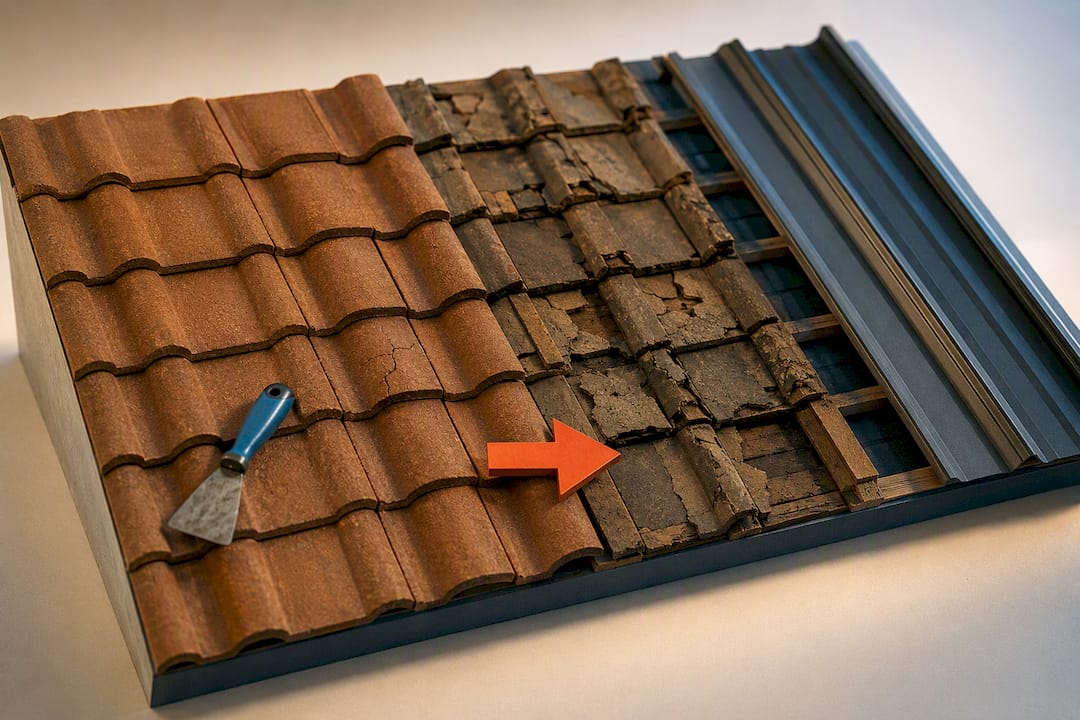
The 30% rule in practice: if a contractor is proposing to replace a large portion of your roofing surface, get a second opinion on whether a full re-roof works out cheaper per square metre than staged repairs, since labour and access costs are largely fixed regardless of job size.
Weigh these factors before deciding:
- Roof age relative to its expected material lifespan
- Extent of damage, not just the number of visible faults
- Condition of the substrate or decking beneath the covering
- How frequently you’ve needed repairs in the last two to three years
- Whether the same fault keeps recurring in the same spot
When comparing quotes, check that each one covers the same scope. A cheaper quote that excludes flashing replacement, scaffolding, or disposal of old material isn’t actually cheaper once you add those back in. Ask specifically what’s included, what access equipment is costed in, and what warranty applies to workmanship as well as materials.
Common roof types and appropriate repair methods
Repair technique depends heavily on what’s actually on your roof, and using the wrong method on the wrong material is a fast route to a second leak. As the Velux guide to roof repairs notes, mixing incompatible membrane or flashing systems without proper detailing is a recognised cause of adhesion failure.
- Pitched tiled roofs: individual tiles are lifted and replaced, with the underlay checked for tears beneath the removed tile. Ridge and valley flashing gets particular attention, since these junctions fail long before the tiles themselves wear out.
- Metal roofing: loose sheets are re-fixed with matching fasteners, corroded sections treated or replaced, and seals around screws and laps renewed rather than just topped up with sealant.
- Flat membrane roofs: ponding is the recurring culprit. Diagnosis focuses on where water sits rather than where it eventually drips through, and blisters or splits in the membrane are patched with compatible material once the surface is fully dry.
Flat roofs deserve particular caution. Water still sitting 48 hours after rain is a recognised failure mode that usually needs a drainage fix or a structural change, not another layer of patch, according to research on flat roof waterproofing problems. A detailed breakdown of material choices sits in this guide to waterproofing methods for roofs.
Step-by-step tips for common repairs you can attempt safely
Some jobs are genuinely within reach for a competent, careful homeowner. Others aren’t, and knowing the difference matters more than any technique.
- Swapping a broken tile: lift the tile above the damaged one using a slater’s ripper, slide out the broken piece, and fit the replacement so it sits flush with its neighbours before pushing the tile above back into place.
- Re-securing a lifted metal sheet: remove the damaged fastener, check the deck beneath for rot, then refit using a matching screw with a rubber washer, driven straight rather than at an angle to avoid creating a new entry point.
- Resealing flashing: strip old, cracked sealant back to bare metal, clean the joint fully, and apply a compatible flashing sealant in a continuous bead rather than dabs, which fail faster.
- Patching a small flat-roof puncture: clean and dry the area, cut a patch of matching membrane material with rounded corners, and bond it with the manufacturer’s recommended adhesive, checking the edges are fully sealed.
Pro Tip: Always check that any patch material is compatible with what’s already on the roof. Bonding the wrong membrane type to an existing surface is one of the more common reasons a “fixed” flat roof leaks again within a season.
Stop and call a professional if you find rotten structural timber, a complex multi-plane valley, or a leak that’s returned more than once despite repair. These aren’t jobs where a confident guess is good enough.
Preventative maintenance checklist and inspection cadence
A roof that gets checked twice a year rarely produces a genuine emergency. One structured seasonal routine reduces exactly the kind of urgent, expensive repairs covered above, according to guidance on fixing roof leaks before the rainy season.
- Inspect before the rainy season and again after any major storm
- Clear gutters and downpipes of leaves and debris at least twice a year
- Trim overhanging branches that drop debris or scrape the surface in wind
- Check flashing and sealant around penetrations annually for cracking or shrinkage
- Photograph the roof each inspection and keep dated records alongside any warranty paperwork
Practical advice on preparing for storm season, including what to check before heavy weather hits, is covered in this guide to weatherproofing your roof for storm season. If you’re ever unsure whether a stain is new or an old issue resurfacing, this piece on tracking down roof leak issues is worth a read before you assume the worst.
When to hire a professional and what to ask them
Some damage removes DIY from the table entirely: structural rot, daylight visible through the roof deck, ponding that returns after every rain, or a leak you’ve patched more than once without success. At that point, a contractor visit isn’t optional caution, it’s the only route to an actual fix.
When you get someone out, ask these questions before signing anything:
- What exactly caused the leak, and how does the proposed repair address that cause rather than just the symptom?
- What material or brand will be used, and is it compatible with what’s already on the roof?
- What does the workmanship warranty cover, and for how long?
- Are they insured and appropriately licensed for the work?
- Does the written quote itemise materials, labour, access equipment, and disposal separately?
Get everything in writing, and be wary of any quote that’s a single lump sum with no breakdown. That’s usually where scope disputes start later.
Practitioner tips from Eben at Pro Waterproofing
Standard roofing patches address the visible break. Waterproofing addresses why water was sitting there in the first place, which is the difference between a repair that lasts a season and one that lasts years. More detail on that distinction is in Pro Waterproofing’s guide to waterproofing methods for roofs.
Balancing DIY fixes with professional waterproofing
Small, well-diagnosed fixes are worth doing yourself. Recurring leaks, ponding, or anything involving substrate damage rarely stay fixed without proper waterproofing behind them. Photograph your work, keep every receipt, and ask any contractor for a written warranty. That paper trail is what protects you if the same spot leaks again next winter.
— Eben
How Pro Waterproofing can help with persistent leaks
Prowaterproofing exists for the leaks that keep coming back after you’ve already tried the tarp, the sealant, and the second opinion from a mate who’s “handy with roofs”. Where a standard roofing patch treats the symptom, a proper waterproofing assessment looks at drainage, substrate condition, and material compatibility together, which is exactly the gap that causes repeat callouts.

A professional assessment from Prowaterproofing typically covers a full inspection of the affected area, identification of the actual water path (not just the visible damage), and a written scope before any work starts. Expect your quote to itemise materials, access, and labour separately, and ask specifically about the workmanship warranty length, since that’s often where cheaper, informal quotes fall short. If you’ve patched the same spot more than once, or you’re staring at ponding water that hasn’t budged in two days, it’s worth getting a second, waterproofing-specific opinion rather than reaching for another tube of sealant. You can request a site inspection directly through Prowaterproofing to get a proper diagnosis before committing to any repair.
Sources
- Roof repairs: your complete guide
- Roof Repair or Replace – How to Decide
- Stop flat roof leaks for good: diagnosis and repair guide for SA homeowners
- Repairing leaky roofs – HowStuffWorks
- Repairing your roof: 2026 warning signs and planning guide
FAQ
What are the five most common roofing problems?
The most frequent issues are missing or cracked tiles, damaged or rusted flashing, blocked gutters causing water backup, ponding on flat roofs, and worn or blistered membranes. Each shows up differently depending on your roof type, which is why diagnosis has to come before repair.
Why is my roof still leaking even after it has been repaired?
Recurring leaks usually mean the original repair patched the visible symptom rather than the actual water path, which is a well-documented cause of repeat failures according to industry roofing guidance. On flat roofs specifically, ongoing ponding or substrate movement is often the true culprit, and no amount of resealing fixes that until the drainage itself is addressed.
Can you repair just a section of a roof?
Yes, partial repairs are common and often sensible when damage is localised and the roof is otherwise sound. Once damage or wear spreads across roughly 30% of the total area, though, replacement typically becomes more cost-effective than continuing with piecemeal patches.
What damages a roof the most?
Prolonged water exposure, especially standing water on flat sections, causes more structural damage over time than any single storm event. Poor drainage, ageing materials past their expected lifespan, and skipped maintenance compound the damage, which is why a seasonal inspection routine matters so much for catching problems early.
Does Prowaterproofing offer roof leak repairs?
Prowaterproofing offers professional waterproofing services for roofs, basements, bathrooms, and other problem areas, with pricing available on request through the service page. Because waterproofing addresses root causes like drainage and substrate condition rather than surface symptoms, it’s the more durable option once a standard patch has already failed once.