
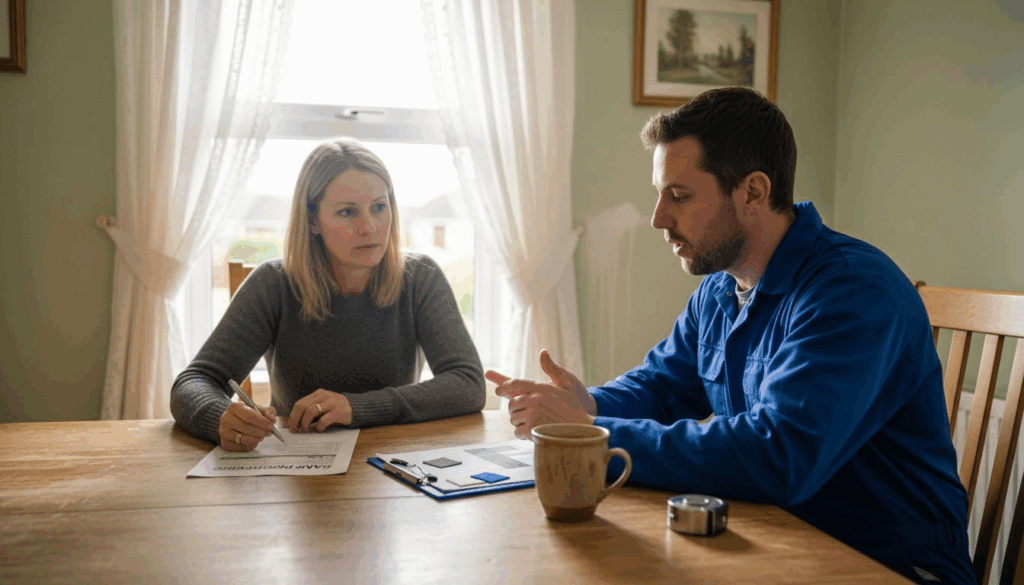
Selecting a waterproofing contractor in South Africa can feel overwhelming when water damage threatens your property investment. Knowing which questions to ask separates experienced professionals from unreliable operators who leave costly problems behind. This guide equips you with essential interview questions that reveal contractor expertise, uncover their approach to complex challenges, and help you confidently choose a waterproofing specialist who delivers lasting protection. By understanding methodology, warranties, and problem-solving capabilities, you’ll make informed decisions that safeguard your home against South Africa’s demanding climate and prevent expensive future repairs.
Table of Contents
- Understand Contractor Methodologies And Materials
- Evaluate Warranties, Guarantees And Maintenance Support
- Probe Contractor Approaches To Problem Areas And Site-Specific Challenges
- Compare Contractors To Make The Best Hiring Decision
- Pro Waterproofing Solutions For South African Homes
- Frequently Asked Questions
Key takeaways
| Point | Details |
|---|---|
| Methodology matters | Understanding a contractor’s waterproofing methods and materials reveals their expertise and suitability for your specific project type. |
| Warranties indicate reliability | Comprehensive warranties and maintenance support demonstrate contractor confidence and protect your investment long term. |
| Problem-solving separates experts | How contractors handle site-specific challenges like ponding water and structural cracks distinguishes true professionals from novices. |
| Surface preparation affects longevity | Proper prep work and seam detailing are critical factors that determine waterproofing success and prevent future failures. |
Understand contractor methodologies and materials
Asking contractors about their waterproofing methods immediately reveals their technical knowledge and project suitability. You need to understand which materials they propose and why these suit your specific situation, whether you’re waterproofing a flat roof, basement, or balcony. Common South African methods include torch-on membranes, liquid rubber coatings, and cementitious applications for different surfaces and conditions. Each technique offers distinct advantages depending on substrate type, exposure levels, and budget constraints.
Surface preparation separates quality contractors from shortcuts takers. Proper prep ensures adhesion, longevity, and prevents membrane failure regardless of which waterproofing system gets applied. Ask contractors to explain their preparation process in detail, including cleaning, priming, crack repair, and moisture testing procedures. Experienced professionals recognise that rushed or inadequate prep work causes most waterproofing failures within the first few years.
Different substrates and structural conditions demand tailored approaches. Concrete, masonry, timber, and metal surfaces each require specific primers, adhesives, and application techniques. Contractors should demonstrate knowledge of how environmental factors like UV exposure, thermal movement, and moisture levels influence material selection. Request examples showing how they’ve adapted methods for challenging conditions similar to your property.
Key questions to ask:
- Which waterproofing materials do you recommend for my project type and why?
- What surface preparation steps will you perform before application?
- How do you adjust your approach for different substrates or structural conditions?
- Can you provide examples of similar projects you’ve completed in my area?
Pro Tip: Request that contractors show photographs of previous projects using similar methods, preferably local to your area, so you can verify their experience with conditions matching yours and potentially visit completed sites.
Understanding how to waterproof flat roofs helps you evaluate whether contractors truly grasp the complexities of your specific waterproofing challenge and can deliver appropriate solutions.
Evaluate warranties, guarantees and maintenance support
Warranty terms reveal contractor confidence in their workmanship and materials. Ask about warranty length, what it covers, and any conditions that might void protection. Quality contractors offering comprehensive coverage demonstrate they stand behind their work and use reliable materials. Clarify whether warranties cover labour costs, materials, and potential leak repairs, as some warranties exclude labour charges that can prove expensive.
Post-installation support and maintenance services protect your investment beyond initial completion. Contractors should explain what routine maintenance they recommend, how often inspections should occur, and whether they offer maintenance packages. Regular maintenance extends waterproofing lifespan and catches small issues before they become major problems. Ask whether they provide emergency repair services and typical response times for leak incidents.
Project timelines and site cleanup commitments indicate professionalism and respect for your property. Request clear schedules outlining each project phase, expected completion dates, and how weather delays get managed. Discuss site cleanup procedures, waste disposal, and how they’ll protect surrounding areas during work. Contractors who provide detailed timelines and cleanup plans typically deliver more organised, professional service.
Warranty evaluation checklist:
- What warranty length do you offer and what does it cover?
- Are both labour and materials included in warranty coverage?
- What conditions might void the warranty?
- Do you provide post-installation maintenance services?
Choose waterproofing contractors in South Africa offering long warranties of up to 20 years and documented maintenance plans to safeguard your investment. These extended guarantees suggest confidence in workmanship and material quality that shorter warranties cannot match. Always review warranty documents carefully and understand your responsibilities for maintaining coverage validity.
Knowing the right questions to ask a waterproofing contractor about warranties helps you compare offers objectively and select contractors committed to long term performance rather than quick profits.
Probe contractor approaches to problem areas and site-specific challenges
How contractors handle ponding water reveals their technical competence and commitment to lasting solutions. Ponding water accelerates membrane degradation through UV exposure, thermal stress, and constant moisture contact that breaks down waterproofing materials prematurely. Ask contractors how they’ll address drainage issues, whether they’ll modify roof slopes, install additional drains, or use specific membrane types resistant to standing water. Contractors who prioritise drainage solutions over simply applying thicker membranes demonstrate superior understanding of waterproofing principles.
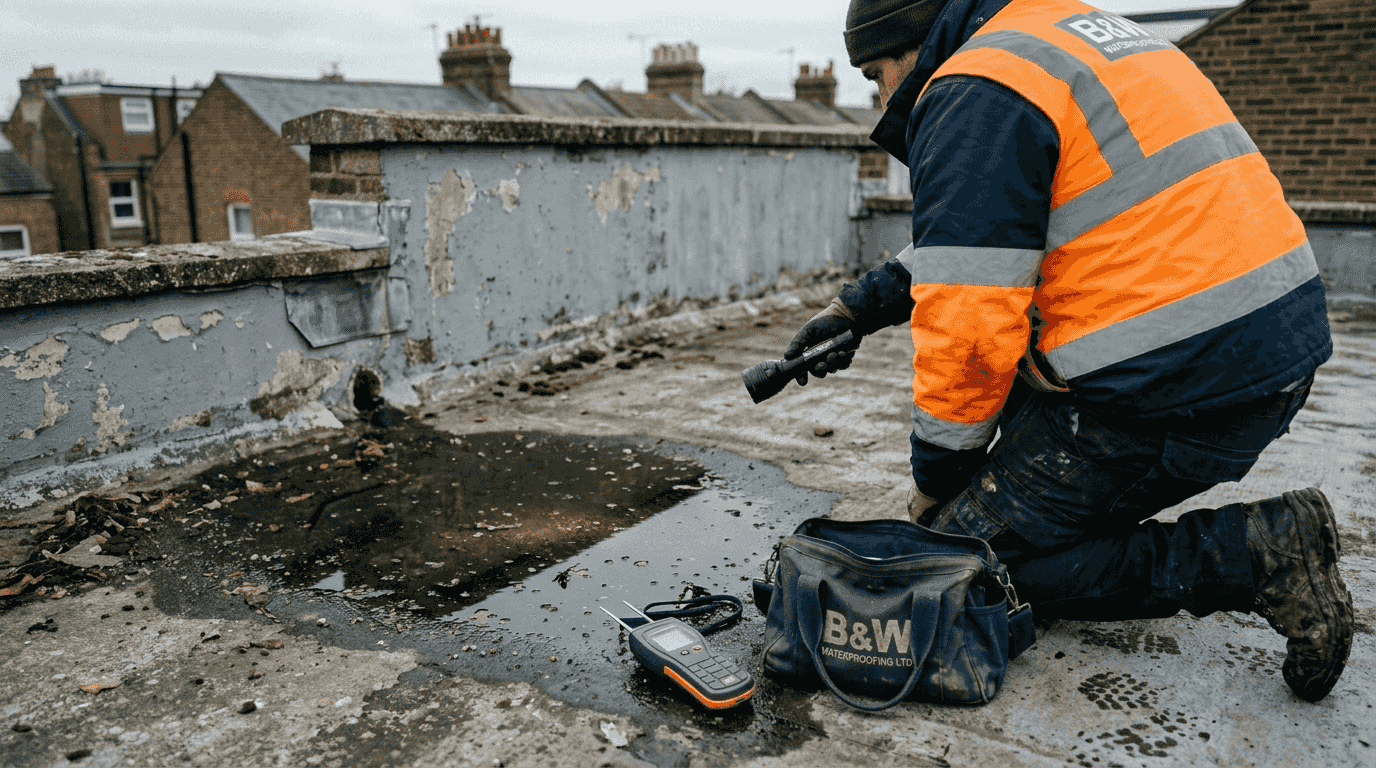
Structural movement and thermal expansion create cracks that compromise waterproofing integrity. Inquire about methods contractors use to accommodate building movement, particularly around joints, corners, and penetrations where stress concentrates. Flexible sealants, expansion joints, and reinforcement fabrics help waterproofing systems move with structures rather than crack under stress. Contractors should explain their approach to existing cracks, whether they’ll inject epoxy, install flexible membranes, or use other repair techniques suited to crack severity and location.
High water tables and stormwater management significantly impact waterproofing success, especially for basements and below-grade structures. Ask how contractors assess site drainage, manage groundwater pressure, and integrate stormwater runoff into their waterproofing plan. Effective solutions often combine waterproofing membranes with drainage systems, sump pumps, and proper grading to redirect water away from structures. Request examples of how they’ve solved similar challenges on South African properties facing comparable conditions.
Challenge assessment questions:
- How will you address any ponding water issues on my property?
- What methods do you use for flexible sealing around cracks and joints?
- How do you manage high water tables or stormwater integration?
- Can you provide examples of solving common South African waterproofing problems?
| Challenge | Torch-on membranes | Liquid rubber coatings | Cementitious systems |
| — | — | — |
| Ponding water | Moderate resistance, requires proper drainage | Excellent seamless coverage | Poor, absorbs moisture |
| Thermal expansion | Limited flexibility, needs expansion joints | Highly flexible, accommodates movement | Rigid, cracks under stress |
| Structural cracks | Requires reinforcement fabric | Self-healing properties | Ineffective without repair |
Pro Tip: Contractors who perform diagnostic root cause analysis rather than just patch repairs better prevent recurring leaks that indicate deeper issues like poor installation or unaddressed drainage problems requiring comprehensive solutions.
Asking essential questions for contractors about problem-solving approaches helps you identify professionals who think strategically rather than apply quick fixes that fail within months.
Compare contractors to make the best hiring decision
Structured comparison helps you objectively evaluate contractors based on methodology, warranty terms, problem-solving capabilities, and customer feedback. Create a comparison matrix listing each contractor alongside key criteria including waterproofing methods proposed, warranty length and coverage, approach to site challenges, seam workmanship standards, and verified customer reviews. This systematic approach prevents emotional decisions and highlights which contractor offers the best overall value rather than simply the lowest price.
Membrane seam quality critically affects waterproofing longevity since seams are vulnerable points where water penetrates if improperly sealed. Ask contractors about their seam strength testing, overlap requirements, and sealing techniques. Quality contractors specify minimum overlap dimensions, use heat welding or chemical bonding for torch-on membranes, and perform seam inspections before covering work. Request details about their seam quality control process and whether they document seam locations for future reference.
| Criteria | Contractor A example | Contractor B example | What to prioritise |
| — | — | — |
| Methods | Torch-on with 20-year warranty | Liquid rubber, 15-year warranty | Match method to your needs |
| Site challenges | Drainage redesign included | Membrane only, no drainage | Comprehensive solutions |
| Seam workmanship | Heat welded, 150mm overlap | Adhesive, 100mm overlap | Stronger sealing methods |
| Customer reviews | 4.8 stars, 50 reviews | 4.2 stars, 15 reviews | Consistent positive feedback |
Contractor evaluation checklist:
- Review detailed written proposals from at least three contractors
- Check professional certifications and insurance coverage
- Verify references by contacting previous clients directly
- Inspect completed job sites when possible to assess quality
- Evaluate communication responsiveness during initial enquiries
- Compare warranty terms and post-installation support offerings
Prioritise contractors who demonstrate clear communication, provide thorough warranties, and show proven problem-solving expertise through documented case studies or site visits. Price matters, but the cheapest quote often signals cut corners, inferior materials, or hidden costs that emerge later. Invest in quality workmanship that protects your property for decades rather than temporary fixes requiring expensive repairs within years.
Resources on selecting waterproofing contractors provide additional guidance for comparing proposals and identifying red flags that indicate unreliable operators who overpromise and underdeliver.
Pro waterproofing solutions for South African homes
Pro Waterproofing delivers locally proven waterproofing solutions specifically tailored to South African climate conditions and building standards. Their experienced team understands the unique challenges posed by intense UV exposure, thermal cycling, and seasonal rainfall patterns that demand robust, properly installed waterproofing systems. You benefit from expert material selection matched to your property type, comprehensive surface preparation that ensures lasting adhesion, and meticulous attention to drainage design that prevents ponding and water accumulation.
Clients receive strong warranties backing both materials and workmanship, demonstrating confidence in quality that protects your investment long term. Pro Waterproofing provides attentive maintenance services, clear project timelines, and responsive communication throughout every project phase. Their proven track record addressing complex issues like ponding water, structural cracks, and challenging substrates makes them a trusted choice for homeowners and property managers seeking reliable waterproofing expertise. Discover comprehensive guidance through their questions to ask a waterproofing contractor resources and learn more about selecting waterproofing contractors who meet professional standards.
Frequently asked questions
What are the most important questions to ask a waterproofing contractor?
Focus on methodology by asking which waterproofing materials and techniques they recommend for your specific project type and why these suit your conditions. Clarify warranty length, coverage details, and what post-installation maintenance support they provide. Probe their approach to common challenges like ponding water, structural cracks, and drainage issues to assess problem-solving capabilities.
How do I verify a contractor’s waterproofing experience and quality?
Request references from recent clients and contact them to discuss their experience with the contractor’s work quality, professionalism, and post-installation support. Ask for photographs or addresses of completed projects you can inspect personally. Verify professional certifications, insurance coverage, and business registration status through relevant South African industry bodies and regulatory authorities.
What warranty length should I expect when hiring a waterproofing contractor in South Africa?
Typical warranties range up to 20 years in South Africa for quality waterproofing installations using premium materials and proper application techniques. Longer warranties suggest contractor confidence in their workmanship and material durability. Always clarify exactly what the warranty covers, including labour costs, materials, and leak repairs, plus any maintenance requirements needed to keep coverage valid.
How should a contractor manage ponding water issues on flat roofs?
Contractors should prioritise proper drainage design including adequate roof slope, strategically placed drains, and overflow provisions to prevent ponding water that causes UV and thermal degradation of waterproofing membranes. They should specify flexible, UV-resistant membrane materials designed to withstand occasional standing water. Regular maintenance to clear blocked drains and remove debris is essential for preventing water accumulation that accelerates membrane failure and structural damage.