
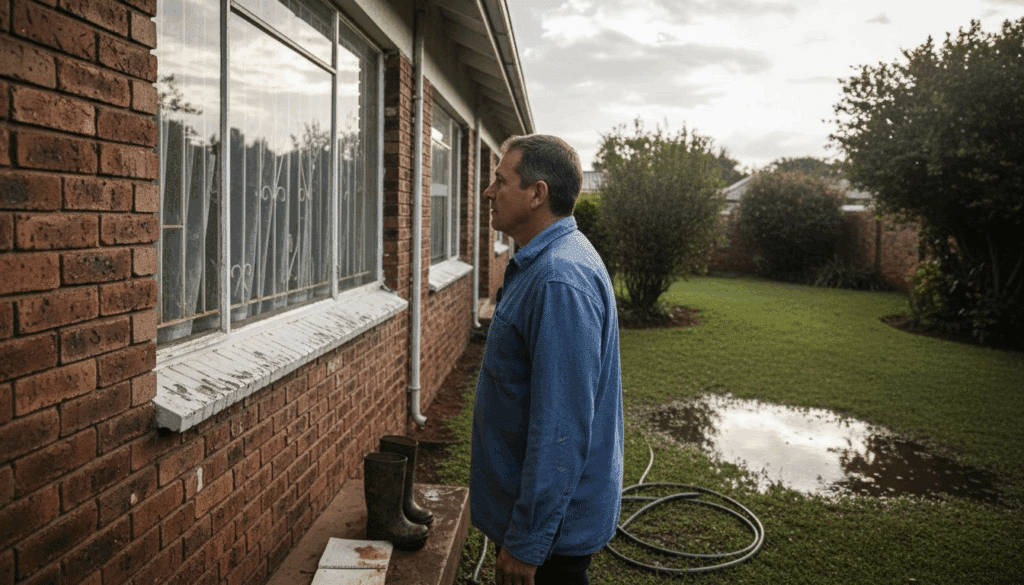
Most residential property owners in Gauteng face tough decisions when water damage strikes, especially with the region’s unpredictable rainfall. Studies show that nearly 40 percent of South African homes suffer moisture-related issues every year, prompting many to search for trusted local experts fast. With recent weather events leaving homes at risk, finding a solution that meets both british standards and local conditions becomes urgent. This guide covers what factors truly matter when assessing waterproofing needs and choosing the right contractor.
Table of Contents
- Defining Waterproofing Needs In South African Homes
- Recognising Common Signs Of Water Damage
- Types Of Waterproofing For Various Surfaces
- DIY Assessment Versus Professional Evaluation
- Key Mistakes Property Owners Should Avoid
Key Takeaways
| Point | Details |
|---|---|
| Understand Local Needs | Waterproofing solutions must be tailored to the specific environmental and structural challenges of South African homes, particularly in areas like Gauteng. |
| Recognise Water Damage Signs | Homeowners should regularly inspect for signs of water damage, such as discolouration and strange odours, to proactively address moisture issues. |
| Opt for Professional Assessment | Engaging professional waterproofing specialists ensures comprehensive evaluations, identifying hidden vulnerabilities that DIY assessments may overlook. |
| Avoid Common Mistakes | Selecting inappropriate products and neglecting surface preparation can lead to severe structural damage; thorough research and adherence to guidelines are essential. |
Defining Waterproofing Needs In South African Homes
Waterproofing represents a critical protective strategy for South African residential properties, particularly in regions like Gauteng where diverse environmental conditions challenge structural integrity. The National Certificate in Waterproofing outlines essential competencies for protecting homes against moisture intrusion, emphasising the importance of tailored solutions that address local climate and construction challenges.
In South African contexts, waterproofing needs are determined by multiple factors including geological composition, rainfall patterns, and architectural design. Homes in Gauteng, for instance, experience significant temperature variations and occasional heavy rainfall, making robust moisture protection crucial. These environmental stressors can compromise building foundations, walls, and interior spaces if proper waterproofing techniques are not implemented strategically.
Professional waterproofing assessments typically evaluate several critical elements: substrate condition, potential moisture entry points, existing drainage systems, and specific regional environmental challenges. Homeowners must consider factors such as roof integrity, foundation stability, exterior wall composition, and potential underground water table interactions. Understanding these nuanced requirements helps develop comprehensive waterproofing strategies that protect structural investments and prevent long-term damage.
Pro Tip: Always conduct a comprehensive moisture assessment during autumn or early winter to identify potential vulnerabilities before the rainy season begins.
Recognising Common Signs Of Water Damage
Water damage often develops subtly, with homeowners frequently overlooking initial warning signs until significant structural compromise occurs. Identifying structural water damage requires careful observation and understanding of the nuanced indicators that suggest potential moisture intrusion and underlying issues.
Several critical visual markers signal potential water damage in residential properties. Discolouration of walls and ceilings, particularly yellow or brownish stains, typically indicates water penetration and potential mould growth. Peeling paintwork, warped wooden surfaces, and unexplained musty odours represent additional red flags that demand immediate professional assessment. Hairline cracks in foundations, swelling of skirting boards, and unexpected dampness in interior spaces are equally significant indicators of potential structural moisture problems.
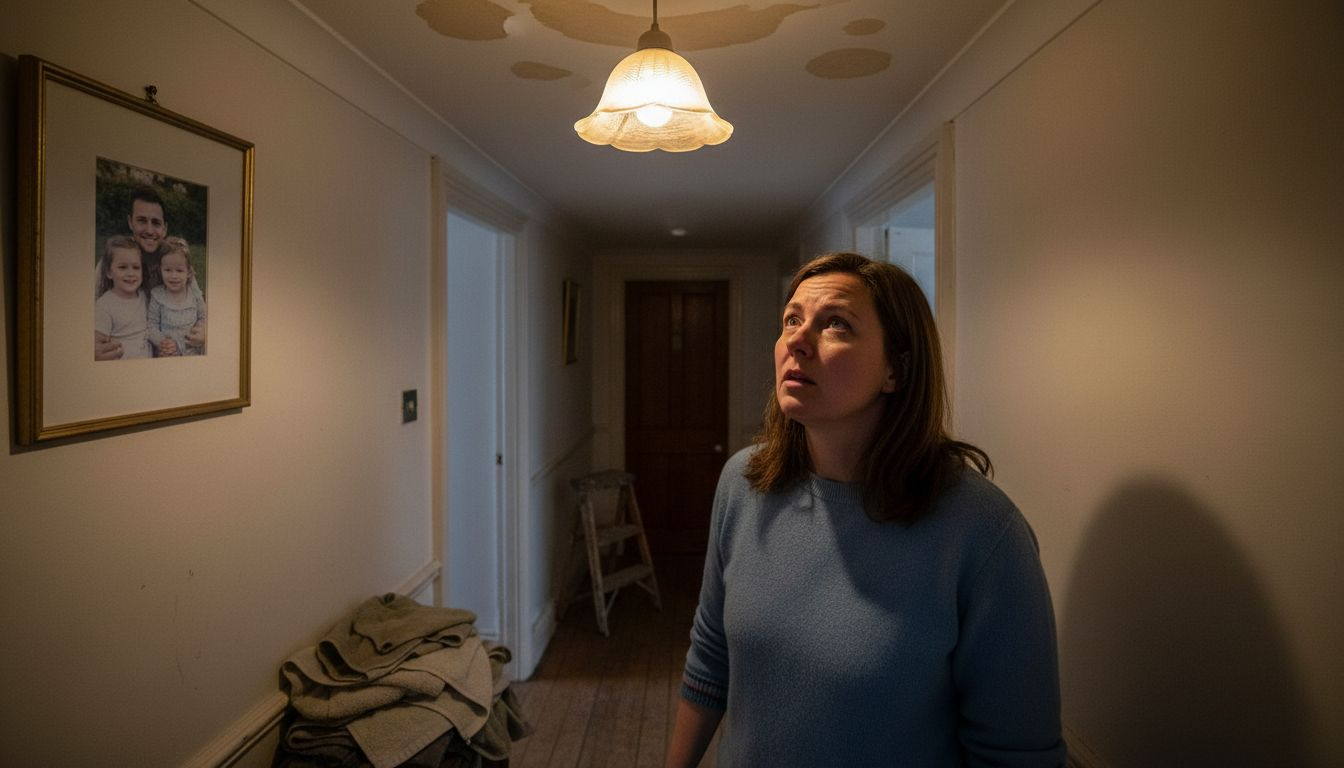
Homeowners should pay particular attention to specific areas prone to water damage, including basement regions, external wall junctions, roof interfaces, and areas surrounding plumbing fixtures. Subtle signs like minor efflorescence (white, powdery residue on concrete or masonry), unexplained increases in humidity levels, and recurring condensation patches can signal underlying moisture challenges that require professional intervention. Regular visual inspections, combined with proactive moisture management strategies, remain crucial in preventing extensive and costly water-related structural deterioration.
Pro Tip: Conduct a comprehensive moisture assessment every six months, focusing on high-risk areas and documenting any changes to track potential water damage progression.
Types Of Waterproofing For Various Surfaces
Waterproofing solutions in South African properties demand sophisticated approaches tailored to specific surface requirements and environmental challenges. Common waterproofing materials play a crucial role in protecting residential structures against moisture intrusion, with different techniques designed to address unique architectural and environmental demands.
Cementitious waterproofing remains particularly effective for high-moisture areas like basements and underground structures. This rigid coating provides excellent protection in areas with consistent water exposure, creating a robust barrier against moisture penetration. Liquid-applied membranes offer more flexible solutions for surfaces experiencing structural movement, such as roofs and terraces, allowing seamless coverage and adaptability to temperature fluctuations and building settlement.
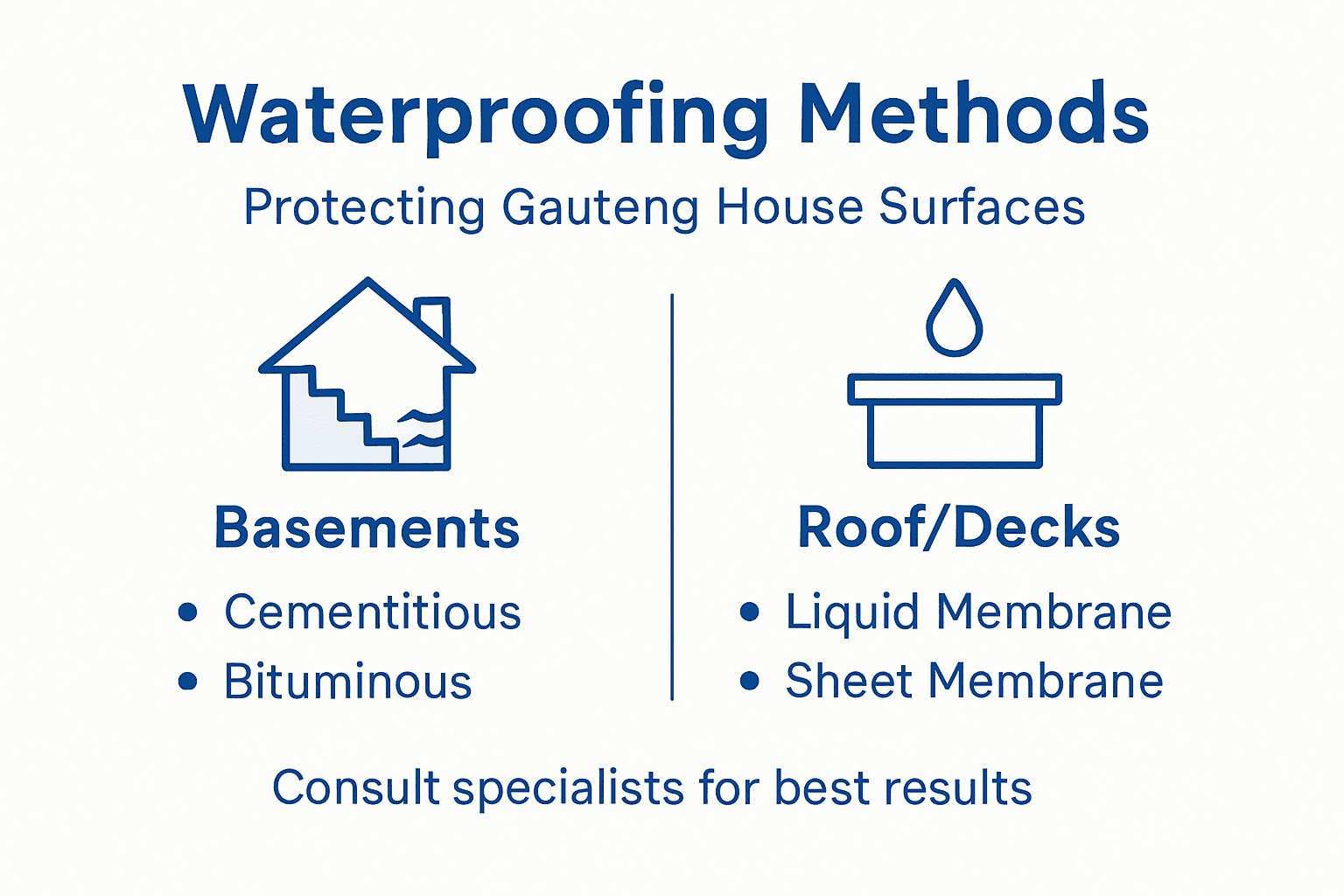
Bituminous coatings represent another critical waterproofing technique, especially for foundational protection. These durable applications create a strong, impermeable layer on concrete and masonry surfaces, preventing water absorption and potential structural degradation. Modern waterproofing strategies often combine multiple techniques, recognising that different surfaces require nuanced approaches to moisture management, including specialised treatments for external walls, roof interfaces, and underground structural elements.
The following table compares common waterproofing methods suitable for different surfaces in South African homes:
| Method | Ideal Surface | Durability | Flexibility |
|---|---|---|---|
| Cementitious Coating | Basements, walls | High | Rigid, less flexible |
| Liquid-Applied Membrane | Roofs, terraces | Moderate to high | Highly adaptable |
| Bituminous Coating | Foundations, masonry | Very high | Some flexibility |
| Combination Approach | Multiple areas | Customised | Varies by technique |
Pro Tip: Consult professional waterproofing specialists to develop a comprehensive moisture protection strategy specific to your property’s unique architectural characteristics and local environmental conditions.
DIY Assessment Versus Professional Evaluation
Homeowners face a critical decision when evaluating potential water damage and moisture risks in their properties, weighing the limitations of self-assessment against the comprehensive insights provided by professional specialists. Waterproofing inspections and assessment services reveal the substantial differences between amateur and expert evaluations, highlighting the nuanced expertise required to identify hidden structural vulnerabilities.
DIY assessments typically involve visual inspections that can detect obvious signs of water damage, such as visible mould, discolouration, and surface cracks. However, these preliminary examinations often miss critical underlying issues that require advanced diagnostic techniques. Professional evaluations utilise specialised moisture mapping technologies, thermal imaging cameras, and sophisticated moisture detection equipment to uncover hidden leaks, assess structural integrity, and identify potential risk areas that remain imperceptible to untrained observers.
The financial implications of DIY assessments versus professional evaluations extend far beyond the initial inspection costs. While homeowners might perceive professional services as an unnecessary expense, the long-term cost of undetected moisture damage can be exponentially higher. Comprehensive professional assessments provide detailed reports outlining precise structural risks, recommended interventions, and potential preventative measures, offering property owners a strategic approach to moisture management that goes well beyond surface-level observations.
Pro Tip: Request a written diagnostic report from professional waterproofing specialists that includes photographic evidence, detailed moisture mapping, and specific recommendations for your property’s unique structural challenges.
Key Mistakes Property Owners Should Avoid
Waterproofing projects demand precision and expertise, with numerous potential pitfalls that can compromise structural integrity and waste valuable resources. Waterproofing mistakes homeowners commonly make represent critical vulnerabilities that can transform what should be preventative maintenance into expensive repair scenarios, particularly in challenging South African environmental conditions.
One of the most prevalent errors involves selecting inappropriate waterproofing products for specific surface types. Different substrates require tailored solutions, and using generic materials can lead to rapid deterioration and ineffective moisture protection. Homeowners frequently underestimate the importance of proper surface preparation, neglecting crucial steps like thorough cleaning, applying appropriate primers, and addressing existing structural cracks before waterproofing treatments. Weather timing also plays a significant role, with many property owners initiating waterproofing projects during unsuitable seasonal conditions that can compromise material adhesion and curing processes.
Technical application represents another critical area where property owners often make catastrophic mistakes. Incorrect application thickness, inadequate reinforcement in plaster mixes, and rushing curing processes can render even high-quality waterproofing materials ineffective. Professional contractors emphasise the importance of following manufacturer guidelines meticulously, understanding substrate characteristics, and recognising the nuanced techniques required for different architectural elements. Overlooking minor details like joint sealing, edge treatments, and proper drainage considerations can transform what should be a protective measure into a potential source of future structural damage.
Here is a summary of key mistakes property owners should avoid when waterproofing residential buildings:
| Mistake | Impact on Structure | Prevention Tip |
|---|---|---|
| Inadequate product selection | Rapid deterioration | Match product to surface requirements |
| Poor surface preparation | Weak adhesion, leaks | Clean, prime, repair cracks beforehand |
| Rushed application | Material failure, defects | Follow manufacturer guidelines strictly |
| Ignoring drainage details | Persistent moisture problems | Check joints, edges, and water flow routes |
Pro Tip: Invest time in comprehensive research and consultation before commencing any waterproofing project, ensuring you understand the specific requirements of your property’s unique architectural characteristics.
Secure Your Gauteng Home with Expert Waterproofing Solutions
Understanding the unique waterproofing needs of Gauteng homes is crucial to guarding your property against moisture damage and costly repairs. This article highlights common challenges such as identifying structural water damage and selecting the right materials for your surfaces. If you want to avoid typical pitfalls like poor surface preparation or rushed application, professional guidance is essential.
Don’t leave your home’s protection to chance. Visit Uncategorized – Pro Waterproofing to explore expert advice and tailored solutions. Discover how professional waterproofing assessments and customised treatments can preserve your investment and enhance your property’s durability. Act now and connect with trusted specialists through https://prowaterproofing.co.za to start your waterproofing project with confidence.
Frequently Asked Questions
What are the common signs of water damage in a home?
Common signs of water damage include discolouration of walls and ceilings, peeling paint, warped wooden surfaces, unexplained musty odours, hairline cracks in foundations, and unexpected dampness in interior spaces. Regularly inspecting high-risk areas can help identify these issues early.
How do I know if my home needs waterproofing?
Homes may require waterproofing if there are visible signs of moisture, such as damp patches, rot, or mould. Additionally, if your home is situated in an area with heavy rainfall or high humidity, it is advisable to conduct a thorough assessment to identify potential vulnerabilities.
What are the different types of waterproofing methods available for home surfaces?
Common waterproofing methods include cementitious coatings for basements and walls, liquid-applied membranes for roofs and terraces, and bituminous coatings for foundations. Each type serves specific surfaces and environmental conditions, making it important to choose the right one for your property.
Is it better to conduct a DIY moisture assessment or hire a professional?
While a DIY assessment can help identify obvious signs of water damage, professional evaluations are more comprehensive as they utilise advanced tools such as moisture mapping technologies and thermal imaging. Professionals can uncover hidden vulnerabilities that may not be visible to the untrained eye, ultimately providing better protection for your home.