
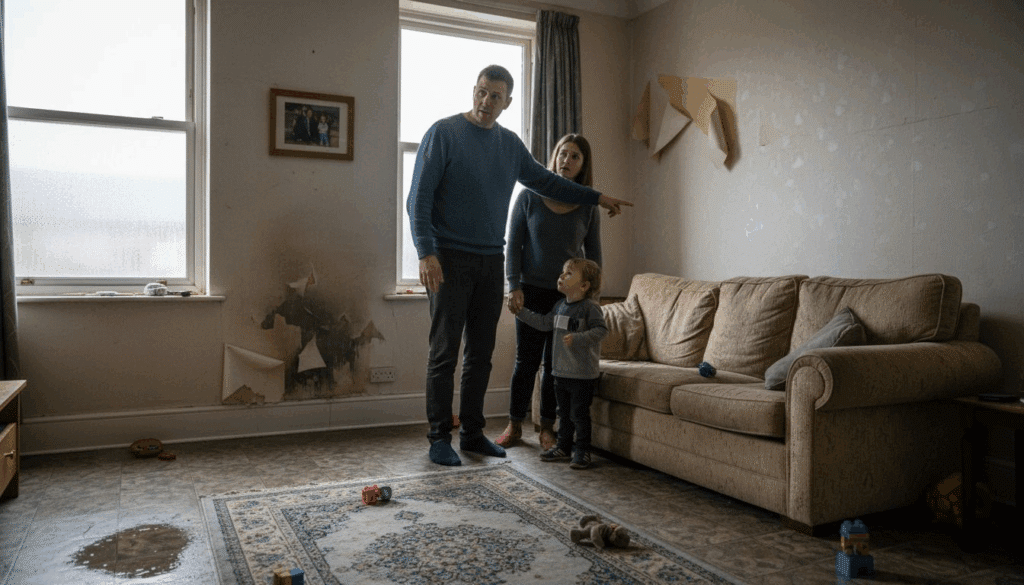
Leaking walls and stubborn musty smells can quickly turn your Gauteng home from a sanctuary into a source of worry. Damp problems not only weaken building materials but also invite health concerns and costly repairs if ignored. Understanding the causes and warning signs of moisture infiltration helps you take proactive steps to protect your property, with clear guidance on how professional waterproofing solutions can provide lasting peace of mind.
Table of Contents
- What Are Damp Walls And Why They Occur
- Types Of Damp: Rising, Penetrating And Condensation
- Key Signs And Symptoms Of Damp Walls
- Factors Worsening Damp In South African Homes
- Risks Of Ignoring Damp And When To Act
Key Takeaways
| Point | Details |
|---|---|
| Understanding Damp Walls | Damp walls are caused by moisture infiltration through various pathways, risking structural integrity and health. |
| Types of Damp | The main types include Rising Damp, Penetrating Damp, and Condensation Damp, each with distinct causes and locations. |
| Signs of Damp | Common indicators include water stains, mould growth, and musty odours, which should be identified early to prevent severe damage. |
| Importance of Prevention | Implementing damp proofing measures and regular inspections can significantly mitigate potential damp issues in homes. |
What Are Damp Walls and Why They Occur
Damp walls represent a significant structural challenge for Gauteng homeowners, characterised by unwanted moisture penetration into building materials. Moisture infiltration through building elements can compromise structural integrity and create potential health risks.
The phenomenon of damp walls occurs when moisture becomes trapped within wall structures through several potential pathways. These include:
- Ground moisture rising through porous materials via capillary action
- Rainwater penetration through unprotected external wall surfaces
- Inadequate drainage systems surrounding the property
- Poor ventilation causing condensation build-up
- Structural defects allowing water ingress
Moisture movement represents a complex process involving multiple environmental and construction-related factors. When moisture penetrates building materials, it can create progressive damage that extends beyond surface-level discolouration.
Damp proofing techniques are crucial for preventing long-term structural deterioration. Professional interventions typically involve installing damp proof courses (DPC), implementing damp proof membranes (DPM), and applying specialised waterproofing surface treatments.
Pro tip: Conduct regular visual inspections of your walls, paying particular attention to areas near ground level and external wall surfaces to catch early signs of dampness.
Types of Damp: Rising, Penetrating and Condensation
Damp walls manifest in three distinct categories, each presenting unique challenges for Gauteng homeowners. Moisture problems in buildings arise through different mechanisms, requiring targeted diagnostic and remediation approaches.
The primary types of damp include:
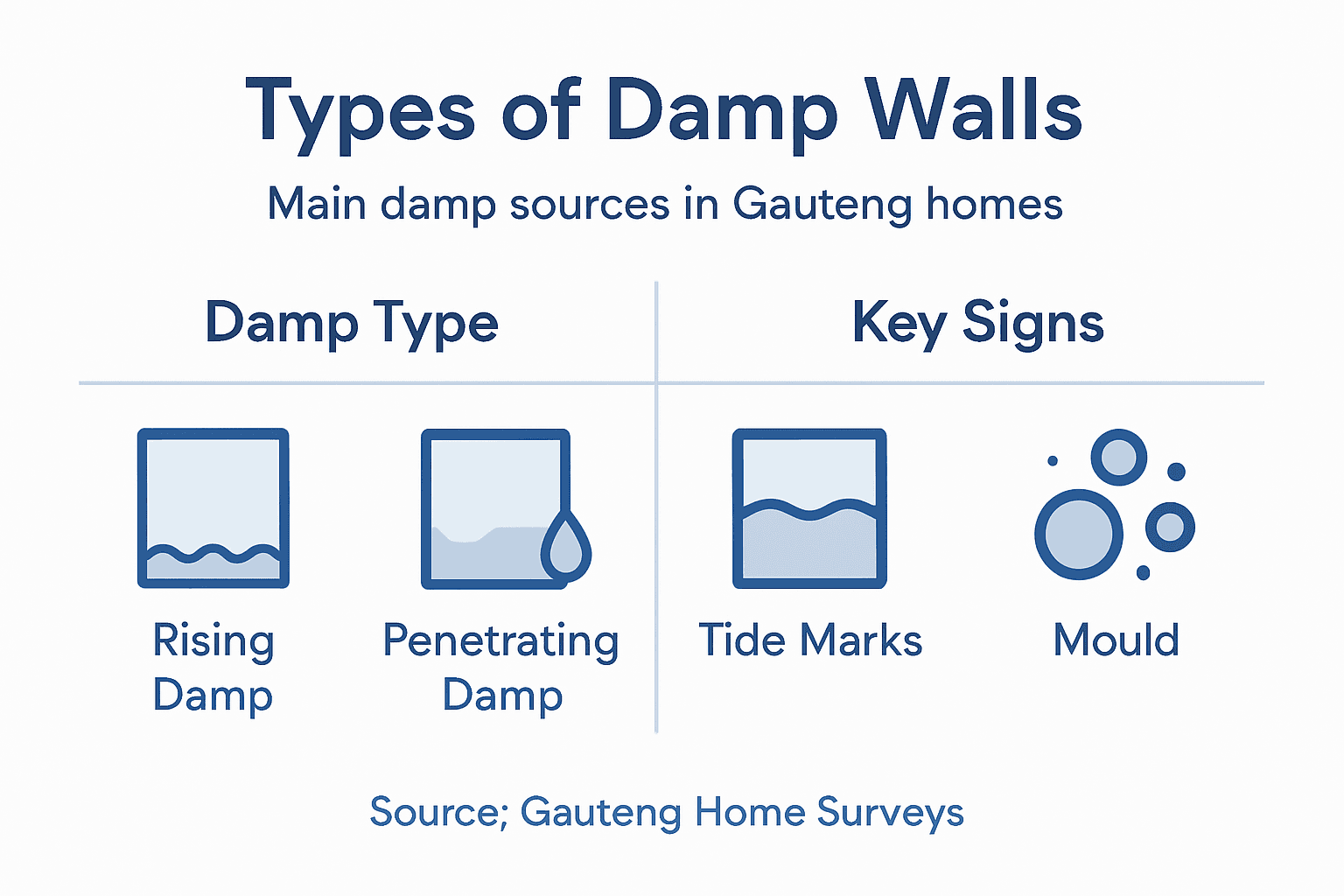
- Rising Damp: Moisture drawn upward from ground sources through porous building materials via capillary action
- Penetrating Damp: Water infiltration through external walls, roofs, or structural defects
- Condensation Damp: Moisture formed when warm, humid air contacts cooler surfaces
Rising damp occurs when groundwater moves upward through wall materials through tiny interconnected passages. This process can create significant structural damage, causing paint deterioration, salt deposit formation, and potential structural weakening. Typically, rising damp affects ground-floor walls and appears as visible moisture stains or tide marks near wall bases.
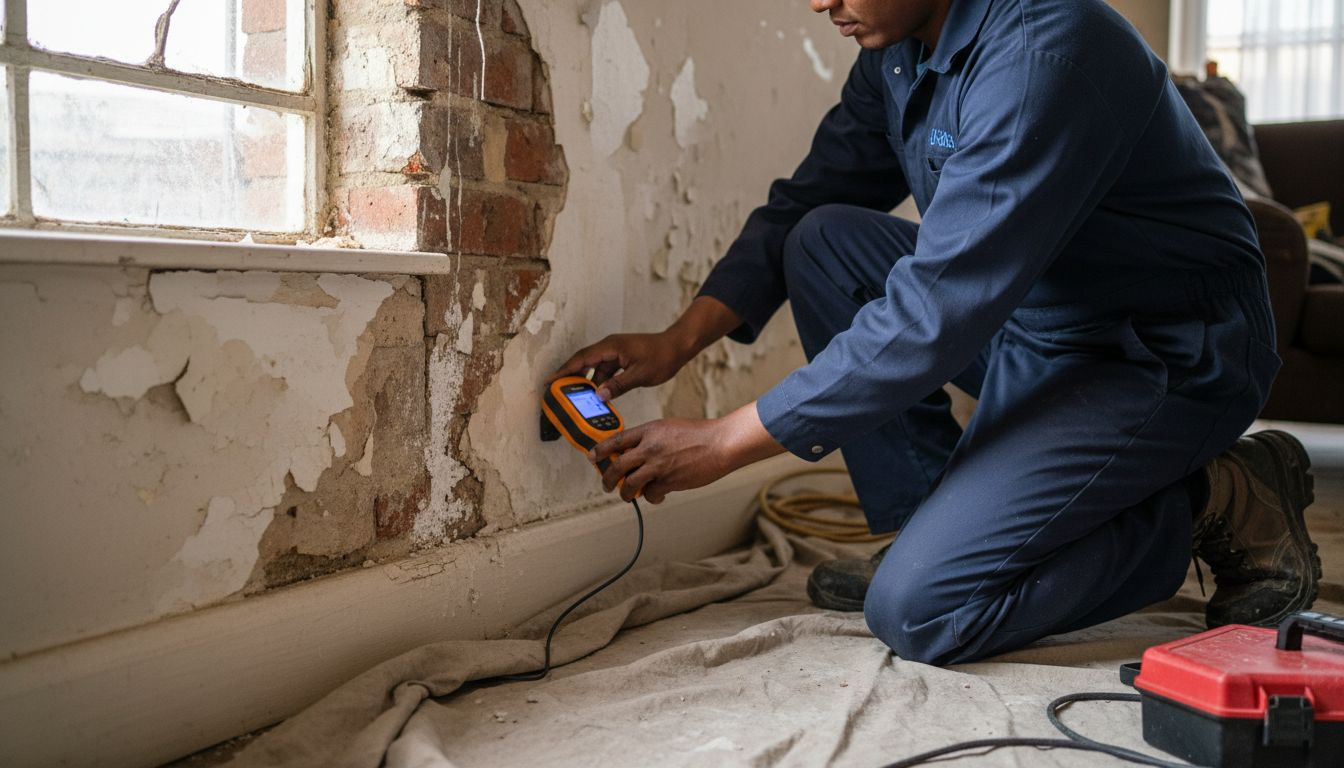
Moisture intrusion mechanisms demonstrate that penetrating damp results from external water sources breaching the building envelope. Factors like damaged roof tiles, cracked rendering, blocked gutters, and poor external wall maintenance can accelerate water ingress, leading to progressive structural deterioration.
Condensation damp represents a different challenge, emerging from internal environmental conditions. High humidity levels, inadequate ventilation, and temperature variations contribute to moisture droplet formation on cooler wall surfaces. This type of damp is particularly prevalent in poorly ventilated spaces like bathrooms, kitchens, and areas with limited air circulation.
The following table contrasts the three main types of damp, highlighting their typical locations and primary causes:
| Damp Type | Usual Location | Primary Cause |
|---|---|---|
| Rising Damp | Ground-floor wall bases | Ground moisture capillarity |
| Penetrating Damp | External/interior walls | Rainwater ingress, leaks |
| Condensation Damp | Kitchens, bathrooms | High humidity, poor airflow |
Pro tip: Invest in a reliable humidity metre to monitor indoor moisture levels and identify potential condensation risks before they develop into significant damp problems.
Key Signs and Symptoms of Damp Walls
Damp walls present a range of distinctive warning signs that Gauteng homeowners should recognise early. Moisture-related symptoms can manifest through multiple visual and sensory indicators, signalling potential structural risks.
The most common signs of damp walls include:
- Visible water staining or discoloration
- Warping or bubbling paint and wallpaper
- Mould and mildew growth
- Persistent musty odours
- White salt deposits (efflorescence)
- Cold, damp surface sensations
- Crumbling or weakening plaster
- Dark patches or tide marks near wall bases
Mould growth represents one of the most dangerous indicators of persistent dampness. These fungal colonies not only damage wall surfaces but also pose significant health risks, potentially triggering respiratory issues and allergic reactions for inhabitants. Dark green, black, or brown patches typically suggest advanced moisture problems requiring immediate professional intervention.
Wall moisture symptoms often progress from subtle visual changes to more extensive structural damage. Salt deposits, known as efflorescence, emerge as white crystalline formations on wall surfaces, indicating prolonged moisture penetration. These deposits occur when water-soluble salts migrate through porous building materials, leaving behind distinctive white or greyish markings.
Pro tip: Conduct monthly visual inspections of your walls, paying special attention to corners, areas near plumbing, and ground-level surfaces to catch early damp warning signs.
Factors Worsening Damp in South African Homes
Gauteng homeowners face multiple challenges that can accelerate damp problems in residential properties. South African building moisture risks stem from a complex interplay of environmental, structural, and maintenance-related factors.
The primary factors worsening damp in South African homes include:
- Inadequate waterproofing during initial construction
- Poorly maintained drainage systems
- Porous building materials
- High groundwater levels
- Extreme seasonal rainfall patterns
- Substandard foundation designs
- Lack of proper ventilation
- Structural cracks and defects
Climatic conditions play a significant role in damp progression. South African regions experience intense seasonal variations, with heavy rains creating substantial moisture challenges. Buildings in flood-prone areas or locations with high groundwater levels are particularly vulnerable to persistent dampness.
Building material vulnerabilities compound moisture-related risks. Cavity walls without effective water drainage, absent or poorly installed damp proof courses, and substandard plastering techniques contribute to increased moisture penetration. These structural weaknesses allow water to migrate through building materials, creating long-term dampness problems.
Pro tip: Invest in a professional drainage assessment for your property, focusing on ground slope, gutter functionality, and foundation waterproofing to mitigate potential damp risks.
Below is a summary of preventative measures and their key benefits for homeowners:
| Preventative Measure | Main Benefit | When to Implement |
|---|---|---|
| Install damp proof course | Stops ground moisture rising | During construction or retrofit |
| Improve drainage & gutters | Diverts water from foundations | After heavy rains or flooding |
| Enhance indoor ventilation | Reduces internal condensation | In humid or poorly aired rooms |
| Regular property inspections | Early detection of damp issues | At least every six months |
Risks of Ignoring Damp and When to Act
Homeowners in Gauteng must recognise the critical importance of addressing damp issues promptly. Moisture-related health risks can escalate quickly, transforming minor concerns into significant structural and health challenges.
The primary risks of neglecting damp walls include:
- Structural damage to foundations
- Accelerated wood rot and material decay
- Increased metal corrosion
- Compromised building integrity
- Reduced property market value
- Higher long-term repair costs
- Potential pest infestations
- Severe respiratory health complications
Mould growth represents one of the most dangerous consequences of persistent dampness. These fungal colonies can trigger serious respiratory issues, particularly for children, elderly individuals, and those with pre-existing health conditions. The spores proliferate rapidly in moisture-rich environments, potentially causing allergic reactions and chronic respiratory problems.
Long-term damp consequences extend beyond immediate structural damage. Continuous moisture penetration weakens building materials, creates ideal conditions for pest infestations, and can dramatically reduce a property’s structural integrity and market value. Professional intervention becomes crucial when homeowners observe persistent moisture, unexplained musty odours, or visible mould patches.
Pro tip: Schedule a professional damp assessment at the first sign of moisture, as early detection can save thousands in potential repair costs and protect your family’s health.
Protect Your Gauteng Home from Damp Walls with Professional Waterproofing Solutions
Damp walls affect many Gauteng homeowners, causing structural damage and health risks through rising, penetrating, and condensation damp. If you are noticing signs like mould growth, water stains or persistent musty odours, you understand the urgency to act fast. Addressing these issues requires expert knowledge of damp proofing techniques and tailored waterproofing strategies to stop moisture infiltration and preserve your property’s integrity.

Take control of your home’s health today by exploring the trusted services at Pro Waterproofing. Our team provides specialised interventions designed to halt rising damp and penetrating moisture before costly repairs become necessary. Learn more about effective solutions on our Uncategorized – Pro Waterproofing page and discover how routine waterproofing maintenance can prevent condensation-related problems. Don’t wait for damage to worsen. Visit Pro Waterproofing now and secure your property with quality, licensed waterproofing expertise.
Frequently Asked Questions
What are the main causes of damp walls?
The primary causes of damp walls include rising damp from groundwater, penetrating damp from rainwater infiltration, and condensation damp from poor ventilation and high humidity levels.
How can I identify rising damp in my home?
Rising damp typically manifests as moisture stains, tide marks near the base of walls, salt deposits (efflorescence), and damage such as peeling paint or wallpaper at ground-floor levels.
What are effective methods to prevent damp walls?
Effective methods to prevent damp walls include installing damp proof courses (DPC), improving drainage systems, enhancing indoor ventilation, and conducting regular property inspections for early signs of moisture.
Why is it important to address dampness immediately?
Ignoring dampness can lead to severe structural damage, increased mould growth, and potential health risks. Early intervention can prevent costly repairs and protect the wellbeing of occupants.
Recommended
- Why Walls Get Damp – Impact on South African Homes
- Damp Proofing Walls – Ensuring Healthy South African Homes
- Preventing & Treating Damp in Internal Walls
- Waterproofing vs Damp Proofing – Protecting South African Homes
- What Are The Potential Obstacles When Surveying Hygienic Wall Cladding Installations.