
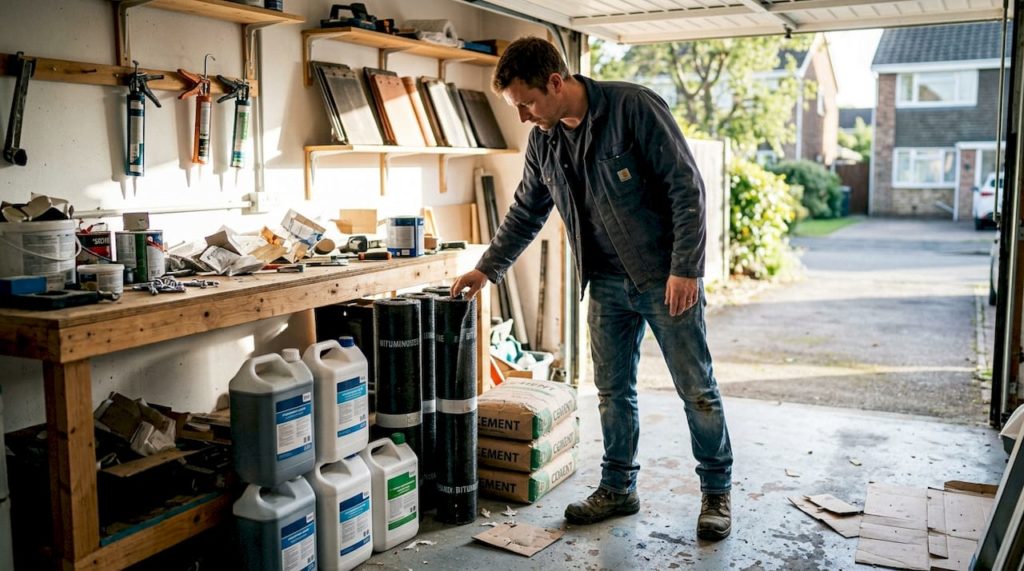
Selecting the right waterproofing material can feel overwhelming when you’re staring at dozens of options, each promising superior protection for your South African property. The wrong choice doesn’t just waste money, it invites structural damage, mould growth, and costly repairs down the line. This guide cuts through the confusion by presenting a clear evaluation framework and comprehensive materials list tailored to South Africa’s unique climate challenges. You’ll discover exactly which materials suit your property type, budget, and environmental conditions, empowering you to make confident decisions that protect your investment for decades.
Table of Contents
- Key takeaways
- How to evaluate waterproofing materials: key criteria for South African properties
- Top waterproofing materials for residential, commercial, and industrial buildings
- Comparison of waterproofing materials: advantages and limitations
- Choosing the right waterproofing material for your property type and budget
- Top waterproofing solutions from Pro Waterproofing
- Frequently asked questions
Key Takeaways
| Point | Details |
|---|---|
| Selection criteria | Durability, suitability and ease of application should guide the choice, balancing cost and climate suitability. |
| Material variety | A wide range of options exists from bituminous membranes to cementitious coatings and polyurethane, each with distinct advantages. |
| Regional applicability | Regional conditions require materials that cope with coastal humidity or inland rainfall and maintain protection over time. |
| Cost and maintenance | Long term cost effectiveness comes from durability and reduced maintenance rather than the cheapest upfront option. |
How to evaluate waterproofing materials: key criteria for South African properties
Choosing waterproofing materials without a clear evaluation framework leads to mismatches between product capabilities and property needs. Material selection depends on durability, flexibility, cost, and climate suitability, making it essential to assess each factor systematically. South Africa’s climate presents particular challenges, from the humid coastal regions of KwaZulu-Natal to the seasonal downpours in Gauteng, requiring materials that withstand both constant moisture and periodic intense rainfall.
Durability stands as the primary consideration because waterproofing failures create cascading problems throughout your property. Materials must resist UV degradation, temperature fluctuations, and mechanical stress whilst maintaining their protective barrier for years. A membrane that cracks after three winters costs far more in repairs than investing in proven longevity from the start. Commercial and industrial properties face higher exposure levels than residential buildings, demanding materials with superior toughness and chemical resistance.
Application ease directly impacts both DIY feasibility and professional installation costs. Some materials require specialised equipment, multiple coats, or specific weather conditions during application. Cementitious coatings offer straightforward brush or roller application, whilst fluid-applied membranes need spray equipment and trained applicators. Consider your timeline, available labour, and weather windows when evaluating options. Properties with complex geometries or numerous penetrations benefit from materials that conform easily to irregular surfaces.
Cost analysis must extend beyond initial purchase price to include application labour, maintenance requirements, and expected lifespan. A cheaper material requiring reapplication every five years ultimately costs more than a premium option lasting fifteen years with minimal upkeep. Factor in your property’s accessibility, as difficult-to-reach areas make frequent maintenance impractical and expensive. Understanding the foundation waterproofing guide helps clarify long-term cost implications for below-grade applications.
Key evaluation criteria include:
- Waterproofing effectiveness measured by permeability ratings and test certifications
- Climate compatibility with local temperature ranges, rainfall intensity, and humidity levels
- Application requirements including surface preparation, equipment needs, and curing time
- Maintenance demands such as inspection frequency and recoating schedules
- Regulatory compliance with South African building codes and safety standards
Pro Tip: Prioritise durability over lower upfront costs, especially for foundations and commercial roofs. Spending 30% more on premium materials typically saves 200% in avoided repairs and extended service life.
Top waterproofing materials for residential, commercial, and industrial buildings
South African property owners have access to diverse waterproofing materials, each engineered for specific applications and performance requirements. Understanding the characteristics of popular options helps narrow choices based on your property type and exposure conditions. Polyurethane coatings offer excellent protection and flexibility for various property types, making them versatile solutions for both new construction and remedial projects.
Polyurethane liquid membranes create seamless, elastic barriers that accommodate structural movement without cracking. These coatings bond directly to concrete, metal, and wood substrates, forming a continuous waterproof layer that bridges hairline cracks. Their flexibility makes them ideal for roofs, balconies, and parking decks experiencing thermal expansion. Polyurethane resists chemical exposure, making it suitable for industrial facilities handling aggressive substances. Application requires dry conditions and proper surface preparation, but the resulting membrane delivers decades of reliable protection.
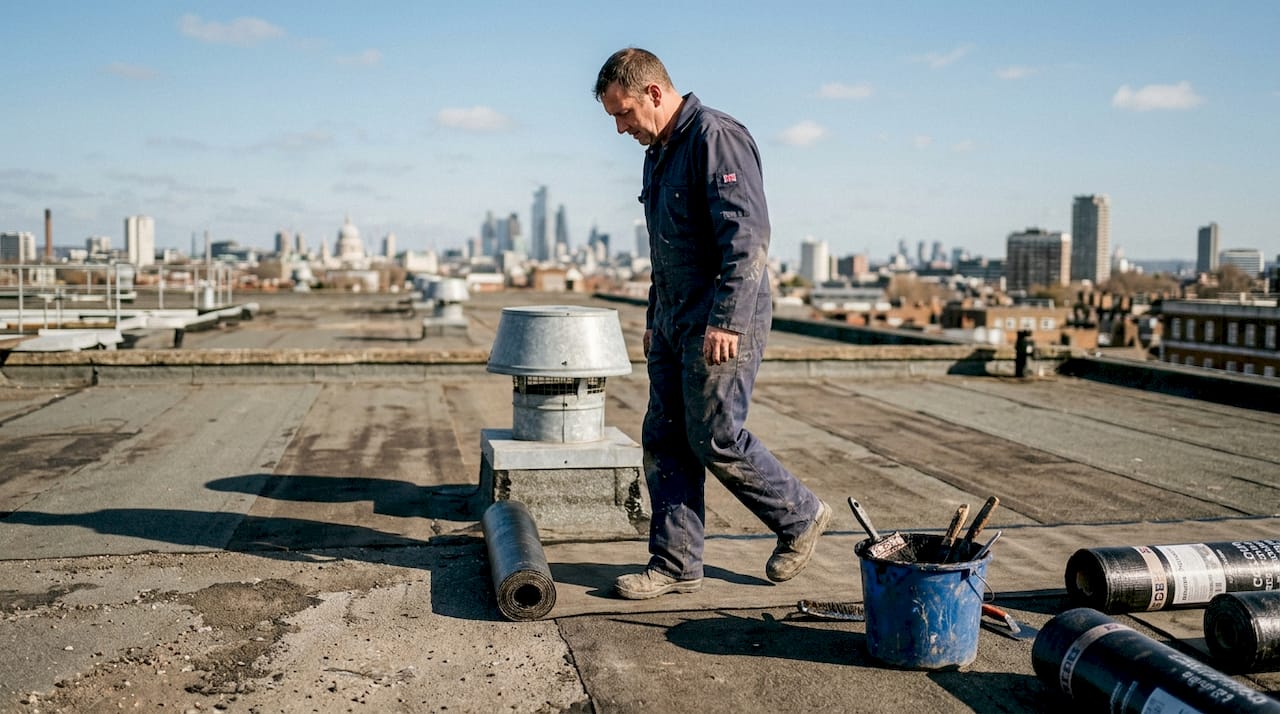
Bituminous membranes dominate commercial waterproofing due to their proven durability and cost effectiveness at scale. Bituminous membranes are popular for commercial building waterproofing due to durability, particularly for large flat roofs and below-grade walls. These sheet membranes come in torch-applied and self-adhesive variants, offering redundancy through multiple layers. Modified bitumen products incorporate polymers for enhanced flexibility and UV resistance. Their thickness provides excellent puncture resistance, crucial for roofs with foot traffic or mechanical equipment.
Cementitious waterproofing membranes suit concrete structures where breathability matters alongside water resistance. Cementitious waterproofing membranes are commonly used in basements and concrete structures, allowing water vapour transmission whilst blocking liquid water penetration. These powder-based products mix with water to form a slurry applied by brush, roller, or spray. They bond chemically with concrete substrates, becoming integral to the structure rather than forming a separate layer. Cementitious systems excel in water retaining structures, swimming pools, and below-grade walls where hydrostatic pressure exists.
Fluid-applied membranes eliminate seams entirely, creating monolithic waterproof barriers across complex geometries. These liquid products cure to form rubber-like membranes that conform to irregular surfaces, penetrations, and details. Spray or roller application allows rapid coverage of large areas with consistent thickness. Fluid-applied systems work particularly well for remedial projects where existing substrates have multiple protrusions or difficult access points. Their seamless nature reduces failure points compared to sheet membranes requiring overlaps and terminations.
Elastomeric coatings provide cost-effective waterproofing for residential roofs and exterior walls. These acrylic or silicone-based products stretch and contract with temperature changes, bridging minor cracks and surface imperfections. Application resembles painting, making them accessible for property owners seeking DIY solutions. Elastomeric coatings reflect solar radiation, reducing cooling costs in South Africa’s sunny climate. They require recoating every five to eight years but offer excellent value for low-slope residential roofs and rendered walls.
Common material applications:
- Polyurethane for roofs, balconies, and parking decks requiring flexibility
- Bituminous membranes for commercial flat roofs and foundation walls
- Cementitious systems for basements, pools, and water retaining structures
- Fluid-applied membranes for complex geometries and remedial projects
- Elastomeric coatings for residential roofs and exterior wall protection
Comparison of waterproofing materials: advantages and limitations
Comparing waterproofing materials side by side reveals critical trade-offs between cost, performance, and application complexity. Each waterproofing material has unique strengths and weaknesses depending on application context, making direct comparison essential for informed decision making. This analysis examines popular materials across key performance indicators relevant to South African property owners.
| Material | Cost range | Durability | Application ease | Best applications | Expected lifespan |
|---|---|---|---|---|---|
| Polyurethane | R150-250/m² | Excellent | Moderate | Roofs, balconies, decks | 15-20 years |
| Bituminous | R80-180/m² | Very good | Moderate | Commercial roofs, foundations | 12-18 years |
| Cementitious | R60-120/m² | Good | Easy | Basements, pools, concrete | 10-15 years |
| Fluid-applied | R180-300/m² | Excellent | Difficult | Complex geometries, remedial | 15-25 years |
| Elastomeric | R40-90/m² | Fair | Very easy | Residential roofs, walls | 5-8 years |
Polyurethane advantages include superior flexibility, chemical resistance, and seamless application across varied substrates. These membranes handle structural movement exceptionally well, preventing crack propagation common with rigid systems. Their disadvantages involve higher material costs and sensitivity to moisture during application. Surface preparation requirements are stringent, and improper priming leads to adhesion failures. Polyurethane works best where long-term performance justifies premium pricing.
Bituminous membranes offer proven reliability backed by decades of field performance in harsh conditions. Their multi-layer construction provides redundancy, and torch-applied variants create robust seams resistant to water penetration. Limitations include weight, requiring structural support, and vulnerability to UV degradation without protective layers. Installation demands skilled labour and fire safety precautions for torch-applied types. These membranes excel in large commercial projects where economies of scale offset labour costs.
Cementitious systems provide breathable waterproofing ideal for concrete structures experiencing hydrostatic pressure. They bond integrally with substrates and tolerate damp conditions during application. Weaknesses include limited flexibility, making them unsuitable for surfaces with significant movement, and susceptibility to mechanical damage from impacts. Cementitious membranes suit stable concrete structures where vapour permeability prevents moisture accumulation.
Fluid-applied membranes eliminate seam failures entirely whilst conforming to complex details effortlessly. Their seamless nature makes them ideal for remedial work on existing structures with numerous penetrations. Disadvantages include high material costs, specialised application equipment requirements, and strict weather limitations during installation. These systems justify their premium for projects where seam integrity is critical or substrate geometry is challenging.
Elastomeric coatings deliver accessible waterproofing at entry-level pricing suitable for residential budgets. Their reflective properties reduce cooling loads, and simple application allows DIY installation. Limitations include shorter lifespan, requiring regular recoating, and inadequate protection for high-exposure commercial applications. They perform well for residential roofs in moderate climates with proper maintenance.
Material selection considerations:
- Polyurethane for maximum flexibility and chemical resistance
- Bituminous for proven commercial-grade durability
- Cementitious for breathable concrete protection
- Fluid-applied for seamless coverage on complex surfaces
- Elastomeric for budget-conscious residential projects
Pro Tip: Combining materials often delivers superior protection for complex projects. Apply cementitious base coats for concrete bonding, then top with polyurethane for flexibility and UV resistance.
Choosing the right waterproofing material for your property type and budget
Matching waterproofing materials to your specific property type and financial constraints ensures optimal protection without overspending or underperforming. Commercial properties with high exposure levels justify premium materials like polyurethane that withstand heavy traffic, chemical exposure, and extreme weather. These buildings generate revenue that waterproofing failures would interrupt, making reliability paramount regardless of upfront costs. Industrial facilities handling corrosive substances require chemically resistant membranes that cheaper alternatives cannot provide.
Residential properties benefit from cost-effective solutions like elastomeric coatings or cementitious membranes that deliver adequate protection within typical household budgets. Homeowners rarely need the extreme durability commercial buildings demand, allowing them to prioritise value over maximum performance. A well-maintained elastomeric roof coating provides 15-20 years of service through periodic recoating, matching most homeowners’ ownership duration. Material choice depends largely on property use, exposure level, and investment capability, making context essential for appropriate selection.
Hybrid approaches combining multiple materials often outperform single-product systems by leveraging each material’s strengths. Apply cementitious base coats to concrete foundations for integral bonding and vapour management, then top with polyurethane for flexibility and UV protection. This layered strategy costs more than single systems but provides redundancy and extended service life. Complex projects with varied substrate types benefit from tailored material selection for each area rather than forcing one product across all applications.
Budget planning must account for total project costs including surface preparation, application labour, and long-term maintenance. DIY-friendly materials save installation costs but may require more frequent reapplication, whilst professional-grade systems demand skilled labour upfront but last longer with minimal upkeep. Properties in remote areas should favour durable materials reducing maintenance visits, even if initial costs run higher. Accessible urban properties can utilise shorter-lifespan materials with planned recoating schedules.
Property evaluation checklist:
- Identify all areas requiring waterproofing: roofs, foundations, basements, balconies, walls
- Assess exposure levels: UV intensity, rainfall frequency, chemical contact, mechanical stress
- Determine substrate types: concrete, masonry, metal, wood, existing coatings
- Calculate total surface area and access difficulty for labour cost estimation
- Define performance expectations: required lifespan, maintenance tolerance, aesthetic preferences
- Establish budget constraints: total available funds, financing options, maintenance reserves
Timing waterproofing projects during South Africa’s dry seasons ensures optimal curing conditions and application success. Most materials require dry substrates and rain-free curing periods, making winter months in the Western Cape or dry season in Gauteng ideal. Scheduling flexibility allows contractors to work during optimal weather windows, reducing rush fees and application compromises. Planning projects six months ahead provides time for proper material selection, contractor vetting, and weather coordination.
Pro Tip: Schedule waterproofing during dry seasons to ensure proper curing and maximum material performance. Applying membranes during rainy periods compromises adhesion and can void warranties.
Top waterproofing solutions from Pro Waterproofing
Navigating waterproofing material selection becomes significantly easier with expert guidance from professionals who understand South African property challenges intimately. Pro Waterproofing specialises in supplying and applying comprehensive waterproofing solutions tailored to residential, commercial, and industrial clients across the country. Their team evaluates your property’s specific conditions, recommends appropriate materials, and executes installations backed by performance warranties.
Whether you’re protecting a new home foundation, remediating a leaking commercial roof, or waterproofing an industrial facility, Pro Waterproofing delivers customised solutions using premium materials and proven application techniques. Their extensive product range includes all materials discussed in this guide, allowing them to match solutions precisely to your requirements and budget. Professional assessments identify hidden risks DIY approaches might miss, preventing costly failures down the line. Explore Pro Waterproofing specialised solutions to discover how expert waterproofing protects your property investment for decades. Contact their team for free consultations and detailed project assessments tailored to your property’s unique needs.
Frequently asked questions
What are the most durable waterproofing materials for South African homes?
Polyurethane coatings and bituminous membranes rank among the most durable options for local climates, offering 15-20 year lifespans with proper application. Durability depends heavily on correct installation and regular maintenance inspections. Premium materials justify their costs through extended service life and reduced repair frequency.
Can I apply waterproofing materials myself or do I need a professional?
Some materials like elastomeric coatings and cementitious systems allow DIY application with careful preparation and technique. However, professional waterproofing services ensure longer-lasting results through expert surface preparation, proper product selection, and warranty coverage. Complex structures and commercial buildings always require professional installation to meet building codes and performance standards.
How often should waterproofing be inspected or renewed?
Inspection every two to three years is advisable, depending on material type and exposure conditions. Renewal schedules vary significantly, with some bituminous membranes lasting 15+ years whilst elastomeric coatings may need reapplication every five to eight years. Regular inspections catch minor issues before they escalate into expensive structural damage.
What is the cost range for effective waterproofing materials in South Africa?
Costs vary widely based on material selection and project area, starting from R40-90/m² for affordable elastomeric options to R180-300/m² for premium polyurethane or fluid-applied systems. Professional installation typically adds 40-60% to material costs but enhances effectiveness and provides warranty protection. Total project costs depend on surface preparation requirements, accessibility, and complexity of details like penetrations and terminations.