
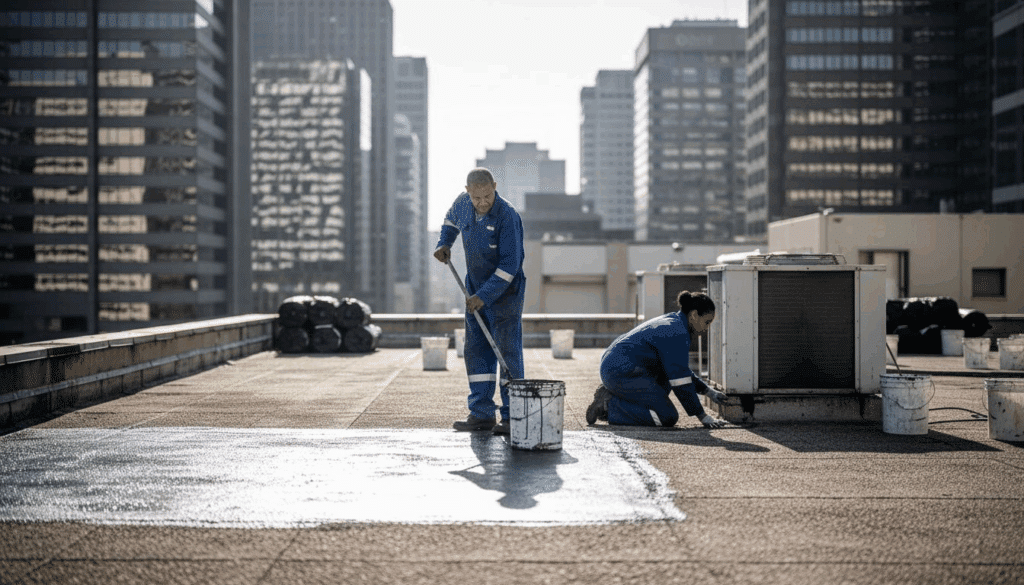
Over half of commercial buildings in Gauteng aged over twenty years show signs of water damage that reduce property value and increase maintenance costs. For property managers, especially those overseeing aging british or South African structures, finding reliable waterproofing solutions is crucial for long term asset protection. This guide uncovers proven systems that help prevent leaks, extend building lifespan, and secure your investment against the harsh local climate.
Table of Contents
- 1. Understanding Roof Membrane Waterproofing Solutions
- 2. Benefits of Liquid Applied Waterproofing Systems
- 3. Sealing Basements and Underground Parking Areas
- 4. Waterproofing for Expansion Joints and Concrete Cracks
- 5. Protecting Exterior Walls with Bituminous Coatings
- 6. Tank and Reservoir Waterproofing Techniques
- 7. Choosing the Right Waterproofing Contractor
Quick Summary
| Takeaway | Explanation |
|---|---|
| 1. Proper installation is crucial | Ensure professional installation of waterproofing systems for optimal effectiveness and long-term protection against moisture. |
| 2. Tailor solutions to building types | Different structures need specific membrane solutions based on factors like roof pitch and usage. |
| 3. Annual inspections are essential | Conduct yearly professional inspections to address potential membrane weaknesses before serious issues arise. |
| 4. Select contractors carefully | Evaluate contractor credentials and experience to ensure they meet necessary waterproofing standards. |
| 5. Assess structural vulnerabilities | Conduct thorough moisture assessments before waterproofing to identify risks and choose appropriate protection methods. |
1. Understanding Roof Membrane Waterproofing Solutions
Roof membrane waterproofing represents a critical protective strategy for commercial buildings in South Africa, safeguarding structural integrity against moisture penetration. These sophisticated systems create an impenetrable barrier that shields building infrastructure from water damage, preventing costly structural deterioration.
Commercial roof membranes function as sophisticated shields, engineered to repel water and prevent moisture infiltration through multiple layers of specialised materials. The South African National Standard SANS 10021 provides comprehensive guidelines for membrane installation, ensuring that waterproofing systems meet rigorous performance standards specific to local environmental conditions.
Key Components of Roof Membrane Systems:
- Synthetic rubber compounds
- Bituminous materials
- Thermoplastic polymers
- Liquid applied membranes
These membranes work by creating a continuous, flexible layer that adapts to building movement while resisting water penetration. Professional installation involves precise application techniques, ensuring complete coverage and seamless protection against moisture ingress.
Property managers must recognise that different building types require specific membrane solutions. Factors like roof pitch, building usage, and local climate significantly influence membrane selection. For instance, industrial facilities might require more robust systems compared to standard office complexes.
Expert Tip: Conduct annual professional inspections to identify potential membrane weaknesses before they develop into significant water damage problems.
2. Benefits of Liquid Applied Waterproofing Systems
Liquid applied waterproofing systems represent a cutting edge solution for protecting commercial buildings against moisture damage. These innovative systems deliver comprehensive protection through seamless, highly elastic coatings that adapt perfectly to complex architectural surfaces.
Understanding liquid waterproofing technologies reveals their extraordinary versatility in addressing South Africa’s challenging environmental conditions. Unlike traditional waterproofing methods, liquid membranes create continuous protective layers without seams or joints, dramatically reducing potential leak risks.
Key Advantages of Liquid Applied Waterproofing:
- Seamless coverage across complex surfaces
- Exceptional UV and chemical resistance
- High flexibility accommodating structural movements
- Rapid application and minimal disruption
- Long term durability with minimal maintenance requirements
Commercial property managers appreciate these systems because they provide superior protection against heavy rainfall, intense sunlight, and significant temperature variations prevalent in South African climates. The liquid membrane adapts to roof contours, parapet walls, and intricate structural elements, ensuring comprehensive moisture protection.
The application process involves spraying or rolling specialised liquid compounds that cure into a robust, elastic membrane. These materials create strong adhesive bonds with multiple surface types, including concrete, metal, and existing roofing materials, making them incredibly versatile for different commercial building requirements.
Professional Recommendation: Always engage certified waterproofing professionals who understand local environmental conditions to ensure precise liquid membrane application and optimal long term protection.
3. Sealing Basements and Underground Parking Areas
Underground structures like basements and parking areas represent critical zones requiring robust waterproofing protection. Commercial buildings in South Africa face significant challenges from groundwater moisture and hydrostatic pressure that can compromise structural integrity.
The most effective waterproofing strategies involve sophisticated basement wall sealing techniques that create comprehensive moisture barriers. Bituminous membranes play a crucial role in protecting these underground environments by delivering exceptional water resistance and durability.
Key Waterproofing Components for Underground Structures:
- Polymer reinforced bituminous membranes
- Cementitious waterproofing slurries
- Multi layer protective coatings
- Flexible sealant applications
Professional waterproofing approaches typically involve multiple stages of protection. Cementitious waterproofing slurries are applied directly to concrete and masonry surfaces, forming rigid barriers that prevent moisture penetration. These specialised coatings address the unique challenges of underground environments by creating impermeable layers resistant to hydrostatic pressure.
The application process requires meticulous surface preparation, including cleaning, priming, and careful coating techniques. Property managers must understand that different underground areas require tailored waterproofing strategies based on specific environmental conditions and structural characteristics.
Professional Recommendation: Conduct comprehensive moisture assessments before waterproofing to identify potential structural vulnerabilities and select the most appropriate protection method.
4. Waterproofing for Expansion Joints and Concrete Cracks
Expansion joints and concrete cracks represent critical vulnerabilities in commercial building structures where water infiltration can cause significant structural damage. Understanding how to effectively seal these potential entry points is essential for maintaining long term building integrity.
Modern waterproofing technologies have developed sophisticated joint sealing solutions that address the complex challenges of structural movement and moisture prevention. These advanced systems recognise that buildings are dynamic structures subject to thermal expansion, ground settlement, and mechanical stresses.
Key Waterproofing Strategies for Expansion Joints:
- Pre compressed sealant applications
- Crystalline waterproofing admixtures
- Flexible joint filling compounds
- Elastomeric membrane treatments
The most effective approach involves using specialised products that can accommodate structural movement while maintaining a robust moisture barrier. Crystalline waterproofing admixtures penetrate concrete at a molecular level, creating self sealing capabilities that react with moisture to block potential water ingress paths.
Professional waterproofing requires a comprehensive assessment of each building’s unique structural characteristics. Factors such as building age, construction materials, local climate conditions, and historical movement patterns all influence the selection of appropriate joint and crack sealing techniques.
Professional Recommendation: Conduct comprehensive thermal movement and settlement assessments before selecting waterproofing strategies to ensure maximum protection and compatibility with your specific structural requirements.
5. Protecting Exterior Walls with Bituminous Coatings
Bituminous coatings represent a sophisticated approach to protecting exterior walls from moisture damage, offering commercial buildings comprehensive defence against environmental challenges. These specialised protective layers create an impenetrable barrier that shields structures from water penetration and structural degradation.
Understanding the critical role of exterior wall waterproofing techniques helps property managers implement robust moisture protection strategies. Bituminous coatings are engineered to provide exceptional resistance against water ingress while maintaining structural flexibility.
Key Characteristics of Bituminous Exterior Wall Protection:
- Exceptional water repellent properties
- High durability under extreme weather conditions
- Flexibility accommodating structural movements
- Resistance to UV radiation and temperature variations
- Long term protective performance
The application process involves meticulous surface preparation and multiple layer treatments that create a seamless protective membrane. Professional applicators carefully clean exterior surfaces, address existing imperfections, and apply specialised bituminous compounds using professional grade equipment.
Modern bituminous coatings have evolved to include advanced polymer modifications that enhance their protective capabilities. These innovative formulations provide superior adhesion, crack resistance, and longevity compared to traditional waterproofing methods.
Professional Recommendation: Conduct comprehensive wall surface assessments and select bituminous coating systems specifically tailored to your building’s unique environmental exposure and structural characteristics.
6. Tank and Reservoir Waterproofing Techniques
Tank and reservoir waterproofing represents a critical infrastructure protection strategy for commercial and industrial facilities in South Africa. Proper waterproofing ensures the structural integrity and longevity of water containment systems that are essential for numerous industrial applications.
Liquid rubber coatings have emerged as a sophisticated waterproofing solution for large scale structures that demand comprehensive moisture protection. These advanced materials create seamless, flexible barriers that adapt to complex structural dynamics while resisting environmental challenges.
Key Waterproofing Techniques for Tanks and Reservoirs:
- Liquid rubber membrane applications
- Seamless rubberized coating systems
- Chemical resistant protective layers
- UV and abrasion tolerant treatments
- Multi stage application protocols
Professional waterproofing involves meticulous surface preparation, including thorough cleaning and priming before applying specialised protective compounds. The process requires precision application techniques that ensure complete coverage and eliminate potential moisture infiltration points.
Engineering considerations are paramount when selecting waterproofing strategies. Factors such as tank material, intended usage, environmental exposure, and potential chemical interactions must all inform the selection of appropriate waterproofing technologies.
Professional Recommendation: Conduct comprehensive structural assessments and engage certified waterproofing specialists who can design tailored protection strategies specific to your reservoir or tank infrastructure.
7. Choosing the Right Waterproofing Contractor
Selecting an exceptional waterproofing contractor represents a critical decision that directly impacts the long term structural integrity of commercial buildings. Property managers must conduct thorough evaluations to ensure they partner with professionals who deliver comprehensive moisture protection solutions.
Understanding how to evaluate waterproofing contractor credentials involves assessing multiple critical factors beyond simple cost considerations. The right contractor brings specialised expertise, proven track records, and deep understanding of local environmental challenges.
Essential Contractor Selection Criteria:
- Verified professional certifications
- Extensive local experience
- Proven technical expertise
- Comprehensive insurance coverage
- Demonstrable project portfolio
- Technical material knowledge
- Robust post installation support
Professional waterproofing requires sophisticated understanding of surface preparation, application techniques, and material compatibility. Experienced contractors possess nuanced knowledge about South African environmental conditions that significantly influence waterproofing performance.
Property managers should request detailed project proposals, examine previous client references, and verify technical competencies before committing to any waterproofing engagement. A comprehensive evaluation process helps mitigate potential risks associated with substandard moisture protection installations.
Professional Recommendation: Request comprehensive documentation including technical certifications, insurance details, and detailed project case studies before finalising your waterproofing contractor selection.
This table summarises the main points and key takeaways regarding roof membrane waterproofing solutions for commercial buildings in South Africa, as detailed in the article.
Secure Your Commercial Property with Expert Waterproofing Solutions
Commercial buildings in South Africa face unique challenges from water infiltration that can compromise structural integrity and cost you dearly. This article highlights proven waterproofing techniques such as roof membrane applications, liquid applied systems, and specialised joint sealing that protect your investment from costly moisture damage. If you want to prevent leaks, cracks, and underground water issues, understanding these solutions is critical for long-lasting protection.
Take control of your building’s future by partnering with trusted professionals who specialise in comprehensive waterproofing services designed specifically for commercial properties. At Pro Waterproofing, we understand the importance of tailored applications and certified craftsmanship to ensure durable and effective moisture barriers across roofs, basements, walls, and more. Explore solutions in our Uncategorized – Pro Waterproofing section and learn how to select the right contractor to safeguard your investment today. Don’t wait for damage to appear. Visit Pro Waterproofing now and start your project with confidence.
Frequently Asked Questions
What are the main types of commercial waterproofing solutions for buildings?
The main types of commercial waterproofing solutions include roof membrane systems, liquid applied waterproofing, and products for sealing expansion joints and cracks. Each type is designed to address specific building needs, so assess your building’s structure and environmental conditions to choose appropriately.
How can I determine if my building needs commercial waterproofing?
To determine if your building needs waterproofing, inspect for signs of water damage, such as stains on walls or ceilings, mould growth, or dampness in basements. Conduct this assessment at least once a year or after significant weather events to ensure timely action.
What factors should I consider when selecting a waterproofing contractor?
When selecting a waterproofing contractor, consider their professional certifications, local experience, and past project portfolios. Obtain detailed project proposals and check client references to ensure their expertise aligns with your specific waterproofing requirements.
How often should I conduct maintenance on waterproofing systems?
Conduct maintenance on waterproofing systems at least annually, or after extreme weather, to identify potential weaknesses. Regular inspections can prevent costly repairs and extend the lifespan of your waterproofing systems, safeguarding your investment for years.
What materials are commonly used in waterproofing construction?
Common materials used in waterproofing construction include bituminous membranes, liquid applied coatings, and elastomeric sealants. Familiarising yourself with these materials can help you make informed decisions about the best solution for your building’s specific needs.
Can waterproofing techniques adapt to different weather conditions?
Yes, many waterproofing techniques are designed to withstand various weather conditions, including heavy rainfall and temperature fluctuations. Assess your building’s location and environmental challenges to select the most suitable waterproofing method that ensures long-term protection.