
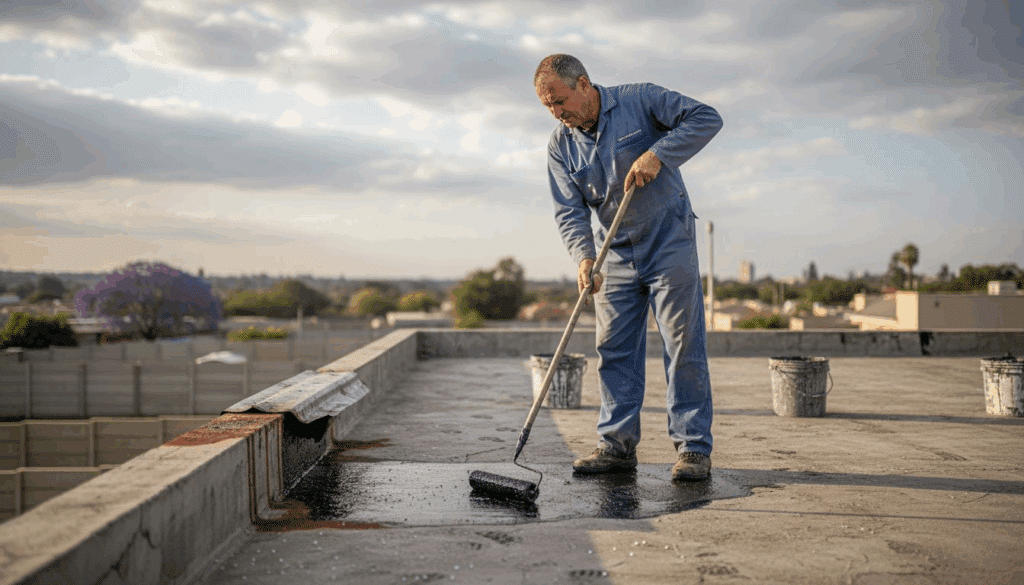
Many Gauteng homeowners overlook a simple truth—flat roofs demand more than a basic seal to keep your home safe. Without proper waterproofing, even a bit of moisture can cause serious structural problems and costly repairs. In a climate as challenging as South Africa’s, especially compared to typical British weather, understanding effective waterproofing solutions for flat roofs is crucial. Here, you will find practical guidance to prevent water damage and extend your roof’s lifespan backed by expert advice.
Table of Contents
- Flat Roof Waterproofing Defined And Debunked
- Types Of Waterproofing Systems For Flat Roofs
- Standard Process And Best-Practice Techniques
- SANS Regulations For South African Roofs
- Risks Of Water Damage And Common Mistakes
- Comparing Maintenance Costs And System Lifespans
Key Takeaways
| Point | Details |
|---|---|
| Importance of Waterproofing | Flat roof waterproofing is essential for protecting residential properties in Gauteng from water damage, requiring regular maintenance and inspections. |
| Types of Systems | Various waterproofing systems exist, including liquid membranes and sheet membranes, each with unique advantages suited to different environmental challenges. |
| Compliance with Regulations | Adhering to South African National Standards (SANS) is crucial for ensuring the durability and structural integrity of roofing systems. |
| Risks of Inadequate Waterproofing | Insufficient waterproofing can lead to severe structural and health issues, emphasising the need for professional assessment and specialised techniques. |
Flat roof waterproofing defined and debunked
Flat roof waterproofing represents a critical protective strategy for residential properties in Gauteng, designed to shield buildings from potential water damage. Roof waterproofing is the process of applying a protective layer to prevent moisture penetration and structural deterioration, particularly important in South Africa’s challenging climate conditions.
The fundamental purpose of waterproofing involves creating an impermeable barrier that prevents water from seeping into the underlying roof structure. Different waterproofing systems exist, including liquid membranes, bitumen membranes, and specialised coatings, each tailored to address specific environmental challenges. These solutions are particularly crucial for flat roofs, which are more susceptible to water accumulation and potential leakage compared to pitched roof designs.
Common misconceptions about flat roof waterproofing often lead homeowners to underestimate its significance. Many believe that a single application provides permanent protection, when in reality, waterproofing requires periodic inspection and maintenance. Factors such as UV exposure, temperature fluctuations, and structural movement can compromise waterproofing integrity over time, necessitating professional assessment and potential reapplication.
Pro tip: Schedule professional roof inspections every two years to identify and address potential waterproofing weaknesses before they escalate into costly structural damage.
Types of waterproofing systems for flat roofs
Flat roof waterproofing in Gauteng demands a nuanced understanding of various waterproofing systems designed for specific environmental challenges. These systems range from liquid membranes to sheet-based solutions, each offering unique advantages for protecting residential structures against moisture intrusion.
The primary waterproofing systems for flat roofs include liquid waterproofing, which provides a seamless protective layer applied directly onto the roof surface. This method creates a continuous membrane that effectively seals potential entry points for water. Another robust option is sheet waterproofing, where pre-manufactured waterproofing sheets are meticulously adhered to the roof substrate. Cementitious waterproofing systems also play a critical role, offering cement-based coatings that provide excellent durability and resistance to water penetration.
Professional waterproofing specialists typically recommend selecting a system based on multiple factors, including roof material composition, local climate conditions, budget constraints, and the specific structural requirements of the building. Advanced options like heat-fused and synthetic membranes offer additional protection, particularly for complex roof configurations such as balconies, terraces, and parking decks. The selection process requires careful evaluation to ensure long-term effectiveness and minimal maintenance requirements.
Pro tip: Consult a certified waterproofing professional to conduct a comprehensive roof assessment and recommend the most suitable waterproofing system for your specific property conditions.
Standard process and best-practice techniques
The waterproofing process for flat roofs requires meticulous attention to detail and systematic preparation to ensure comprehensive protection. Professional waterproofing technicians follow a structured approach that begins with thorough surface assessment and preparation, which is critical to achieving long-lasting results.
The standard procedure involves several key stages. Surface preparation is paramount, requiring a comprehensive cleaning and inspection of the roof substrate. Any existing cracks, damage, or structural irregularities must be repaired before waterproofing begins. Next, a specialised primer is applied to create optimal adhesion for the waterproofing membrane. The membrane application itself demands precision, with professionals ensuring complete coverage and paying extra attention to vulnerable areas such as joints, edges, and potential water entry points.
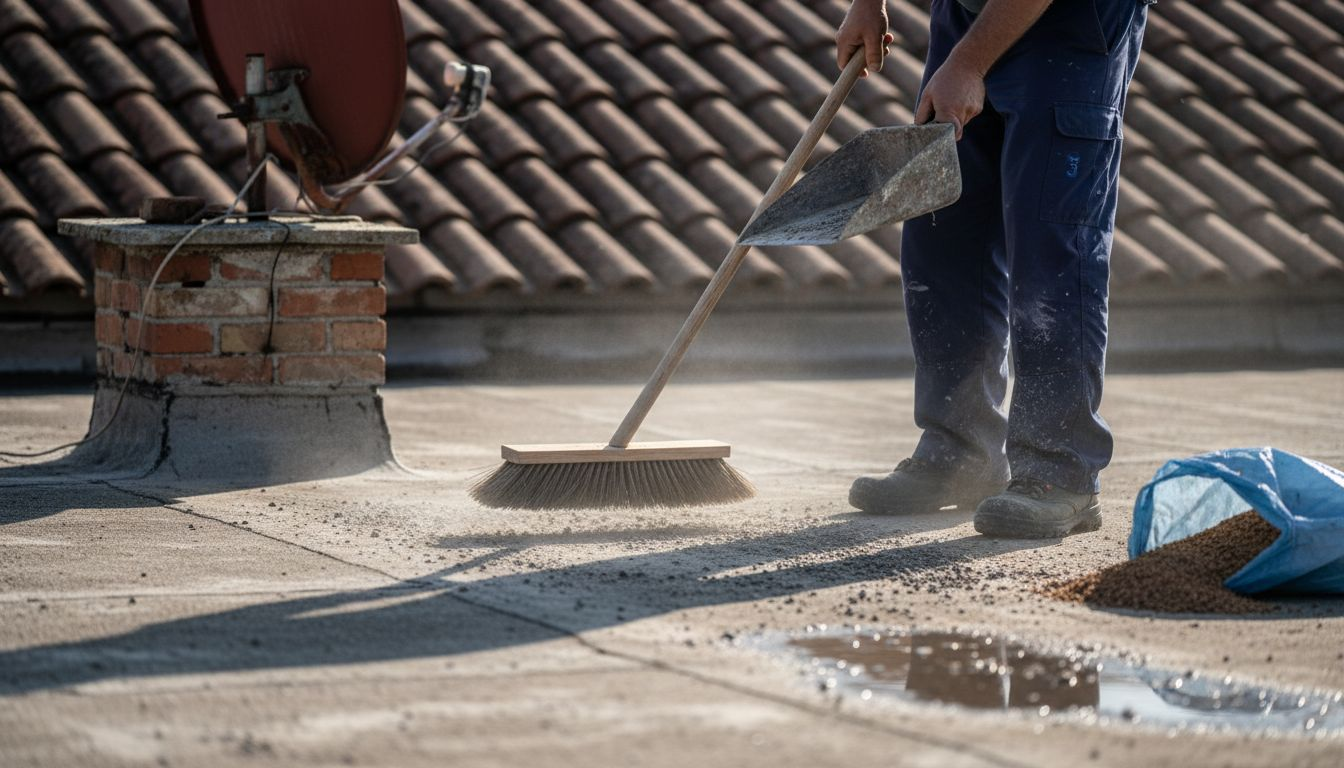
Best practices in flat roof waterproofing extend beyond the initial application. Techniques such as using reinforced membranes, implementing multiple layers of protection, and selecting materials compatible with the specific roof substrate can significantly enhance long-term performance. Professionals also recommend periodic inspections and maintenance to identify potential weaknesses early, preventing minor issues from escalating into costly structural damage. Climate considerations, including temperature variations and UV exposure, play a crucial role in selecting the most appropriate waterproofing system for Gauteng’s unique environmental conditions.
Pro tip: Schedule annual professional inspections to detect and address potential waterproofing weaknesses before they compromise your roof’s integrity.
SANS regulations for South African roofs
The South African National Standards (SANS) provide comprehensive regulatory guidelines governing roof construction and waterproofing practices to ensure building safety and structural integrity across the country. These regulations are particularly crucial for flat roofs, which are more susceptible to water damage and environmental stress in Gauteng’s challenging climate conditions.
SANS 10400 establishes rigorous requirements for roof design and waterproofing systems, mandating that roofing solutions must demonstrate exceptional durability and resilience. The standards specify that waterproofing products and installation methods must protect buildings from water penetration for a minimum of 10 to 20 years. Key regulatory requirements include ensuring roofing systems can withstand significant temperature variations, intense UV radiation, and potential chemical and biological degradation that might compromise roof structural integrity.
Compliance with SANS regulations involves multiple critical considerations for property owners and contractors. Waterproofing systems must meet specific performance criteria, including repairability, chemical resistance, and long-term structural stability. These standards apply to both residential and commercial buildings, providing a comprehensive framework that addresses the unique environmental challenges faced by South African construction projects. Professional waterproofing contractors must demonstrate thorough understanding of these regulations and implement systems that meet or exceed the prescribed technical specifications.
Pro tip: Always request documented evidence of SANS compliance from your waterproofing contractor to guarantee your roof meets national regulatory standards.
Risks of water damage and common mistakes
Flat roofs in Gauteng face significant challenges, with water damage presenting complex risks that can compromise entire building structures. The potential consequences extend far beyond simple surface deterioration, encompassing critical structural and health-related complications that demand proactive management.
The primary risks associated with inadequate waterproofing include structural degradation, electrical hazards, and potential health issues. Water infiltration can cause wood rot, compromise building foundations, and create ideal environments for mold and fungal growth. Electrical systems hidden within roof structures become particularly vulnerable, with moisture potentially leading to short circuits, equipment failure, and increased fire risks. These complications are often exacerbated by common waterproofing mistakes such as improper surface preparation, selecting inappropriate materials for local climate conditions, and neglecting crucial sealing around joints and roof edges.
Professional waterproofing specialists highlight several critical mistakes that Gauteng homeowners frequently make. These include attempting DIY waterproofing without proper technical knowledge, using generic waterproofing products unsuited to flat roof requirements, and failing to conduct regular maintenance inspections. Each of these errors can significantly accelerate roof deterioration, transforming what might have been a minor repair into an expensive complete roof replacement. Understanding these risks requires homeowners to recognise the importance of professional assessment and specialised waterproofing techniques tailored to South Africa’s unique environmental challenges.
Below is a summary of the major risks associated with water ingress and common mistakes homeowners should avoid:
| Risk/Issue | Consequence | Prevention Strategy |
|---|---|---|
| Structural degradation | Weakening of roof and walls | Use professional waterproofing |
| Electrical hazards | Short circuits, fire risk | Seal around joints and cables |
| Health complications | Mould, fungal growth | Regular maintenance inspections |
| Inadequate surface prep | Premature membrane failure | Thorough cleaning, priming |
Pro tip: Invest in annual professional roof inspections to detect and address potential water damage risks before they escalate into major structural problems.
Comparing maintenance costs and system lifespans
Understanding the long-term financial implications of different waterproofing systems is crucial for Gauteng homeowners, with varied approaches offering distinct cost and durability profiles. The selection process involves carefully balancing initial installation expenses against projected maintenance requirements and expected roof lifespan.
Liquid waterproofing systems present a moderate investment option, typically offering 10-15 years of protection with reasonable maintenance demands. These systems provide a seamless application that can be more cost-effective for smaller roof areas. In contrast, sheet membrane solutions represent a more substantial upfront investment, with potential lifespans extending to 20 years or more. Professional waterproofing specialists note that while these membranes may require more expensive repairs if damaged, they often deliver superior long-term protection under challenging environmental conditions.
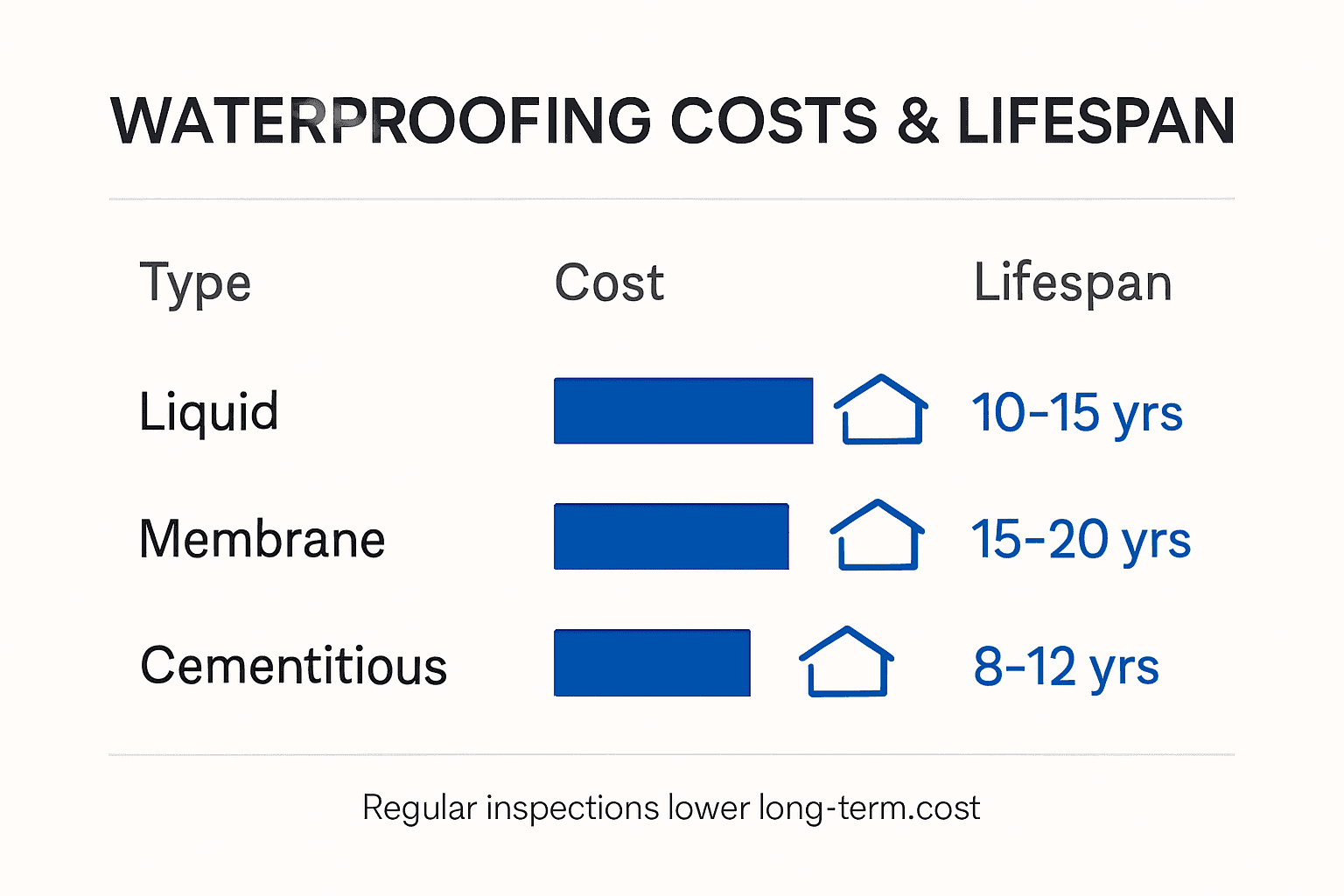
Professional waterproofing experts highlight that South African conditions necessitate a nuanced approach to system selection, considering factors beyond initial cost. Heat-fused and synthetic membranes, though more expensive initially, can provide more robust protection against Gauteng’s extreme temperature variations and UV exposure. Cementitious coatings offer an economical initial solution but may demand more frequent maintenance, potentially increasing long-term expenses. Homeowners must consider not just the immediate financial outlay but the cumulative costs of maintenance, potential repairs, and eventual replacement when choosing a waterproofing system.
To help you select the optimal waterproofing system, here is a quick comparison of popular flat roof solutions used in Gauteng:
| Waterproofing Type | Typical Lifespan | Maintenance Frequency | Suitability for Harsh Climates |
|---|---|---|---|
| Liquid Membrane | 10-15 years | Every 2-3 years | Effective if regularly checked |
| Sheet Membrane | 15-20+ years | Every 3-4 years | Highly robust; resists extremes |
| Cementitious Coating | 7-12 years | Annual inspections | Moderate; may crack over time |
| Synthetic/Heat-fused | 20+ years | Minimal if undamaged | Excellent for extreme weather |
Pro tip: Calculate the total lifecycle cost of your waterproofing system, including installation, maintenance, and potential replacement, rather than focusing solely on upfront expenses.
Protect Your Gauteng Home with Expert Flat Roof Waterproofing Solutions
Flat roofs require specialised waterproofing strategies that address unique challenges such as water accumulation, UV exposure, and temperature fluctuations. If you are concerned about potential leaks, structural damage, or the high costs of ineffective waterproofing, you are not alone. Many homeowners underestimate the importance of regular maintenance and professional-grade materials tailored to South African conditions. At Pro Waterproofing, we understand these challenges and focus on delivering durable solutions that comply with SANS regulations and provide lasting protection for your property.
Explore comprehensive advice and proven techniques in our Uncategorized – Pro Waterproofing section, where we cover critical topics like membranes, surface preparation, and common waterproofing mistakes.
Don’t risk costly repairs caused by premature waterproofing failure. Visit Pro Waterproofing today to connect with trusted specialists who bring the experience, licensing, and quality warranties you deserve. Take action now to safeguard your roof with solutions designed specifically for Gauteng’s demanding climate. Start your journey with a professional assessment and quote by visiting our landing page, and let us help you protect your investment for years to come.
Frequently Asked Questions
What are the main types of flat roof waterproofing systems?
The primary types of flat roof waterproofing systems include liquid waterproofing, sheet membrane waterproofing, and cementitious waterproofing. Liquid waterproofing provides a seamless layer, while sheet membranes involve pre-manufactured materials that are adhered to the roof. Cementitious systems utilise cement-based coatings for durability.
How often should I inspect my flat roof for waterproofing issues?
It is advisable to schedule a professional roof inspection every two years to identify potential waterproofing weaknesses before they lead to significant damage. Annual inspections are also recommended to catch any problems early.
What are the risks associated with poor flat roof waterproofing?
Inadequate waterproofing can lead to severe risks, including structural degradation, electrical hazards, and health issues due to mould growth. Water infiltration can cause wood rot, damage foundations, and create unsafe environments for occupants.
How long can I expect different waterproofing systems to last?
The lifespan of waterproofing systems varies: liquid membranes typically last 10-15 years, sheet membranes can extend to over 20 years, cementitious coatings last around 7-12 years, and synthetic or heat-fused systems can last 20 years or more, depending on maintenance and environmental conditions.