
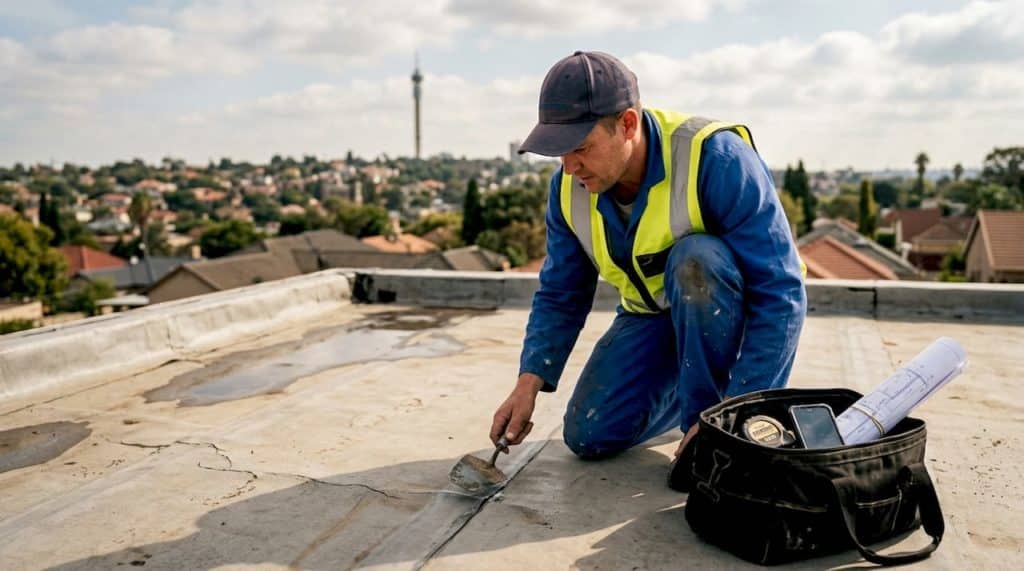
Over 60% of flat roofs in Cape Town suffer from inadequate drainage leading to waterproofing failure, costing property owners thousands in emergency repairs. Most failures stem from poor installation practices and neglected maintenance rather than material defects. This guide equips South African property owners with expert, step by step advice to ensure your flat roof remains watertight for decades. You will learn compliance requirements, proven application methods, and maintenance strategies that protect your investment from costly water damage.
Table of Contents
- Key takeaways
- South African standards and compliance for flat roof waterproofing
- Step by step waterproofing methodology for flat roofs
- Common challenges and practical nuances in flat roof waterproofing
- Maintaining your flat roof waterproofing for long term durability
- Protect your investment with professional waterproofing services
- Frequently asked questions
Key Takeaways
| Point | Details |
|---|---|
| Drainage and surface preparation | Effective waterproofing depends on thorough surface preparation and achieving adequate drainage to prevent ponding and membrane degradation. |
| Compliance and certified installers | Flat roofs must comply with SANS 10400 Part L and be installed by competent, certified professionals to safeguard warranties and structural integrity. |
| Regular maintenance | Ongoing inspections and maintenance help prevent failures caused by ponding water, UV exposure and thermal cycling. |
| Materials and conditions | Choose waterproofing materials based on roof use, budget and environmental exposure for durability and cost efficiency. |
| Step by step application | Adhering to a practical step by step application reduces repair costs by addressing each stage from preparation to sealing and UV protection. |
South African standards and compliance for flat roof waterproofing
Flat roofs must comply with SANS 10400 Part L, requiring competent installers, adherence to manufacturer instructions, minimum 5 year watertightness, and a drainage fall of 1:80. These regulations exist because flat roofs face unique challenges in South Africa’s diverse climate zones, from coastal humidity to inland temperature extremes. Non compliant installations void warranties and expose you to structural damage liability.
Certified installers understand local conditions and material behaviour under UV exposure and thermal cycling. They follow precise application protocols that DIY attempts often miss, such as correct primer selection for substrate types and proper overlap distances for membrane seams. South African waterproofing standards mandate specific performance thresholds that protect your investment.
The 1:80 drainage slope requirement translates to 12.5mm fall per metre of roof surface. This seemingly minor gradient prevents ponding water, which accelerates membrane degradation through constant moisture exposure and thermal stress cycles. Many older flat roofs were built without adequate fall, making retrofit drainage solutions essential during waterproofing projects.
Key compliance elements include:
- Appointment of competent persons with verifiable waterproofing qualifications and experience
- Submission of waterproofing specifications and material data sheets to building inspectors
- Documented adherence to manufacturer application instructions including temperature and humidity limits
- Provision of minimum 5 year workmanship and material warranties in writing
- Installation of adequate drainage outlets sized for local rainfall intensity
- Use of materials with proven UV resistance suitable for South African sun exposure
Compliance safeguards your investment by ensuring installations meet minimum performance standards. Non certified work frequently fails within 2 to 3 years, requiring complete membrane replacement at double the original cost. Insurance claims for water damage often fail when investigations reveal non compliant installations, leaving property owners liable for extensive repairs to ceilings, walls, and contents.
Step by step waterproofing methodology for flat roofs
Key steps include inspecting and cleaning the roof, ensuring drainage fall, priming, applying membranes, sealing edges, and UV coating if needed. This systematic approach eliminates common failure points and maximises membrane lifespan. Each step builds on the previous one, so shortcuts compromise the entire system.
-
Inspection and surface preparation: Remove all debris, vegetation, and loose material. Identify cracks, blisters, and damaged areas requiring repair. Clean surfaces thoroughly with pressure washing or wire brushing to remove contaminants that prevent adhesion. Allow surfaces to dry completely before proceeding.
-
Drainage verification: Confirm minimum 1:80 fall to all outlets using a spirit level and string lines. Install additional outlets or build up low areas with lightweight screed if ponding zones exist. Ensure outlet sumps are deep enough to prevent blockages.
-
Crack and joint repair: Fill cracks wider than 2mm with flexible polyurethane sealants. Reinforce movement joints with reinforcing fabric embedded in primer. Replace damaged concrete sections and allow proper curing time.
-
Priming application: Apply primer suited to your substrate type, whether concrete, timber, or metal. Primer penetrates porous surfaces and provides the chemical bond for membrane adhesion. Coverage rates vary by product, typically 4 to 6 square metres per litre.
-
Membrane installation: Apply your chosen waterproofing system following the waterproofing application process guide. Torch on bitumen requires controlled flame application with 100mm overlaps. EPDM sheets need careful alignment and seam taping. Liquid membranes require multiple coats at specified thickness.
-
Detail sealing: Pay special attention to upstands, penetrations, and roof edges. These vulnerable points cause 70% of waterproofing failures. Use reinforcing fabric at internal corners and ensure minimum 150mm upstand height on parapets.
-
UV protective coating: Apply reflective coatings to extend membrane life in high UV regions. These coatings reduce surface temperatures by up to 15°C, significantly slowing degradation.
-
Water testing: Conduct a 72 hour standing water test, maintaining 50mm water depth across the entire roof. This verifies watertight integrity before handover.
Pro Tip: Schedule waterproofing during dry months with temperatures between 10°C and 30°C for optimal curing. Avoid application during windy conditions that contaminate wet surfaces or when rain is forecast within 24 hours.
The waterproof flat roofs guide provides additional detail on material specific techniques. Proper methodology eliminates 90% of premature failures caused by installation errors.
Common challenges and practical nuances in flat roof waterproofing
Ponding water accelerates membrane degradation, adding thermal stress, increasing load, and causing mould. This single issue accounts for over 60% of flat roof failures in Cape Town and similar coastal regions. Understanding these challenges helps you specify appropriate solutions and avoid costly mistakes.
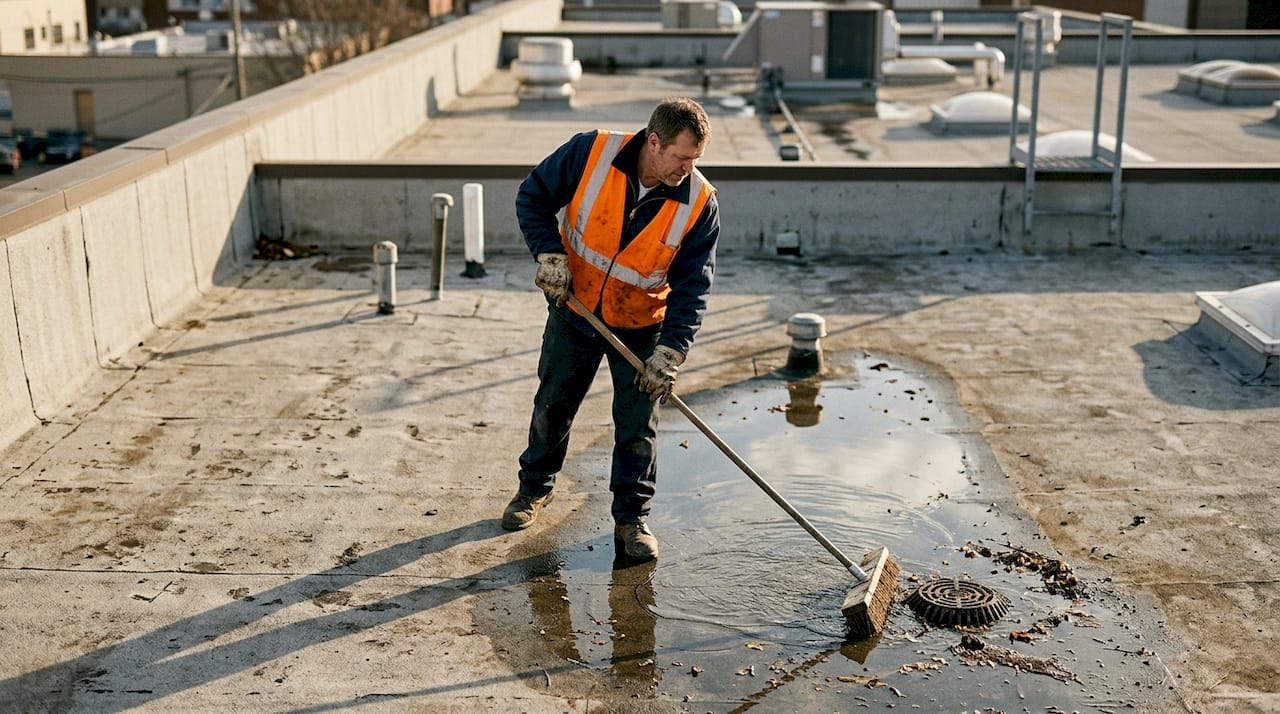
Ponding water creates three destructive mechanisms. First, constant moisture prevents membranes from drying, accelerating chemical breakdown. Second, daily temperature cycles cause expansion and contraction that fatigues membrane structure. Third, standing water adds significant dead load that stresses structural elements and creates deflection, worsening the ponding problem.
Membrane selection depends on your specific conditions:
- Torch on bitumen: Cost effective for residential roofs with simple layouts. Requires skilled application to avoid overheating. Lifespan 10 to 15 years with proper maintenance. Vulnerable to UV degradation without protective coating.
- EPDM rubber: Excellent flexibility accommodates building movement. Seams are potential weak points requiring careful installation. Performs well in temperature extremes. Expected lifespan 20 to 25 years.
- PVC membranes: Superior chemical resistance makes them ideal for industrial applications. Hot air welded seams create monolithic barriers. Higher initial cost justified by 25 to 30 year lifespan. Best choice for complex roof geometries.
- Liquid applied coatings: Seamless application suits irregular surfaces and penetrations. Multiple coat build up to specified thickness. Requires precise application conditions. Recoating every 5 to 7 years maintains protection.
| Membrane type | Cost per m² | Lifespan | Best application | Key limitation |
|---|---|---|---|---|
| Torch on bitumen | R180 to R250 | 10 to 15 years | Simple residential roofs | UV degradation |
| EPDM rubber | R220 to R320 | 20 to 25 years | Temperature extremes | Seam vulnerability |
| PVC membrane | R350 to R480 | 25 to 30 years | Complex commercial roofs | Higher initial cost |
| Liquid coating | R160 to R280 | 5 to 7 years | Irregular surfaces | Recoating frequency |
Avoid cold or wet application conditions for liquid membranes. Temperature below 10°C prevents proper curing, leaving membranes soft and vulnerable. Humidity above 85% causes surface defects and reduces adhesion. PVC membranes are preferable where complex details or chemical exposure exist, despite higher upfront costs.
Pro Tip: Inspect your roof after heavy rain to identify ponding zones. Water remaining 48 hours after rainfall indicates inadequate drainage requiring correction before waterproofing.
Environmental factors significantly impact performance. Coastal properties face salt spray that degrades certain membrane types. Inland regions experience extreme temperature swings causing thermal fatigue. Industrial areas expose roofs to airborne chemicals requiring chemically resistant systems. The flat roof waterproofing methods article explores regional considerations.
Regular maintenance costs 5% of installation expense annually but extends membrane life by 40% compared to neglected roofs. This translates to R2,000 yearly maintenance protecting a R40,000 waterproofing investment.
Common installation errors include inadequate surface preparation, incorrect primer selection, insufficient membrane thickness, poorly sealed seams, and neglected detail work at penetrations. These mistakes typically manifest within the first two years as localised leaks that progressively worsen.
Maintaining your flat roof waterproofing for long term durability
Biannual inspections, clearing drains regularly, and UV recoating every 2 to 3 years significantly reduce waterproofing failures and prolong roof lifespan. Maintenance represents a fraction of replacement cost while preventing catastrophic water damage to building interiors and contents. Property owners who implement systematic maintenance programmes report 60% fewer emergency repairs.
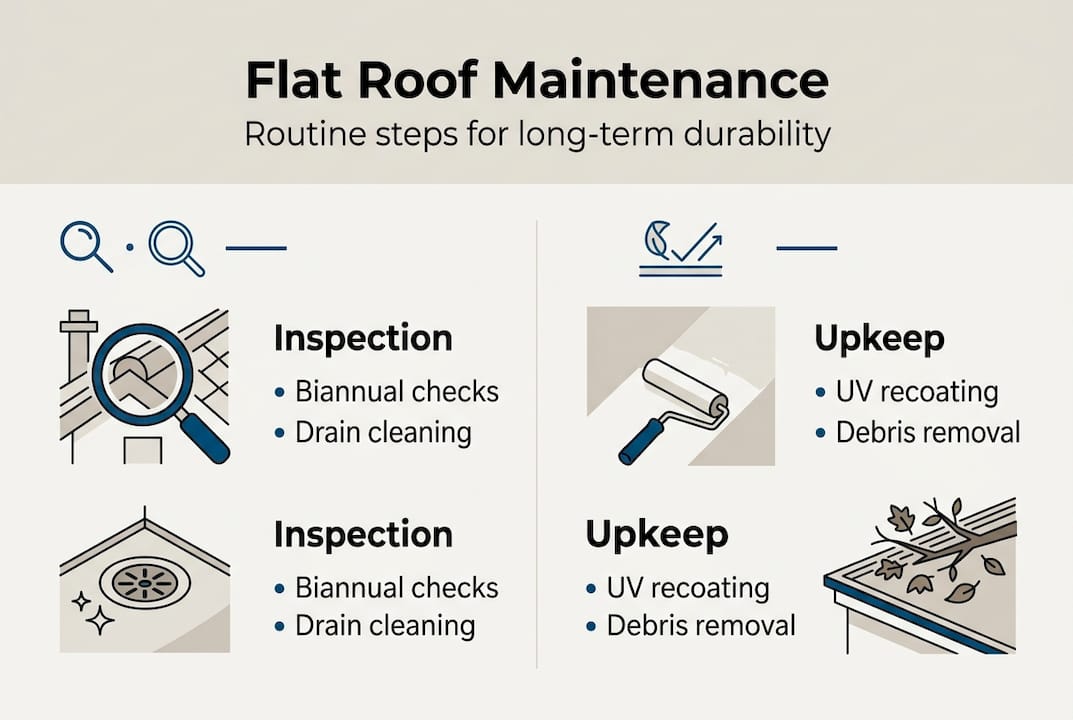
Schedule inspections in autumn and spring to prepare for rainy and dry seasons respectively. Professional inspections cost R1,500 to R3,000 but identify problems before they escalate. DIY inspections work for accessible roofs if you know warning signs.
Your inspection checklist should cover:
- Drainage outlets and gutters free from debris, leaves, and blockages
- Membrane surface condition checking for cracks, blisters, or delamination
- Seam integrity along all joins and overlaps
- Flashing condition at upstands, parapets, and penetrations
- Ponding water zones indicating drainage problems
- UV coating condition, noting chalking or loss of reflectivity
- Vegetation growth that indicates moisture retention
- Fastener or fixing integrity for mechanically attached systems
Clear debris quarterly in areas with overhanging trees. Accumulated organic matter retains moisture against membranes and provides habitat for vegetation that penetrates waterproofing. Use soft brooms rather than metal tools that damage membrane surfaces.
UV recoating timing depends on visual indicators rather than fixed schedules. Chalking surfaces, colour fading, and loss of gloss signal coating breakdown. Recoat before membrane exposure occurs, typically every 2 to 3 years in high UV regions. Coastal and highveld properties may require annual recoating due to intense sun exposure.
Pro Tip: Photograph your roof from the same positions during each inspection. Comparing images over time reveals gradual deterioration that is easy to miss during visual inspections.
Early failure signs include:
- Small water stains on ceilings indicating pinhole leaks
- Bubbling or blistering membrane surfaces showing delamination
- Cracking along seams suggesting movement or poor installation
- Persistent damp patches after rainfall
- Mould growth on interior surfaces below the roof
Address problems immediately when detected. Small repairs cost R500 to R2,000 compared to R40,000 plus for complete membrane replacement. The waterproofing inspection guide details professional inspection processes.
Selecting qualified maintenance contractors requires verification of credentials and references. Request evidence of previous flat roof work, insurance coverage, and manufacturer training certificates. Avoid contractors offering prices significantly below market rates, as they often cut corners on materials or application standards. Review waterproofing failures examples to understand consequences of poor workmanship.
Document all maintenance activities including dates, work performed, materials used, and costs. This maintenance log supports warranty claims and provides valuable information for future contractors. Comprehensive records also enhance property value by demonstrating proper care.
Protect your investment with professional waterproofing services
Implementing the techniques outlined in this guide requires expertise and precision that professional waterproofing services deliver consistently. Pro Waterproofing connects you with certified installers who comply with SANS 10400 Part L standards and provide guaranteed watertight protection tailored to South African conditions. Our network includes specialists experienced in diverse roof types, from residential homes to commercial complexes.
Expert application eliminates the trial and error of DIY attempts, ensuring your waterproofing investment performs as intended from day one. Certified professionals bring specialised equipment, quality materials, and proven techniques that deliver long lasting results. We offer comprehensive services including initial assessments, waterproofing installation, and ongoing maintenance programmes that preserve your roof’s integrity.
Contact professional waterproofing services today for a detailed consultation and quote tailored to your property’s specific requirements. Our team provides transparent pricing, realistic timelines, and workmanship guarantees that give you confidence in your waterproofing project.
Frequently asked questions
What types of waterproofing membranes are best for South African flat roofs?
Torch on bitumen offers cost effective protection for simple residential roofs, whilst EPDM rubber excels in temperature extremes with 20 to 25 year lifespan. PVC membranes suit complex commercial applications requiring chemical resistance and superior durability. Liquid coatings work well for irregular surfaces and tight budgets, though they require recoating every 5 to 7 years. Your choice depends on roof complexity, budget, and expected service life. The flat roof waterproofing methods guide compares regional performance.
How often should I inspect and maintain my flat roof waterproofing?
Conduct thorough inspections twice yearly, ideally in autumn and spring, to identify problems before seasonal weather extremes. Clear drainage outlets quarterly, more frequently if trees overhang your roof. Apply UV protective recoating every 2 to 3 years depending on sun exposure and coating condition. Professional inspections cost R1,500 to R3,000 but prevent expensive emergency repairs. Regular maintenance extends membrane life by 40% compared to neglected roofs. Review the waterproofing inspection guide for detailed checklists.
What are the most common causes of waterproofing failure on flat roofs?
Ponding water from inadequate drainage causes over 60% of flat roof failures by accelerating membrane degradation through constant moisture and thermal stress. Poor installation practices including insufficient surface preparation, incorrect primer selection, and poorly sealed seams account for another 25% of failures. UV damage degrades unprotected membranes within 3 to 5 years in South Africa’s intense sunlight. Neglected maintenance allows small problems to escalate into major leaks. Understanding these failure modes helps you specify preventive measures. Explore waterproofing failures examples for case studies.
Do I need a certified installer for flat roof waterproofing in South Africa?
Yes, SANS 10400 Part L requires competent, certified installers who follow manufacturer guidelines and provide minimum 5 year watertight guarantees. Non certified work frequently fails within 2 to 3 years, voiding material warranties and exposing you to liability for water damage. Certified installers understand local climate challenges, proper material selection, and precise application techniques that DIY attempts miss. Insurance claims for water damage often fail when investigations reveal non compliant installations. Verify installer credentials through manufacturer training certificates and previous project references. Learn more about South African waterproofing standards requirements.