
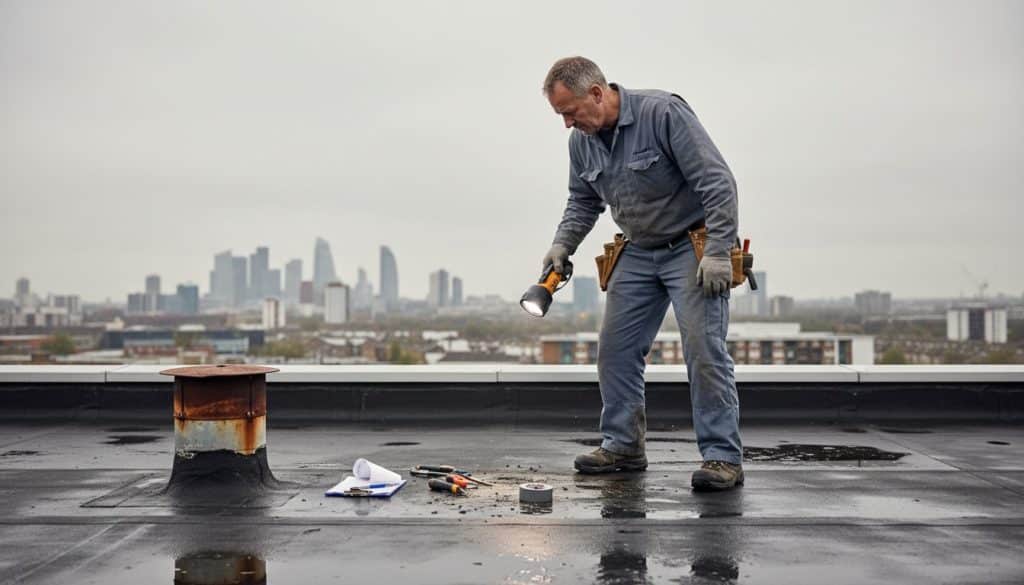
Over 60 percent of british homes experience some form of moisture intrusion during the rainy season. This challenge puts structures at risk of costly repairs and health hazards if not addressed quickly. Understanding how to properly assess property vulnerabilities and select the right waterproofing materials can be the difference between long-term protection and ongoing water damage. Discover practical steps and expert guidance designed to make every property owner’s waterproofing decisions effective and stress free.
Table of Contents
- Step 1: Assess Property Needs And Vulnerabilities
- Step 2: Identify Suitable Waterproofing Material Options
- Step 3: Compare Performance Lifespan And Cost Factors
- Step 4: Consult Professionals For Expert Recommendations
- Step 5: Verify Material Compliance And Warranties
Quick Summary
| Key Point | Explanation |
|---|---|
| 1. Conduct a Thorough Property Assessment | Assess water-prone areas and document vulnerabilities using photographs to create a targeted waterproofing strategy. |
| 2. Choose the Right Waterproofing Materials | Evaluate options based on their characteristics and compatibility for effective moisture protection specific to your property. |
| 3. Compare Costs and Lifespans of Solutions | Analyse waterproofing options by understanding their costs, performance characteristics, expected lifespans, and potential maintenance needs. |
| 4. Consult Professionals for Tailored Solutions | Engage certified waterproofing specialists for expert evaluations and personalised recommendations suited to your property’s challenges. |
| 5. Verify Material Compliance and Warranties | Ensure materials meet building regulations and analyse warranty details for long-term protection against defects and application failures. |
Step 1: Assess Property Needs and Vulnerabilities
Identifying your property’s specific waterproofing requirements is the foundational step towards ensuring comprehensive moisture protection. By carefully evaluating existing conditions and potential vulnerabilities, you can develop a targeted waterproofing strategy that addresses your unique structural challenges.
Begin your assessment by conducting a thorough visual inspection of your property, paying close attention to areas prone to water penetration such as basements, foundations, exterior walls, and roof surfaces. Look for telltale signs of moisture damage including discoloured wall patches, peeling paint, musty odours, and visible water stains. Waterproofing inspection services can provide professional insights during this critical evaluation stage, helping you understand potential structural weaknesses that might compromise your building’s integrity.
Consider your local climate and geographical context when assessing property vulnerabilities. Regions with high rainfall, frequent flooding, or significant groundwater levels will require more robust waterproofing solutions compared to drier environments. Examine your property’s drainage systems, checking for proper slope away from foundations, functional guttering, and clear drainage channels that prevent water accumulation near critical structural points.
Pro tip: Document your findings photographically and create a detailed moisture vulnerability map of your property, highlighting specific areas requiring targeted waterproofing interventions. This systematic approach will help you prioritise repairs and investments more effectively.
Step 2: Identify Suitable Waterproofing Material Options
Selecting the right waterproofing materials is a critical decision that directly impacts your property’s long-term moisture protection and structural integrity. Understanding the diverse range of available options will help you make an informed choice tailored to your specific environmental conditions and building requirements.
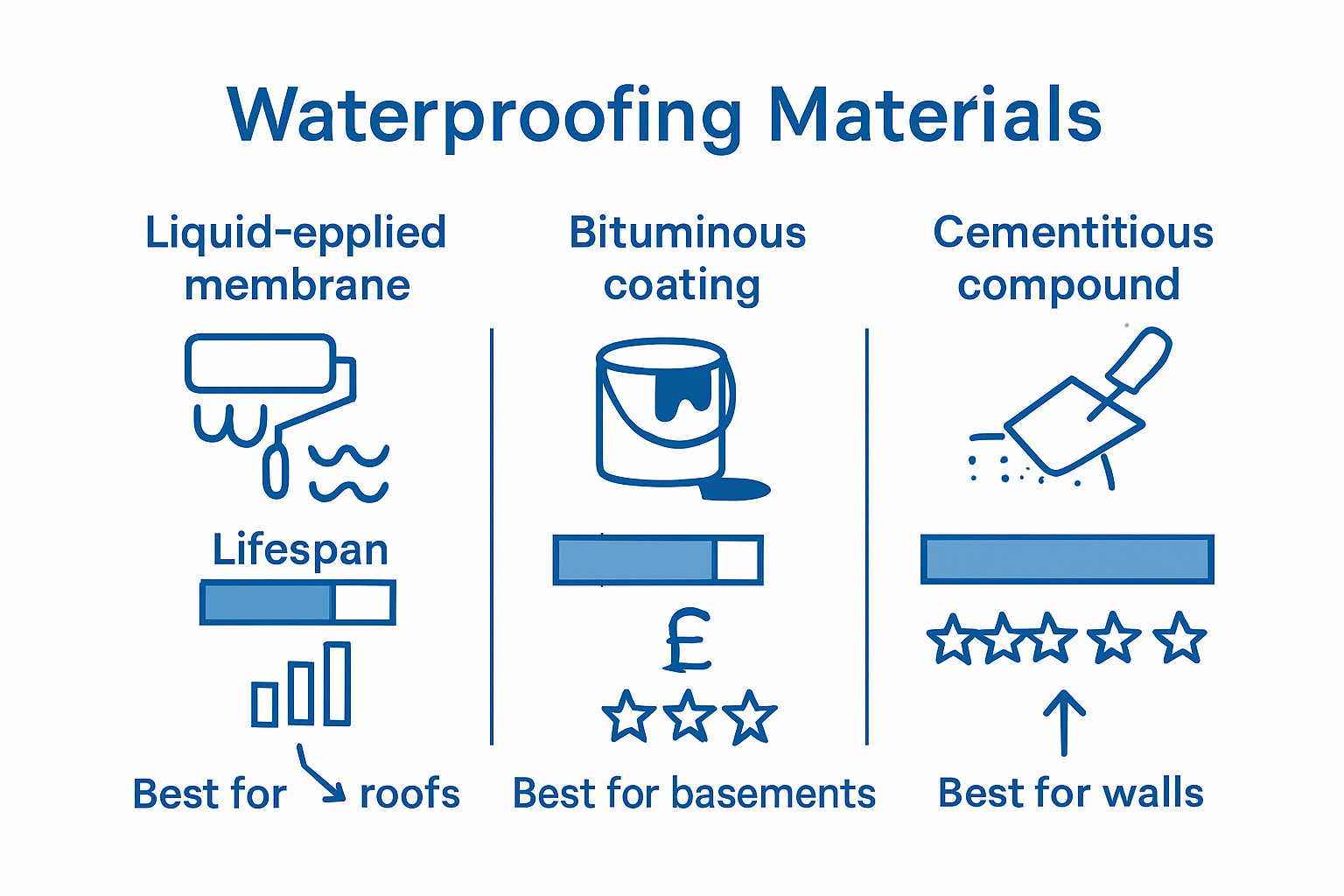
Explore various waterproofing materials by considering their unique characteristics and performance capabilities. Common waterproofing materials include liquid-applied membranes, bituminous coatings, cementitious compounds, polyurethane sealants, and advanced synthetic membranes. Each material offers distinct advantages depending on your property’s exposure to moisture, structural design, and environmental challenges. Liquid membranes provide excellent flexibility for complex surfaces, while cementitious materials work exceptionally well in concrete structures with high water pressure environments.
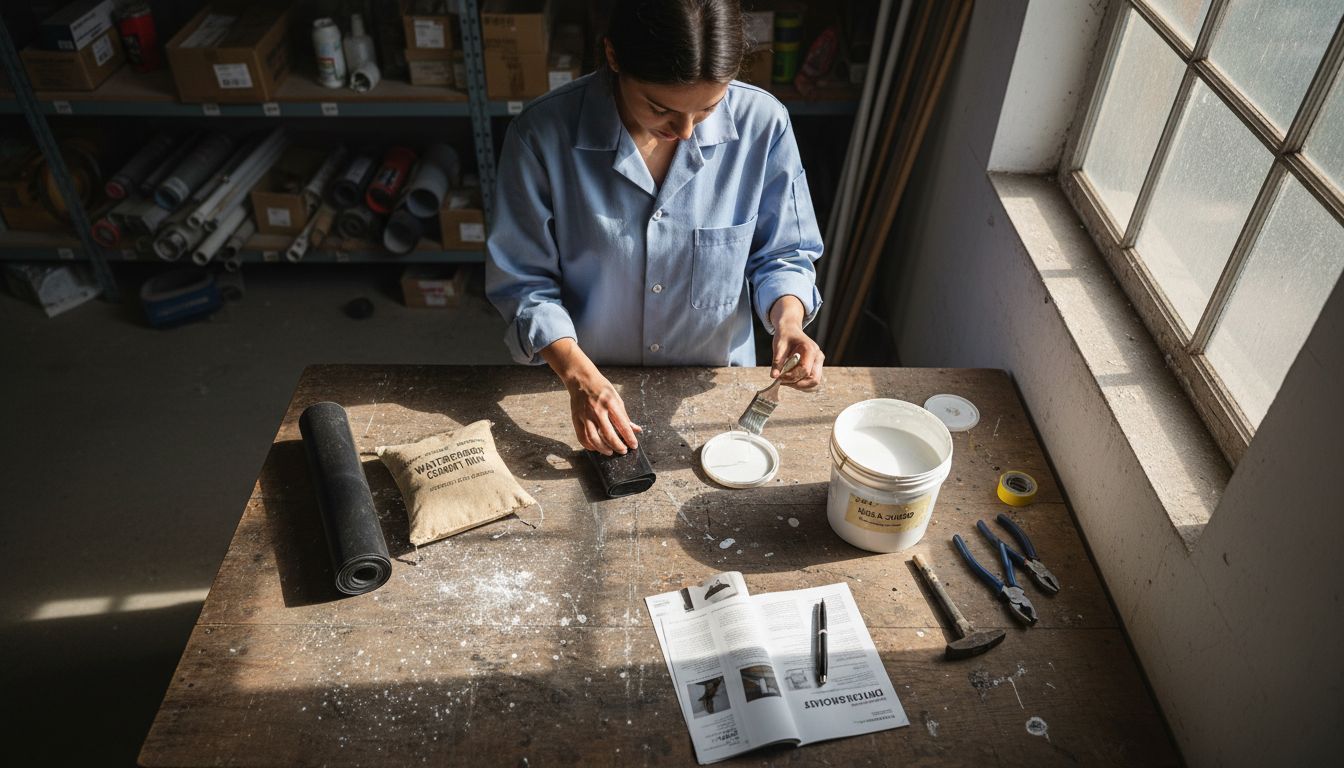
Evaluate each material’s compatibility with your specific building substrate, considering factors such as temperature resistance, elongation properties, chemical composition, and expected lifespan. Some materials perform better in underground applications, whereas others excel in roof or external wall treatments. Consider consulting with professional waterproofing specialists who can provide expert recommendations based on a comprehensive assessment of your property’s unique moisture protection needs.
Pro tip: Request material samples and performance certifications from manufacturers before making a final selection, allowing you to conduct practical tests and verify the material’s suitability for your specific environmental conditions.
Here is a summary of common waterproofing materials and their primary advantages:
| Material Type | Best Use Cases | Key Advantage |
|---|---|---|
| Liquid-applied Membrane | Roofs, balconies, terraces | Superior flexibility on cracks |
| Bituminous Coating | Foundations, basements | Excellent water resistance |
| Cementitious Compound | Water tanks, concrete walls | Resists high water pressure |
| Polyurethane Sealant | Expansion joints, windows | Ease of application |
| Synthetic Membrane | Roofs, walls, wet areas | Long-lasting performance |
Step 3: Compare Performance Lifespan and Cost Factors
Comparing waterproofing materials requires a comprehensive analysis of their performance characteristics, anticipated lifespan, and associated financial investment. This critical evaluation will help you make an informed decision that balances immediate costs with long-term protection for your property.
Waterproofing costs per square metre in South Africa demonstrate significant variation across different material types. Bitumen membranes typically range from R300 to R400 per square metre with an expected lifespan of 8 to 10 years, while liquid applied coatings cost between R140 to R400 per square metre and offer protection for 5 to 10 years. When assessing cost effectiveness, consider not just the initial installation expense but also the long-term durability and potential maintenance requirements. Factors such as material resilience, environmental exposure, and application complexity will significantly influence your total investment over time.
Here is a comparison of waterproofing material costs and lifespans relevant for property owners:
| Material Type | Typical Cost per m² (ZAR) | Expected Lifespan (years) |
|---|---|---|
| Bitumen Membrane | 300–400 | 8–10 |
| Liquid Applied Coating | 140–400 | 5–10 |
| Cementitious Compound | 120–300 | 6–8 |
| Polyurethane Sealant | 200–350 | 7–12 |
| Synthetic Membrane | 400–600 | 10–15 |
Evaluate each waterproofing solution across multiple dimensions including chemical resistance, flexibility, tensile strength, and performance under different temperature ranges. More expensive materials often provide superior long-term protection, potentially reducing future repair and maintenance costs. Calculate the total cost of ownership by factoring in installation expenses, expected lifespan, maintenance requirements, and potential property damage prevention.
Pro tip: Request detailed performance certificates and request case studies from manufacturers demonstrating real-world application results in environments similar to your specific property conditions.
Step 4: Consult Professionals for Expert Recommendations
Engaging professional waterproofing specialists provides invaluable insights that go beyond standard material selection, offering tailored recommendations specific to your property’s unique structural characteristics and environmental challenges. Professional consultation transforms your waterproofing strategy from a generic approach to a precision-targeted solution.
Seek recommendations from certified waterproofing contractors who can conduct a comprehensive site assessment, identifying potential moisture vulnerabilities that might not be immediately apparent. These experts will evaluate your property’s specific conditions including soil composition, drainage patterns, structural age, and existing moisture intrusion points. Waterproofing application processes vary significantly, and professional guidance ensures you select materials and techniques perfectly matched to your building’s requirements.
During professional consultations, request detailed technical assessments that include moisture mapping, substrate analysis, and recommendations for both immediate waterproofing interventions and long-term maintenance strategies. Experienced specialists can provide cost benefit analyses comparing different waterproofing approaches, helping you understand potential future savings and risk mitigation. Be prepared to discuss your property’s history, any previous water damage incidents, and your specific performance expectations.
Pro tip: Request written technical recommendations and comparative assessments from at least three different certified waterproofing professionals to ensure comprehensive and unbiased expert insights.
Step 5: Verify Material Compliance and Warranties
Verifying the compliance and warranty details of waterproofing materials is a critical final step in ensuring your long-term property protection. This process involves carefully examining technical specifications, industry standards, and manufacturer guarantees to safeguard your investment and ensure maximum performance.
Waterproofing product specifications should include comprehensive technical data sheets that outline precise performance characteristics, application guidelines, and compatibility with different substrate types. Carefully review these documents to confirm the material meets relevant South African building regulations and industry standards. Pay particular attention to details such as chemical resistance, elongation properties, temperature tolerance, and expected lifespan under various environmental conditions.
Examine warranty terms meticulously, understanding the exact coverage, duration, and conditions of protection. Look for warranties that provide comprehensive protection against material defects, application failures, and potential water intrusion. Request written documentation that clearly defines warranty limitations, exclusions, and specific maintenance requirements to keep the warranty valid. Consider consulting waterproofing warranty guidelines to understand the nuanced aspects of manufacturer guarantees and your rights as a property owner.
Pro tip: Request a written comparison of warranty terms from multiple manufacturers, highlighting differences in coverage, duration, and specific conditions to make a fully informed selection.
Choose the Right Waterproofing Materials with Confidence for Lasting Property Protection
Selecting the perfect waterproofing materials is crucial to safeguard your property against water damage and costly repairs. This article has outlined essential steps such as assessing vulnerabilities, understanding material options, comparing costs and lifespans, and verifying warranties. With so many technical details and choices to consider, property owners often face uncertainty when deciding what suits their unique needs best. You want durable protection that fits your budget and withstands South Africa’s challenging climates.
At Pro Waterproofing, we specialise in guiding homeowners, business owners, and industrial clients through this exact process. Our professional services include expert evaluations, material recommendations, and trusted contractor connections to ensure your waterproofing project delivers long-lasting results. Visit our Uncategorized – Pro Waterproofing page to explore valuable insights and start making informed decisions.
Don’t leave your property vulnerable to moisture risks. Take action today by consulting with South Africa’s leading waterproofing experts at Pro Waterproofing. Access detailed guides, request personalised quotes, and partner with reliable specialists who prioritise quality, warranties, and proven workmanship. Your property deserves protection that lasts — reach out now and secure peace of mind for years ahead.
Frequently Asked Questions
How do I assess my property’s waterproofing needs?
Begin by conducting a thorough visual inspection of your property, focusing on areas like basements, foundations, and roofs. Look for signs of moisture damage such as discoloured walls or water stains, and document your findings to highlight vulnerable areas.
What types of waterproofing materials should I consider?
Explore options like liquid-applied membranes, bituminous coatings, and cementitious compounds. Each material has unique advantages, so evaluate them based on your property’s specific conditions and requirements.
How can I compare the costs and lifespans of different waterproofing materials?
Examine the typical costs per square metre and the expected lifespans of various materials, focusing on both initial expenses and long-term value. This comparison will help you choose a solution that balances upfront costs with durability, potentially reducing maintenance in the future.
Why is it important to consult with waterproofing professionals?
Consulting with professionals provides tailored recommendations based on a thorough assessment of your property. They can identify specific vulnerabilities and suggest materials and techniques that are best suited to your unique structural characteristics.
How do I verify the compliance and warranties of waterproofing materials?
Carefully review technical specifications and warranty details to ensure materials meet industry standards and offer adequate protection. Request written documentation outlining warranty coverage and specific maintenance requirements to protect your investment effectively.
What should I include in my moisture vulnerability map?
Document areas needing waterproofing interventions, highlighting specific vulnerabilities identified during your assessment. This map will serve as a practical guide to prioritise repairs and investments for effective moisture protection.