
TL;DR:
- Unchecked damp significantly weakens industrial structures and increases repair costs.
- Proper detection, surface preparation, application, and maintenance are crucial to effective damp proofing.
- Professional assessment and adherence to best practices prevent costly failures and ensure longevity.
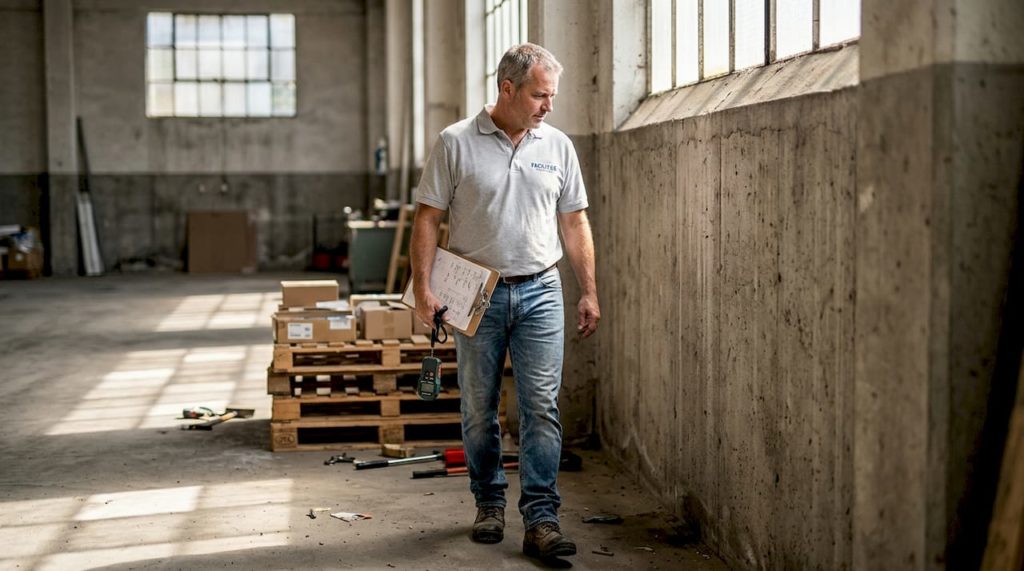
Unchecked damp in an industrial building is not merely an aesthetic problem. It is a slow, expensive threat that erodes structural steel, weakens concrete, and can bring operations to a halt at the worst possible moment. Unaddressed damp can quickly undermine the structural integrity of industrial buildings, leading to repair bills that dwarf the cost of prevention. This guide walks you through every stage of industrial damp proofing, from spotting the first warning signs to maintaining a system that lasts for decades. Whether you manage a warehouse, a factory, or a processing plant, this practical framework gives you a clear, professional path forward.
Table of Contents
- Identifying damp problems in industrial buildings
- Tools, materials, and safety for industrial damp proofing
- Step-by-step process: industrial damp proofing explained
- Verifying and maintaining damp proofing effectiveness
- Expert perspective: damp proofing mistakes and how to avoid them
- Get professional results with industrial damp proofing experts
- Frequently asked questions
Key Takeaways
| Point | Details |
|---|---|
| Identify damp early | Catching damp problems early reduces repair costs and business disruptions. |
| Use proper materials | Select industrial-grade damp proofing materials and tools for lasting protection. |
| Follow each step precisely | Success relies on systematic preparation, application, and curing—skipping steps risks failure. |
| Maintain and check regularly | Routine inspections and maintenance keep damp issues at bay and protect your investment. |
Identifying damp problems in industrial buildings
After understanding the stakes, the next step is learning to detect damp issues before they spiral. Industrial buildings present unique challenges because of their sheer size, wide roof spans, mixed construction materials, and the heavy moisture loads that manufacturing or storage processes can generate.
There are three main damp types you need to recognise:
- Rising damp: Groundwater moves upward through porous masonry or concrete via capillary action. It typically appears as a tide mark on lower walls.
- Penetrating damp: Water enters horizontally through cracks, failed joints, or porous external walls. Roof penetrations are a common culprit in large industrial structures.
- Condensation: Warm, moist air meets cold surfaces and deposits moisture. This is especially common in food processing or chemical facilities.
The visible signs to watch for include mould growth, deteriorating or bubbling plaster, white powdery deposits on masonry (called efflorescence), rust staining on steel columns or cladding, and persistent musty odours. Industrial buildings are especially prone to rising damp and water ingress through foundations and walls, making early detection critical.
Statistic: Early detection and intervention can save up to 30% in repair costs compared to addressing damp after structural damage has set in.
Understanding the damp proofing basics helps you communicate clearly with contractors and make informed decisions. For more targeted guidance, reviewing industrial damp solutions specific to large-scale properties gives you a practical benchmark for what a proper assessment should cover.
Tools, materials, and safety for industrial damp proofing
Recognising damp is only step one. Next is assembling the right tools and understanding the safety protocols that apply to industrial-scale work in South Africa.
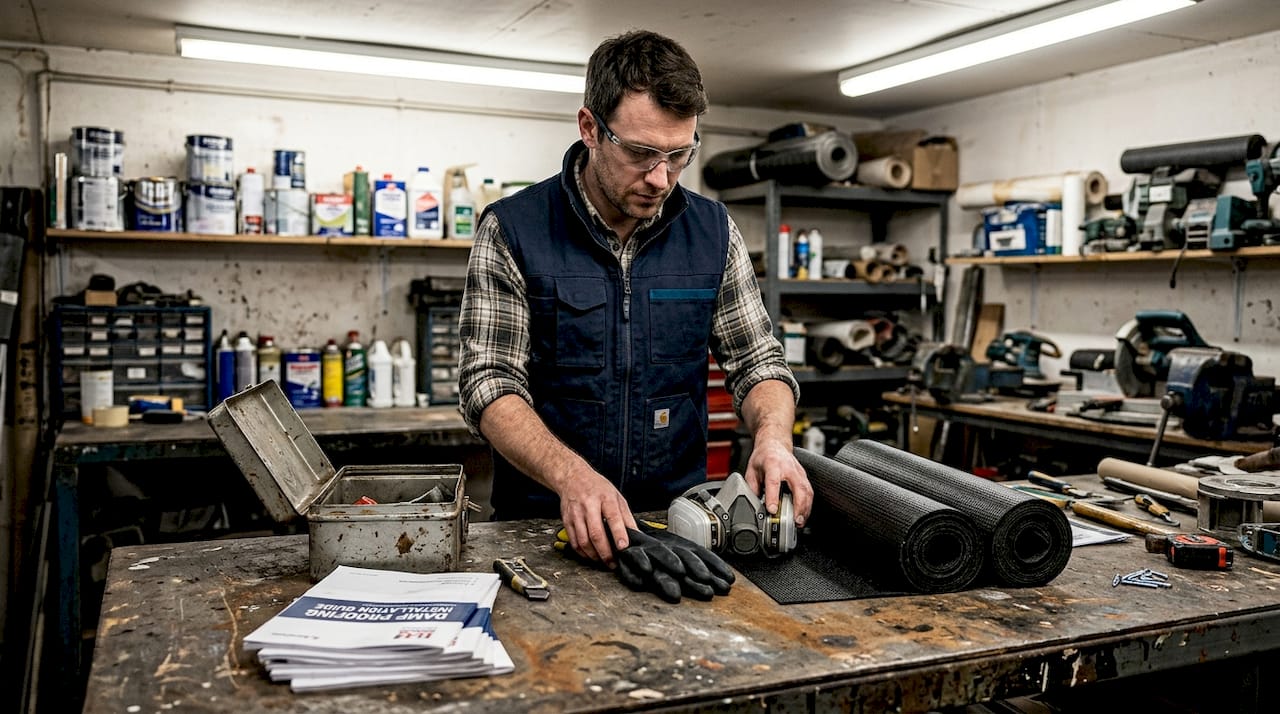
Surface preparation and PPE are legally required under South African regulations for damp proofing works. Cutting corners here is not just a quality risk. It is a compliance risk.
Essential PPE for industrial damp proofing:
- Heavy-duty chemical-resistant gloves
- Full-face respirator or P2-rated dust mask
- Safety goggles or face shield
- Steel-capped boots and protective overalls
Key tools and materials:
| Category | Item | Purpose |
|---|---|---|
| Testing | Moisture meter | Measure moisture content in walls and floors |
| Application | Industrial sprayer | Apply liquid DPC (damp proof course) evenly |
| Preparation | Masonry drill and chisel | Remove loose material and create injection points |
| Materials | Liquid DPC membrane | Primary barrier against moisture ingress |
| Materials | Sheet membrane (HDPE or bituminous) | Physical barrier for floors and below-ground walls |
| Materials | Bonding primer | Ensures adhesion of membrane to substrate |
For large industrial projects, you will also need a wire brush or mechanical grinder for surface cleaning, a pressure washer for removing contaminants, and mixing equipment for two-part compounds. Always follow surface preparation best practice to ensure materials bond correctly to the substrate.
“The quality of any damp proofing system is only as good as the surface it is applied to. No product compensates for poor preparation.”
Step-by-step process: industrial damp proofing explained
With tools and materials ready, it is essential to follow these sequential steps for thorough and successful damp proofing. Skipping stages, even seemingly minor ones, is where most projects fail.
- Clear and dry the area. Remove all stored goods, machinery, and debris from the affected zone. Allow the surface to dry as much as possible. Use industrial fans or dehumidifiers if needed.
- Clean and prepare the surface. Remove loose plaster, paint, and efflorescence using a wire brush or mechanical grinder. Wash the surface and allow it to dry completely. Systematic surface preparation is the single most important factor in long-term damp resistance.
- Apply the bonding primer. Coat the prepared surface evenly and allow it to cure to the manufacturer’s specified tack time. This step is non-negotiable for adhesion.
- Apply the damp proofing membrane or liquid DPC. For concrete floors and walls, a liquid-applied system is often most practical. Correct damp proofing application on concrete surfaces ensures durable protection against long-term moisture ingress. For sheet membranes, lay them with a minimum 100 mm overlap at all joints.
- Seal all edges and penetrations. Pipe penetrations, wall-to-floor junctions, and expansion joints are the most common failure points. Use compatible sealant or flashing tape at every junction.
- Allow full curing. Follow the product’s curing schedule precisely. Do not expose the fresh membrane to foot traffic or machinery before it has fully cured.
- Conduct a final inspection. Check for pinholes, missed areas, and unsealed edges using a moisture meter and visual inspection.
Pro Tip: For mixed-construction facilities combining concrete, steel, and masonry, use a compatible primer system that bridges different substrates. Applying a single primer across incompatible materials is a common and costly mistake.
Comparison: liquid DPC vs sheet membrane for industrial use
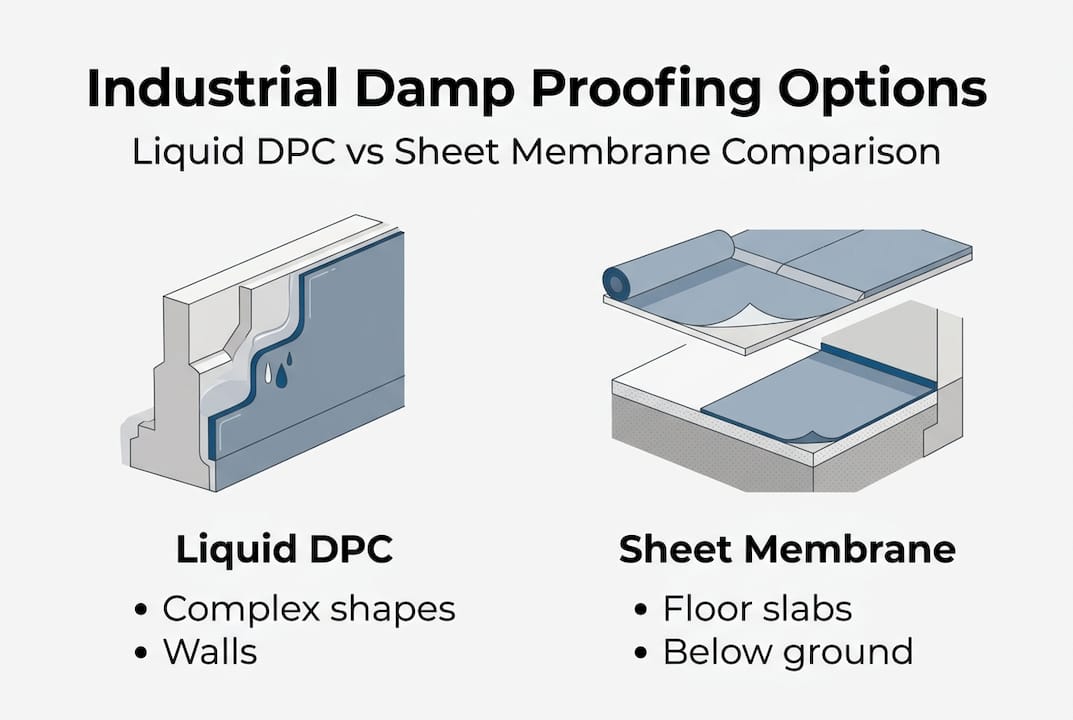
| Factor | Liquid DPC | Sheet membrane |
|---|---|---|
| Best for | Walls, complex shapes | Floors, below-ground slabs |
| Application speed | Fast | Moderate |
| Joint risk | Low (seamless) | Higher (requires overlap sealing) |
| Cost | Moderate | Higher |
| Durability | 15 to 20 years | 20 to 30 years |
For further guidance on concrete waterproofing process steps, reviewing detailed technical resources before starting will save you time on site.
Verifying and maintaining damp proofing effectiveness
After applying the system, ongoing verification and maintenance prevent setbacks and ensure lasting value. A damp proofing system that is never checked is a system waiting to fail silently.
How to verify your damp proofing is working:
- Moisture meter readings. Take baseline readings immediately after curing, then repeat at 30-day intervals for the first three months. Readings should trend downward and stabilise.
- Visual inspection. Look for new staining, bubbling, or efflorescence at three months, six months, and annually thereafter.
- Check all junctions and penetrations. These are the most vulnerable points. Inspect sealants for cracking or separation.
- Review drainage around the building. Poor external drainage can overwhelm even a well-installed system. Ensure gutters, downpipes, and ground-level drainage are clear and functional.
Pro Tip: Keep a simple maintenance log recording inspection dates, moisture readings, and any remedial actions taken. This record is invaluable if you need to make a warranty claim or brief a new contractor.
Routine inspection and maintenance are key for sustained protection. Missed defects lead to recurring damp that becomes progressively more expensive to fix. If damp returns after treatment, do not simply reapply product. Investigate the root cause first, whether it is a failed joint, a blocked drain, or inadequate original preparation.
For persistent or widespread problems, professional assessment is the right call. Reviewing damp proofing techniques and essential damp proofing tips gives you a solid foundation for evaluating whether a DIY fix is appropriate or whether you need specialist intervention.
Expert perspective: damp proofing mistakes and how to avoid them
After years of working on industrial properties across South Africa, one pattern stands out above all others. Most damp proofing failures are not caused by inferior products. They are caused by inferior processes.
Property owners often invest in premium membranes and liquid systems, then watch them fail within two years. The reason is almost always the same: cutting corners on preparation is the most common cause of damp proofing failure. A R500 primer applied to a poorly cleaned surface will outperform a R2,000 membrane applied to contaminated masonry every single time.
The false economy of skipping stages is seductive. Preparation is slow, unglamorous work. It does not look like progress. But every hour saved on preparation typically costs three hours in remediation later. We see this repeatedly on large industrial sites where time pressure leads teams to rush the cleaning and priming stages.
Our honest advice: treat the process as the product. Review damp proofing best practices before you start, and hold your team or contractor accountable to each sequential step. The material you choose matters far less than the discipline with which it is applied.
Get professional results with industrial damp proofing experts
For complex industrial projects, the margin for error is simply too narrow to leave to chance. A missed joint or an undertreated section can undo months of work and trigger costly operational disruptions.
At Pro Waterproofing, our industrial damp proofing experts bring hands-on experience with large-scale South African facilities, from warehouses to manufacturing plants. We conduct thorough site evaluations, recommend the right system for your specific construction type, and apply every stage with the precision that industrial buildings demand. If you are unsure where to start or want a second opinion on an existing system, contact us for a professional assessment. You can also learn more about choosing contractors to ensure any specialist you engage meets the standards your facility deserves.
Frequently asked questions
What is the best damp proofing method for large industrial buildings in South Africa?
Sheet membrane and liquid-applied systems are most effective for large areas, but the right choice depends on building material and use conditions. Different surfaces and exposures require tailored damp proofing methods rather than a one-size-fits-all approach.
How long does industrial damp proofing last?
Modern damp proofing can last over 20 years if properly installed and maintained with regular inspections. Proper damp proofing combined with consistent maintenance can ensure protection for decades.
Is it necessary to halt all operations during damp proofing?
Minor works may proceed with careful sectioning, but extensive projects often require phased shutdowns for safety and quality. Site safety and quality standards may require halting some operations during major damp proofing works.
Can I repair failed damp proofing myself?
Small, localised defects may be handled in-house, but recurring or extensive failures should be assessed by a professional. Professional advice is recommended for persistent or widespread damp problems to avoid compounding the damage.
Recommended
- Commercial Waterproofing Step by Step Guide for Success
- 7 Best Practices for Damp Proofing Every Homeowner Should Know
- Master the Waterproofing Application Process Step-by-Step
- How to Prepare for Waterproofing: Complete Step-by-Step Guide
- Essential Carpet Protection After Cleaning: A Step-by-Step Guide – Yarra Valley Carpet Cleaning
- Master the deep cleaning process: compliant workplaces