
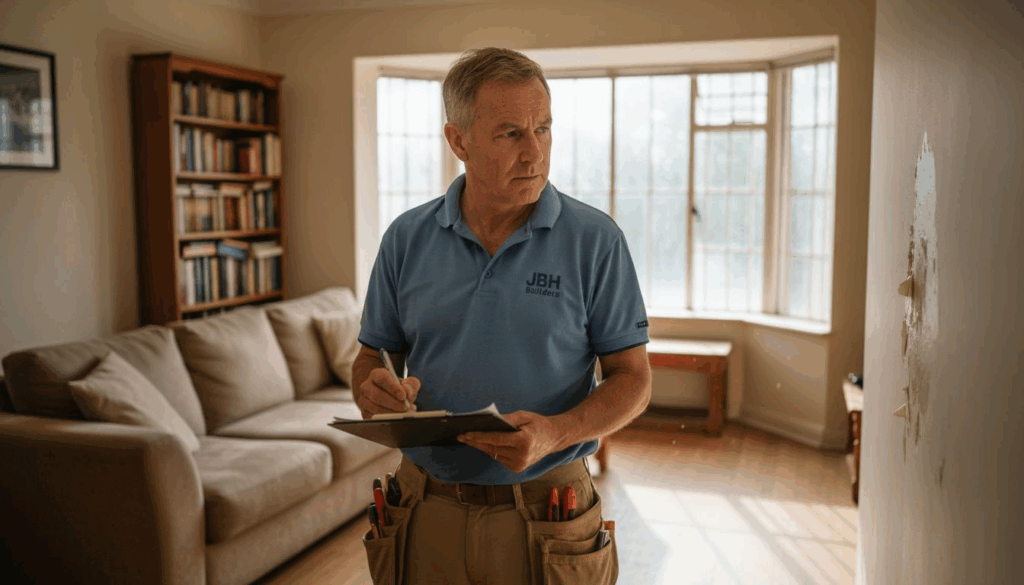
Water damage can quietly undermine the stability of homes across Gauteng and Western Cape, turning small leaks into costly repairs that threaten property value. For homeowners in South Africa facing seasonal rain and unpredictable climate, understanding the need for a comprehensive waterproofing assessment is crucial. By trusting certified professionals who follow strict regulatory standards, you benefit from expert evaluation tailored to your local environment, enabling informed decisions that protect your home’s structure and your financial investment.
Table of Contents
- Defining Professional Waterproofing Assessment
- Types of Assessments and Inspection Methods
- The Step-By-Step Assessment Process
- Benefits for Property Longevity and Value
- Risks of Skipping Professional Evaluations
Key Takeaways
| Point | Details |
|---|---|
| Importance of Assessments | Professional waterproofing assessments are vital for identifying structural vulnerabilities and preventing costly water damage. |
| Advanced Diagnostic Tools | Utilising modern tools like thermal imaging and moisture metres improves detection of hidden water issues. |
| Long-term Benefits | Regular assessments enhance property longevity, protect market value, and improve occupant health by preventing mould growth. |
| Risks of Neglect | Skipping assessments may lead to severe structural damage and increased health risks, resulting in high repair costs and potential legal issues. |
Defining Professional Waterproofing Assessment
A professional waterproofing assessment represents a comprehensive evaluation of a property’s structural integrity and potential water damage risks. This systematic examination identifies existing moisture vulnerabilities and determines preventative strategies specific to South African residential environments. Professional waterproofing contractors conduct detailed inspections using specialised diagnostic techniques to comprehensively analyse potential water ingress points.
The assessment process involves multiple critical components, including visual structural analysis, moisture mapping, and advanced diagnostic testing. Trained specialists examine exterior and interior surfaces, investigating potential weak points such as foundation cracks, roof interfaces, wall joints, and underground moisture penetration zones. They utilise precision instruments like thermal imaging cameras, humidity sensors, and moisture metres to detect hidden water damage risks that might not be immediately visible to untrained observers.
Professional waterproofing assessments are particularly crucial in South African contexts, where diverse climatic conditions range from arid regions to high rainfall areas. These evaluations help homeowners understand their specific property vulnerabilities, providing targeted recommendations for preventing structural damage. Comprehensive assessments typically generate detailed reports outlining current moisture conditions, potential risk factors, recommended intervention strategies, and estimated costs for remediation.
Pro Tip: Request comprehensive written documentation from your waterproofing assessment, including detailed photographic evidence and precise risk analysis to support future maintenance planning.
Types of Assessments and Inspection Methods
Waterproofing assessments encompass several specialised methodologies designed to diagnose potential moisture vulnerabilities in residential and commercial properties. Visual inspections represent the foundational approach, where trained professionals systematically examine external and internal surfaces for evident signs of water damage, structural stress, and potential moisture penetration points. These initial assessments involve comprehensive scanning of foundation walls, roof interfaces, window and door frames, and underground structural elements.
Advanced diagnostic techniques expand beyond visual evaluations, incorporating sophisticated technological instruments. Moisture mapping technologies enable specialists to detect hidden water infiltration using thermal imaging cameras, humidity sensors, and electronic moisture metres. These precision tools can identify subsurface moisture accumulation, track potential migration pathways, and quantify moisture saturation levels across different building materials with remarkable accuracy.
Different assessment types are tailored to specific property characteristics and environmental conditions. Comprehensive assessments might include non-destructive testing methods such as infrared thermography, which reveals temperature variations indicating potential water intrusion, and electronic resistance testing that measures electrical conductivity to pinpoint moisture concentrations. Specialised techniques like endoscopic inspections allow professionals to examine hard-to-reach interior wall cavities and structural interfaces without causing significant structural disruption.
Here’s a summary of key diagnostic tools used during waterproofing assessments:
| Diagnostic Tool | Purpose | Detection Capability |
|---|---|---|
| Thermal imaging camera | Identify temperature differences | Reveals hidden damp areas |
| Moisture metre | Measure moisture in building materials | Quantifies moisture saturation |
| Humidity sensor | Monitor environmental humidity levels | Detects excessive ambient moisture |
| Electronic resistance tester | Assess conductivity and locate water | Pinpoints moisture in hard-to-see places |
Pro Tip: Request multiple diagnostic methods during your waterproofing assessment to ensure a comprehensive understanding of your property’s moisture vulnerabilities.
The Step-by-Step Assessment Process
The waterproofing assessment process begins with a comprehensive preliminary evaluation designed to understand the specific characteristics and vulnerabilities of a property. Initial consultation involves gathering critical information about the building’s age, construction history, previous water damage incidents, and observed moisture-related issues. Trained professionals review architectural plans, conduct preliminary interviews with property owners, and establish a foundational understanding of the structure’s unique environmental exposure.
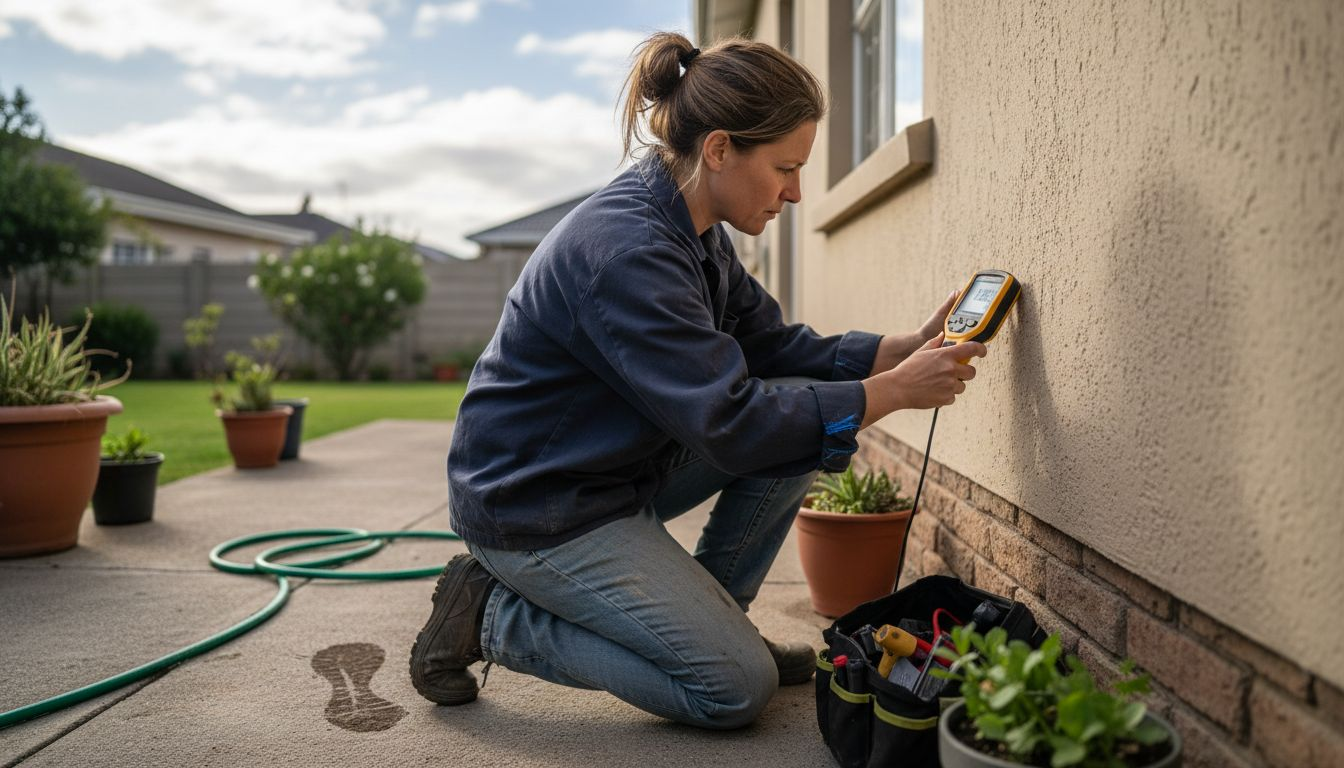
The next phase involves detailed site inspection protocols that systematically examine both exterior and interior surfaces. Assessors meticulously document potential moisture entry points, including foundation walls, roof interfaces, window and door frames, underground structural elements, and potential structural stress zones. Advanced diagnostic tools such as thermal imaging cameras, moisture metres, and electronic resistance testing equipment enable specialists to detect subsurface moisture accumulation and track potential water migration pathways with remarkable precision.
Following the comprehensive diagnostic phase, waterproofing professionals develop a detailed remediation strategy tailored to the specific property’s requirements. This strategy includes a comprehensive report outlining identified moisture vulnerabilities, recommended intervention techniques, estimated repair costs, and long-term preventative measures. Certified applicators provide professional documentation that not only addresses current issues but also offers strategic insights for preventing future water damage, ensuring compliance with South African building standards and best practices.
Pro Tip: Request a comprehensive written report with photographic evidence and detailed recommendations to support your property’s long-term moisture management strategy.
Benefits for Property Longevity and Value
Professional waterproofing assessments deliver substantial long-term advantages for property owners, extending far beyond immediate moisture protection. By identifying and addressing potential structural vulnerabilities early, homeowners can prevent extensive and costly damage that could significantly depreciate property value. Structural integrity remains paramount, with proactive waterproofing interventions helping to maintain the foundational strength and overall structural resilience of residential and commercial buildings.
Accredited industry standards ensure comprehensive protection that directly impacts property market value and durability. Systematic waterproofing assessments minimise potential structural deterioration caused by moisture infiltration, preventing progressive damage to building materials such as concrete, timber, and electrical infrastructure. These preventative measures can potentially save property owners thousands of rand in potential repair costs, while simultaneously maintaining the aesthetic and functional quality of the building.
Beyond financial considerations, professional waterproofing assessments contribute significantly to occupant health and comfort. Moisture prevention strategies eliminate potential breeding grounds for mould, mildew, and harmful fungi that can cause respiratory issues and allergic reactions. By creating a dry, stable internal environment, waterproofing interventions enhance living conditions, reduce potential health risks, and provide property owners with peace of mind regarding their most significant financial investment.
Pro Tip: Schedule regular waterproofing assessments every two to three years to maintain continuous protection and catch potential issues before they escalate into expensive repairs.
Risks of Skipping Professional Evaluations
Neglecting professional waterproofing assessments exposes property owners to substantial financial and structural risks that can escalate quickly and dramatically. Undetected moisture vulnerabilities can compromise a building’s fundamental structural integrity, leading to progressive damage that often remains invisible until significant deterioration has occurred. Hidden moisture infiltration can silently undermine concrete foundations, timber structures, and electrical systems, creating potential catastrophic failures that might require extensive and expensive remediation.
Unvetted waterproofing practices introduce considerable legal and financial vulnerabilities for property owners. Amateur or uncertified interventions frequently utilise inappropriate materials and techniques that fail to address underlying moisture issues, potentially voiding property insurance coverage and reducing market value. These substandard approaches can create long-term structural compromises that significantly increase repair costs, with moisture-related damages potentially developing exponentially over time.
Beyond financial implications, skipping professional evaluations poses serious health risks to occupants. Uncontrolled moisture environments generate ideal conditions for toxic mould proliferation, which can cause severe respiratory problems, allergic reactions, and long-term health complications. Microscopic fungal growth within wall cavities, beneath flooring, and around structural interfaces can spread rapidly, creating invisible health hazards that compromise indoor air quality and potentially lead to significant medical expenses.
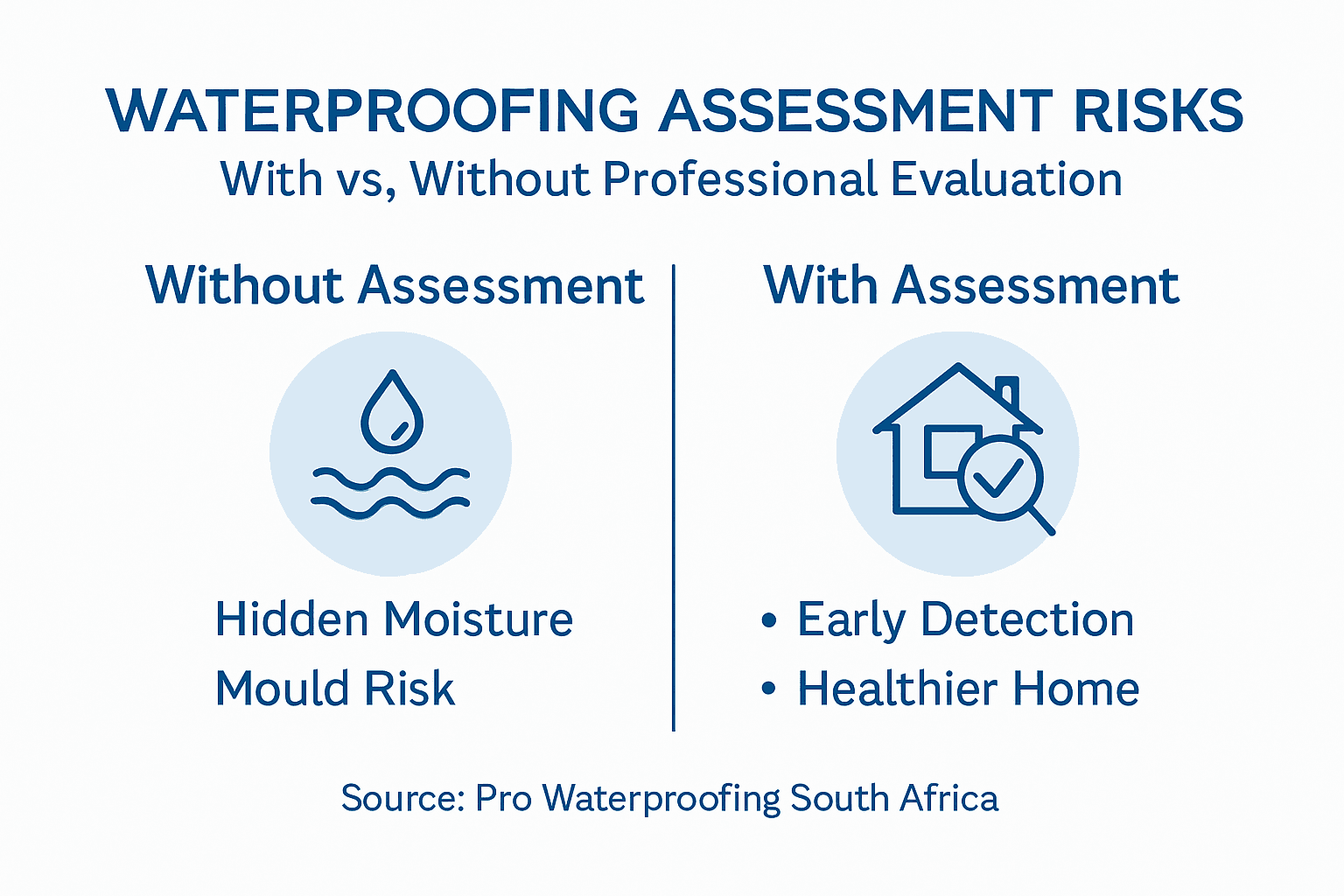
This table compares the risks of neglecting professional waterproofing assessments with the benefits of scheduled inspections:
| Aspect | Without Assessments | With Professional Assessments |
|---|---|---|
| Structural risk | Hidden damage, possible collapse | Early issue detection, stronger structure |
| Financial impact | Expensive repairs, uninsured costs | Lower costs, preserved property value |
| Occupant health | Increased mould risk, health issues | Cleaner air, reduced health problems |
| Compliance | May breach standards, legal issues | Meets regulations, supports insurance |
Pro Tip: Document every moisture-related issue immediately and photograph potential problem areas to support future professional assessments and potential insurance claims.
Protect Your South African Home with Expert Waterproofing Assessments
Water damage and hidden moisture can silently destroy your property’s value and safety. This article highlights how professional waterproofing assessments identify critical vulnerabilities using advanced diagnostic tools and customised strategies. Do not leave your home exposed to structural risks, mould growth, or costly repairs.
Take control of your property’s longevity today by exploring expert solutions available at Uncategorized – Pro Waterproofing.
Act now to safeguard your investment with trusted professionals at Pro Waterproofing. Our licensed specialists offer detailed inspections and tailored waterproofing plans designed to prevent moisture issues before they escalate. Contact us to request your comprehensive waterproofing assessment and gain peace of mind about your South African home’s future.
Frequently Asked Questions
What is a professional waterproofing assessment?
A professional waterproofing assessment is a comprehensive evaluation of a property’s structural integrity and water damage risks, identifying moisture vulnerabilities and recommending preventative strategies.
Why is it important to conduct a waterproofing assessment?
Conducting a waterproofing assessment helps homeowners identify potential moisture vulnerabilities, prevent extensive damage, maintain structural integrity, and improve occupant health by reducing mould and mildew risks.
What methods are used during a waterproofing assessment?
Assessment methods include visual inspections, moisture mapping, thermal imaging, humidity sensing, and electronic moisture measurement to accurately detect hidden water damage and assess the property’s moisture levels.
How often should waterproofing assessments be conducted?
It is recommended to schedule waterproofing assessments every two to three years to ensure continuous protection and timely identification of moisture-related issues.
Recommended
- Assessing Waterproofing Needs – Protecting Gauteng Homes
- Understanding the Importance of Waterproofing in South Africa – Pro Waterproofing
- What Is a Waterproofing Inspection and Why It Matters
- Why Waterproofing Matters for South African Properties
- Protective Coating Trends 2025: Innovations for Infrastructure