
TL;DR:
- Nearly 25% of South African building damage results from missed inspections and maintenance.
- Professional waterproofing inspections identify hidden issues that DIY checks may overlook.
- Regular inspections protect property value, reduce long-term costs, and prevent structural damage.
Roughly a quarter of all building damage in South Africa stems from missed inspections and maintenance that has simply been left too long. That is not a minor statistic. It represents cracked walls, flooded basements, rotting roof structures, and repair bills that could have been avoided entirely. Many property owners assume that if nothing is visibly leaking, everything is fine. That assumption is expensive. This article walks you through why waterproofing inspections matter, what professionals actually do during a site visit, how DIY compares to expert assessment, and how to make inspections a permanent part of your property management routine.
Table of Contents
- Why waterproofing inspections matter for property owners
- The inspection process: What professionals look for
- DIY versus professional inspections: An evidence-based comparison
- Making inspection part of your property maintenance plan
- Our perspective: What most owners get wrong about waterproofing inspections
- Get expert help for your next waterproofing inspection
- Frequently asked questions
Key Takeaways
| Point | Details |
|---|---|
| Prevent costly damage | Regular waterproofing inspections help you avoid expensive repairs and structural problems. |
| DIY risks long-term costs | Attempting inspections yourself may miss critical issues and increase expenses over time. |
| Integrate routine checks | Including inspections in your maintenance plan preserves property value and peace of mind. |
| Expertise matters | Certified professionals use tools and experience that reveal problems homeowners often overlook. |
Why waterproofing inspections matter for property owners
A waterproofing inspection is a structured assessment of every surface and system that keeps water out of your building. That includes your roof, external walls, basement slabs, window frames, and drainage channels. The goal is to catch deterioration before it becomes a structural problem. Understanding why waterproofing inspections matter is the first step toward protecting what is likely your most valuable asset.
South Africa’s climate adds layers of complexity that many owners underestimate. The Western Cape faces intense winter rainfall. KwaZulu-Natal deals with heavy summer storms. Gauteng experiences dramatic temperature swings that cause building materials to expand and contract repeatedly. Each of these conditions accelerates the wear of waterproofing membranes, sealants, and coatings. A surface that looked fine eighteen months ago may now be allowing moisture to seep in silently.
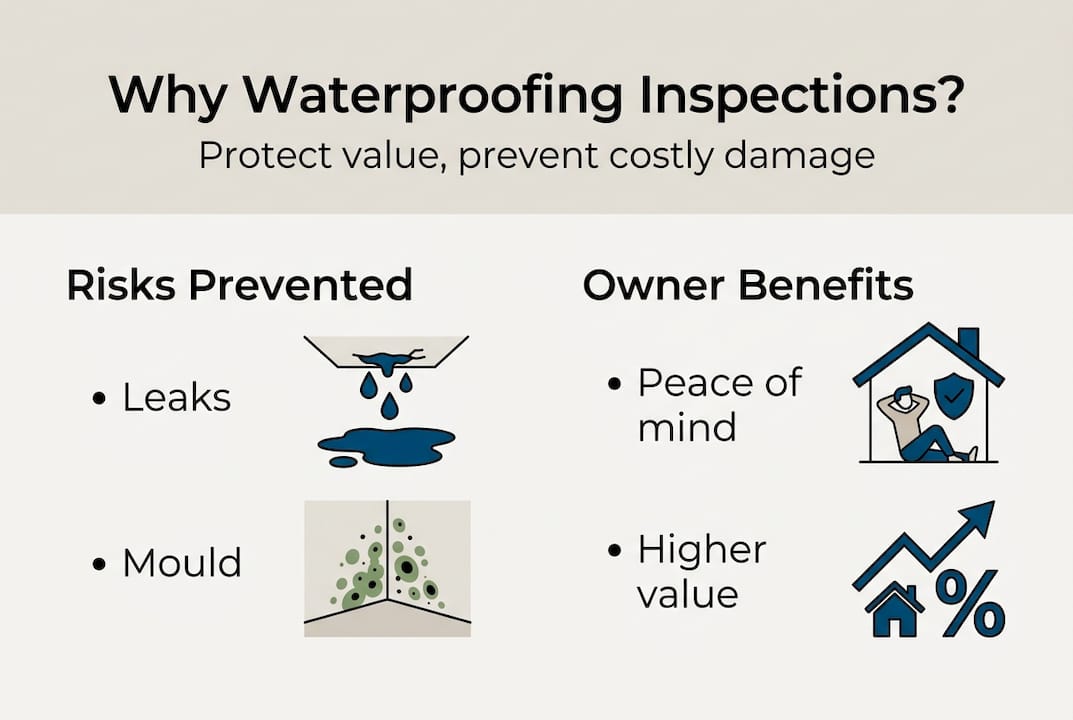
The risks of skipping inspections are not abstract. Here is what neglected waterproofing leads to:
- Structural weakening from prolonged moisture exposure in concrete and steel
- Mould and mildew growth that affects indoor air quality and health
- Damage to electrical systems from water ingress
- Delamination of internal finishes such as plaster and paint
- Reduced property value and complications during resale
- Insurance claim disputes when damage is attributed to owner negligence
Research on building maintenance impact consistently shows that proactive care dramatically reduces long-term costs. As one body of research on South African structures confirms, ~25% of building damage is caused by inadequate maintenance and inspections, often because roofs and walls have exceeded their service life without anyone noticing.
“Water is patient. It will find every gap, every crack, and every failed seal. Regular inspection is the only way to stay ahead of it.”
Pro Tip: Schedule your waterproofing inspection at the end of summer, before the rainy season begins. This gives you time to address any issues before your building faces its heaviest moisture load.
The inspection process: What professionals look for
Knowing that inspections matter is one thing. Understanding what actually happens during one helps you appreciate the value of professional expertise over a casual walk-around.
A qualified waterproofing inspector follows a structured process:
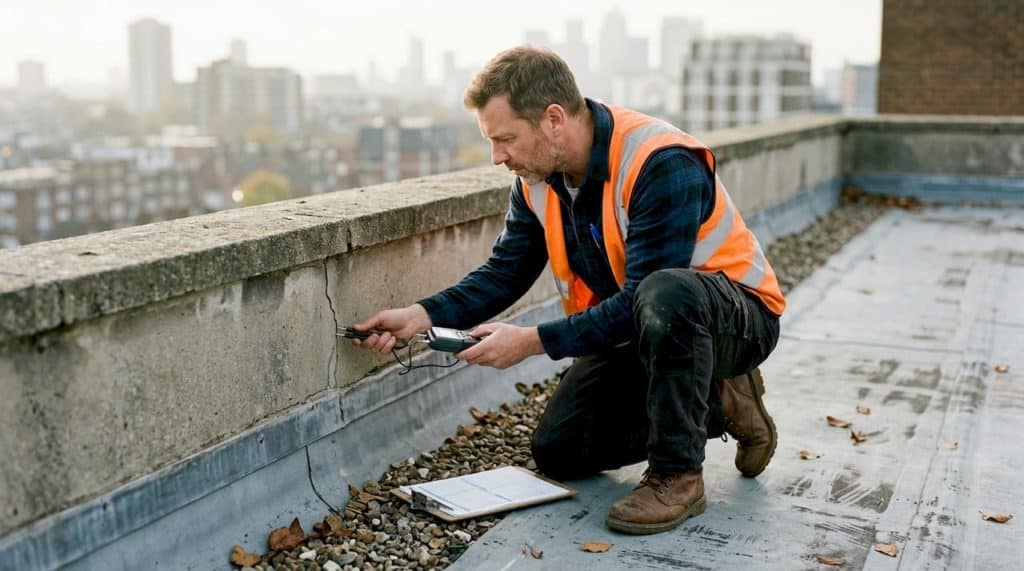
- Initial visual assessment of all external surfaces, looking for visible cracks, staining, efflorescence (white salt deposits on walls), and damaged sealants.
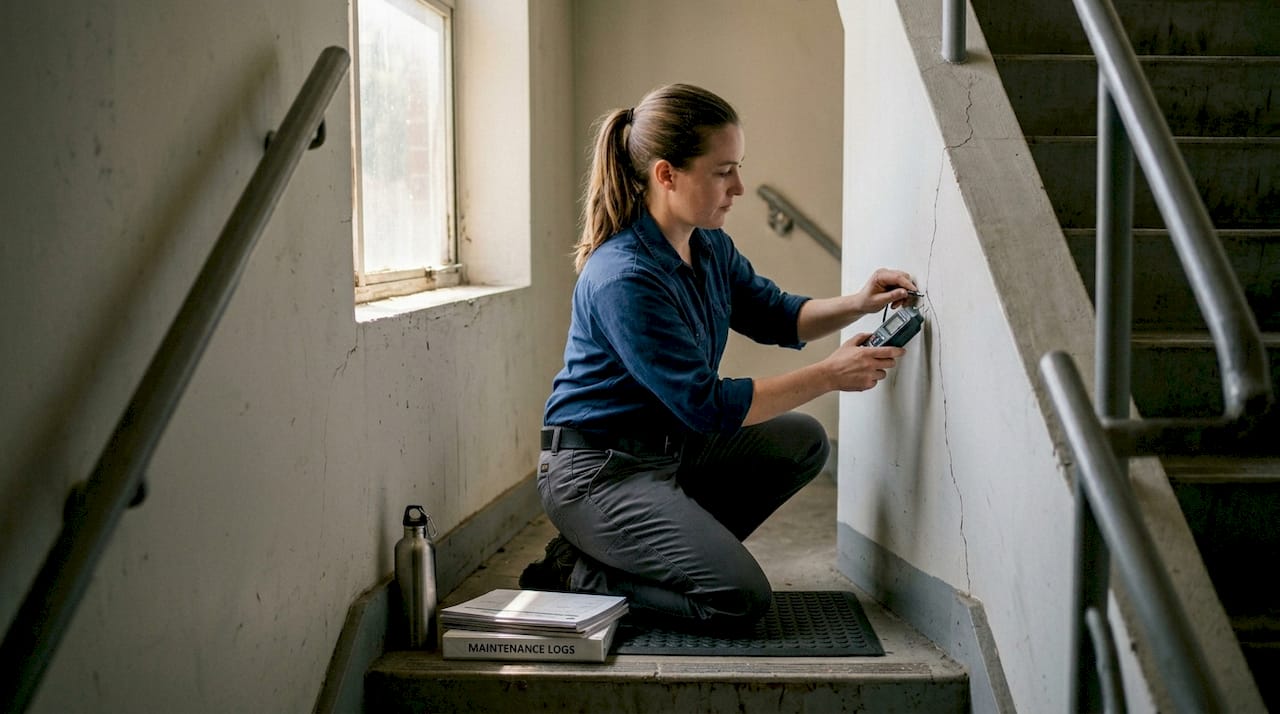
- Moisture testing using specialised instruments such as capacitance meters and infrared cameras to detect hidden dampness inside walls and slabs.
- Material evaluation to assess the condition of existing membranes, coatings, and flashings, and to determine whether they have reached the end of their service life.
- Drainage review to check that gutters, downpipes, and surface drainage are functioning correctly and directing water away from the structure.
- Written report detailing findings, risk ratings for each area, and recommended remedial actions with priority levels.
Here is a summary of the most common issues professionals identify:
| Area inspected | Typical problem found | Recommended action |
|---|---|---|
| Flat roof | Membrane blistering or cracking | Re-membrane or patch repair |
| Parapet walls | Failed coping and sealant joints | Reseal and repoint |
| Basement slab | Rising damp and hydrostatic pressure | Injection grouting or tanking |
| Window frames | Deteriorated perimeter sealant | Strip and reseal |
| External walls | Hairline cracks allowing moisture ingress | Crack injection and coating |
Professional tools matter because moisture hides. A crack in your parapet wall may look cosmetic but could be channelling water into your roof structure for months before you see a ceiling stain. Understanding inspections at this level of detail is what separates a trained eye from a hopeful glance. Research confirms that 87% of maintenance failures are owner responsibility, often because proper inspection was never carried out.
DIY versus professional inspections: An evidence-based comparison
It is tempting to save money by inspecting your own property. Walking around with a checklist feels productive. But there is a significant gap between what you can see and what is actually happening inside your walls and under your roof membrane.
Here is how the two approaches compare:
| Factor | DIY inspection | Professional inspection |
|---|---|---|
| Cost upfront | Low or zero | Moderate fee |
| Detection accuracy | Limited to visible signs | Includes hidden moisture and material testing |
| Tools available | Basic (eyes, torch) | Moisture meters, infrared cameras, probes |
| Risk of missing damage | High | Low |
| Long-term cost if issues missed | Very high | Significantly reduced |
| Documentation | None or informal | Formal written report |
| Insurance value | Minimal | Supports claims and compliance |
The numbers tell a clear story. Empirical data shows that owner responsibility accounts for 87% of maintenance failures, and DIY approaches consistently result in higher long-term repair costs because problems are caught late.
There are situations where a DIY check makes sense. After a storm, walking your property to look for obvious damage, blocked gutters, or displaced roof tiles is sensible and immediate. But that is a preliminary scan, not an inspection. It should trigger a professional assessment, not replace one.
The maintenance importance argument is straightforward. A professional inspection typically costs a fraction of what a single water damage repair job will set you back. Fixing a failed membrane before it leaks costs far less than replacing a damaged ceiling, treating mould, and repairing structural concrete after prolonged water ingress.
Pro Tip: If you are buying or selling a property, always commission a professional waterproofing inspection beforehand. It protects you legally and financially, and it gives buyers confidence in the building’s condition.
Making inspection part of your property maintenance plan
Knowing you should inspect is not the same as actually doing it. The properties that suffer the least water damage are those where inspections are scheduled in advance, not triggered by visible problems.
Integrating waterproofing inspections into your annual maintenance plan is simpler than most owners expect. Here is a practical approach:
- Set a fixed annual date. Choose a time that works for your climate zone. In the Western Cape, late February works well. In Gauteng, September before the summer storms is ideal.
- Document everything. Keep a maintenance file with photos, inspection reports, and records of any repairs carried out. This is invaluable for insurance purposes.
- Address issues immediately. Do not defer small repairs. A minor sealant failure addressed promptly costs very little. Left for six months, it can cause significant structural damage.
- Follow up after severe weather. Heavy storms, hail, or extreme heat events warrant a visual check and, if anything looks suspect, a professional assessment.
- Review your inspection checklist. Use a structured inspection checklist to ensure nothing is overlooked between professional visits.
Technology can help. Set calendar reminders on your phone or property management software. Some property owners photograph the same vulnerable areas every six months to track changes over time. This kind of systematic approach to maintaining waterproofed areas is what keeps buildings in good condition for decades.
Regular inspections also protect your property’s value. A building with documented maintenance history is easier to insure, easier to sell, and less likely to generate disputes with tenants or buyers. Given that inadequate maintenance causes roughly a quarter of all building damage, the financial case for routine inspection is undeniable.
Our perspective: What most owners get wrong about waterproofing inspections
After working with properties across South Africa, one pattern stands out clearly. Most owners wait for a visible leak before they act. By that point, the damage has already been building for months, sometimes years. The leak is not the problem. It is the symptom of a problem that a timely inspection would have caught long before.
The reactive mindset is expensive. Repairs triggered by visible water damage cost three to five times more than preventive maintenance. Yet the idea of paying for an inspection when nothing appears wrong feels counterintuitive to many owners.
South Africa’s climate is also more aggressive than people give it credit for. UV radiation degrades membranes faster here than in many European climates. Temperature cycles in Gauteng stress building joints constantly. These are not minor factors. They accelerate deterioration in ways that are invisible until they are not.
We have seen properties where owners followed industry waterproofing standards diligently and avoided major repairs for over fifteen years. The difference is not luck. It is consistent, scheduled inspection combined with prompt action on small findings. That is the real protection strategy.
Get expert help for your next waterproofing inspection
If your property has not had a professional waterproofing inspection in the past twelve months, now is the right time to arrange one. Waiting until something leaks means the damage has already begun.
Pro Waterproofing provides expert waterproofing inspections for residential, commercial, and industrial properties across South Africa. Our inspectors use professional-grade tools to find what the naked eye cannot, and every assessment comes with a clear written report and prioritised recommendations. You get peace of mind, long-term savings, and the confidence that your building meets current standards. Contact us today to arrange your inspection and take the first step toward protecting your investment properly.
Frequently asked questions
How often should I get a waterproofing inspection in South Africa?
Most experts recommend a professional waterproofing inspection at least once a year, or after any severe weather event, since ~25% of building damage stems from inadequate maintenance and missed inspections.
Can I perform waterproofing inspections myself?
You can spot obvious surface issues, but 87% of maintenance failures are owner responsibility, often because hidden damage goes undetected without professional tools, making professional assessment the safer and more cost-effective choice.
What are the hidden risks if I skip waterproofing inspections?
Skipping inspections allows undetected leaks, structural weakening, mould growth, and electrical hazards to develop unchecked, and inadequate inspections cause roughly a quarter of all building damage in South African structures.
Does waterproofing inspection increase property value?
Yes. Regular professional inspections prevent structural deterioration and extend building service life, and documented maintenance history supports higher valuations and smoother property transactions, since neglected maintenance is one of the leading causes of building damage.