

More than 60 percent of South African properties face basement moisture issues that threaten both safety and investment value. Left unchecked, water intrusion can lead to mould, damaged foundations, and even expensive repairs. Understanding how professional waterproofing works gives property owners the knowledge to prevent these risks from taking hold, protect their homes against future damage, and promote healthier living environments.
Table of Contents
- Waterproof Basements: Definition And Core Principles
- Types Of Basement Waterproofing Solutions
- Key Benefits For South African Properties
- Risks And Issues With Untreated Basements
- Cost Factors And Choosing A Contractor
Key Takeaways
| Point | Details |
|---|---|
| Importance of Waterproofing | Basement waterproofing is essential to prevent structural damage, mold growth, and loss of property value. |
| Types of Solutions | Various methods including cementitious coatings and cavity drainage systems cater to different moisture challenges. |
| Benefits for Property Owners | Proper waterproofing enhances structural longevity, improves energy efficiency, and ensures a healthier living environment. |
| Risk of Neglect | Untreated basements lead to serious issues like structural deterioration, health hazards, and significant financial loss. |
Waterproof Basements: Definition And Core Principles
Basement waterproofing is a critical protective strategy designed to prevent moisture penetration and structural damage in below-ground building spaces. According to Wikipedia, waterproofing involves specialised techniques and materials that stop water from entering basement areas, which are particularly vulnerable to moisture-related challenges.
At its core, basement waterproofing encompasses three primary protection approaches as defined by BS 8102 standards:
- Type A (Barrier Protection): Physical barriers installed to block water entry
- Type B (Structurally Integral Protection): Incorporating waterproof design directly into building structure
- Type C (Drained Protection): Systems that manage and redirect water away from basement spaces
Professional waterproofing requires understanding ground conditions, potential water sources, and implementing targeted solutions that match specific structural requirements. Understanding Why Basement Waterproofing is Crucial reveals that effective moisture management prevents multiple risks including structural degradation, mould growth, and potential property value reduction. Each basement represents a unique environment demanding customised waterproofing strategies that balance technical expertise with site-specific engineering considerations.
Types Of Basement Waterproofing Solutions
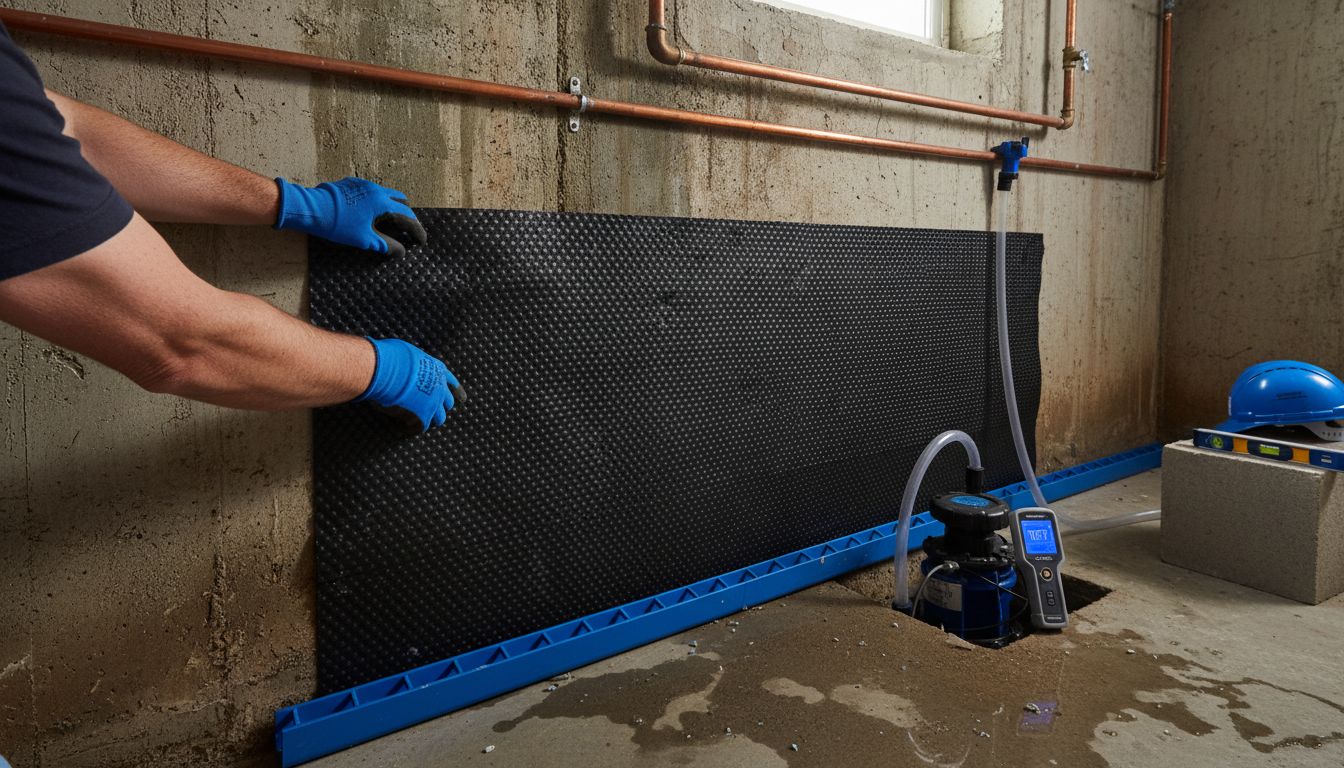
Basement waterproofing involves multiple sophisticated techniques designed to protect underground structures from moisture intrusion. Greenbuild highlights several primary waterproofing methods that cater to diverse structural requirements and environmental challenges.
Waterproofing solutions can be categorised into several key approaches:
- Cementitious Coatings: Rigid waterproofing systems applied directly to concrete surfaces
- Bituminous Waterproofing: Petroleum-based protective layers offering excellent moisture resistance
- Liquid-Applied Membranes: Seamless protective coatings that create flexible water barriers
- Crystalline Waterproofing: Chemical treatments that penetrate and seal concrete pores
- Cavity Drainage Systems: Engineered solutions that manage and redirect water away from structures
5 Common Exterior Basement Waterproofing Techniques reveals that professional waterproofing goes beyond simple application. According to Sika, advanced solutions like fully-bonded sheet membranes and watertight concrete systems provide comprehensive protection tailored to specific project requirements. Understanding these nuanced approaches ensures property owners can select the most appropriate method for their unique basement environment.
Key Benefits For South African Properties
Waterproofing represents a critical investment for property owners across South Africa’s diverse and challenging environmental landscapes. Sephaku Cement emphasises that implementing appropriate waterproofing systems ensures critical structural longevity and integrity for buildings exposed to variable moisture conditions.
The key benefits of professional basement waterproofing for South African properties include:
- Structural Protection: Preventing water damage and foundation degradation
- Moisture Control: Managing humidity levels and preventing mould growth
- Property Value Preservation: Maintaining building structural integrity and market value
- Health Safety: Reducing risks associated with dampness and fungal contamination
- Energy Efficiency: Minimising heat loss and improving overall building insulation
Understanding the Importance of Waterproofing in South Africa highlights that strategic waterproofing goes beyond simple moisture management. In regions with complex geological conditions and varying rainfall patterns, professional waterproofing techniques like cementitious coatings and liquid membranes provide comprehensive protection against potential structural compromises. By investing in robust waterproofing solutions, property owners can safeguard their most significant asset against the unpredictable environmental challenges characteristic of South African landscapes.
Risks And Issues With Untreated Basements
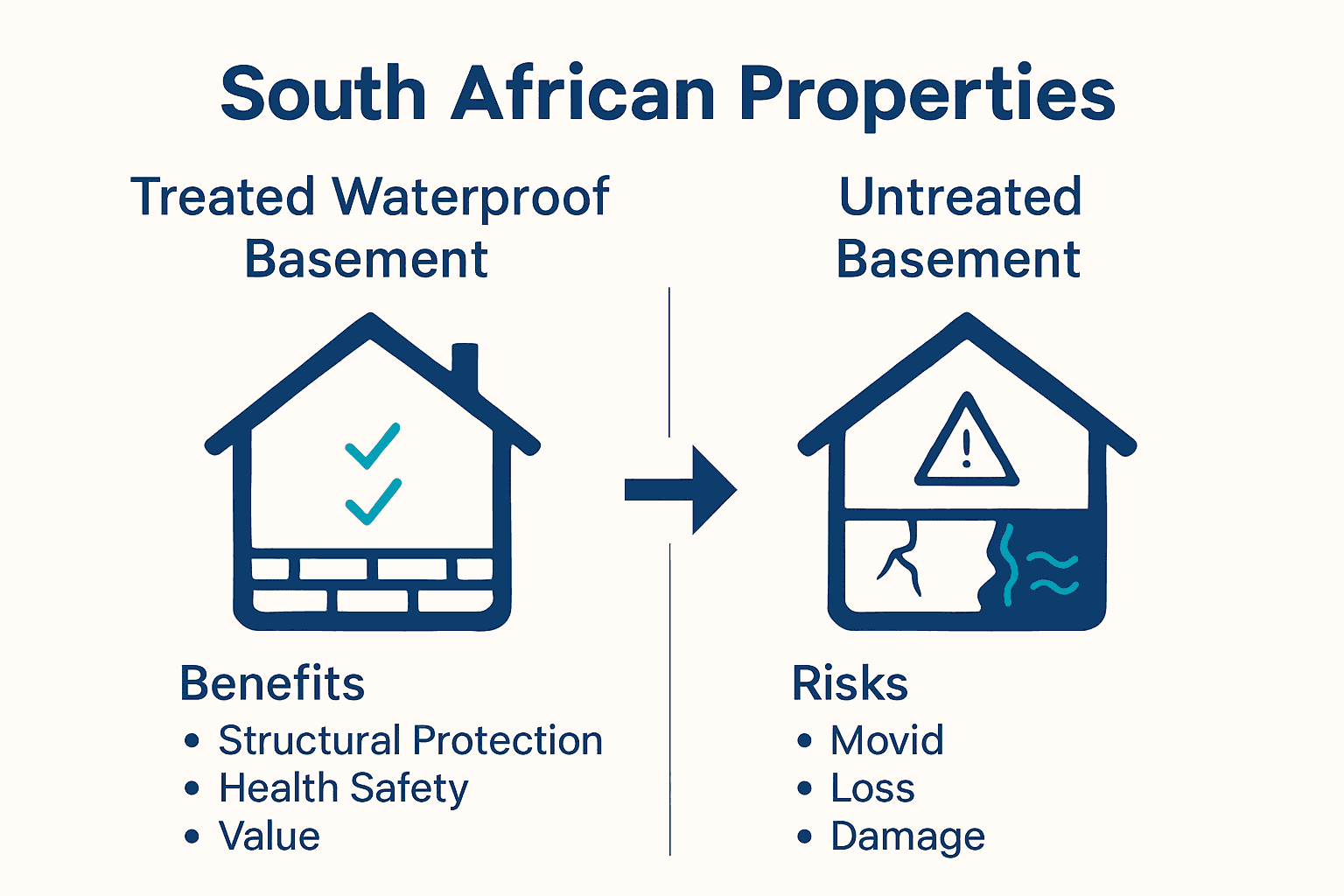
Untreated basements represent significant potential risks for property owners, creating vulnerabilities that can compromise structural integrity and health safety. According to Wikipedia, water infiltration can cause extensive damage through persistent hydrostatic pressure that forces moisture through structural weaknesses.
The primary risks associated with neglected basement waterproofing include:
- Structural Deterioration: Progressive weakening of foundation walls and floors
- Mould Proliferation: Dangerous fungal growth causing respiratory health risks
- Material Decay: Accelerated deterioration of building materials like wood and metal
- Electrical Hazards: Potential short-circuiting and electrical system damage
- Property Value Reduction: Significant depreciation of real estate investment
What You Should Know About Basement Moisture Control reveals that unchecked moisture can create cascading problems beyond immediate visible damage. Waterproof emphasises that water ingress leads to potential structural deterioration and serious health hazards, making proactive waterproofing not just a maintenance issue, but a critical investment in property protection and occupant well-being.
Cost Factors And Choosing A Contractor
Basement waterproofing investments require careful consideration of multiple financial and professional factors. The Handyman Johannesburg provides insights into regional pricing, noting that waterproofing treatments can range significantly depending on specific techniques and project complexity.
Key cost factors for basement waterproofing include:
- Surface Area: Total square meterage requiring treatment
- Waterproofing Method: Different techniques have varying price points
- Existing Damage: Extent of prior moisture damage affects preparation costs
- Accessibility: Difficulty of accessing basement spaces
- Material Quality: Premium waterproofing materials command higher prices
How to Select Waterproofing Contractor for Reliable Results suggests that pricing typically ranges from R200 to R700 per square meter, with cementitious treatments on the lower end and advanced polyurethane injections representing more sophisticated interventions. When selecting a contractor, property owners should prioritise proven expertise, comprehensive warranties, and transparent pricing structures that account for the unique challenges of their specific basement environment.
Protect Your South African Basement with Expert Waterproofing Solutions
Basements in South Africa face unique challenges from moisture and structural risks as highlighted in the article. If you worry about rising damp, mould growth or potential foundation damage reassurance is near. Pro Waterproofing understands the critical role of waterproofing systems like cementitious coatings and cavity drainage to safeguard your property’s structural integrity and health. With tailored solutions designed to meet the specific geological and rainfall conditions of the region you can protect your investment and live with confidence.
Explore practical answers and proven treatments by visiting our Uncategorized – Pro Waterproofing resource hub.
Take control by connecting today with reliable waterproofing experts at Pro Waterproofing. Don’t wait for costly damage—act now to secure fast, professional assessment and quotes that provide peace of mind and lasting protection for your basement. Your property deserves nothing less than trusted expertise tailored to South African conditions.
Frequently Asked Questions
What are the main types of basement waterproofing methods?
There are three primary types of basement waterproofing methods: Type A (Barrier Protection), Type B (Structurally Integral Protection), and Type C (Drained Protection). Each method addresses different moisture-related challenges.
Why is basement waterproofing important for property health?
Basement waterproofing is crucial as it prevents structural deterioration, mould growth, and moisture-related health hazards, preserving property value and enhancing overall safety.
How do I choose the right waterproofing solution for my basement?
Selecting the right waterproofing solution depends on various factors, including the basement structure, environmental conditions, and existing moisture damage. Consulting a professional can help tailor the best approach for your situation.
What are the potential consequences of not waterproofing a basement?
Neglecting basement waterproofing can lead to severe risks such as structural deterioration, mould proliferation, material decay, electrical hazards, and significant decreases in property value.