

Water stains creeping along ceilings or damp patches spreading across walls are a reality many homeowners in Gauteng and Western Cape know all too well. Protecting your property from water damage is more than a quick fix, especially given South Africa’s varied climate and increasing rainfall. With strict national quality standards like SANS and NHBRC warranties guiding industry practice, choosing a solution backed by true waterproofing assurance means your home gets long-term defence from costly and disruptive problems. For peace of mind, prioritise professional expertise and verifiable guarantees.
Table of Contents
- What Waterproofing Assurance Really Means
- Types of Waterproofing Warranties and Guarantees
- Industry Standards and Legal Requirements in South Africa
- Contractor Qualifications and Proof of Compliance
- Risks of Inadequate Waterproofing Assurance
- What to Check Before Signing an Agreement
Key Takeaways
| Point | Details |
|---|---|
| Comprehensive Strategy | Waterproofing assurance in South Africa involves more than surface treatments; it requires professional certification and compliance with national standards. |
| Varied Climate Challenges | Different South African regions necessitate tailored waterproofing strategies to effectively address specific environmental risks. |
| Warranty Importance | Homeowners should understand the different types of waterproofing warranties available to ensure adequate protection against potential water-related damages. |
| Regulatory Compliance | All waterproofing work must adhere to stringent national standards and legal requirements to guarantee structural integrity and safety. |
What Waterproofing Assurance Really Means
Waterproofing assurance represents a comprehensive strategy for protecting residential structures from water-related damage in South Africa. It goes far beyond simple surface treatments, encompassing technical competence, systematic risk management, and adherence to national quality standards. Technical competency in waterproofing involves ensuring that professionals possess the necessary skills and knowledge to implement effective water-resistant solutions.
At its core, waterproofing assurance involves multiple critical components:
- Professional certification verifying individual competence
- Compliance with national standards like SANS regulations
- Systematic assessment of potential water ingress points
- Implementation of specialised prevention techniques
- Regular quality control and maintenance checks
The significance of waterproofing assurance becomes particularly pronounced in South Africa’s diverse climate zones, where properties face varied environmental challenges. Coastal regions experience high humidity and salt-laden air, while interior areas might encounter significant rainfall or underground water table fluctuations. These environmental variables demand robust, scientifically-designed waterproofing strategies that protect structural integrity.
The following table summarises how South African climate zones impact waterproofing strategies:
| Region Type | Main Challenge | Essential Approach |
|---|---|---|
| Coastal areas | High humidity, salt air | Salt-resistant membranes |
| Interior regions | Heavy rains, ground water | Advanced drainage systems |
| Semi-arid zones | Temperature extremes | Flexible seals & coatings |
Professional expertise ensures that waterproofing solutions are not merely applied, but strategically engineered to address specific environmental conditions. This means understanding substrate characteristics, anticipating potential water movement patterns, and selecting appropriate materials that can withstand localised environmental stressors.
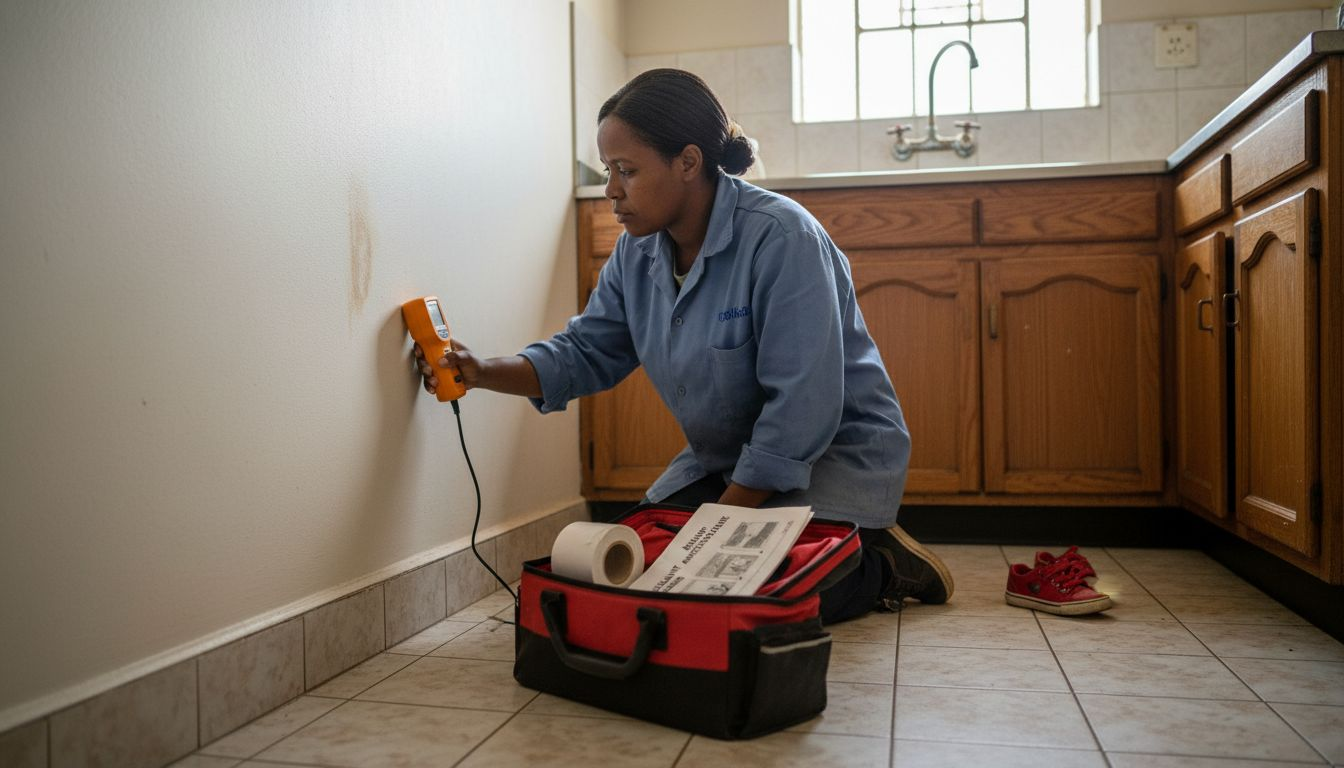
Pro tip: Always request comprehensive documentation and certification from waterproofing professionals to guarantee their technical competence and compliance with national standards.
Types of Waterproofing Warranties and Guarantees
Waterproofing warranties in South Africa represent crucial protection mechanisms for homeowners, offering comprehensive coverage against potential water-related structural damages. Home builder warranties provide structured protection across different timelines and structural elements, ensuring homeowners have legal recourse for potential defects.
The primary types of waterproofing warranties include:
- Minor Defect Warranty: Covers initial construction imperfections within 3 months
- Roof Leak Warranty: Protects against water penetration for up to 1 year
- Structural Defect Warranty: Comprehensive coverage for major structural issues lasting up to 5 years
- Extended Material Warranty: Covers specialised waterproofing materials beyond standard periods
Professional associations play a significant role in warranty reliability. Professional registration standards ensure contractors meet minimum industry requirements, which directly impacts the quality and credibility of issued warranties. These standards mandate continuous professional development and adherence to rigorous technical guidelines.
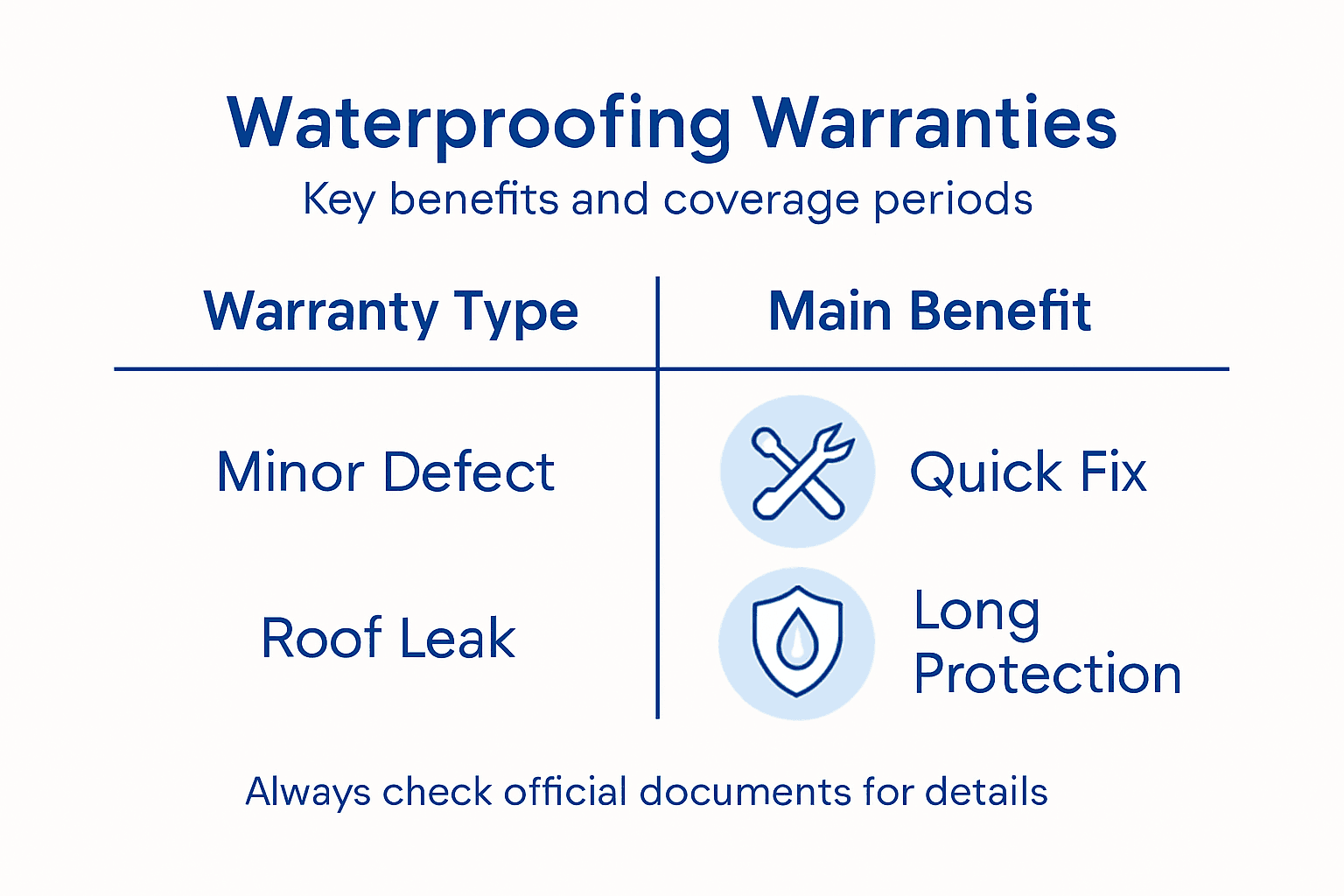
Homeowners should carefully examine warranty documentation, paying close attention to specific coverage terms, exclusion clauses, and maintenance requirements. Understanding the nuanced differences between warranty types can prevent future disputes and ensure comprehensive protection for your property’s waterproofing systems.
Here is a comparison of warranty types and their homeowner benefits:
| Warranty Type | Typical Duration | Key Homeowner Benefit |
|---|---|---|
| Minor Defect Warranty | Up to 3 months | Swift resolution of flaws |
| Roof Leak Warranty | Up to 1 year | Reduces interior damage risk |
| Structural Defect Warranty | Up to 5 years | Ensures long-term integrity |
| Material Warranty | Varies (extended) | Covers costly replacements |
Pro tip: Request a detailed written warranty that explicitly outlines coverage periods, specific protection areas, and conditions for claim validity.
Industry Standards and Legal Requirements in South Africa
Waterproofing in South Africa is governed by a comprehensive framework of national standards and legal requirements designed to protect homeowners and ensure structural integrity. South African National Standards such as SANS 10252-1 establish critical technical guidelines for water installations and waterproofing practices across residential and commercial properties.
Key regulatory components include:
- National Building Regulations defining minimum construction standards
- SANS Technical Specifications for water-resistant installations
- NHBRC Performance Requirements for residential construction
- Consumer Protection Laws governing construction quality
- Mandatory Compliance Certificates for waterproofing work
Technical requirements for weatherproofing are particularly stringent, reflecting South Africa’s diverse climate challenges. These standards mandate specific moisture control techniques, material specifications, and installation methodologies to prevent water damage and ensure long-term structural protection.
Professional contractors must demonstrate compliance through detailed documentation, quality certifications, and adherence to prescribed technical guidelines. This regulatory environment ensures that waterproofing is not merely a cosmetic consideration but a critical aspect of building safety and longevity.
Pro tip: Always request official compliance documentation and verify a contractor’s registration with recognised professional bodies before commissioning waterproofing work.
Contractor Qualifications and Proof of Compliance
Qualifying a waterproofing contractor in South Africa requires careful assessment of professional credentials, technical competence, and regulatory compliance. National Waterproofing Certification serves as a critical benchmark for determining a contractor’s professional standards and technical expertise.
Key qualifications and compliance indicators include:
- National Qualifications Framework (NQF) Certification
- Registered with Professional Industry Bodies
- Documented Technical Training
- Current Professional Indemnity Insurance
- Proven Track Record of Successful Projects
Competent contractors must demonstrate technical proficiency through recognised national standards, which go beyond mere practical skills. This involves comprehensive understanding of moisture dynamics, substrate analysis, material compatibility, and installation methodologies specific to South Africa’s diverse environmental conditions.
Essential contractor questions include verifying their registration status, reviewing previous project portfolios, and confirming their understanding of local building regulations. Homeowners should request detailed documentation proving technical competence and systematic approach to waterproofing challenges.
Pro tip: Request contractors to provide their NQF level certification and professional registration details before commencing any waterproofing project.
Risks of Inadequate Waterproofing Assurance
Water damage consequences represent a critical concern for South African homeowners, with inadequate waterproofing potentially leading to catastrophic structural and health-related risks. The unique climatic conditions of South Africa, characterised by intense rainfall and high humidity in many regions, exponentially increase the potential for moisture-related deterioration.
Primary risks associated with poor waterproofing include:
- Structural Integrity Compromise
- Mould and Fungal Growth
- Electrical System Damage
- Reduced Property Value
- Potential Health Hazards
- Escalating Repair Costs
The financial implications of inadequate waterproofing extend far beyond immediate repair expenses. Home warranty systems exist to mitigate these risks, but homeowners must proactively understand the potential long-term consequences of moisture infiltration. Unchecked water damage can compromise building foundations, create conducive environments for toxic mould growth, and potentially render entire sections of a property uninhabitable.
Professional assessment and preventative waterproofing measures are crucial in South Africa’s diverse environmental conditions. Different regions present unique challenges, from coastal salt-laden environments to inland areas with dramatic temperature fluctuations, making comprehensive waterproofing not just a recommendation but an essential investment in property preservation.
Pro tip: Invest in annual professional moisture inspections to identify potential waterproofing vulnerabilities before they escalate into major structural problems.
What to Check Before Signing an Agreement
Navigating waterproofing contracts requires meticulous attention to detail and comprehensive understanding of legal protections. NHBRC warranty coverage represents a fundamental baseline for ensuring contractual integrity and consumer safeguards in South African construction agreements.
Critical elements to verify before signing include:
- Explicit Warranty Terms
- Detailed Scope of Work
- Materials Specification
- Performance Guarantees
- Compliance Certifications
- Post-Installation Support
Contractual documentation should comprehensively outline the specific waterproofing techniques, materials, and methodologies to be employed. This includes precise descriptions of substrate preparation, membrane application, drainage system integration, and anticipated performance outcomes under varying environmental conditions specific to the property’s location.
Homeowners must scrutinise not just the financial aspects, but the technical competence demonstrated through professional qualifications, previous project references, and verifiable industry registrations. Understanding the nuanced differences between workmanship warranties, materials warranties, and structural guarantees can prevent potential future disputes and ensure robust protection against water-related damages.
Pro tip: Engage an independent technical consultant to review the contract’s technical specifications and warranty terms before signing.
Secure Your South African Home with Expert Waterproofing Assurance
Water damage poses a serious threat to the safety and value of your property. The article highlights key challenges such as structural risks, mould growth, and costly repairs that arise from inadequate waterproofing. At Pro Waterproofing, we understand the vital importance of professional certification, compliance with South African standards, and tailored waterproofing solutions that address your specific environment whether coastal or inland.
Explore trusted solutions with Pro Waterproofing for peace of mind and durable protection. Visit our Uncategorized – Pro Waterproofing page to learn more about our expert services. Ready to safeguard your home? Connect directly through Pro Waterproofing to request a personalised consultation and ensure your waterproofing contractor meets all industry qualifications. Act now to prevent expensive damage by partnering with South Africa’s waterproofing specialists.
Frequently Asked Questions
What is waterproofing assurance?
Waterproofing assurance is a comprehensive strategy for protecting homes from water-related damage, involving technical competency, adherence to national standards, and systematic risk management.
What types of waterproofing warranties are available?
Common types include Minor Defect Warranty (up to 3 months), Roof Leak Warranty (up to 1 year), Structural Defect Warranty (up to 5 years), and Extended Material Warranty (beyond standard periods).
Why is professional expertise important in waterproofing?
Professional expertise ensures that waterproofing solutions are not merely applied but strategically engineered to address specific environmental conditions, maximising effectiveness and longevity.
What should I check before signing a waterproofing contract?
Before signing, verify warranty terms, the scope of work, materials specifications, performance guarantees, compliance certifications, and post-installation support to ensure comprehensive protection and quality workmanship.