
Discovering water stains or bubbling paint on your walls in Gauteng can signal trouble brewing beneath the surface. Dampness and water intrusion not only threaten your home’s structural integrity, they can also bring costly repairs and hidden health risks. By understanding the importance of a systematic assessment and following expert waterproofing guidance, you will learn how to safeguard your property and avoid common mistakes that leave homes vulnerable.
Table of Contents
- Step 1: Assess Property For Damp And Water Risks
- Step 2: Prepare Surfaces And Select Suitable Materials
- Step 3: Apply Waterproofing Membranes And Coatings
- Step 4: Seal Vulnerable Points And Joints
- Step 5: Inspect Installation For Coverage And Defects
- Step 6: Maintain And Monitor Waterproofed Areas
Quick Summary
| Key Point | Explanation |
|---|---|
| 1. Conduct thorough property inspections | Examine interior and exterior areas for signs of moisture, including stains and discolouration, to identify potential water damage early. |
| 2. Use appropriate waterproofing materials | Select high-quality, climate-specific waterproofing materials that allow for moisture vapour transmission while preventing water penetration. |
| 3. Seal all vulnerable points diligently | Carefully seal around windows, pipes, and joints with flexible sealants to create a robust moisture barrier and prevent water infiltration. |
| 4. Regularly inspect and maintain waterproofed areas | Implement a maintenance plan with quarterly inspections to catch emerging moisture issues and extend the effectiveness of your waterproofing efforts. |
| 5. Document all findings and actions | Keep a maintenance log to track inspections and repairs, ensuring a proactive approach to addressing any potential water damage. |
Step 1: Assess property for damp and water risks
Detecting potential water damage in your Gauteng home requires a systematic and thorough investigation of your property’s vulnerable areas. Understanding how moisture can penetrate your property is crucial for preventing long-term structural deterioration and potential health risks.
Begin by conducting a comprehensive visual inspection of both interior and exterior surfaces. Look for telltale signs of water intrusion such as discolouration, paint bubbling, white salt-like efflorescence deposits, or visible water stains on walls and ceilings. Pay special attention to areas near external walls, basement regions, and spaces adjacent to plumbing fixtures. Performance criteria for water penetration established by Agrément South Africa recommend examining wall surfaces meticulously for any indication of moisture compromise.
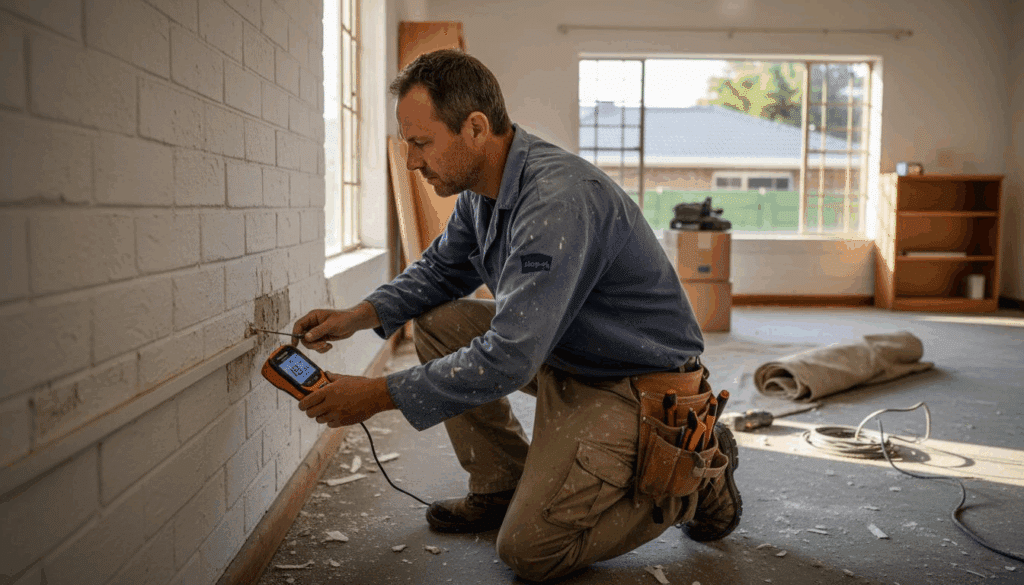
Utilise a moisture metre to quantify dampness levels in walls and flooring. These devices provide objective measurements that help determine the extent of potential water damage beyond what is visible to the naked eye. Check areas with known water exposure risks such as foundations, crawl spaces, and areas with historical plumbing or roof leakage. Document your findings comprehensively, noting precise locations and severity of any moisture intrusion.
Expert Tip: Conduct your property assessment during or immediately after rainfall to identify active water penetration points more effectively.
Step 2: Prepare surfaces and select suitable materials
Successfully waterproofing your Gauteng property requires meticulous surface preparation and strategic material selection to ensure long lasting protection against moisture intrusion. The right approach will prevent future water damage and maintain your property’s structural integrity.
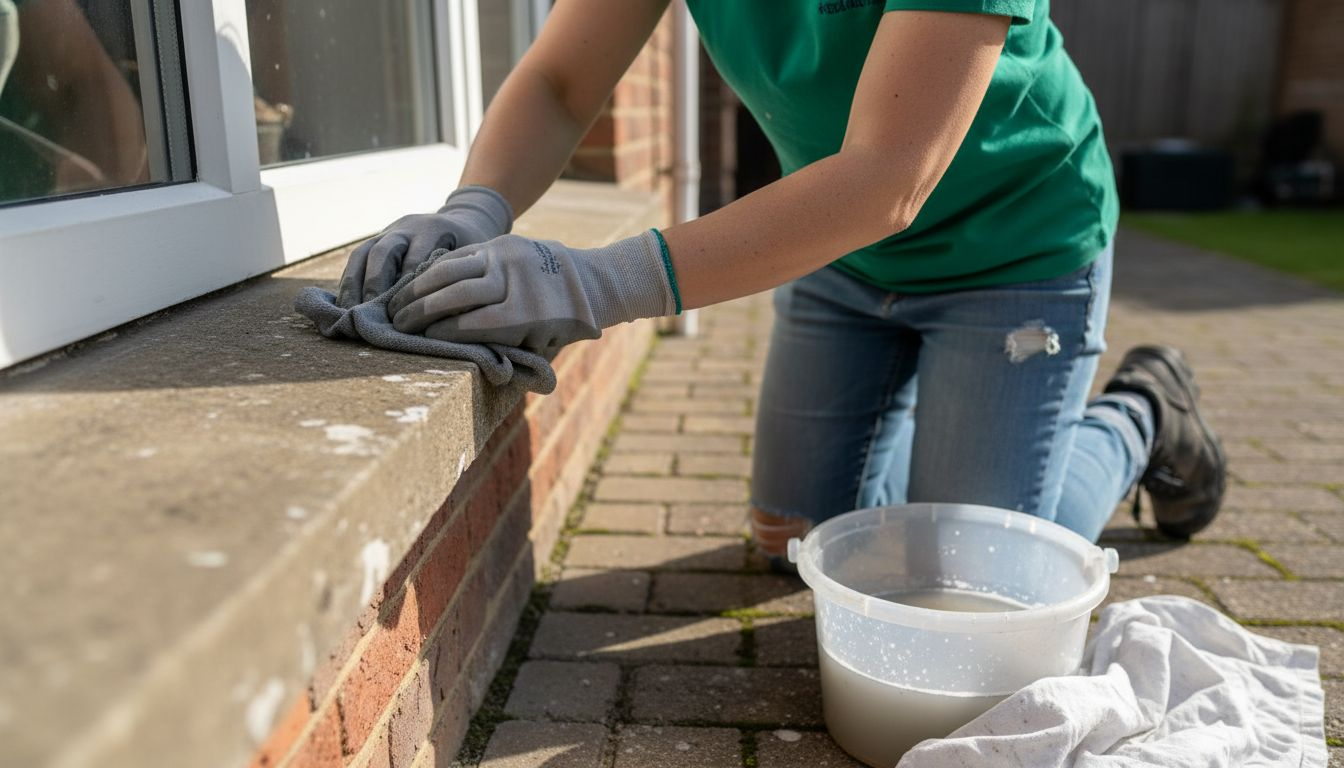
Begin by thoroughly cleaning and inspecting all surfaces targeted for waterproofing. Remove any existing paint, plaster, or loose materials using specialised cleaning tools like wire brushes and pressure washers. Repair structural cracks or imperfections with appropriate waterproofing inspection techniques that address underlying structural weaknesses. Ensure surfaces are completely dry, clean, and free from dust or debris before applying any waterproofing treatments.
Select high quality waterproofing materials specifically designed for Gauteng’s unique climate conditions. Consider factors such as temperature fluctuations, rainfall intensity, and soil moisture levels when choosing membranes, sealants, and protective coatings. Opt for breathable materials that allow moisture vapour transmission while preventing liquid water penetration. Silicone based sealants, cementitious waterproofing compounds, and liquid applied membranes are excellent choices for comprehensive protection.
Expert Tip: Always purchase waterproofing materials from reputable suppliers and check manufacturer specifications for compatibility with your specific surface type and environmental conditions.
Step 3: Apply waterproofing membranes and coatings
Applying waterproofing membranes and coatings is a critical stage in protecting your Gauteng home from moisture damage. This process requires precision, careful technique, and understanding of different application methods to create an effective moisture barrier.
Start by selecting the most appropriate types of waterproofing membranes for your specific surface and environmental conditions. For horizontal surfaces like foundations and basement floors, consider liquid applied membranes or sheet membranes that provide seamless coverage. Apply the chosen membrane systematically using rollers, brushes, or specialised spray equipment to ensure complete and uniform coverage. Pay extra attention to corners, joints, and potential weak points where water might penetrate.
Carefully follow manufacturer instructions for each waterproofing product, ensuring proper drying times and application thickness. Use multiple layers if recommended, allowing sufficient time between coats for optimal adhesion and protection. For vertical surfaces like exterior walls, use brush or spray techniques that create a consistent protective layer without gaps or thin spots. Check for complete coverage by examining the surface from multiple angles and using a torch to highlight any potential missed areas.
Here is a summary of common types of waterproofing membranes and their best uses in Gauteng homes:
| Membrane Type | Typical Application Area | Key Advantage |
|---|---|---|
| Liquid applied membrane | Basements, foundations | Seamless coverage, adapts to shapes |
| Sheet membrane | Floors, exterior walls | Consistent thickness, rapid installation |
| Cementitious waterproofing | Bathrooms, interior walls | Good adhesion, easy to apply |
| Bituminous membrane | Roofs, terraces | Durable in heavy rainfall |
Expert Tip: Work during dry weather conditions and avoid applying waterproofing membranes in direct sunlight or extreme temperatures to ensure maximum product effectiveness.
Step 4: Seal vulnerable points and joints
Identifying and sealing vulnerable points is crucial for comprehensive waterproofing protection in your Gauteng home. Water can infiltrate through seemingly insignificant gaps and cracks, potentially causing extensive structural damage if left unaddressed.
Concentrate on critical areas prone to water penetration such as window frames, pipe penetrations, expansion joints, and wall floor intersections. Use basement wall sealing techniques to apply specialised sealants that create a robust moisture barrier. Select high quality polyurethane or silicone based sealants that offer flexibility and long term durability. Apply these materials carefully using professional grade caulking guns, ensuring complete coverage and smooth application without air pockets or uneven surfaces.
For external joints and connections, consider using flexible waterproofing tapes or membrane patches that can accommodate slight structural movements. These materials provide additional protection in areas experiencing temperature fluctuations or minor ground shifts. Inspect each sealed area meticulously, running your fingers along the application to confirm a smooth continuous seal without gaps or bubbles that could compromise water resistance.
Expert Tip: Always clean and thoroughly dry surfaces before applying sealants to ensure maximum adhesion and effectiveness of your waterproofing materials.
Step 5: Inspect installation for coverage and defects
Final quality verification is essential to ensure your waterproofing installation provides comprehensive protection for your Gauteng home. A thorough inspection will confirm that all previous steps have been executed correctly and no vulnerabilities remain unaddressed.
Utilise a comprehensive 75-point waterproofing checklist to systematically evaluate every aspect of the installation. Begin with a visual examination of the entire treated surface, looking for uneven coverage, air bubbles, thin spots, or visible discontinuities in the membrane application. Check all sealed joints and intersections for complete adhesion and smooth transitions. Use multiple lighting angles and a bright torch to highlight potential imperfections that might be invisible under standard conditions.
Carry out targeted moisture tests using professional grade detection equipment to validate the effectiveness of your waterproofing installation. Press firmly along membrane edges and joints to confirm proper adhesion and look for any signs of lifting or separation. Pay special attention to areas around pipe penetrations, window frames, and floor wall junctions where water intrusion is most likely. Document any identified issues with photographs and precise location notes to facilitate potential repairs or touch ups.
Expert Tip: Conduct your final inspection during different times of day and under varying light conditions to reveal subtle imperfections that might otherwise go unnoticed.
Step 6: Maintain and monitor waterproofed areas
Maintaining your newly waterproofed surfaces requires consistent attention and proactive monitoring to preserve the long term effectiveness of your investment. Regular inspections and preventative actions will help protect your property from potential water damage and extend the lifespan of your waterproofing system.
Implement a systematic maintenance strategy that includes quarterly visual inspections of all waterproofed surfaces. Look for early warning signs such as small cracks, discolouration, or minor paint bubbling that could indicate emerging moisture issues. Pay special attention to areas with previous water penetration risks including foundations, basement walls, roof edges, and external wall interfaces. Use a moisture metre to quantitatively assess potential water absorption and track any changes in moisture levels over time.
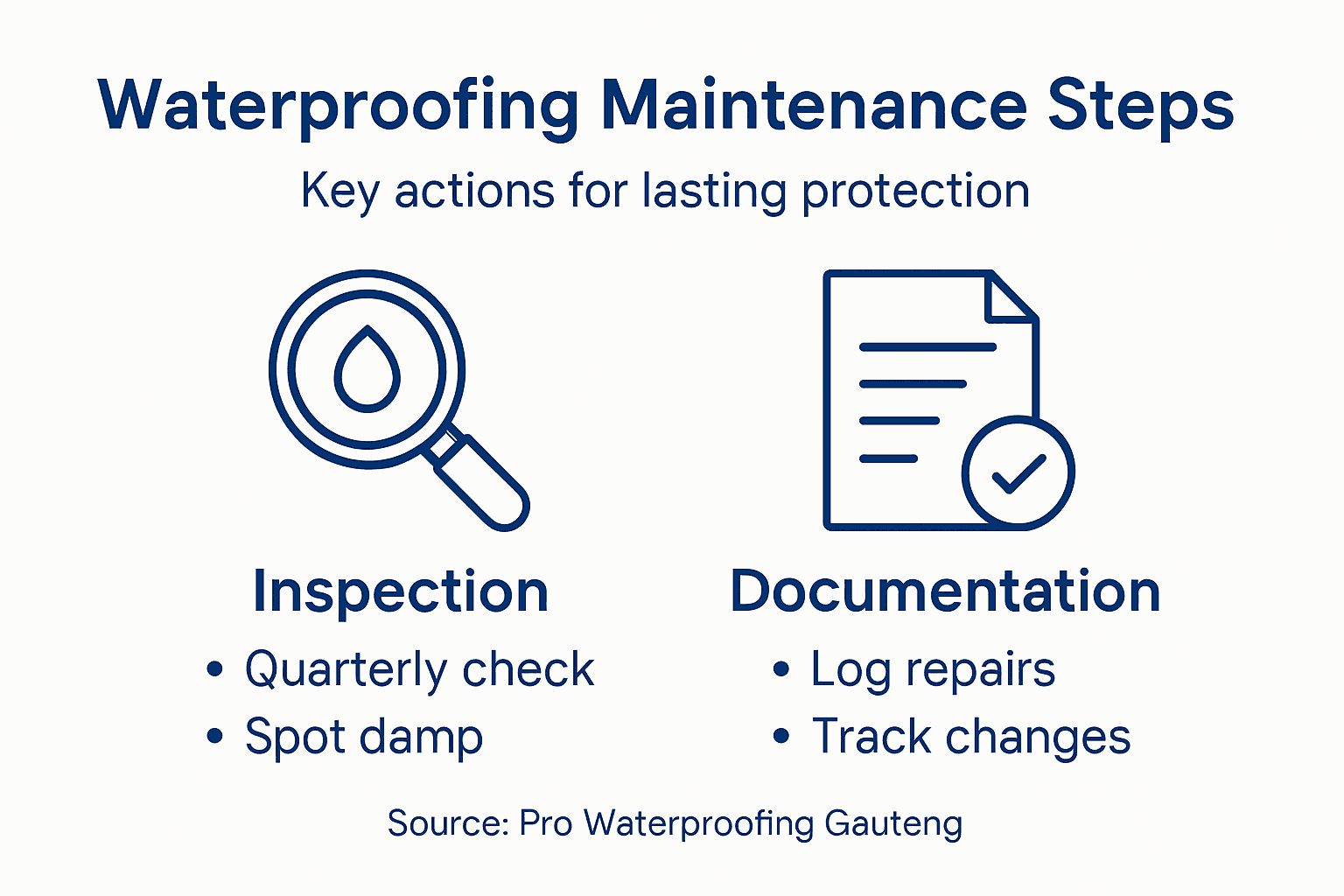
Develop a maintenance log to document each inspection, recording the date, specific observations, and any remedial actions taken. Clean waterproofed surfaces periodically using mild non abrasive cleaning solutions that will not compromise the protective membrane. Remove vegetation or debris that might accumulate near sealed areas, as these can retain moisture and potentially compromise the waterproofing integrity. Address any identified issues promptly to prevent minor imperfections from developing into significant water damage problems.
The following table provides a structured overview of essential maintenance tasks for waterproofed areas:
| Maintenance Task | Frequency | Main Purpose |
|---|---|---|
| Visual inspection | Quarterly | Detect early signs of moisture intrusion |
| Moisture level monitoring | Quarterly | Track ongoing effectiveness of waterproofing |
| Surface cleaning | Bi-annually | Remove debris and prevent membrane deterioration |
| Vegetation removal | After rainfall | Reduce risk of water retention near sealed zones |
Expert Tip: Schedule your maintenance inspections strategically after significant rainfall periods to identify any potential water intrusion points while they are most apparent.
Protect Your Gauteng Home with Expert Waterproofing Solutions
Water intrusion and dampness pose serious risks to your property’s structural integrity and your family’s health, especially if left unchecked. This guide highlights critical steps such as detailed property assessment, selecting climate-appropriate materials, and expertly sealing vulnerable points. Your goal is to PREVENT water damage and costly repairs by ensuring a reliable moisture barrier that withstands Gauteng’s unique weather.
For homeowners ready to secure lasting protection, explore our Uncategorized – Pro Waterproofing resources to deepen your understanding and choose proven waterproofing methods.
Don’t wait until dampness or leaks undermine your peace of mind. Visit Pro Waterproofing today to connect with trusted specialists who prioritise quality, experience, and proper installation backed by warranties. Take decisive action now to safeguard your home with professional waterproofing support designed specifically for Gauteng properties.
Frequently Asked Questions
How can I assess my home for damp and water risks before waterproofing?
Begin by conducting a thorough visual inspection of both the interior and exterior surfaces of your property. Look for signs of water intrusion such as discolouration, stains, or efflorescence, particularly in basements and areas near plumbing fixtures.
What steps are involved in preparing surfaces for waterproofing?
To prepare surfaces, first clean and inspect them by removing any loose materials and repairing structural cracks. Ensure that the surfaces are completely dry and free from dust and debris before applying any waterproofing treatments.
How do I apply waterproofing membranes and coatings correctly?
Start by selecting the appropriate waterproofing membrane for your surface, such as liquid applied membranes or sheet membranes. Apply the chosen product evenly using rollers or brushes, paying attention to joints and corners for complete coverage, and allow adequate drying time between coats.
What are the key vulnerable points to seal during waterproofing?
Focus on areas prone to water penetration, such as window frames, pipe penetrations, and wall-floor intersections. Use high-quality sealants to fill gaps and apply flexible waterproofing tapes at external joints to ensure a robust moisture barrier.
How can I ensure the waterproofing installation is effective?
Conduct a comprehensive inspection by assessing the treated surfaces for even coverage and checking sealed joints for complete adhesion. Use professional-grade moisture detection equipment to confirm that no areas are lifting or showing signs of water intrusion.
What maintenance should I perform after the waterproofing installation?
Implement a systematic maintenance strategy that includes quarterly visual inspections and moisture level monitoring. Clean serviced areas bi-annually and remove vegetation that may retain moisture near sealed zones to preserve the integrity of your waterproofing system.