
TL;DR:
- Moisture causes 85% of construction defects in South Africa due to poor waterproofing.
- Compliance with SANS standards ensures waterproofing systems perform at least five years.
- Hiring qualified, association-member contractors with proper documentation prevents costly water damage.
Moisture is quietly responsible for 85% of construction defects in South Africa, yet most property owners only discover the problem after the damage is already done. Walls bubble, ceilings stain, and structural elements corrode, all because waterproofing was either skipped, rushed, or done without understanding what the law actually requires. Whether you manage a residential estate, a commercial building, or an industrial facility, the rules governing waterproofing are not optional. This guide breaks down the national standards, the systems available, and how to choose a contractor who will protect your asset properly.
Table of Contents
- The foundation: SANS and national waterproofing standards
- Waterproofing systems explained: methods and material choices
- Modern versus traditional systems: performance and risks
- Choosing and verifying a qualified waterproofing contractor
- The uncomfortable truth most owners miss about waterproofing standards
- Work with industry leaders for guaranteed waterproofing results
- Frequently asked questions
Key Takeaways
| Point | Details |
|---|---|
| Follow SANS standards | All waterproofing in South Africa must comply with SANS 10400 requirements for legal and long-term performance. |
| Use proven systems | Modern systems like EPDM/TPO last longer and require fewer repairs than outdated methods. |
| Hire qualified contractors | Insist on WTASA or DWASA membership and full documentation to guarantee work quality. |
| Avoid common risks | Most property defects come from ignored standards, DIY attempts, or poor contractors. |
The foundation: SANS and national waterproofing standards
Before applying any materials, it is critical to understand what legally qualifies as proper waterproofing. In South Africa, the South African National Standard SANS 10400 series forms the legal backbone of all building compliance. These are not guidelines you can choose to follow. They are mandated requirements under the National Building Regulations.
SANS 10400-Part L is the primary standard for roof waterproofing in South Africa. It governs everything from material selection to installation methodology, and it requires that only competent persons carry out the work in accordance with manufacturer specifications. Part K addresses external walls, and Part P covers damp-proofing at ground level. These three parts work together, and a failure in any one of them can compromise the entire building envelope.
The SANS 10400 series, including walls and damp-proofing requirements, also specifies that waterproofing systems must deliver a minimum of five years of watertight performance. That is the floor, not the target. Many quality systems far exceed this benchmark.
“85% of construction defects trace back to moisture. That is not a statistic about bad luck. It is a statistic about missed standards and underqualified workmanship.”
Non-compliance carries real consequences. Insurance claims can be denied if work was not done to standard. Resale values drop when defects are discovered during conveyancing inspections. In commercial settings, landlords may face liability for tenant losses caused by water ingress.
Here is what compliance actually requires:
- Adherence to SANS 10400 Parts K, L, and P as applicable to the structure
- Use of products that conform to relevant SANS material standards
- Installation by a competent, qualified person as defined by the regulations
- A minimum five-year watertight performance guarantee
- Documentation of the system used, including product data sheets
For a deeper look at roof waterproofing basics, understanding the specific requirements per roof type is a useful starting point before engaging any contractor.
Waterproofing systems explained: methods and material choices
Knowing the standards, the next step is understanding the technology behind waterproofing. South Africa’s climate varies enormously, from the wet Western Cape winters to the intense Highveld summer storms, and the system you choose must match your specific conditions.
| System | Lifespan | Best application | SANS compliance |
|---|---|---|---|
| Cementitious coating | 5 to 10 years | Basements, wet rooms | Yes |
| Liquid-applied membrane | 10 to 15 years | Flat roofs, balconies | Yes |
| Torch-on bitumen | 15 to 25 years | Low-slope roofs | Yes |
| EPDM or TPO membrane | 20 to 30+ years | Large commercial roofs | Yes |
Key methodologies including cementitious coatings, liquid-applied membranes, bituminous torch-on systems, and EPDM or TPO membranes each have distinct lifespans and performance profiles. Cementitious coatings are affordable and easy to apply, but they are rigid and can crack with structural movement. Liquid membranes are flexible and bond well to most substrates, making them popular for balconies and flat roofs. Torch-on systems use heat to bond bitumen sheets and are well-proven in South African conditions. EPDM and TPO are synthetic rubber and thermoplastic membranes that offer superior UV resistance and longevity.
Selecting the right system involves more than picking the most expensive option. Follow this process:
- Assess the substrate condition and structural movement potential
- Identify the exposure level, including UV intensity, rainfall, and foot traffic
- Match the system to the building type and budget over a full lifecycle cost
- Confirm the product carries a SANS-compliant material certification
- Verify that the chosen contractor is trained and approved by the manufacturer
Brands such as Sika, Derbigum, and PUDLO are widely recognised in the South African market for producing compliant, tested products. Always request the product data sheet and technical approval documentation before work begins.
Pro Tip: Never assess a waterproofing system on price alone. A cheaper product applied over a poorly prepared substrate will fail faster than a mid-range product applied correctly. Substrate preparation is often where corners are cut.
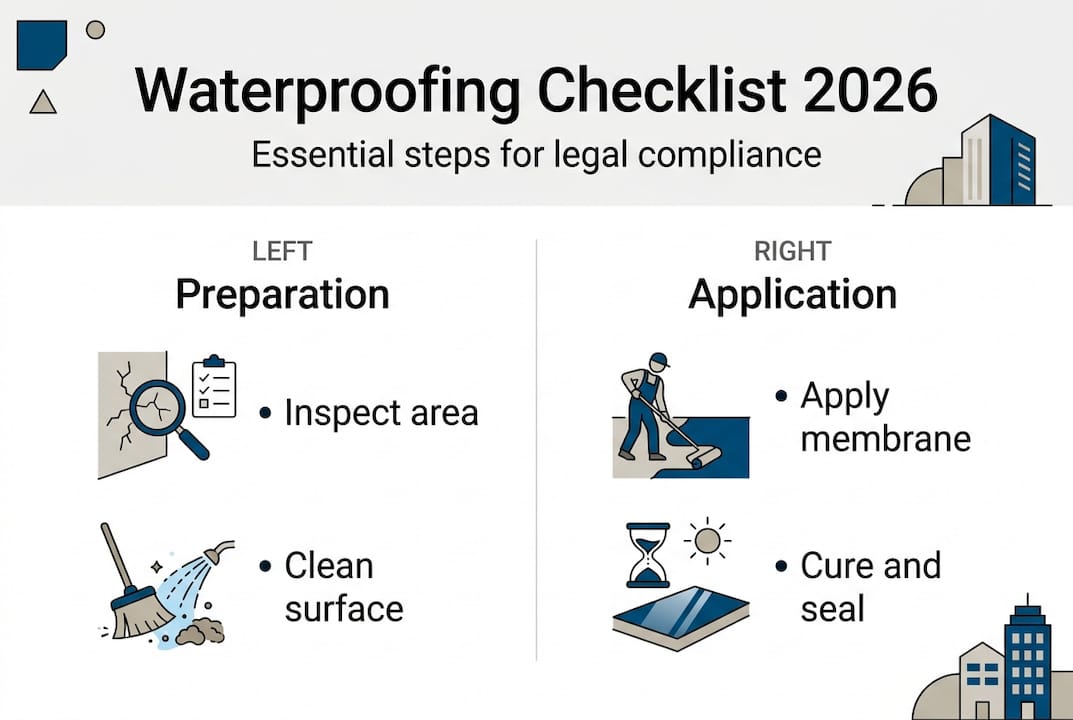
A thorough waterproofing checklist can help you track every step from assessment through to completion.
Modern versus traditional systems: performance and risks
Once you know your options, it is vital to weigh the benefits of modern systems against trusted traditional approaches. Both have a place, but understanding their limitations protects you from costly mistakes.
| Feature | Traditional (torch-on bitumen) | Modern (EPDM or TPO) |
|---|---|---|
| Lifespan | 15 to 25 years | 20 to 30+ years |
| UV resistance | Moderate | High |
| Flexibility | Low to moderate | High |
| Installation risk | Fire hazard during application | Low risk |
| Cost | Lower upfront | Higher upfront, lower lifecycle cost |
Torch-on systems last 15 to 25 years, while EPDM and TPO systems can exceed 30 years with proper maintenance. The UV resistance and flexibility differences matter enormously in South Africa’s high-UV environment, where traditional bitumen can become brittle and crack at seams over time.
Traditional systems still persist for good reasons. They are cost-effective for smaller projects, widely understood by local contractors, and proven in South African conditions. However, they require more frequent maintenance inspections and are more vulnerable to thermal cycling.
The South African waterproofing market is growing at 8% CAGR largely because climate risks are intensifying. More extreme rainfall events and higher temperatures are accelerating the failure of older, underperforming systems. This growth reflects demand, not just opportunity.
Common risks when outdated or incorrect materials are used include:
- Premature delamination at seams and overlaps
- Moisture ingress leading to mould and structural decay
- Warranty voidance due to non-compliant product use
- Insurance claim rejection following water damage events
- Increased maintenance costs over the asset’s lifespan
For property managers planning long-term maintenance budgets, the 2026 waterproofing owner guide provides updated benchmarks for performance expectations and replacement cycles.
Choosing and verifying a qualified waterproofing contractor
For reliable results, selecting the right professional to implement these systems is just as important as understanding the standards themselves. South Africa has no shortage of contractors claiming expertise, but not all are equal.
Follow this process to verify contractor compliance before signing anything:
- Confirm membership with WTASA (Waterproofing Trade Association of Southern Africa) or DWASA (Damp-proofing and Waterproofing Association of Southern Africa)
- Request proof of SANS-compliant product usage and manufacturer training certification
- Ask for a written warranty covering both materials and workmanship for a minimum of five years
- Verify that the contractor carries public liability insurance
- Check references from similar projects completed in the past two years
WTASA and DWASA are the main industry associations setting standards for the waterproofing sector. Membership is not automatic. It requires demonstrated competency and commitment to ethical practice. A contractor without any association affiliation is a red flag.
Property owners should prioritise SANS-compliant contractors with WTASA or DWASA association and always verify warranty conditions in writing before work commences.
Red flags to watch for include vague scope of work documents, refusal to provide product data sheets, requests for full payment upfront, and no mention of substrate preparation in their quotation.
Pro Tip: Always demand a written guarantee that specifies the exact product used, the application method, and the warranty period. A verbal assurance is worth nothing when water starts coming through the ceiling two years later.
For a broader picture of what separates good from great contractors, the waterproofing contractors guide and top waterproofing contractors comparison are both worth reviewing before you shortlist anyone.
The uncomfortable truth most owners miss about waterproofing standards
Here is what we have observed after working across residential, commercial, and industrial properties in South Africa: most owners treat waterproofing as a box to tick rather than an investment to protect. They meet the minimum SANS requirement, accept a five-year guarantee, and move on. Then, seven years later, they are facing repair bills that dwarf the original waterproofing cost.
The minimum standard exists to set a legal floor, not to define good practice. Exceeding the minimum is where real asset protection begins. A building that receives a 15-year membrane system with annual inspections will outperform a building with a five-year system left unchecked every single time.
DIY waterproofing on anything beyond a small garden wall is a false economy. The substrate preparation alone requires skill and equipment that most property owners simply do not have access to. Most building defects do not become visible until years after a project reaches legal completion, which means the damage is already compounding before you even know there is a problem.
The cost of waterproofing assurance done properly is a fraction of what structural water damage repairs cost. Shift the mindset from compliance to protection, and the decision to invest in quality becomes obvious.
Work with industry leaders for guaranteed waterproofing results
When you are ready to ensure total peace of mind, it is best to partner with vetted, reputable professionals who understand both the standards and the conditions specific to your property.
Pro Waterproofing works with property owners and managers across South Africa to deliver fully SANS-compliant waterproofing solutions backed by robust guarantees. Every project follows best-practice methodology, uses certified products, and is carried out by association-linked professionals who meet WTASA and DWASA benchmarks. Whether you need a full roof membrane, basement tanking, or a damp-proofing assessment, the team can provide a property-specific evaluation and a clear, documented plan. Review the contractors guide to understand what to expect, then get in touch for a no-obligation assessment tailored to your property.
Frequently asked questions
What is the main waterproofing standard for South African properties?
SANS 10400-Part L, part of the National Building Regulations, is the primary standard governing roof waterproofing. It works alongside Parts K and P for walls and damp-proofing respectively.
How long should a compliant waterproofing system last?
A compliant system must deliver at least five years of watertight performance, though EPDM and TPO systems can last 20 to 30 years or more with proper maintenance.
How can I check if a contractor meets waterproofing association standards?
Verify their WTASA or DWASA membership directly with the association and confirm they use SANS-approved products with manufacturer-backed certification.
Why is professional waterproofing important in South Africa?
Improper waterproofing causes 85% of building defects, and with South Africa’s climate variability intensifying, the risk of moisture-related damage is growing year on year.
What happens if waterproofing does not meet SANS requirements?
Non-compliant waterproofing can lead to denied insurance claims, legal liability, and costly structural repairs, as SANS standards are legally mandated under the National Building Regulations.
Recommended
- South African waterproofing standards 2026: owner guide
- Industry standards waterproofing: protect South African properties
- Understanding Waterproofing Regulations in South Africa – Pro Waterproofing
- Complete Guide to Waterproofing Regulations South Africa
- Roof Coatings | Commercial Roofing Services, Storm Restoration & Inspections