
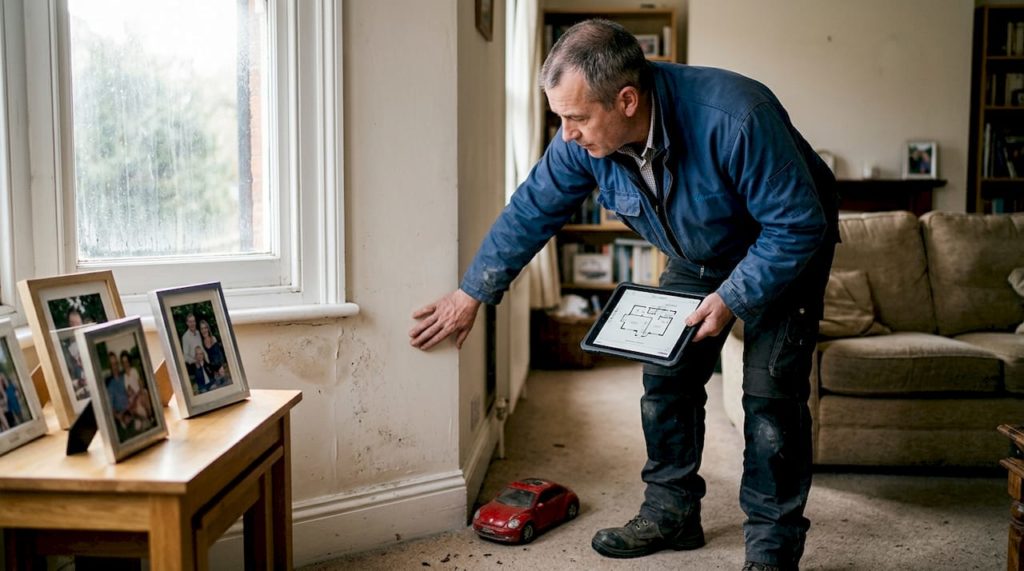
Choosing the wrong moisture protection for your building is one of the most expensive mistakes a South African property owner can make. Many people treat waterproofing and damp proofing as two names for the same thing, but they solve fundamentally different problems. Apply damp proofing where waterproofing is needed, and you could face structural damage, mould, and repair bills that dwarf the original cost. This article breaks down exactly what each system does, which materials are involved, and how to choose correctly for your specific building and site conditions.
Table of Contents
- Why knowing the difference matters
- Core definitions: damp proofing vs waterproofing explained
- Main materials and methods
- Where each system is used in South Africa
- How to choose: codes, risks, and best practice
- Summary: key takeaways and next steps
- Protect your South African property with expert help
- Frequently asked questions
Key Takeaways
| Point | Details |
|---|---|
| Damp proofing vs waterproofing | Damp proofing blocks minor moisture; waterproofing stops liquid water under pressure. |
| Application areas matter | The right solution depends on drainage, water table, and exposure risks in your building. |
| Combine for best results | Using both systems together, where needed, increases long-term protection. |
| Codes and climate | South African codes and weather conditions affect moisture control system choice. |
| Professional advice pays | A qualified assessment reduces risk, saves money, and prevents future repair costs. |
Why knowing the difference matters
The financial stakes are real. When damp proofing is applied in an area exposed to significant water pressure, it simply cannot hold. Damp proofing fails under pressure, leading to structural damage in high water table zones, clay soils, and coastal South African conditions where waterproofing is the only appropriate choice. That failure does not announce itself immediately. Water seeps in slowly, weakens concrete, corrodes steel reinforcement, and encourages mould growth before you even notice the problem.
South Africa’s building environment adds extra complexity. Soil conditions vary enormously between the Highveld, the Cape coastal belt, and KwaZulu-Natal’s humid zones. Clay-rich soils expand when wet and exert lateral pressure on foundations. A high water table in low-lying areas means foundations are under constant moisture stress. Getting the waterproofing vs damp proofing overview right from the start is not optional in these environments.
Here are the most common and costly misconceptions property owners hold:
- Damp proofing and waterproofing are interchangeable terms for the same product
- A thicker coat of damp proofer will perform like a waterproofing membrane
- Any moisture problem on a wall can be solved with a single paint-on product
- Waterproofing is only necessary for basements and swimming pools
- Damp proofing is always the cheaper and therefore smarter choice
“Choosing the wrong system is not just a technical error. It is a financial one. Remedial waterproofing after structural damage costs several times more than getting it right the first time.”
Core definitions: damp proofing vs waterproofing explained
Let’s be precise about what each system actually does.
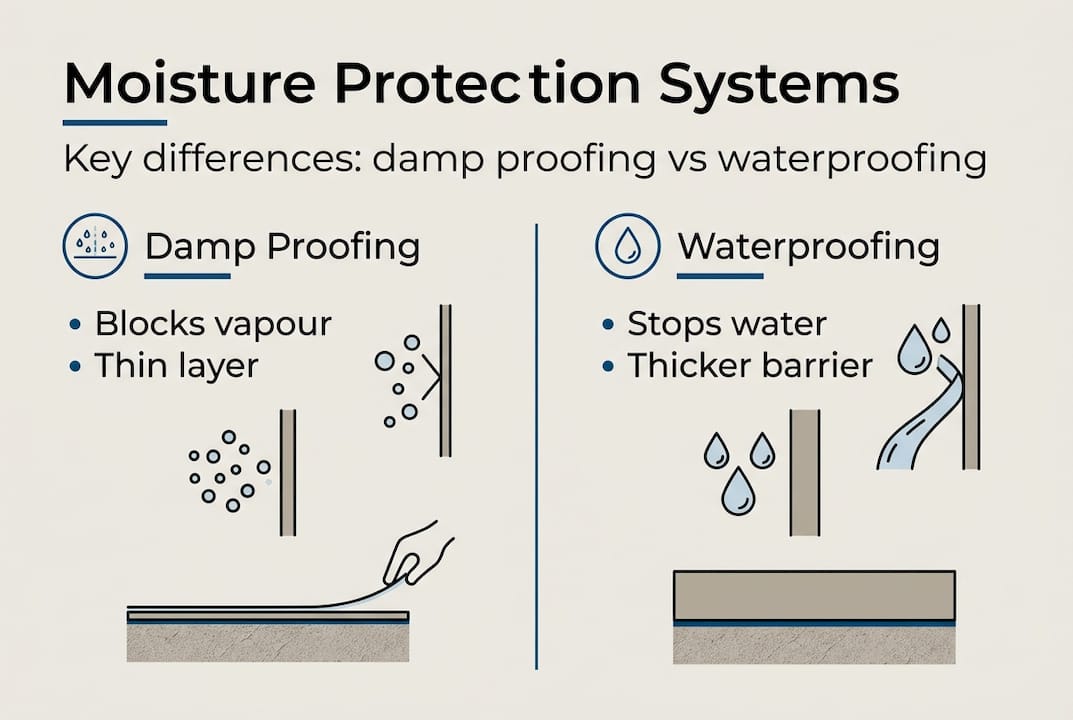
Damp proofing is designed to resist moisture vapour and capillary action, which is the tendency of water to travel upward through tiny pores in masonry and concrete. It works well against soil moisture that is not under pressure. However, damp proofing does not withstand hydrostatic pressure, while waterproofing creates a complete barrier against liquid water even when that water is actively pushing against the structure.
Waterproofing creates a continuous, unbroken barrier. It resists both vapour and liquid water, regardless of the pressure behind it. This is the critical distinction. Hydrostatic pressure is the force that water exerts when it accumulates against a surface, such as against a basement wall after heavy rain. Damp proofing cannot resist this force. Waterproofing is specifically engineered to do so, which is why it must meet far stricter industry standards for waterproofing than damp proofing ever needs to.
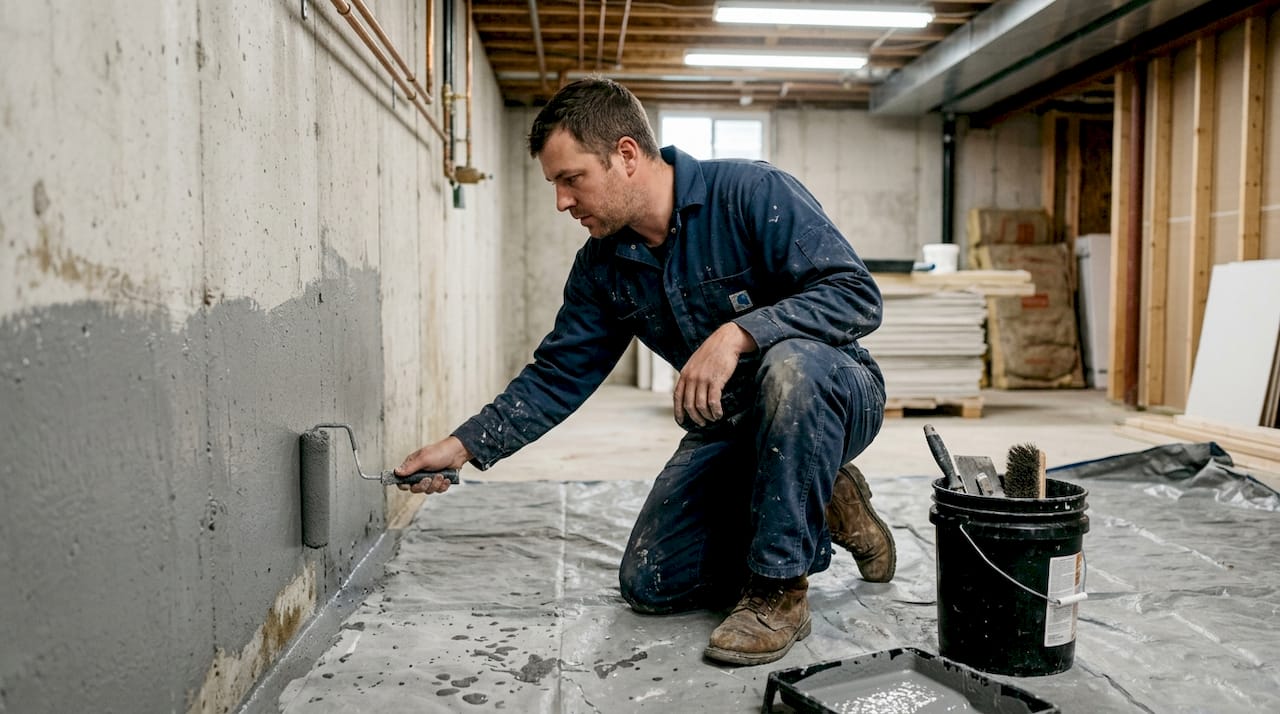
| Feature | Damp proofing | Waterproofing |
|---|---|---|
| Resists moisture vapour | Yes | Yes |
| Resists capillary action | Yes | Yes |
| Resists liquid water | Partially | Yes |
| Withstands hydrostatic pressure | No | Yes |
| Suitable for basements | No | Yes |
| Suitable for rooftops | No | Yes |
| Typical application thickness | Less than 10 mils | 40 mils or more |
| Cost relative to waterproofing | Lower | Higher |
The table above makes the choice clearer. If your building faces any scenario involving standing water, high groundwater, or significant rainfall runoff, damp proofing is not sufficient.
Main materials and methods
Knowing the materials helps you have an informed conversation with your contractor and spot when something is not right.
Common damp proofing materials:
Damp proofing uses bitumen coatings or cement-based solutions applied thinly, typically less than 10 mils thick, and is suitable for foundations with good drainage. These materials are cost-effective and adequate for low-risk situations. They include:
- Bitumen-based brush-on coatings
- Cement slurries and crystalline coatings
- Integral waterproof admixtures added to concrete mixes
- Horizontal damp proof courses (DPC) built into masonry walls
Common waterproofing materials:
Waterproofing employs flexible membranes, sealants, and liquid coatings over 40 mils thick, including polyurethane and torch-on systems, for high-pressure areas such as basements, roofs, and bathrooms. These include:
- Torch-on bituminous membranes, commonly used on flat roofs
- Liquid-applied polyurethane membranes
- Sheet membranes bonded to foundations
- Cementitious waterproofing for wet rooms and bathrooms
- Crystalline waterproofing that penetrates and seals concrete permanently
You can explore specific damp proofing techniques and compare the full range of waterproofing methods in SA to understand which suits your project best.
| Material | Type | Thickness | Best use |
|---|---|---|---|
| Bitumen brush-on | Damp proofing | Less than 10 mils | Below-ground walls, good drainage |
| Cement slurry | Damp proofing | Thin coat | Internal walls, low moisture risk |
| Torch-on membrane | Waterproofing | 40 mils or more | Flat roofs, basements |
| Polyurethane liquid | Waterproofing | 40 mils or more | Balconies, wet rooms |
| Crystalline coating | Waterproofing | Penetrating | Concrete tanks, foundations |
Where each system is used in South Africa
Location within the building and local site conditions determine which system you need. Getting this wrong is where most costly mistakes happen.
Where damp proofing is typically adequate:
- Above-ground external walls in low-rainfall inland areas
- Foundations in well-drained, sandy soils with a low water table
- Horizontal DPC layers in masonry walls to prevent rising damp
- Internal walls not exposed to direct water contact
Where waterproofing is essential:
- Basements and below-ground structures in any soil type
- Retaining walls that hold back soil and groundwater
- Flat and low-pitch roofs exposed to standing water after rain
- Bathrooms, showers, and wet rooms where water is applied directly
- Balconies and podium decks
- Any structure in coastal zones, high water table areas, or clay-rich soils
For SA property owners, combining both systems is often the correct approach. Damp proofing handles vapour control in walls and foundations with good drainage, while waterproofing protects pressure-exposed areas. A professional site assessment is essential to avoid misapplication. You can also learn more about waterproofing interior walls to understand how this plays out in practice.
Pro Tip: If your property sits on clay soil or within 500 metres of the coast, always default to waterproofing for any below-ground or roof application. The additional upfront cost is a fraction of what remedial work will cost later.
How to choose: codes, risks, and best practice
South African building regulations do not leave moisture protection to guesswork. The NHBRC (National Home Builders Registration Council) emphasises a system approach that includes drainage alongside waterproofing. Codes mandate waterproofing over damp proofing in high groundwater conditions, and the NHBRC reinforces this with requirements for integrated drainage systems.
The performance gap between the two systems is measurable. Waterproofing resists up to 100 psi of hydrostatic pressure per ASTM D5385 standards, while damp proofing offers no rated resistance to hydrostatic pressure at all. That is not a minor difference. It is the difference between a system that holds and one that fails.
Here is a practical step-by-step approach to making the right choice:
- Assess your site conditions. Identify soil type, proximity to the water table, and local rainfall patterns. A geotechnical report is worth the investment for larger projects.
- Identify all moisture-exposed areas. Map every surface that contacts soil, water, or high humidity. Do not guess.
- Consult the relevant codes. Review NHBRC guidelines and your local municipality’s building regulations before specifying any system.
- Ask your contractor the right questions. Request proof of experience with both systems, ask for references, and confirm whether they carry professional indemnity insurance.
- Insist on a written specification. A reputable contractor will provide a detailed scope of work, including materials, thicknesses, and warranty terms.
- Do not substitute waterproofing with damp proofing to save costs. If codes or site conditions call for waterproofing, there is no acceptable shortcut.
You can review the latest SA waterproofing standards 2026 and the full SA waterproofing regulations guide to stay compliant and informed.
Pro Tip: Always ask your contractor to confirm in writing which system they are applying and why. If they cannot explain the reasoning clearly, that is a warning sign.
Summary: key takeaways and next steps
After all the technical detail, the core message is straightforward. Damp proofing and waterproofing solve different problems, and applying the wrong one is a costly mistake that South African property owners make far too often.
Some sources note damp proofing is sufficient for low-risk, well-drained sites, while others warn of failure risks and favour waterproofing proactively. The truth is that both perspectives are valid in their correct context. The key is knowing which context you are in.
| Situation | Recommended system | Reason |
|---|---|---|
| Above-ground wall, good drainage | Damp proofing | Low moisture pressure, vapour only |
| Basement or below-ground structure | Waterproofing | Hydrostatic pressure present |
| Flat roof or balcony | Waterproofing | Standing water risk |
| Coastal or high water table site | Waterproofing | Constant moisture pressure |
| Wet room or bathroom | Waterproofing | Direct water application |
| Inland wall, sandy soil, low rainfall | Damp proofing | Low risk, adequate protection |
The single most important action you can take is to get a professional site assessment before specifying any system. Do not rely on a product label or a contractor’s verbal assurance. Insist on a written recommendation that accounts for your specific soil, climate, and building design. In any situation where you are uncertain, waterproofing is the safer choice.
Protect your South African property with expert help
Understanding the theory is valuable, but applying it correctly to your specific property requires hands-on expertise. South Africa’s varied soil conditions, coastal humidity, and seasonal rainfall patterns mean that a one-size-fits-all approach simply does not work.
The team at Pro Waterproofing works with residential, commercial, and industrial property owners across South Africa, providing site-specific assessments that take local conditions, building codes, and long-term performance into account. Whether you need clarity on which system suits your foundation, roof, or wet room, or you want to compare waterproofing methods before committing to a contractor, the resources and specialists are available to guide you. Reach out for a professional consultation and protect your investment with confidence.
Frequently asked questions
What is the main difference between damp proofing and waterproofing?
Damp proofing blocks water vapour and minor soil moisture, while waterproofing stops both vapour and pressing water even under high hydrostatic pressure. The two systems are not interchangeable, and damp proofing cannot withstand hydrostatic pressure the way a full waterproofing membrane can.
Where should I use waterproofing instead of damp proofing?
Use waterproofing for basements, roofs, wet rooms, and any area exposed to ground or pressing water, especially in high groundwater or coastal zones. Damp proofing fails under pressure in clay soils and coastal South African conditions, making waterproofing the only safe choice in those environments.
Can I use both waterproofing and damp proofing in the same building?
Yes, combining both is common and often the correct approach. Combining both systems means using damp proofing for vapour control in walls and foundations with good drainage, and waterproofing for high-risk or high-pressure zones.
What are the typical materials used for damp proofing and waterproofing?
Damp proofing uses bitumen or cement-based coatings applied thinly, while waterproofing includes thick membranes and sealants over 40 mils thick, such as torch-on systems and polyurethane liquid coatings.
Recommended
- Examples of waterproofing failures property owners must know
- Waterproofing for houses and other buildings is not negotiable
- The role of waterproofing in building maintenance
- Waterproofing vs Damp Proofing – Protecting South African Homes
- Protect your Nordic property: spring checklist after harsh winter 2026 – Guestly Homes