
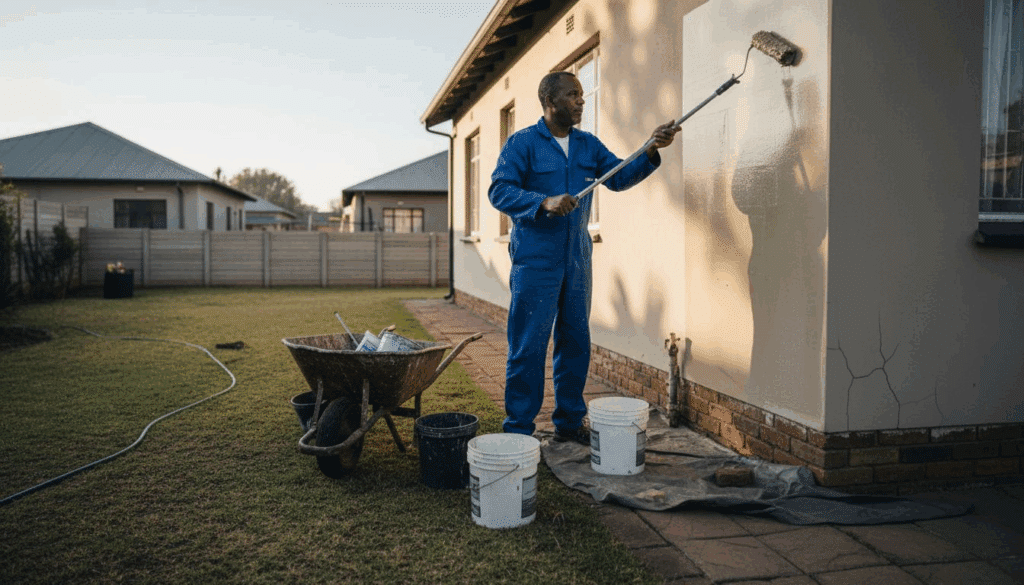
Water can become any South African homeowner’s worst enemy whether you face persistent Atlantic rainfall in the Western Cape or unpredictable summer storms in Gauteng. Moisture sneaks into walls and foundations, causing expensive damage if not addressed correctly. Many people mistakenly think waterproofing and damp proofing do the same job but the reality is more complex. This guide highlights the key differences between waterproofing and damp proofing so you can protect your property with confidence.
Table of Contents
- Defining Waterproofing And Damp Proofing
- Types And Systems Used In South Africa
- How These Moisture Barriers Work
- Common Uses And Real-World Examples
- Risks, Costs, And Signs Of Failure
- Legal Standards And Compliance Obligations
Key Takeaways
| Point | Details |
|---|---|
| Waterproofing vs. Damp Proofing | Understanding that waterproofing blocks liquid water under pressure, while damp proofing manages moisture vapour, is crucial for effective protection against moisture issues. |
| Choosing the Right System | Assess your specific property vulnerabilities to determine whether you need waterproofing for active water threats or damp proofing for gradual moisture issues. |
| Regular Maintenance is Essential | Schedule professional inspections every 5 to 10 years to prevent failures and address any signs of deterioration early. |
| Legal Compliance Matters | Ensure any moisture protection work complies with SANS 10021 standards to safeguard against future liabilities and ensure effective moisture management. |
Defining waterproofing and damp proofing
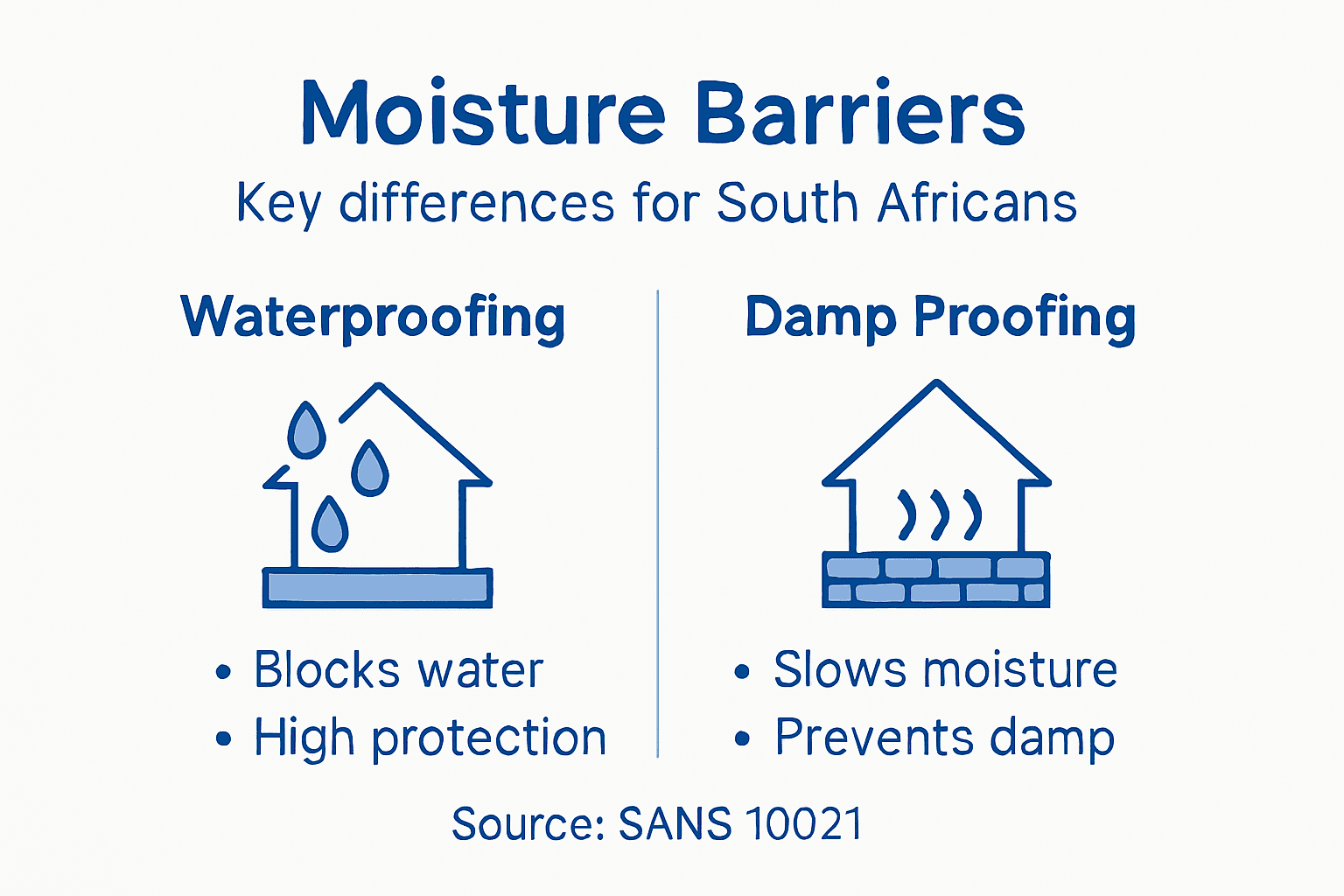
Think of your South African home as a fortress under constant siege from moisture. Whether you’re in Gauteng facing summer thunderstorms or in the Western Cape battling Atlantic seepage, water finds every crack, every gap, every weakness in your structure. But here’s where most homeowners get confused: they use the terms “waterproofing” and “damp proofing” interchangeably, when they actually protect your property in fundamentally different ways.
Waterproofing is your aggressive defence system. It’s a comprehensive barrier designed to stop water completely from entering a structure. Think of it as the difference between a raincoat (damp proofing) and a full hazmat suit (waterproofing). Waterproofing tackles areas that face active water exposure: basements that flood during heavy rains, below-ground parking structures, roof terraces, and bathroom walls where water spray is constant. The membranes and sealants used in waterproofing are thicker, more durable, and designed to withstand sustained water pressure. When contractors apply waterproofing, they’re creating a permanent barrier that can handle heavy rainfall, ground water seepage, and ongoing moisture stress. It’s the solution you need when water is actively trying to get in, not just sneaking through vapour.
Damp proofing, by contrast, is about managing moisture vapour and preventing dampness rather than blocking water entirely. Damp proofing techniques work against the invisible enemy: rising damp from the soil below your walls, humidity seeping through external brickwork, and the slow accumulation of moisture that leads to mould, deteriorating plaster, and structural damage. Damp proofing is lighter, more permeable than waterproofing, and focuses on either blocking the damp’s path or allowing walls to “breathe” while preventing moisture build-up. It’s typically applied to cavity walls, solid brick structures, and internal surfaces where water isn’t pouring in but dampness is creeping through.
The key distinction matters because applying waterproofing where you only need damp proofing can trap moisture inside your walls, creating new problems. Conversely, using damp proofing in a basement that floods annually guarantees failure. Your choice depends entirely on your specific vulnerability: Is water actively trying to penetrate your structure, or is dampness silently working its way through your walls?
Here is a side-by-side comparison of waterproofing and damp proofing functions and best-fit environments:
| Aspect | Waterproofing | Damp Proofing |
|---|---|---|
| Main Role | Blocks liquid water under pressure | Manages moisture vapour only |
| Typical Locations | Basements, terraces, roofs | External walls, interior masonry |
| Membrane Thickness | 3–5 millimetres | Less than 2 millimetres |
| Best Climate Use | High rainfall, flooding risk | Humid, gradual moisture exposure |
| Failure Risk | Sudden water ingress | Slow wall deterioration |
| Standard Solution For | Flood-prone, below-grade areas | Heritage bricks, rising damp zones |
Pro tip: Identify where water enters your home by checking walls after rainfall—active water stains indicate waterproofing is needed, whilst slow dampness developing over weeks suggests damp proofing will solve your problem.
Types and systems used in South Africa
South African homeowners and property managers have access to a diverse range of waterproofing and damp proofing systems, each designed for specific climate challenges and structural conditions found across our country. The methods you choose will depend on where you live, your property’s age, and the particular moisture threat you’re facing. Unlike one-size-fits-all solutions, these systems have been refined over decades to handle everything from Johannesburg’s dry spells followed by intense summer rains to Cape Town’s persistent coastal damp.
Waterproofing systems in South Africa typically fall into two main categories. Liquid applied membranes are spray-on or painted barriers that create a seamless protective layer, ideal for complex roof shapes, irregular surfaces, and areas where flexibility matters. These work particularly well on terraces and balconies where water pools during heavy downpours. Alternatively, sheet membranes are pre-manufactured materials rolled onto surfaces, offering consistent thickness and durability. Many contractors combine both approaches: sheet membranes on horizontal surfaces where water sits, and liquid membranes on vertical walls or detailed corners. Modern South African installations often use bituminous and synthetic membranes that resist UV damage from our intense sun whilst maintaining flexibility in temperature fluctuations.
Damp proofing systems vary based on whether you’re dealing with rising damp or penetrating damp. Rising damp (water creeping up through foundations and external walls) requires physical barriers like bitumen-based coatings, silicone injections into brick mortar, or breathable membranes that let walls dry naturally. Many older Johannesburg and Pretoria properties rely on chemical injection systems that were installed decades ago and still perform effectively. Penetrating damp, common in weathered brickwork, responds better to hydrophobic coatings that repel water whilst allowing the wall to breathe. Modern silane and siloxane treatments have become increasingly popular across South Africa because they don’t trap moisture and integrate well with traditional masonry.
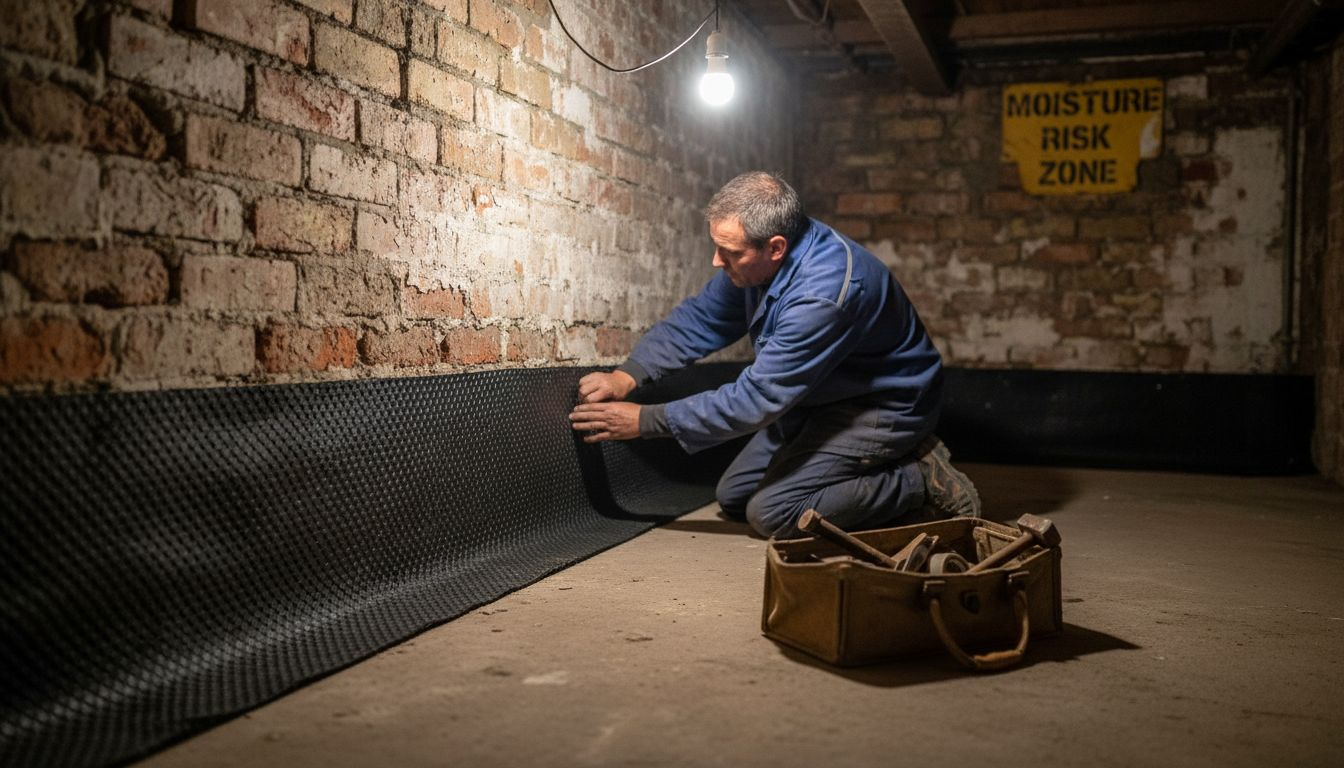
A critical consideration for South African properties is the role of external drainage systems. Whether you’re using waterproofing or damp proofing, proper guttering, downpipes, and ground-level drainage redirects water away from your foundations. Properties in areas with clay soil or poor natural drainage benefit enormously from French drains and sump pump systems working alongside waterproofing membranes.
Pro tip: Before selecting a system, ask your contractor which method is standard for your specific problem type and climate zone, as some systems perform significantly better in coastal versus inland environments.
How these moisture barriers work
Understanding the mechanics behind waterproofing and damp proofing reveals why they work so differently and why using the wrong system guarantees failure. The two operate on entirely different principles, targeting different moisture threats with different levels of intensity. Your South African home faces moisture challenges from multiple directions: water pressure from above, capillary action creeping up from soil below, and humidity vapour penetrating through materials. Each barrier system addresses these threats in distinct ways.
Damp proofing works by interrupting capillary action, the process where moisture moves upward through porous materials like brick and concrete without any external pressure pushing it. Picture moisture climbing a wick in a lamp, except it’s climbing your external walls. Damp proofing prevents soil moisture and vapour intrusion by creating continuous barriers that block this path without needing to resist water under pressure. Coatings, injections, and membranes used in damp proofing form protective layers in below-grade structures, stopping that invisible creep before it reaches your internal walls. It’s passive protection against steady, low-pressure moisture. Breathable damp proofing materials are particularly clever for older Gauteng properties because they allow trapped moisture to escape, preventing the moisture accumulation that leads to decay.
Waterproofing, by contrast, battles active water pressure. When rain hammers a roof or groundwater pushes against a basement wall, you’re dealing with forces that demand robust resistance. Understanding the role of membranes in waterproofing helps explain how thick membranes or specialised materials like bentonite clay create barriers that don’t just block moisture movement but actively resist liquid water pressing against them. These systems work through mass and density. A quality waterproofing membrane might be 3 to 5 millimetres thick, compared to damp proofing coatings that are often less than 2 millimetres. The thicker barrier forces water to find another path, and when properly installed with sealed seams and overlaps, it creates an impenetrable defence. Waterproofing systems also account for hydrostatic pressure, the force exerted by standing water or persistent moisture against your structure.
The critical difference: damp proofing stops moisture from wandering in; waterproofing stops water from forcing its way in. Your Western Cape home near the ocean, experiencing salt spray and rising groundwater, needs different protection than a Johannesburg property dealing with seasonal flooding. Mismatching the system to your threat level explains why many homeowners find their “waterproofing” fails in light dampness conditions or their “damp proofing” collapses under basement flooding.
Pro tip: Request a moisture assessment from your contractor before deciding which system to install, as they can measure moisture levels and water pressure to recommend the exact protection your property requires.
Common uses and real-world examples
The difference between waterproofing and damp proofing becomes crystal clear when you see them applied to actual South African properties. Every home has specific vulnerabilities, and matching the right solution to the right problem is what separates successful moisture management from costly failures. Let’s walk through where each system actually gets deployed in Gauteng and the Western Cape.
Damp proofing dominates in situations where moisture creeps rather than floods. You’ll find it protecting the external brick walls of heritage cottages in Stellenbosch, where rising groundwater has plagued properties for generations. Interior walls in Victorian homes throughout Pretoria benefit from damp proofing because these structures breathe with the seasons, and breathable solutions prevent the plaster deterioration that rigid barriers would cause. Older flats in Johannesburg’s inner suburbs often have damp proofing applied to cavity walls where moisture enters from outside brick but hasn’t yet reached the interior finish. Damp proofing techniques like silicone injection work brilliantly here because they target the mortar joints where moisture travels without disrupting the structural integrity of the wall. Basement walls in dry seasons, garage interiors, and ground-level retail spaces where occasional dampness develops all respond well to damp proofing systems.
Waterproofing, conversely, tackles the aggressive scenarios. Any property in the Western Cape with a basement experiences periods of groundwater pressure, particularly after winter rainfall. These basements demand waterproofing because damp proofing simply cannot withstand the hydrostatic force. Above-ground swimming pools, roof terraces that collect water, and shower enclosures all require waterproofing because water actively sits against or presses against these surfaces. Consider a newly constructed apartment block in the Sandton area with a below-ground parking level. That parking deck floods during the 1 in 50 year rainfall event. Waterproofing membranes, sealed properly at all seams and penetrations, protect millions of rands worth of vehicles and structure. Similarly, industrial facilities storing liquids, water treatment plants, and bridge decks all use waterproofing because the consequences of failure are catastrophic.
The practical reality for most homeowners is mixed. A typical Gauteng family home might need damp proofing on external walls and waterproofing on the roof and any basement. A coastal property in Hermanus might require waterproofing on the foundation because of high groundwater and damp proofing on upper walls where salt spray creates creeping moisture. New construction always benefits from comprehensive waterproofing during the build phase because corrections afterwards cost significantly more.
Pro tip: Photograph moisture patterns on your walls during rainy seasons and after heavy rainfall, then show these to contractors as they’ll reveal whether you’re dealing with slow dampness requiring damp proofing or active water infiltration demanding waterproofing.
Risks, costs, and signs of failure
Ignoring moisture problems costs far more than addressing them early. When damp proofing or waterproofing fails, you’re not just looking at cosmetic damage. Structural deterioration accelerates, interior finishes crumble, and the cost to remediate balloons exponentially. Understanding what goes wrong, what it costs to fix, and what warning signs to watch for keeps your South African property protected.
Damp proofing failures often stem from installation shortcuts or material deterioration over time. Damp proofing costs in South Africa typically range from R300 to R1000 per square metre, making it an affordable preventative investment. However, failure occurs when damp proof courses (DPCs) get bridged, meaning something connects the damp side to the dry side, defeating the entire system. A builder might have left debris against the external wall, or soil piled against the foundation above the DPC level. Materials deteriorate after 20 to 30 years, especially in older Cape Town and Johannesburg properties where original bitumen-based DPCs have cracked or crumbled. Poor installation matters tremendously: if injected silicone doesn’t reach all mortar joints or if coatings are applied unevenly, moisture finds the gaps. Once damp proofing fails, you’ll notice wallpaper peeling from walls, salt deposits appearing on brickwork (particularly on coast properties), and black mould patches forming in corners and along skirting boards. These aren’t cosmetic issues. Left unchecked, they compromise the structural integrity of load-bearing walls and weaken plaster bonds until entire sections need replacement.
Waterproofing failures carry higher stakes. A failed basement waterproofing system means water actively entering your property, flooding valuable possessions and creating conditions for structural concrete deterioration. Waterproofing membranes fail when seams aren’t sealed properly, when penetrations around pipes and electrical conduits are missed, or when contractors cut corners using substandard materials. A single overlooked crack becomes a failure point. Unlike damp proofing where slow deterioration gives you warning signs, waterproofing failure can happen catastrophically during heavy rainfall. Remedial waterproofing work on an already wet basement costs substantially more than initial installation because contractors must first dry the space, then excavate and repair. Costs escalate from thousands into tens of thousands of rands.
The financial argument for prevention is overwhelming. Invest in proper waterproofing or damp proofing now, and you’re spending a fraction of what structural repairs cost later. Mould remediation, timber replacement, plaster repairs, and potential foundation stabilisation work represent genuine financial disasters for homeowners.
Below is a summary of common signs of failure and their costs in South African residences:
| Failure Type | Main Signs | Typical Cause | Potential Cost Impact |
|---|---|---|---|
| Damp Proofing | Peeling wallpaper, salt stains, mould | DPC bridging, material aging | R300–R1,000/m² to repair |
| Waterproofing | Sudden flooding, structural cracks | Poor seam sealing, underspecified materials | Several thousand to tens of thousands of rands |
Pro tip: Schedule professional inspections every 5 years for damp proofing and every 10 years for waterproofing systems, as catching deterioration early prevents expensive emergency repairs during the rainy season.
Legal standards and compliance obligations
South Africa doesn’t leave waterproofing and damp proofing to guesswork. Building regulations exist for a reason: to protect your property, ensure structural safety, and establish standards that contractors must follow. If you’re building new, renovating significantly, or having moisture work done, understanding the legal framework matters. It protects you from cowboys and ensures you’re getting legitimate protection, not just a coat of paint that won’t last.
SANS 10021 is the South African National Standard governing waterproofing, including damp proofing and vapour barrier installation. This standard sets the technical requirements for materials, application methods, performance testing, and durability criteria, ensuring effective moisture control in building construction. When a contractor says they’re “SANS 10021 compliant,” they’re promising to follow these nationally recognised specifications. This matters because it means they’re using tested materials, applying them correctly, and their work can be inspected and verified. If something goes wrong and you need to claim liability, having SANS 10021 compliance documented protects your legal position. Conversely, if a contractor ignores these standards and their work fails, you have grounds for recourse.
Building plans submitted to local authorities in Gauteng municipalities and Western Cape councils must include waterproofing and damp proofing specifications that comply with the National Building Regulations and SANS standards. Contractors cannot legally proceed without approval. This protects you because it means a third party has reviewed the moisture protection plan before work begins. For residential properties, this verification happens during plan approval and again during inspections. Commercial properties face even stricter requirements because they involve public safety and liability exposure. If you’re hiring contractors for moisture work, they must have appropriate qualifications and insurance. Professional waterproofing contractors should be able to provide evidence of SANS 10021 training, materials certifications, and proof that their work has been inspected and approved.
The practical implication: don’t accept verbal assurances about standards compliance. Request written documentation. Ask to see material certificates proving products meet SANS standards. Confirm that the local authority has approved the moisture protection plan. Get a written guarantee that work complies with SANS 10021. This isn’t bureaucratic overhead. It’s your protection against discovering, years later, that moisture work was done without proper standards and that you have no recourse when it fails.
Pro tip: Before hiring any contractor, request their SANS 10021 compliance certificate and ask to speak with at least three recent clients about their experience, as standards compliance and proven track records separate professional operators from inexperienced practitioners.
Protect Your South African Home with Expert Waterproofing and Damp Proofing Solutions
Moisture can silently damage your property or strike suddenly during heavy rains if your home is not properly protected. This article highlights the crucial difference between waterproofing and damp proofing and why selecting the correct system matters to prevent costly repairs. At Pro Waterproofing, we understand the unique challenges South African homes face—from rising damp to basement flooding—and offer tailored solutions that precisely address your property’s needs. Whether your walls require effective damp control or your basement demands robust waterproofing membranes, our expert team ensures your home withstands the elements confidently.
Do not wait until moisture problems escalate. Visit our Uncategorized – Pro Waterproofing category for detailed insights and learn how our professional waterproofing services protect homes across South Africa. Take the next step today by exploring Pro Waterproofing and contact us to receive a customised assessment and quote. Safeguard your property now with the assurance that only the right moisture barrier can provide.
Frequently Asked Questions
What is the difference between waterproofing and damp proofing?
Waterproofing creates a complete barrier to block liquid water from entering a structure, while damp proofing manages moisture vapour and rising damp without blocking water entirely.
When should I use waterproofing instead of damp proofing?
Waterproofing is essential in areas exposed to active water pressure, such as basements and roofs, whereas damp proofing is suitable for managing moisture in areas like external walls and internal masonry where dampness is an issue rather than flooding.
What are the common signs of damp proofing failure?
Signs of damp proofing failure include peeling wallpaper, salt stains on walls, and the appearance of black mould, indicating that moisture is infiltrating your property.
How can I ensure proper installation of damp proofing and waterproofing systems?
To ensure proper installation, hire qualified contractors who comply with SANS standards and request documentation of their training, material certifications, and recent project references.
Recommended
- These 5 Tips Will Help You Keep Your Home Waterproof
- Damp Proofing Walls – Ensuring Healthy South African Homes
- Role of Damp Proofing: Complete Guide for South Africa
- Understanding the Importance of Waterproofing in South Africa – Pro Waterproofing
- 7 Examples of Waterproof Phone Cases for Everyday Protection – StudioShake