
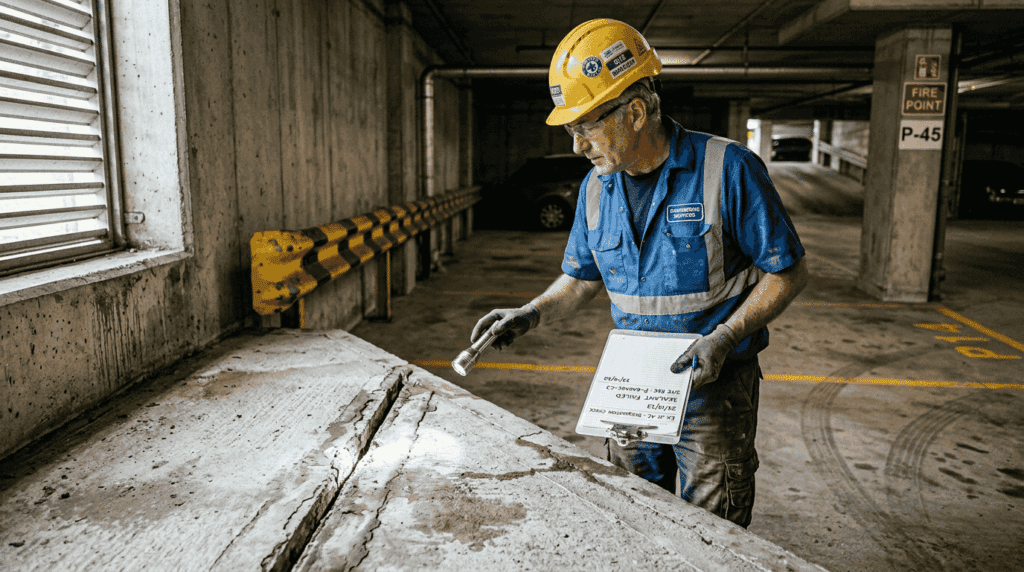
Many property owners assume waterproofing primarily concerns roofs or exterior walls, yet joints where building elements meet are often the most vulnerable points for water ingress. Failed joint waterproofing can lead to severe structural damage, costly repairs, and compromised building integrity. This guide explains what joint waterproofing entails, why it matters for South African properties, and how to approach it effectively. You will learn about joint types, material selection, design considerations, installation best practices, and maintenance strategies to protect your residential or commercial structure from water damage.
Table of Contents
- Understanding Joint Waterproofing And Its Importance
- Types Of Joints And Waterproofing Materials Commonly Used
- Design And Installation Considerations For Effective Joint Waterproofing
- Maintenance And Troubleshooting Of Waterproofed Joints
- Protect Your Property With Professional Joint Waterproofing Services
- Frequently Asked Questions
Key takeaways
| Point | Details |
|---|---|
| Joint waterproofing seals gaps | Prevents water ingress where building materials meet, blocking moisture entry at critical junctions |
| Movement accommodation is essential | Proper design must allow for expansion and contraction from temperature changes and structural shifts |
| Material choice impacts success | Polymer-coated waterstops and specialised sealants offer superior durability and flexibility |
| Below-grade joints need extra care | Hydrostatic pressure and soil movement require reinforced waterproofing strategies |
| Professional consultation ensures protection | Qualified specialists provide long-term solutions compliant with South African standards |
Understanding joint waterproofing and its importance
Joint waterproofing seals the gaps where different building materials or structural elements meet to prevent water from penetrating the building envelope. These junctions occur throughout any structure, from foundations to roofs, and represent critical vulnerability points that demand specialised attention. Without proper sealing, moisture infiltrates through these openings, causing damage that spreads far beyond the immediate area.
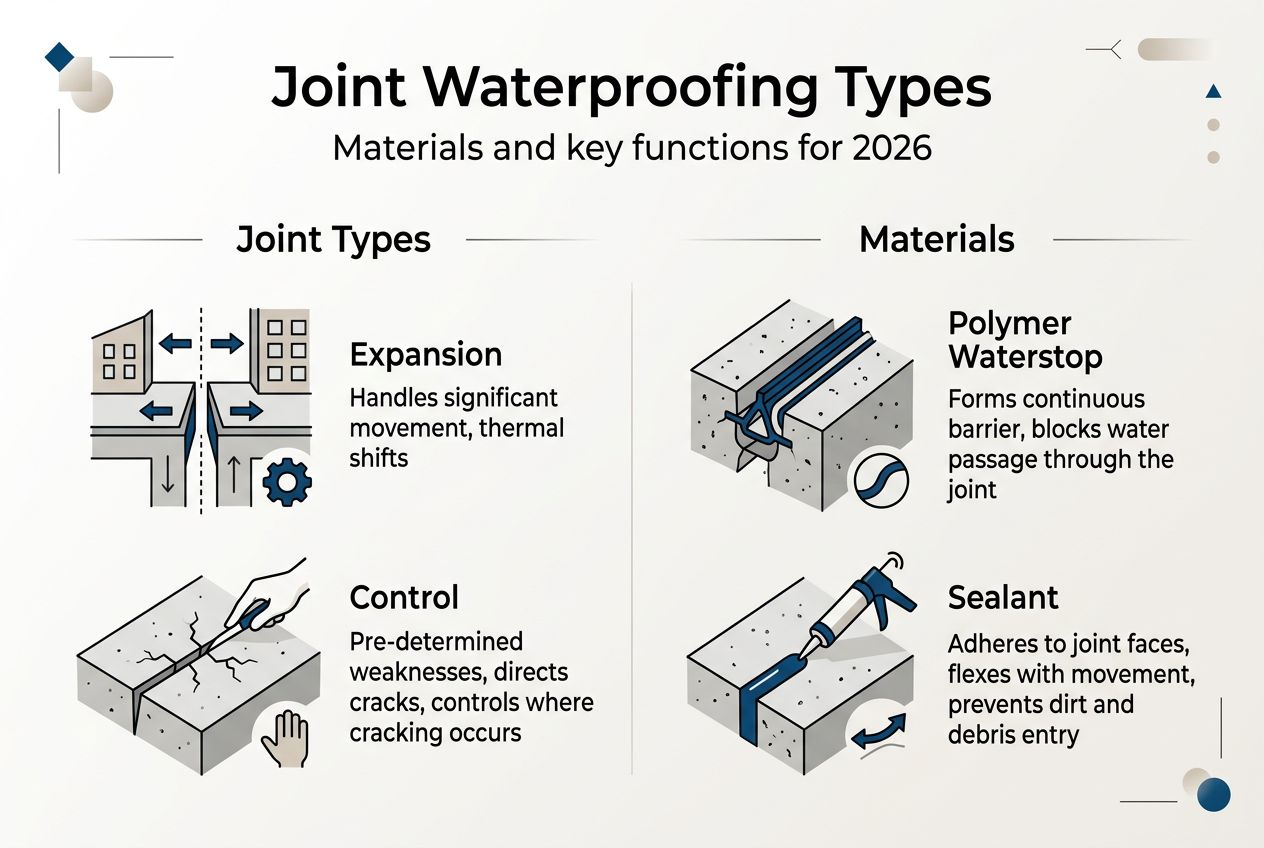
Building joints fall into four main categories. Expansion joints accommodate thermal movement and structural shifts, allowing materials to expand and contract without cracking. Construction joints mark where concrete pours meet, creating natural weak points in the structure. Control joints manage predictable cracking in concrete and masonry by directing stress to predetermined locations. Isolation joints separate different structural elements to prevent damage from differential movement between building components.
These junctions become vulnerable because they experience constant movement from temperature fluctuations, structural settling, and environmental stresses. A concrete slab expands in summer heat and contracts in winter cold, whilst foundation walls shift as soil moisture levels change. Traditional waterproofing membranes applied to solid surfaces cannot adequately address these dynamic conditions. Waterproofing systems must withstand temperatures from -10°C to +80°C, UV exposure, condensation, chemical interactions, and structural movement according to South African standards.
Failed joint waterproofing manifests in various damaging ways. Water seeping through basement construction joints creates damp patches, mould growth, and deteriorating concrete. Leaking expansion joints in parking decks allow chlorides from de-icing salts to corrode reinforcing steel. Compromised roof joints permit moisture into ceiling cavities, damaging insulation and promoting rot. These failures often require extensive remediation, including removing finishes, excavating around foundations, and replacing damaged structural elements at considerable expense.
Pro Tip: Schedule joint inspections every six months to catch early warning signs like sealant cracking, water staining, or efflorescence before minor issues escalate into major structural problems.
Property owners who understand these fundamentals can make informed decisions about essential waterproofing methods appropriate for their buildings. Recognising that joints require different treatment than continuous surfaces helps you evaluate contractor proposals and prioritise maintenance activities.
Types of joints and waterproofing materials commonly used
Expansion joints accommodate significant movement between building sections, typically ranging from 25mm to 100mm in width. These joints appear where new construction meets existing structures, between building wings, and at regular intervals in long walls or slabs. They must remain flexible whilst maintaining a complete water barrier under dynamic conditions. Designers specify expansion joints to prevent cracking from thermal expansion, seismic activity, or foundation settlement.
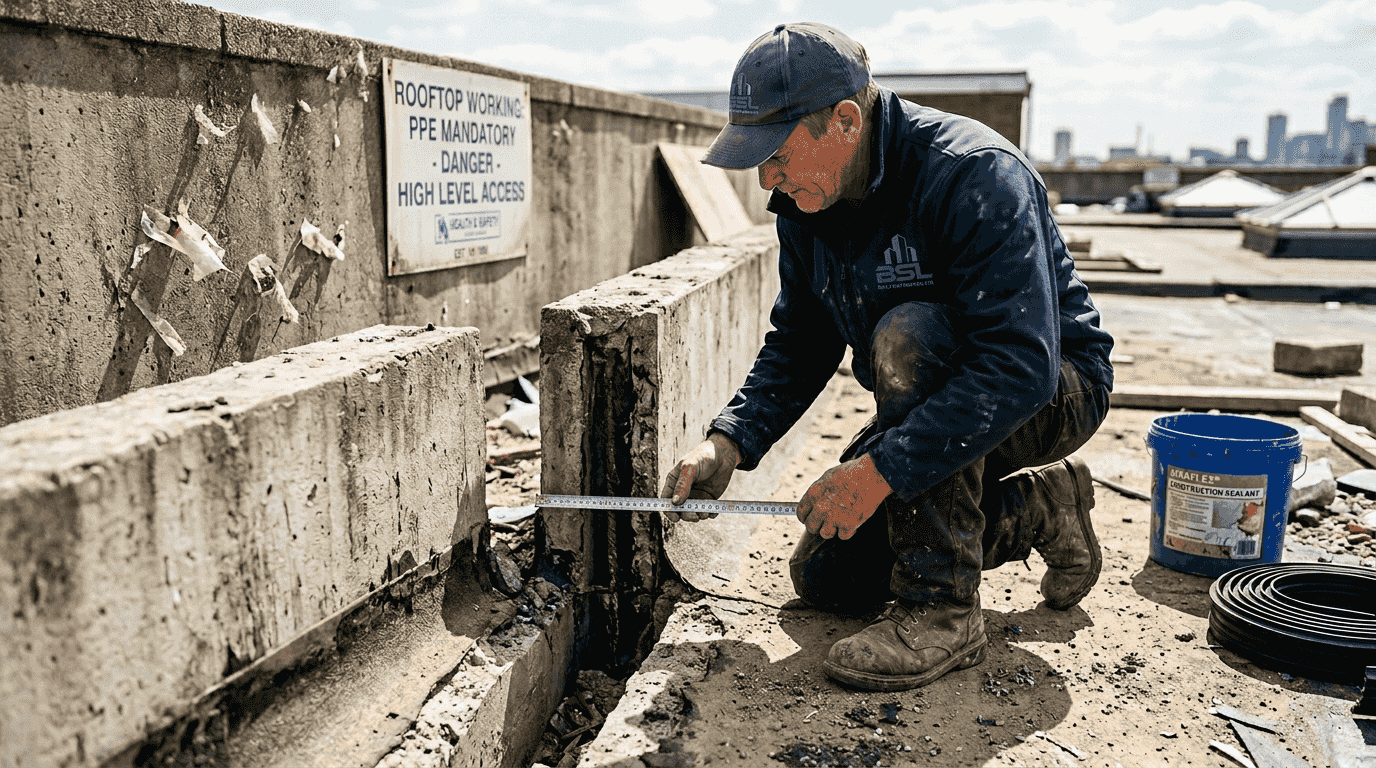
Construction joints form where concrete pours stop and restart, creating interfaces that naturally attract water penetration. Unlike planned expansion joints, construction joints primarily result from practical limitations in placing concrete continuously. Below-grade construction joints face particular challenges from hydrostatic pressure pushing water through any imperfection in the seal. These joints require embedded waterstops installed before concrete placement to create an internal barrier.
Control joints intentionally create weakened planes in concrete and masonry to direct inevitable cracking to predetermined locations. Whilst they manage stress distribution effectively, control joints still require waterproofing attention because cracks provide pathways for moisture. Surface-applied sealants typically protect control joints in above-grade applications. Isolation joints separate different structural elements like walls from slabs or building additions from original structures, preventing damage when components move independently.
Polymer-coated waterstops perform significantly better than other materials in waterproofing construction joints according to recent studies. These products combine a flexible core with protective polymer coating that resists chemical attack and maintains elasticity over decades. Common materials include resilient rubber, flexible PVC, and specialised sealants, all designed to absorb movement whilst maintaining a seamless surface.
| Material | Durability | Flexibility | Application ease | Relative cost |
|---|---|---|---|---|
| Polymer-coated waterstop | Excellent, 30+ years | High, accommodates significant movement | Moderate, requires precise placement | Higher initial investment |
| PVC waterstop | Good, 20-25 years | Moderate, suitable for standard joints | Easy, heat-welded connections | Mid-range |
| Rubber waterstop | Very good, 25-30 years | Excellent, ideal for dynamic joints | Moderate, vulcanised splicing needed | Mid to high range |
| Polyurethane sealant | Good, 15-20 years | High, excellent recovery properties | Very easy, gun-applied | Lower cost |
| Hydrophilic waterstop | Good, 20+ years | Excellent, expands when wet | Easy, adhesive-backed installation | Mid-range |
Self-compacting concrete benefits joint waterproofing by flowing around waterstops without vibration, eliminating voids that create leak paths. However, this concrete type exhibits lower crack resistance, requiring careful control joint planning. IDROSTOP waterstops incorporate expansion properties that activate upon contact with water, swelling to seal gaps and resist pressurised water effectively in below-grade applications.
Pro Tip: Match waterproofing material selection to anticipated joint movement ranges, environmental exposure, and hydrostatic pressure conditions rather than choosing based solely on initial cost to ensure long-term performance.
Understanding these material options helps you evaluate proposals for commercial waterproofing projects and make informed selections appropriate for your specific building conditions and budget constraints.
Design and installation considerations for effective joint waterproofing
Successful joint waterproofing begins with thorough site assessment identifying risks like hydrostatic pressure levels, soil movement potential, and structural loading conditions. Determining design water table elevation requires a geotechnical report detailing soil properties, groundwater conditions, and potential settlement patterns. This information guides material selection and system design to address site-specific challenges effectively.
Coordination with structural engineers is critical for expansion joint design, ensuring waterproofing systems accommodate anticipated movement without compromising structural integrity. Engineers calculate expected displacement from thermal cycles, seismic events, and long-term creep, specifying joint widths and materials accordingly. Early collaboration prevents conflicts between structural requirements and waterproofing installation sequences.
Design planning must account for movement allowances in three dimensions, not just horizontal expansion. Vertical settlement, lateral shifting, and rotational movement all stress waterproofing systems differently. Oversizing joints provides safety margins for unexpected movement, whilst undersizing leads to premature failure as materials exceed their elastic limits. Temperature differentials in South African climates can reach 40°C between summer and winter, driving substantial dimensional changes in building materials.
Key installation steps ensuring waterproofing integrity include:
- Prepare joint surfaces by removing loose material, cleaning thoroughly, and ensuring proper geometry matches design specifications.
- Install backing materials like bond breaker tape or backer rods to control sealant depth and prevent three-sided adhesion that restricts movement.
- Position waterstops precisely at specified elevations with adequate concrete cover on both sides, securing temporarily to prevent displacement during concrete placement.
- Place concrete carefully around waterstops, ensuring complete encasement without voids or honeycombing that create leak paths.
- Apply surface sealants after concrete curing, when joints have reached stable dimensions and moisture levels permit proper adhesion.
- Conduct water testing on critical joints before covering with finishes, allowing repairs whilst access remains simple.
Quality control adherence to standards like SANS 10400-Part L ensures systems meet minimum performance requirements for South African conditions. Inspectors verify material certifications, installation procedures, and testing results at multiple stages. Documentation creates accountability and provides reference for future maintenance activities.
Below-grade waterproofing faces unique challenges from constant hydrostatic pressure, limited access for repairs, and aggressive soil chemistry. Redundant systems combining internal waterstops with external membranes provide defence in depth. Drainage systems reduce hydrostatic pressure, decreasing stress on waterproofing materials. Protective boards shield membranes from backfill damage during construction.
“Failed joint waterproofing in below-grade applications often requires excavation, structural shoring, and extensive remediation costing ten to twenty times the original installation investment, not counting business disruption and property damage.”
Pro Tip: Engage waterproofing specialists during design development rather than after construction documents are complete, allowing system integration with structural details and avoiding costly change orders.
Selecting experienced contractors familiar with proper waterproofing contractor credentials and following commercial waterproofing best practices significantly improves installation quality and long-term performance outcomes.
Maintenance and troubleshooting of waterproofed joints
Properly installed joint waterproofing systems typically provide effective protection for 15 to 30 years depending on material quality, environmental exposure, and maintenance practices. Waterproofing systems must remain watertight for at least five years without extensive maintenance according to South African municipal regulations, establishing minimum performance expectations. Premium materials and expert installation extend service life considerably beyond this baseline requirement.
Early warning signs of joint failure include visible cracks in sealant materials, sealant detachment from substrates creating gaps, water staining on adjacent surfaces, efflorescence deposits indicating moisture migration, and mould growth in interior spaces near joints. Catching these indicators promptly allows targeted repairs before water infiltration causes structural damage. Delayed response transforms minor maintenance into major remediation projects.
Regular maintenance actions preserving joint waterproofing integrity:
- Inspect all accessible joints quarterly, documenting conditions with photographs for comparison over time.
- Clean joint surfaces annually, removing debris, vegetation, and contaminants that degrade sealants or trap moisture.
- Test sealant adhesion by gentle probing, identifying areas requiring replacement before complete failure occurs.
- Reapply surface sealants every 5 to 10 years depending on product specifications and observed condition.
- Monitor interior spaces below joints for moisture signs, addressing problems immediately upon detection.
- Clear drainage systems serving joints, ensuring water moves away rather than pooling against seals.
| Problem | Typical causes | Recommended remedies |
|---|---|---|
| Sealant cracking | UV degradation, excessive movement, poor material choice | Remove failed sealant completely, install appropriate replacement product |
| Water staining | Sealant debonding, substrate preparation issues | Clean surfaces, apply primer, reinstall compatible sealant |
| Joint widening | Structural movement exceeding design, settlement | Assess structural stability, install wider joint system if needed |
| Efflorescence | Moisture migrating through concrete, waterstop failure | Investigate internal waterstop integrity, consider injection repair |
| Mould growth | Chronic moisture from failed waterproofing | Remediate mould, repair waterproofing, improve ventilation |
Proactive maintenance programmes prevent catastrophic failures that compromise structural integrity and create health hazards. Budgeting for routine inspections and minor repairs costs substantially less than emergency interventions addressing extensive water damage. Property managers who track maintenance activities demonstrate due diligence and maintain property values.
Certain conditions warrant professional waterproofing assessments beyond routine maintenance. Active leaks requiring immediate attention, widespread sealant failure across multiple joints, structural cracks suggesting movement problems, and planned renovations affecting waterproofed areas all justify expert evaluation. Specialists employ diagnostic tools like moisture meters, infrared thermography, and flood testing to identify hidden problems.
Pro Tip: Create a joint waterproofing maintenance log recording inspection dates, observed conditions, repairs performed, and materials used, establishing performance trends that guide future maintenance scheduling and budget planning.
Property owners implementing systematic maintenance aligned with lasting waterproofing protection principles maximise their waterproofing investment and avoid disruptive failures.
Protect your property with professional joint waterproofing services
Pro Waterproofing brings extensive expertise in joint waterproofing for residential and commercial buildings throughout South Africa, combining technical knowledge with practical experience addressing diverse site conditions. Our team understands the unique challenges posed by local climates, soil conditions, and building practices, delivering solutions that perform reliably over decades.
Professional assessment identifies vulnerabilities specific to your property, recommending appropriate materials and systems rather than applying generic solutions. We specify products proven in similar applications, avoiding experimental approaches with your building’s integrity. Certified installation by trained technicians ensures systems perform as designed, with quality control at every stage.
Service advantages include:
- Guaranteed workmanship backed by comprehensive warranties protecting your investment
- Compliance with SANS 10400 and local municipal requirements avoiding regulatory issues
- Detailed documentation supporting future maintenance and property transactions
- Ongoing support for maintenance planning and troubleshooting throughout system lifespan
Early engagement with Pro Waterproofing during project planning prevents costly redesign and allows optimal system integration. Our specialists collaborate with your design team, contributing waterproofing expertise that enhances overall building performance. Contact us for tailored solutions addressing your specific waterproofing challenges and protecting your property from water damage.
Pro Tip: Investing in professional waterproofing during initial construction or major renovations costs significantly less than remedial work after failures occur, whilst providing superior long-term protection.
“Trusted waterproofing professionals transform technical complexity into reliable protection, giving property owners confidence their buildings will resist water damage for years to come.”
Review our waterproofing contractor selection guide to understand what distinguishes qualified specialists from general contractors, ensuring you engage the right expertise for your project.
Frequently asked questions
What is the best material for waterproofing expansion joints?
Polymer-coated waterstops perform significantly better than alternative materials in waterproofing construction joints, offering superior durability and flexibility to accommodate substantial movement. Their resistance to water pressure, chemical attack, and environmental stresses makes them ideal for demanding applications including below-grade installations and structures experiencing significant thermal cycling. Consult waterproofing specialists to confirm the optimal material for your specific joint conditions, movement expectations, and budget parameters.
How often should joint waterproofing be inspected and maintained?
Inspections are recommended at least annually for routine monitoring, with additional checks following extreme weather events like heavy storms, floods, or seismic activity that may stress waterproofing systems. Waterproofing systems must remain watertight for at least five years without extensive maintenance per South African regulations, but proactive care extends performance well beyond this minimum. Routine maintenance including cleaning, sealant replacement, and drainage clearance prevents costly repairs and can double or triple effective service life.
Can waterproofing joints prevent all types of water damage?
Proper joint waterproofing significantly reduces water ingress through building junctions but cannot address all moisture sources such as surface flooding, roof leaks, plumbing failures, or condensation issues. Comprehensive building protection requires integrated strategies combining multiple waterproofing systems, proper drainage design, ventilation management, and regular maintenance across all building elements. Joint waterproofing forms one critical component within this holistic approach rather than a complete solution in isolation.
What are the signs that joint waterproofing needs immediate repair?
Active water leakage through joints, rapidly spreading water stains on walls or ceilings, sudden appearance of mould growth, visible sealant gaps wider than 3mm, and structural cracks intersecting waterproofed joints all indicate urgent problems requiring immediate professional attention. Delayed response to these warning signs allows progressive damage affecting structural integrity, creating health hazards, and dramatically increasing repair costs. Contact waterproofing specialists promptly when observing any of these conditions to assess severity and implement appropriate remediation before damage escalates further.