
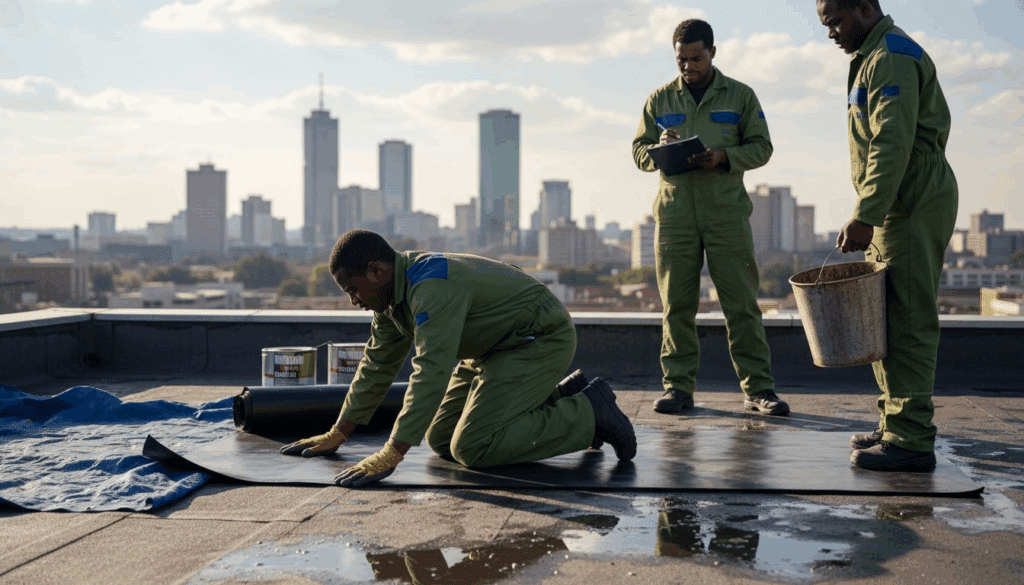
Homeowners across Gauteng and Western Cape know water damage can strike with little warning, especially in regions with ever-changing weather. South African homes face greater risk of costly structural problems when waterproofing is neglected than many british households. Protecting your property means choosing solutions that match our climate and building standards. This guide explains what professional waterproofing truly involves, what sets certified contractors apart, and why the right investment saves you future headaches.
Table of Contents
- What Professional Waterproofing Involves
- Key Types of Waterproofing Solutions
- Benefits of Expert Waterproofers for Homes
- Contractor Credentials and Legal Compliance
- Cost, Warranties, and Risks of DIY Repairs
Key Takeaways
| Point | Details |
|---|---|
| Professional Expertise Required | Employ qualified waterproofing specialists to ensure compliance with South African standards. |
| Variety of Solutions Available | Understand different waterproofing methods like liquid, sheet, and cementitious coatings to suit specific needs. |
| Cost Implications of DIY | Weigh potential long-term expenses of DIY waterproofing against professional services before proceeding. |
| Importance of Proper Certification | Always verify a contractor’s certifications to ensure quality workmanship and adherence to regulations. |
What Professional Waterproofing Involves
Professional waterproofing in South Africa represents a sophisticated technical discipline that goes far beyond basic surface treatments. Professional waterproofing standards require specialised skills, comprehensive knowledge of building materials, and precise application techniques tailored to South Africa’s diverse environmental conditions.
The process involves meticulous assessment of substrate conditions, identifying potential moisture penetration points, and selecting appropriate waterproofing systems for specific structural requirements. Professionals conduct detailed surface evaluations, examining factors like substrate composition, existing damage, potential stress points, and environmental exposure. This diagnostic approach ensures targeted interventions that provide long-term protection against water intrusion, structural degradation, and potential mould growth.
Qualified waterproofing specialists in South Africa must demonstrate competency across multiple technical domains. National Certificate: Waterproofing qualifications require expertise in installing various waterproofing systems, including heat-fused, reinforced, and non-reinforced membranes suitable for different surfaces such as balconies, terraces, parking decks, and water-retaining structures. Compliance with South African National Standards (SANS) is paramount, ensuring that every waterproofing application meets rigorous quality and durability benchmarks.
Expert Tip: Always request documented evidence of a waterproofing contractor’s professional certifications and ask to see their portfolio of completed projects specific to your building type before engaging their services.
Key Types of Waterproofing Solutions
South Africa’s unique climate demands sophisticated waterproofing strategies that protect buildings from diverse environmental challenges. Roof waterproofing methods encompass several critical techniques designed to address specific structural and environmental requirements, ensuring comprehensive moisture protection across different building types and surfaces.
The primary waterproofing solutions include liquid waterproofing, which involves applying seamless liquid membranes directly onto surfaces, providing exceptional coverage and flexibility. Sheet waterproofing represents another crucial technique, particularly effective for pitched roofs, utilising pre-fabricated waterproof sheets that create robust protective barriers. Cementitious waterproofing offers a third essential approach, using specialised cement-based coatings that penetrate and seal concrete surfaces, creating durable moisture-resistant layers ideal for basements, water tanks, and underground structures.
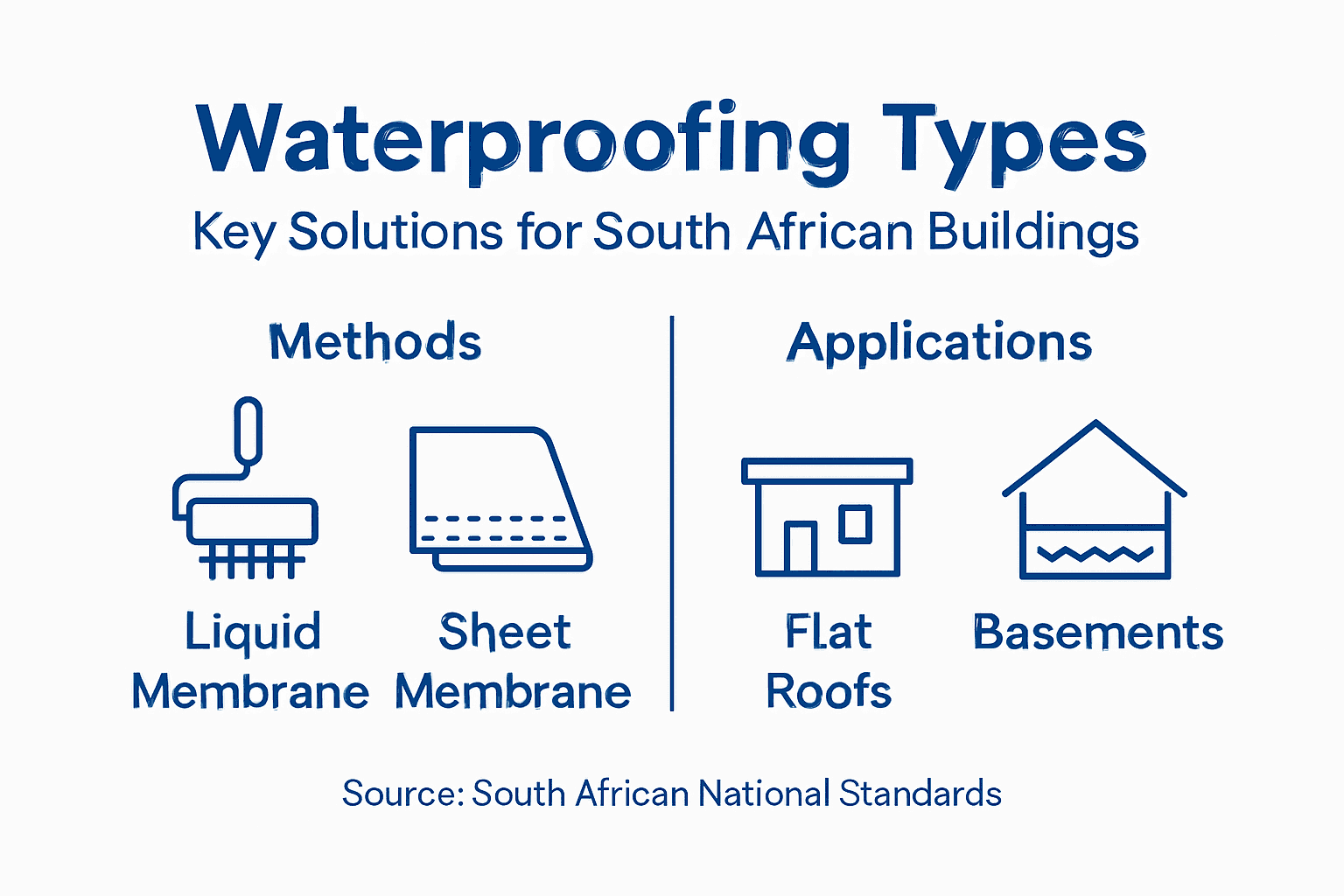
South African National Standards emphasise the importance of selecting waterproofing systems that withstand extreme conditions, including heavy rainfall, intense UV radiation, temperature fluctuations, and potential biological growth. Professional waterproofing solutions must therefore demonstrate remarkable durability, reparability, and adaptability to the country’s varied geographical landscapes and climatic zones.
The following table highlights the differences between common waterproofing methods used across South Africa:
| Method | Ideal Application Areas | Durability Factors | Specialist Skill Required |
|---|---|---|---|
| Liquid Membrane | Flat roofs, balconies | Flexible, UV-resistant | High |
| Sheet Waterproofing | Pitched roofs, parking decks | Robust, mechanical resistance | Moderate |
| Cementitious Coating | Basements, water tanks | Penetrates concrete, waterproofs | High |
Expert Tip: Consult professional waterproofing specialists who understand local building codes and can recommend site-specific solutions tailored to your exact structural and environmental requirements.
Benefits of Expert Waterproofers for Homes
Homeowners in South Africa face unique environmental challenges that demand sophisticated moisture protection strategies. Building regulations and waterproofing standards require specialised expertise to ensure comprehensive home protection against water damage, mould growth, and structural deterioration.
Professional waterproofers provide multiple critical benefits that extend far beyond simple surface treatments. Their expert knowledge enables precise diagnostics of potential moisture vulnerabilities, allowing targeted interventions that prevent long-term structural damage. Structural integrity preservation becomes paramount, as these specialists can identify subtle warning signs of water penetration that untrained individuals might easily overlook. By implementing advanced moisture barrier techniques, they protect critical home components including foundations, walls, roofs, and interior spaces from potentially catastrophic water-related deterioration.
The economic advantages of professional waterproofing are substantial. Expert intervention significantly reduces potential future repair costs by addressing moisture issues proactively, preventing expensive structural repairs, and mitigating risks associated with dampness such as mould proliferation and material degradation. Professional waterproofers bring comprehensive understanding of South African building environments, selecting appropriate materials and techniques that withstand local climatic variations, from coastal humidity to inland temperature extremes.
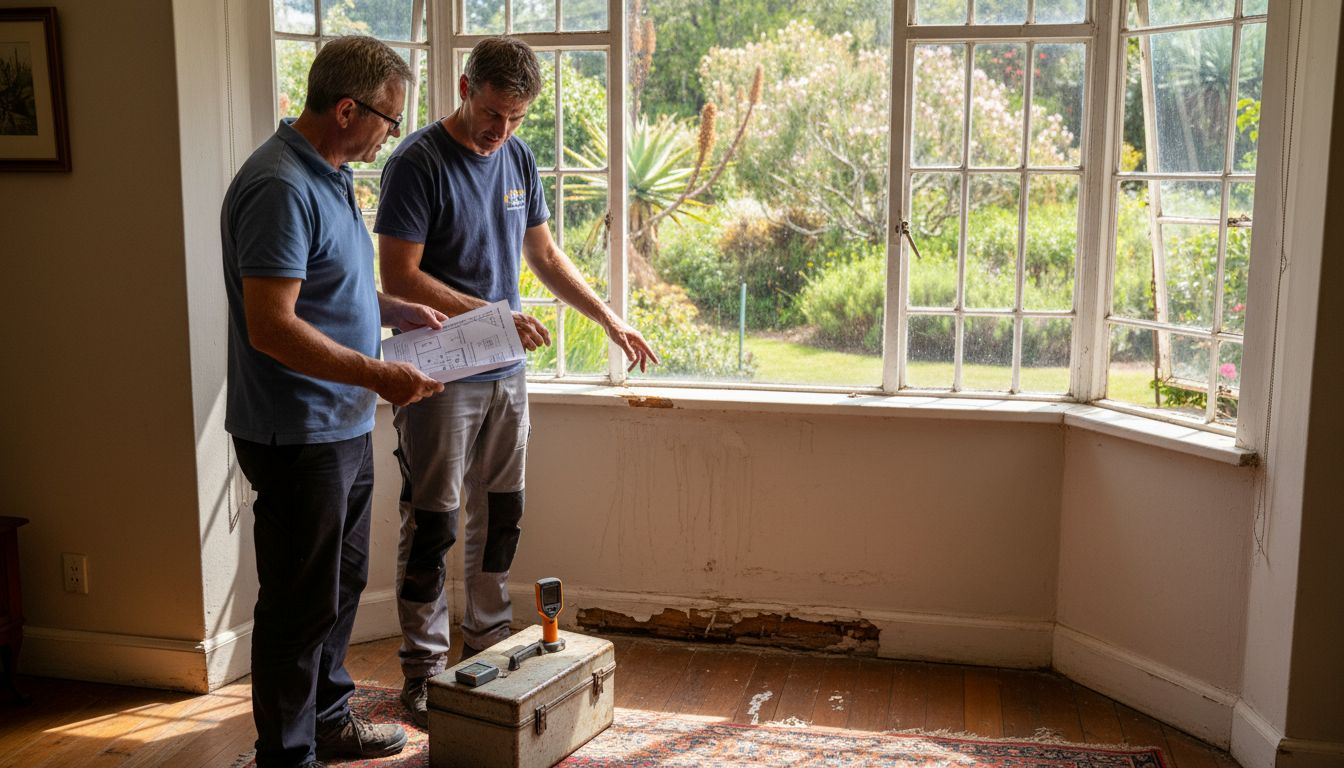
Expert Tip: Request comprehensive moisture assessment reports from waterproofing professionals, which provide detailed documentation of potential vulnerabilities and recommended preventative strategies for your specific property.
Contractor Credentials and Legal Compliance
Professional waterproofing in South Africa requires rigorous regulatory oversight to protect homeowners and maintain industry standards. Professional certification processes ensure that contractors possess the necessary skills, knowledge, and commitment to delivering high-quality waterproofing services that meet national building requirements.
The Certificate of Professional Competency (CPC) represents a critical benchmark for waterproofing professionals. Issued by authoritative bodies like the Professional Roof Repair and Waterproofing Association (PRAWA), this certification validates a contractor’s technical expertise, understanding of local building codes, and ability to execute complex waterproofing projects safely and effectively. Certified professionals must demonstrate comprehensive knowledge of moisture protection techniques, substrate analysis, material selection, and application methodologies specific to South Africa’s diverse environmental conditions.
Construction management regulations further strengthen consumer protection by enforcing strict professional standards. The South African Council for the Project and Construction Management Professions (SACPCMP) mandates contractor registration, ensuring that waterproofing specialists adhere to ethical practices, maintain professional liability, and continuously update their technical competencies. This regulatory framework provides homeowners with crucial safeguards, including accountability mechanisms, dispute resolution protocols, and assurances of technical proficiency.
Expert Tip: Always request and independently verify a contractor’s professional certifications, including their PRAWA membership and CPC status, before commissioning any waterproofing project.
Cost, Warranties, and Risks of DIY Repairs
DIY waterproofing might seem cost-effective initially, but professional standards reveal significant risks that can lead to substantial financial consequences for homeowners. Inexperienced interventions often result in improper material selection, inadequate surface preparation, and application techniques that compromise the entire moisture protection system.
The financial implications of DIY waterproofing extend far beyond initial material costs. Incorrect applications can cause extensive structural damage, potentially leading to expensive repairs that far exceed the original waterproofing project’s budget. Professional waterproofing contractors provide comprehensive warranties that protect homeowners against future moisture-related issues, whereas DIY attempts typically offer no such protection, leaving property owners fully responsible for any subsequent damage or failures.
Building regulation compliance represents another critical concern with DIY waterproofing approaches. South African building standards mandate specific technical requirements for moisture protection that amateur interventions frequently fail to meet. Non-compliant waterproofing can invalidate home insurance policies, reduce property value, and create potential legal liabilities if water damage occurs to neighbouring properties or structural elements.
Here is a summary of the economic and structural impacts of professional versus DIY waterproofing:
| Approach | Long-Term Cost Impact | Warranty Protection | Regulatory Compliance Risk |
|---|---|---|---|
| Professional Services | Low, preventative savings | Full contractor warranty | Minimal |
| DIY Repairs | High, unexpected expenses | No coverage | Significant |
Expert Tip: Calculate the potential long-term costs of DIY repairs by comparing material expenses, potential damage remediation, and professional warranty coverage before attempting any waterproofing project.
Secure Your Property with Expert Waterproofing from Pro Waterproofing
Water damage can silently erode your home or commercial building in South Africa, risking costly repairs and health hazards from mould growth. This article highlights the critical importance of hiring professional waterproofers who possess expert knowledge in specialised techniques like liquid membrane and cementitious coatings, certified skills adhering to South African National Standards, and an understanding of local climate challenges. If you want to protect your property’s structural integrity and avoid the pitfalls of DIY mistakes, partnering with qualified waterproofing specialists is essential.
Discover trusted solutions and comprehensive guidance at Uncategorized – Pro Waterproofing.
Take action today to defend your investment against moisture damage. Visit Pro Waterproofing now for expert advice and certified waterproofing contractors ready to deliver durable, code-compliant, and warranty-backed solutions. Don’t wait until costly problems emerge — ensure peace of mind with professional waterproofing tailored to South Africa’s unique environment.
Frequently Asked Questions
What are the benefits of hiring professional waterproofers?
Hiring professional waterproofers ensures comprehensive moisture protection, structural integrity preservation, and expert diagnostics of potential vulnerabilities. Their experience allows for tailored interventions that can prevent long-term damage and reduce future repair costs.
What types of waterproofing solutions do professionals use?
Professionals typically use several waterproofing solutions, including liquid membranes for flat surfaces, sheet waterproofing for pitched roofs, and cementitious coatings for basements and water tanks. Each method is selected based on specific environmental and structural requirements.
How do I ensure a waterproofing contractor is qualified?
To ensure a contractor is qualified, request evidence of their professional certifications, such as a Certificate of Professional Competency (CPC), and ask to see their portfolio of completed projects that are specific to your building type. It’s also advisable to verify their membership in relevant professional associations.
What are the risks associated with DIY waterproofing?
The risks of DIY waterproofing include improper material selection, inadequate application techniques, and a lack of compliance with building regulations, which can lead to extensive structural damage and costly repairs. Additionally, DIY repairs typically lack warranty protection, leaving homeowners responsible for any subsequent issues.