
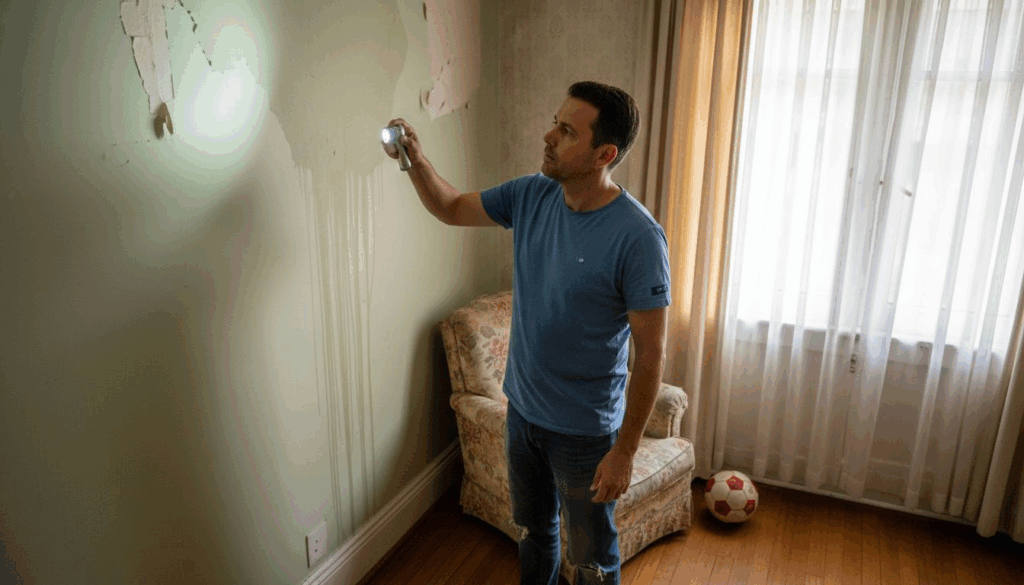
More than forty percent of British homes report issues with wall damp, a problem that extends well beyond aesthetic worries. Damp walls can threaten the safety of any property and affect the well-being of those living inside, especially in humid regions similar to South African environments. Recognizing the causes of wall damp reveals hidden risks and leads to practical solutions for healthier, longer-lasting homes.
Table of Contents
- What Is Wall Damp And Why It Occurs
- Key Sources Of Damp In South Africa
- Types Of Damp: Rising, Penetrating And Condensation
- How Damp Affects Structure And Health
- Prevention And Professional Repair Solutions
Key Takeaways
| Point | Details |
|---|---|
| Understanding Wall Damp | Wall damp results from moisture intrusion, significantly impacting structural integrity and health, especially in South Africa. Regular inspections can identify early issues, preventing costly repairs. |
| Sources of Damp | Common causes include inadequate roof drainage, poor waterproofing, and condensation due to high humidity. Homeowners should be aware of specific regional conditions influencing dampness. |
| Types of Damp | The main types are rising damp, penetrating damp, and condensation damp, each requiring different management strategies to mitigate damage. Understanding these can help homeowners apply appropriate interventions. |
| Prevention Strategies | Implementing damp-proof courses and enhancing drainage systems are essential for long-term moisture management. Professional assessments can provide tailored solutions to potential moisture issues. |
What Is Wall Damp and Why It Occurs
Wall damp represents a persistent moisture problem affecting building structures, particularly challenging in South African residential environments. This complex issue emerges when unwanted moisture penetrates wall surfaces, creating potential risks for structural integrity and human health.
Understanding wall damp requires recognising multiple potential sources of moisture intrusion. Structural moisture damage can originate from external environmental factors like rainfall, groundwater seepage, inadequate drainage, or internal issues such as plumbing leaks and condensation. Brick and concrete walls, common in South African construction, are especially vulnerable due to their porous nature, which allows water molecules to migrate through microscopic channels.
The mechanisms behind wall damp are multifaceted. Rising damp represents a significant concern, where groundwater travels upward through wall materials through capillary action. This phenomenon occurs when a property lacks effective damp-proof courses or membrane barriers. Condensation damp represents another critical pathway, emerging when warm, moisture-laden air contacts cooler wall surfaces, causing water droplet formation. Waterproofing interventions become essential in managing these complex moisture transmission processes.
Pro Tip for Homeowners: Regular wall inspections can help detect early signs of damp, potentially saving significant repair expenses by addressing moisture issues before they become extensive structural problems.
Key Sources of Damp in South Africa
South African homes face numerous moisture challenges due to diverse environmental conditions and construction practices. Understanding these moisture sources becomes critical for homeowners seeking to protect their properties from potential structural damage and health risks.
Geographical and climatic variations significantly influence damp manifestation across different regions. Coastal areas like Cape Town and Durban experience higher humidity levels, increasing wall moisture risks through atmospheric condensation. Inland regions such as Gauteng, with dramatic temperature fluctuations, create condensation environments where warm air interacts with cooler wall surfaces. Essential damp proofing strategies become paramount in managing these complex moisture interactions.
Multiple specific sources contribute to wall dampness in South African properties. These include:
- Inadequate roof drainage systems
- Compromised exterior wall waterproofing
- Underground water table proximity
- Poor building foundation design
- Plumbing infrastructure weaknesses
- Insufficient ventilation in interior spaces
Building materials commonly used in South African construction, such as brick and concrete, possess inherent porosity that exacerbates moisture absorption. Clay-rich soils prevalent in many regions further compound rising damp challenges by facilitating water migration through foundational structures. Comprehensive risk assessment helps homeowners understand the potential long-term implications of unaddressed moisture intrusion.
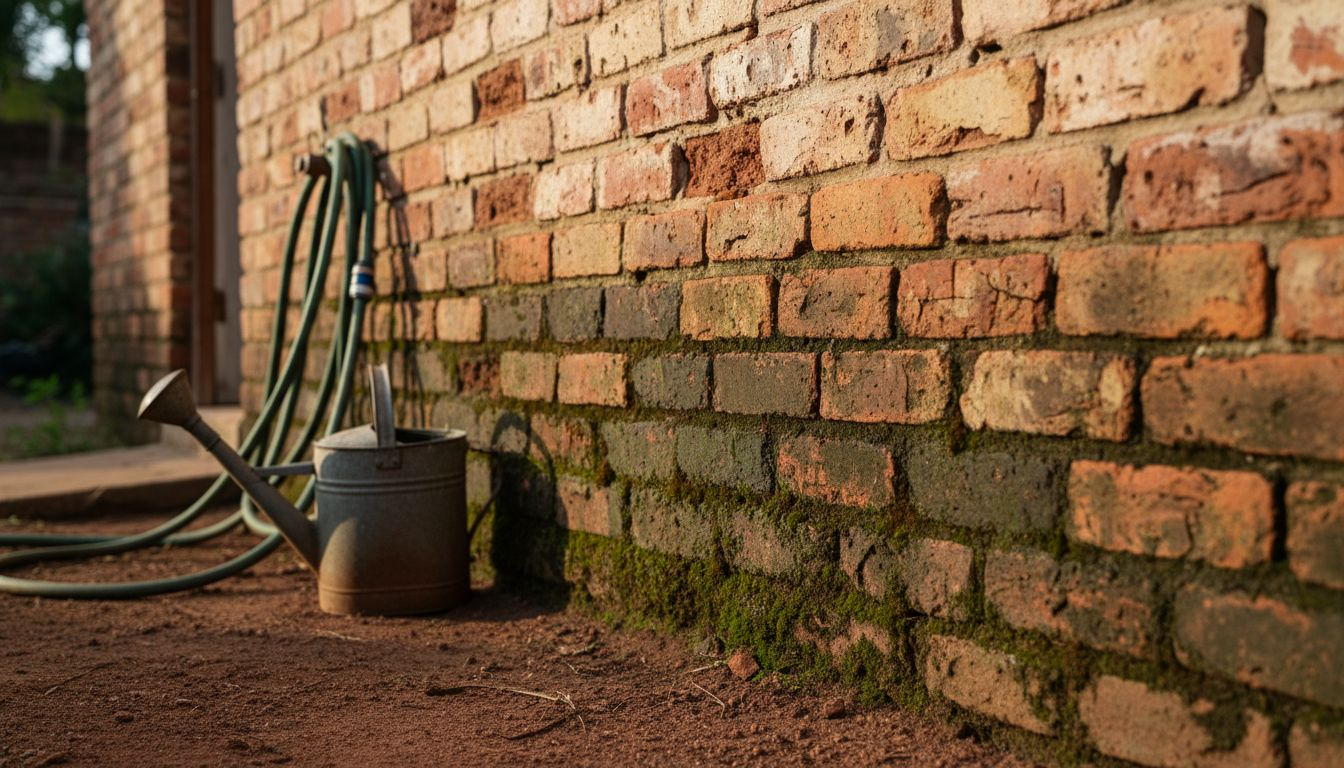
Pro Tip for Property Maintenance: Conduct annual comprehensive moisture inspections, paying particular attention to wall bases, ceiling corners, and areas near plumbing fixtures to identify potential damp sources before they develop into significant structural problems.
Types of Damp: Rising, Penetrating and Condensation
Damp problems represent complex moisture challenges that manifest in three distinct yet interconnected forms, each presenting unique characteristics and potential structural risks for South African properties. Understanding these variations is crucial for effective moisture management and property maintenance.
Rising damp emerges from ground moisture migrating upward through wall materials via capillary action. Comprehensive damp identification techniques reveal characteristic tide marks and salt residue accumulation near wall bases, indicating prolonged moisture penetration. This phenomenon typically occurs when existing damp-proof courses fail or become compromised, allowing groundwater to ascend through porous building materials.
Penetrating damp represents another significant moisture challenge, originating from external water sources infiltrating wall structures through structural defects. Potential entry points include:
- Cracked exterior rendering
- Damaged roof flashings
- Poorly sealed window and door frames
- Deteriorating masonry joints
- Insufficient exterior wall waterproofing
Condensation damp, the third primary moisture type, results from internal humidity interactions with cooler surface temperatures. Rooms with high moisture generation like bathrooms, kitchens, and laundry areas become particularly susceptible. Effective damp proofing strategies can mitigate these challenges by improving ventilation and thermal insulation, preventing water vapour from converting into liquid droplets on wall surfaces.
Pro Tip for Moisture Management: Implement regular visual inspections and maintain consistent indoor humidity levels between 40-60% to minimise condensation risks and protect your property’s structural integrity.
To clarify the differences between various types of damp, see the table below:
| Type of Damp | Typical Source | Signature Signs | Most Affected Areas |
|---|---|---|---|
| Rising Damp | Groundwater capillary | Salt marks, skirting rot | Ground-floor walls |
| Penetrating Damp | External water ingress | Localised wet patches | Walls facing outdoors |
| Condensation Damp | Internal air humidity | Mould growth, droplets | Kitchens, bathrooms, corners |
How Damp Affects Structure and Health
Structural deterioration represents a significant and often insidious consequence of prolonged moisture exposure in residential and commercial buildings. Moisture damage mechanisms progressively compromise building materials, initiating a cascade of structural and health-related challenges that can rapidly escalate if left unaddressed.
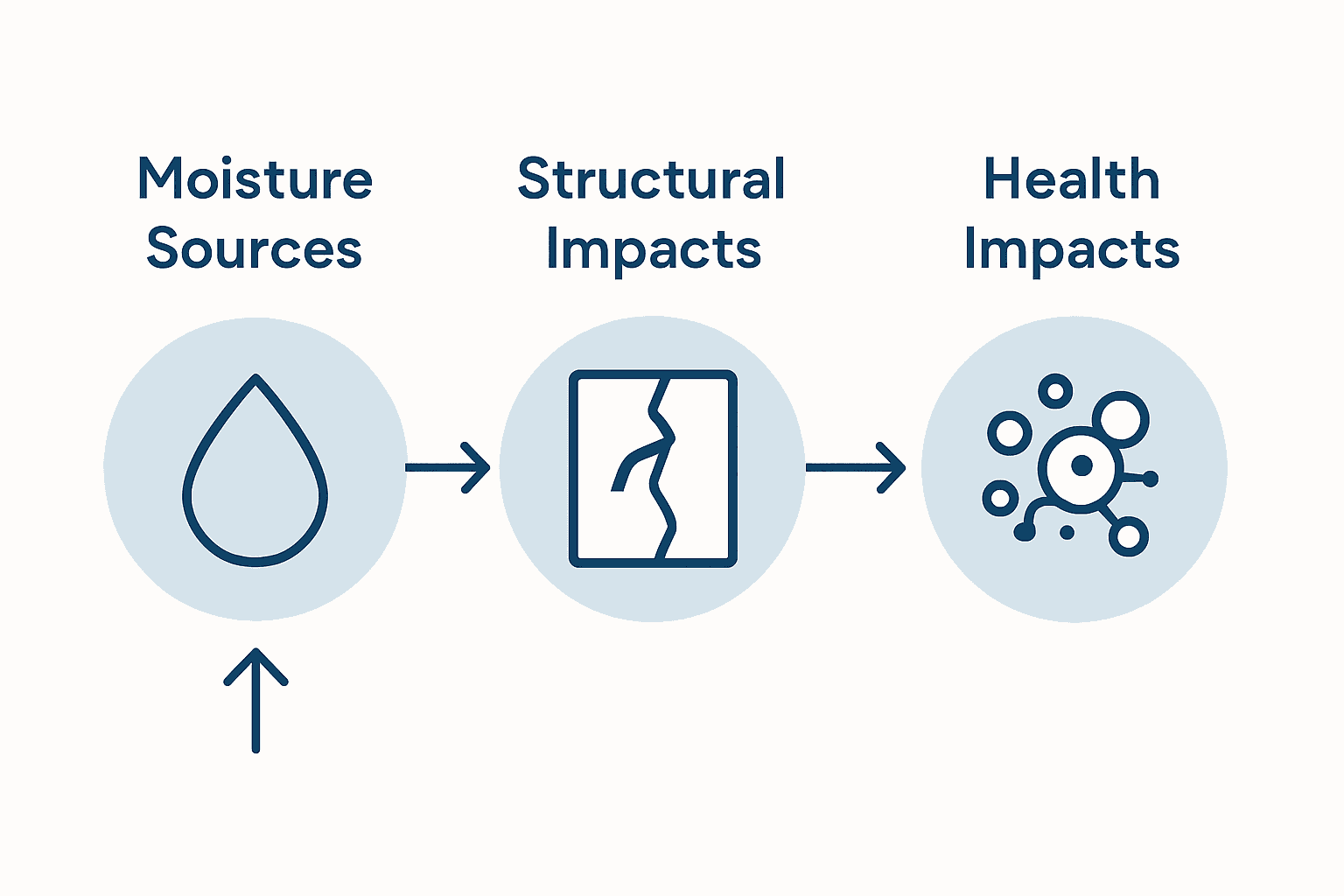
At the structural level, damp creates multiple destructive pathways. Wall materials like plasterboard, timber frames, and concrete gradually lose structural integrity as continuous moisture penetration causes material breakdown. Wooden structural components become particularly vulnerable, experiencing rot, warping, and potential complete structural failure. Salt deposits and mineral crystallisation along wall surfaces indicate advanced moisture migration, signalling potential deep-seated structural compromises that extend beyond superficial damage.
Health implications emerge as another critical concern with persistent dampness. Comprehensive home health assessments reveal that moisture environments cultivate dangerous microbial ecosystems. Black mould and fungal growth thrive in damp conditions, releasing microscopic spores that can trigger significant respiratory issues, allergic reactions, and potentially serious long-term health complications. Individuals with pre-existing conditions like asthma, chronic respiratory diseases, or compromised immune systems face heightened risks from these environmental contaminants.
Additional structural warning signs include:
- Peeling wallpaper and paint
- Visible salt efflorescence
- Decaying skirting boards
- Persistent musty odours
- Visible mould patches
- Timber frame degradation
- Concrete spalling and erosion
Pro Tip for Structural Preservation: Conduct thorough six-monthly moisture inspections, focusing on hidden areas like cavity walls, roof spaces, and foundations, to detect and mitigate potential damp-related structural risks before they become catastrophic.
Prevention and Professional Repair Solutions
Moisture prevention represents a strategic approach to protecting properties from the devastating consequences of ongoing dampness. Comprehensive damp proofing techniques offer property owners multiple defensive strategies to mitigate potential structural and health risks associated with persistent moisture intrusion.
Professional intervention involves several sophisticated moisture management approaches. Specialists typically recommend a multi-layered prevention strategy that includes:
- Installing robust damp-proof courses
- Applying specialised chemical damp proofing treatments
- Implementing waterproof membranes
- Executing cavity wall damp proofing techniques
- Ensuring comprehensive external drainage systems
Remedial waterproofing strategies become essential when existing moisture barriers fail. Professional technicians conduct comprehensive diagnostic assessments, identifying precise moisture entry points and determining the most appropriate intervention method. These investigations might involve moisture mapping, thermal imaging, and invasive testing to understand the full extent of potential structural compromise.
Technical repair solutions range from surface-level interventions to comprehensive structural modifications. Advanced techniques include electro-osmotic damp proofing, which uses electrical currents to prevent moisture migration, and targeted chemical injections that create permanent moisture barriers within wall structures. Drainage improvements, such as installing French drains or reconfiguring ground slopes, can dramatically reduce moisture accumulation around building foundations.
Pro Tip for Moisture Management: Engage professional waterproofing specialists for annual comprehensive property moisture assessments, treating prevention as a proactive investment rather than a reactive emergency repair strategy.
For a quick overview, here is a summary of common repair solutions and their main purpose:
| Solution Type | Primary Purpose | Typical Application Area |
|---|---|---|
| Damp-proof course | Block rising damp | Property foundations |
| Chemical injection | Create internal moisture barrier | Brick/concrete wall bases |
| Waterproof membranes | Prevent external water infiltration | Cavity walls, exteriors |
| Drainage enhancement | Divert ground or rainwater away | Foundations, landscaping |
Protect Your South African Home from Wall Damp with Expert Solutions
Wall damp is a serious challenge for many South African homeowners. Whether it is rising damp, penetrating damp, or condensation causing damage, the risks to your property’s structure and your family’s health are too significant to ignore. Understanding the source of moisture and addressing it early can save you costly repairs and improve your living environment. This is where professional waterproofing becomes essential.

Discover trusted advice and effective waterproofing services with Pro Waterproofing. Visit our Uncategorized – Pro Waterproofing page for detailed guidance on tackling wall damp. Act now to safeguard your home with proven methods like damp-proof courses, chemical injections, and improved drainage. Don’t wait for the damage to worsen — take the first step by contacting the experts at Pro Waterproofing and secure a tailored solution for your damp problems today.
Frequently Asked Questions
What causes wall damp in homes?
Wall damp is caused by various factors, including rising damp from groundwater, penetrating damp from external water infiltration, and condensation damp due to internal humidity interacting with cooler wall surfaces.
How can I identify the type of damp in my walls?
You can identify types of damp by looking for specific signs: rising damp usually presents as salt marks at the base of walls, penetrating damp shows localised wet patches, and condensation damp often results in mould growth and water droplets on colder surfaces.
What are the health risks associated with damp walls?
Damp walls can lead to serious health issues, including respiratory problems and allergic reactions, due to mould and fungal growth that thrive in moist environments.
What preventive measures can be taken against wall damp?
Preventive measures include installing damp-proof courses, applying waterproof membranes, ensuring efficient drainage systems, and conducting regular moisture inspections to catch issues early.