
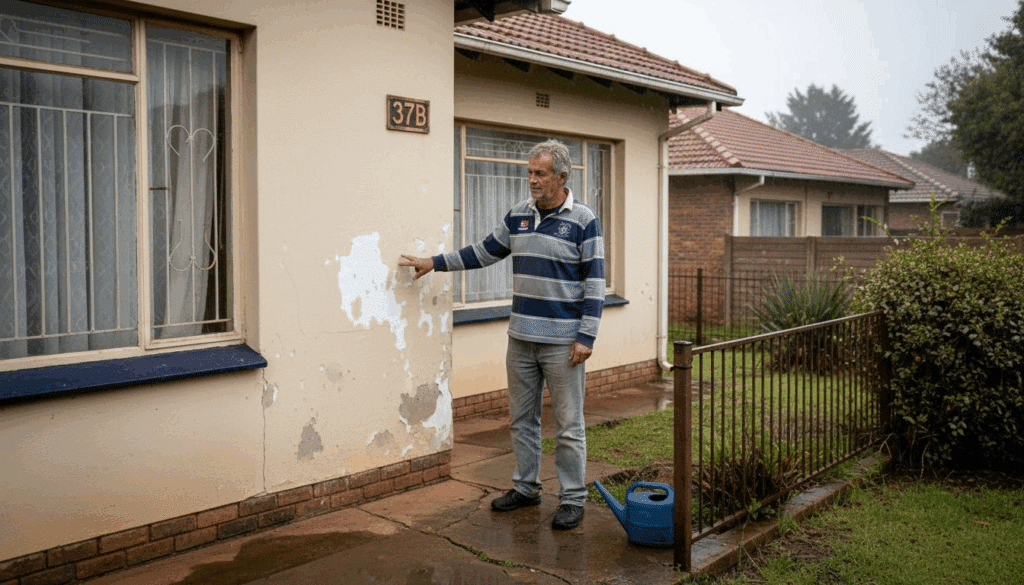
Rainwater pooling along the edge of your living room wall or persistent damp patches in the spare bedroom can signal serious trouble beneath the surface. In homes across Gauteng and Western Cape, waterproofing failures stem from more than just old age or bad weather, with issues like incorrect system selection, poor workmanship, and environmental stress quietly eating away at structural integrity. By examining the true causes of waterproofing failure, you can target lasting solutions and safeguard your property’s value and comfort.
Table of Contents
- What Causes Waterproofing Failure
- Types of Waterproofing Systems and Their Risks
- Warning Signs of Waterproofing Failure
- Key Factors Behind System Breakdown
- Financial and Safety Risks for Homeowners
Key Takeaways
| Point | Details |
|---|---|
| Understanding Causes | Recognising the various factors behind waterproofing failures is crucial for prevention. |
| Material Selection | Choosing the right waterproofing system for environmental conditions is essential. |
| Inspection and Maintenance | Regular inspections can catch early signs of waterproofing issues, saving costs long-term. |
| Professional Consultation | Engaging specialists for installation and assessment ensures optimal waterproofing solutions. |
What Causes Waterproofing Failure
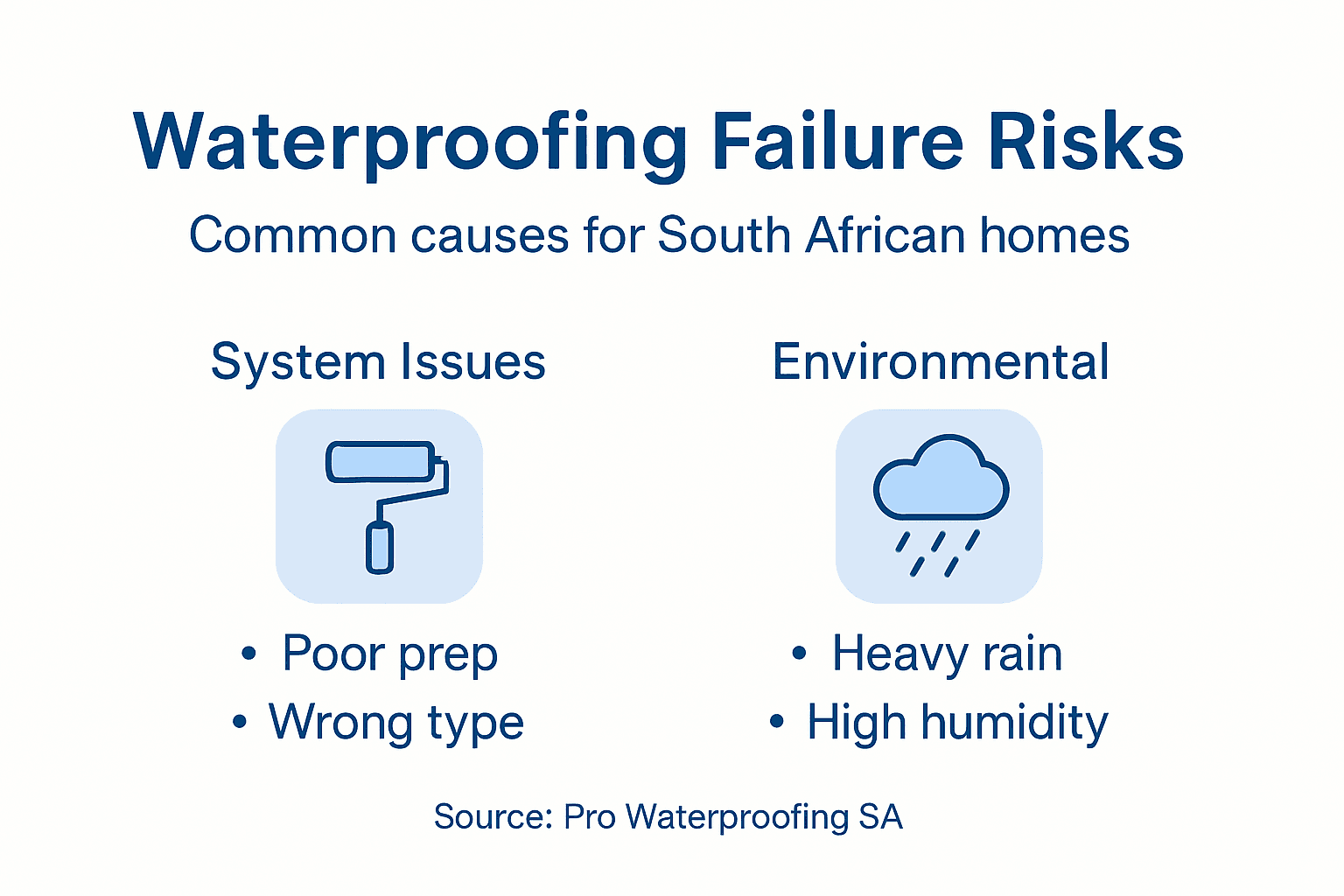
Waterproofing failures in South African homes are complex challenges that stem from multiple interconnected factors. Understanding these causes is critical for preventing costly structural damage and protecting residential investments. Common waterproofing failures reveal systemic problems in application techniques and material selection.
The primary causes of waterproofing failures can be categorised into several key areas:
- Incorrect System Selection: Choosing waterproofing materials incompatible with specific environmental conditions
- Inadequate Substrate Preparation: Failing to properly clean, repair, or prime surfaces before application
- Poor Application Techniques: Improper installation methods that compromise membrane integrity
- Environmental Stress: Extreme temperature variations and moisture exposure
- Workmanship Quality: Insufficient skills and rushed construction processes
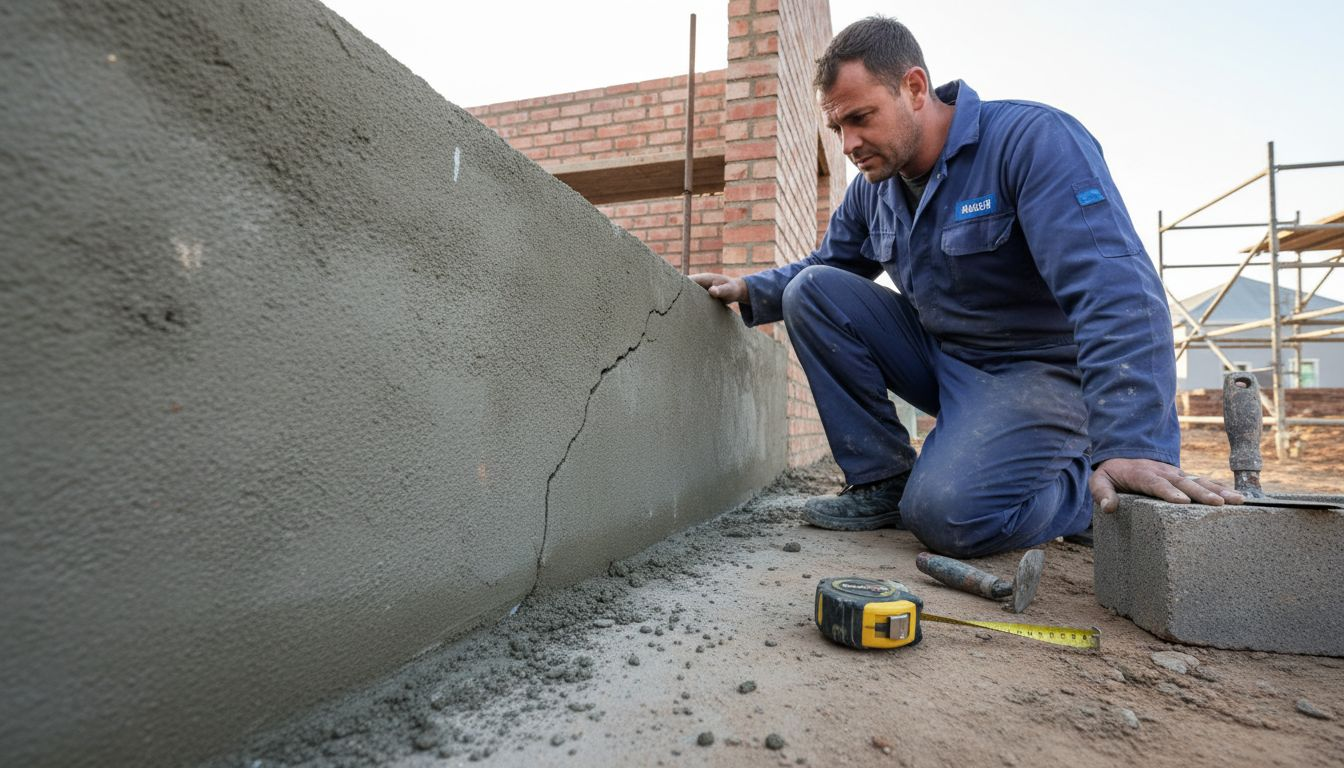
Research indicates that construction-related issues significantly impact waterproofing performance. Artisan skill levels play a crucial role in determining long-term waterproofing effectiveness. Cracks and structural imperfections frequently emerge from poor workmanship, creating potential pathways for water infiltration.
Moisture penetration typically occurs through multiple failure points, including:
- Surface discontinuities
- Improper joint sealing
- Structural movement
- Material degradation
- Chemical incompatibilities
Construction Timelines also dramatically influence waterproofing quality. Extended project durations can introduce additional variables that compromise membrane performance and structural integrity.
Pro tip: Always conduct a comprehensive substrate assessment and select waterproofing systems specifically designed for South African climatic conditions before installation.
Types of Waterproofing Systems and Their Risks
Waterproofing systems in South African construction represent a critical defence against moisture intrusion, with each type presenting unique characteristics and potential vulnerabilities. National standards define multiple waterproofing approaches that require careful consideration and implementation to ensure long-term structural protection.
The primary waterproofing systems commonly used in South African residential construction include:
- Membrane Waterproofing: Synthetic layers applied to create a continuous protective barrier
- Cementitious Waterproofing: Rigid coating systems used for interior and exterior surfaces
- Liquid-Applied Membranes: Seamless protective coatings that conform to surface irregularities
- Crystalline Waterproofing: Chemical treatments that penetrate and seal concrete substrate
- Bituminous Waterproofing: Flexible, petroleum-based protective layers
Each waterproofing system carries inherent risks that can compromise its effectiveness. Membrane systems, for instance, may experience:
- Potential material degradation
- Puncture or tear vulnerabilities
- Inadequate adhesion to substrate
- Temperature-induced expansion and contraction
- Improper installation challenges
Cementitious waterproofing systems present different challenges, including potential cracking under structural movement and limited flexibility compared to more dynamic membrane solutions. The selection of an appropriate waterproofing system requires comprehensive understanding of environmental conditions, substrate characteristics, and potential stress factors.
Here is a summary comparing common waterproofing systems and their main vulnerabilities:
| System Type | Typical Application Location | Main Vulnerability | Maintenance Complexity |
|---|---|---|---|
| Membrane Waterproofing | Roofs, balconies | Prone to tears and poor adhesion | Regular inspection required |
| Cementitious | Basements, walls | Cracks under movement | Moderate, re-coating needed |
| Liquid-Applied | Irregular surfaces | Surface wear and thinning | Reapplication often needed |
| Crystalline | Concrete foundations | Incomplete chemical penetration | Low, but substrate critical |
| Bituminous | Flat roofs, below-ground | UV exposure, flexibility limits | Sun protection essential |
Proper system selection and professional installation are fundamental to mitigating waterproofing system risks and ensuring long-term protective performance.
Environmental Factors play a significant role in determining waterproofing system performance. South African climate variations, including extreme temperature fluctuations and varied moisture exposure, demand robust and adaptive waterproofing strategies.
Pro tip: Always consult professional waterproofing specialists who understand local environmental conditions and can recommend system-specific solutions tailored to your property’s unique requirements.
Warning Signs of Waterproofing Failure
Recognising early indicators of waterproofing deterioration is crucial for South African homeowners seeking to protect their property from extensive structural damage. Early waterproofing failure signs demand immediate attention and professional assessment to prevent potentially catastrophic moisture-related issues.
The most critical warning signs of waterproofing failure include:
- Visible Wall Cracks: Horizontal or vertical fissures indicating structural stress
- Persistent Dampness: Unexplained moisture patches on walls or floors
- Efflorescence: White, powdery salt deposits signalling water penetration
- Mould Growth: Visible fungal development in damp areas
- Paint Bubbling or Peeling: Indication of moisture trapped behind surface layers
- Musty Odours: Persistent dampness causing unpleasant, mildew-like smells
Structural indicators provide more nuanced insights into potential waterproofing compromises. Moisture intrusion can manifest through subtle yet significant symptoms such as:
- Unexplained increase in interior humidity
- Warping of wooden surfaces or flooring
- Corrosion of metal fixtures near potential water entry points
- Unusual temperature variations in specific wall sections
- Soft or deteriorating plaster and wall surfaces
Timely identification of waterproofing failures can save homeowners thousands in potential repair costs and prevent long-term structural damage.
Climate-specific challenges in South African regions like Gauteng and Western Cape amplify waterproofing risks. Areas with extreme temperature fluctuations and high humidity levels require more vigilant monitoring and proactive maintenance strategies.
Pro tip: Conduct a comprehensive visual inspection of your property’s exterior and interior walls every six months, using a moisture metre to detect hidden water infiltration before visible damage occurs.
Key Factors Behind System Breakdown
Waterproofing system failures in South African properties represent complex interactions between material performance, environmental stressors, and construction methodologies. Waterproofing system challenges demand comprehensive understanding to prevent catastrophic structural deterioration.
The primary factors contributing to waterproofing system breakdown include:
- Ground Moisture Dynamics: Rising underground water levels creating persistent hydrostatic pressure
- Material Incompatibility: Selecting waterproofing solutions misaligned with specific environmental conditions
- Construction Defects: Improper installation techniques compromising membrane integrity
- Structural Interface Failures: Weak junctions between roof, wall, and foundation systems
- Environmental Exposure: Extreme temperature variations and UV radiation degradation
Moisture Penetration Mechanisms reveal intricate vulnerabilities within waterproofing systems:
- Microscopic substrate fractures
- Chemical breakdown of protective membranes
- Capillary action through porous materials
- Thermal expansion and contraction stress
- Biological degradation from microorganism growth
Comprehensive understanding of waterproofing system vulnerabilities requires holistic assessment of material, environmental, and construction-related factors.
Regional nuances in South African construction practices significantly influence waterproofing system performance. Gauteng’s variable climate and Western Cape’s coastal environments present unique challenges requiring specialised protective strategies.
Pro tip: Engage professional waterproofing consultants for comprehensive substrate analysis and system recommendation, ensuring materials are precisely matched to your specific environmental conditions.
Financial and Safety Risks for Homeowners
Waterproofing failures represent far more than cosmetic inconveniences for South African homeowners, presenting significant financial and safety challenges that can rapidly escalate into catastrophic property damage. Comprehensive risk assessment reveals multiple interconnected threats requiring immediate attention.
The primary financial risks associated with waterproofing system failures include:
- Structural Repair Costs: Extensive moisture damage requiring comprehensive reconstruction
- Property Value Depreciation: Significant reduction in market valuation
- Increased Insurance Premiums: Higher risk profile leading to elevated coverage expenses
- Potential Legal Liabilities: Risks from structural compromise affecting neighbouring properties
- Ongoing Maintenance Expenses: Continuous intervention to mitigate progressive damage
Health and Safety Hazards emerge through multiple moisture-related mechanisms:
- Toxic mould proliferation
- Respiratory disease triggers
- Compromised structural integrity
- Electrical system vulnerabilities
- Indoor air quality degradation
Unaddressed waterproofing failures can transform minor moisture issues into potentially life-threatening structural risks within months.
Regional variations in South African construction practices, particularly in high-humidity areas like Durban and coastal Western Cape regions, amplify these potential risks. Environmental conditions create unique challenges that demand proactive, specialised protective strategies.
Pro tip: Invest in annual professional moisture assessments to detect early warning signs and prevent exponential financial and safety risks before they become unmanageable.
Protect Your South African Home from Costly Waterproofing Failures
Understanding why waterproofing fails is the first step towards safeguarding your property against the risks of moisture damage, mould growth, and structural decay. If you have noticed signs like persistent dampness or efflorescence in your home, you are not alone. Many homeowners face challenges such as poor workmanship and environmental stress that compromise waterproofing effectiveness. The good news is that professional, tailored solutions exist to address these issues head-on and provide lasting protection.
Explore expert advice and trusted services at Uncategorized – Pro Waterproofing where our specialists focus on fixing problems caused by incorrect system selection, inadequate substrate preparation, and installation pitfalls. Don’t let small waterproofing faults escalate into expensive repairs or reduce your property value. Visit https://prowaterproofing.co.za today to get a professional assessment, receive a personalised quote, and take confident steps in protecting your home from water damage risks.
Frequently Asked Questions
What are the common causes of waterproofing failures in homes?
Waterproofing failures often occur due to incorrect system selection, inadequate substrate preparation, poor application techniques, environmental stress, and workmanship quality.
How can I identify signs of waterproofing failure in my property?
Look for visible wall cracks, persistent dampness, efflorescence (white salt deposits), mould growth, paint bubbling or peeling, and musty odours as indicators of waterproofing failure.
What types of waterproofing systems are commonly used and their risks?
Common waterproofing systems include membrane waterproofing, cementitious waterproofing, liquid-applied membranes, crystalline waterproofing, and bituminous waterproofing, each carrying unique vulnerabilities such as tear risks, cracking, and inadequate adhesion.
Why is proper installation and system selection important for waterproofing?
Professional installation and proper system selection are essential to mitigate risks, ensure effective moisture protection, and maintain the structural integrity of your property against potential deterioration.