
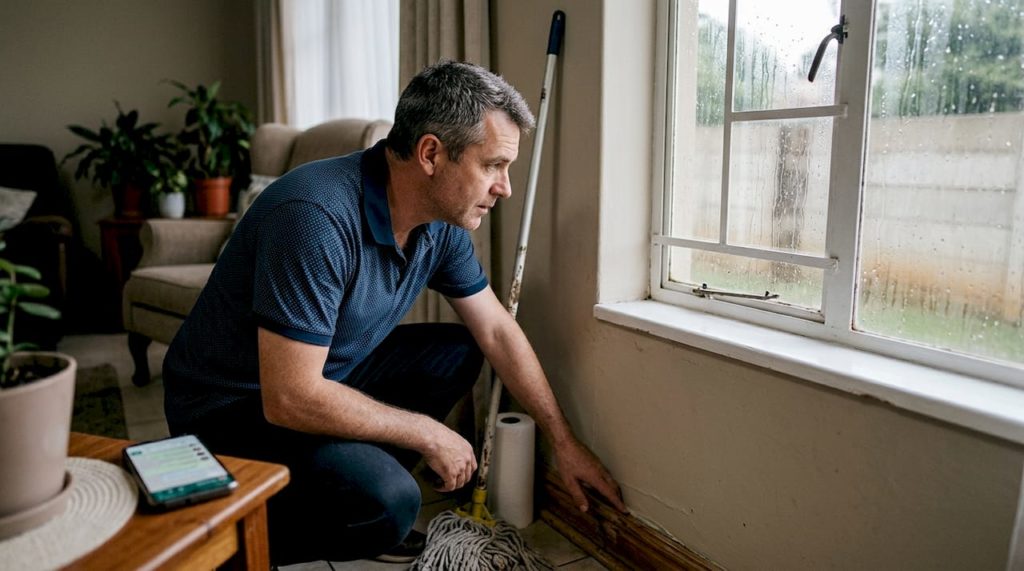
Gauteng’s climate is deceptively punishing. Between the violent summer thunderstorms, relentless high-veld UV radiation, and sudden temperature swings, your property is under constant assault in ways that aren’t always visible until serious damage has already set in. A small surface crack or a damp patch on the ceiling might seem harmless, but these are often early warnings of a much deeper structural problem. Waterproofing is critical in Gauteng precisely because the environment accelerates deterioration faster than most property owners realise. This article explains the real risks, the true costs of inaction, and what you can do to protect your investment before the next rainy season arrives.
Table of Contents
- Why Gauteng properties face unique waterproofing threats
- The true cost of ignoring waterproofing
- Best practices for effective waterproofing in Gauteng
- Maintenance and troubleshooting: Keeping waterproofing performing
- Why most owners underestimate waterproofing: our experience
- Get expert waterproofing support for your property
- Frequently asked questions
Key Takeaways
| Point | Details |
|---|---|
| Gauteng’s climate is harsh | Intense seasonal rains and UV rays in Gauteng rapidly degrade unprotected property surfaces. |
| Prevention saves money | Effective waterproofing prevents up to 30 percent property value loss and minimises future repair costs. |
| Professional solutions matter | Certified waterproofing meets building codes and outperforms DIY for lasting results in Gauteng. |
| Regular checks are critical | Bi-annual maintenance ensures issues are caught early, extending the life of your waterproofing investment. |
Why Gauteng properties face unique waterproofing threats
Not all climates are equal when it comes to building stress. Gauteng sits on the highveld at roughly 1,500 metres above sea level, which means properties here face a combination of threats that coastal or lower-lying regions simply do not experience at the same intensity.
The most obvious threat is rainfall. Gauteng’s summer months bring intense, concentrated storms that can dump large volumes of water in a very short time. Unlike a steady drizzle that drainage systems handle comfortably, these downpours overwhelm gutters, valleys, and flat roof sections in minutes. Intense storms and UV exposure cause more rapid structural degradation in Gauteng than in most other regions of South Africa.
Beyond rainfall, UV radiation at highveld altitude is significantly stronger than at sea level. Waterproofing membranes, sealants, and roof coatings degrade faster here. A product rated for ten years in Cape Town might show failure signs in six or seven years in Johannesburg or Pretoria. This is not a minor difference. It fundamentally changes how frequently you need to inspect and maintain your waterproofing systems.
Urban development compounds the problem further. As Gauteng’s cities expand, more land is covered with hard surfaces such as paving, roads, and concrete. Rainwater that would previously have soaked into soil now runs off rapidly, increasing localised flooding around buildings and pushing water into foundations, basements, and lower-level walls.
There is also a plumbing dimension that many property owners overlook. 83.1% of Midrand residents experience burst pipes within a six-month period. Burst pipes inside walls and under slabs introduce moisture that external waterproofing cannot address. This internal water ingress quietly saturates building materials, encouraging mould growth and weakening structural elements.
Here are the key risk factors specific to Gauteng properties:
- Concentrated summer storms overwhelming drainage capacity
- High UV intensity degrading membranes and sealants faster
- Increased urban runoff from hard-surfaced surroundings
- Valley and low-slope roof sections prone to ponding
- Burst pipes introducing moisture from inside the structure
- Microclimatic variation between valley and ridgeline properties
Understanding how waterproofing protects structures in this specific environment is the first step. The second step is knowing how to assess waterproofing needs for your particular property type and location.
A surface crack is rarely just a surface crack in Gauteng. Thermal expansion, UV stress, and water ingress work together to turn minor cosmetic issues into structural failures within a single wet season.
The true cost of ignoring waterproofing
Many property owners delay waterproofing because the upfront cost feels significant. This is understandable. But the financial logic of waiting almost always works against you.
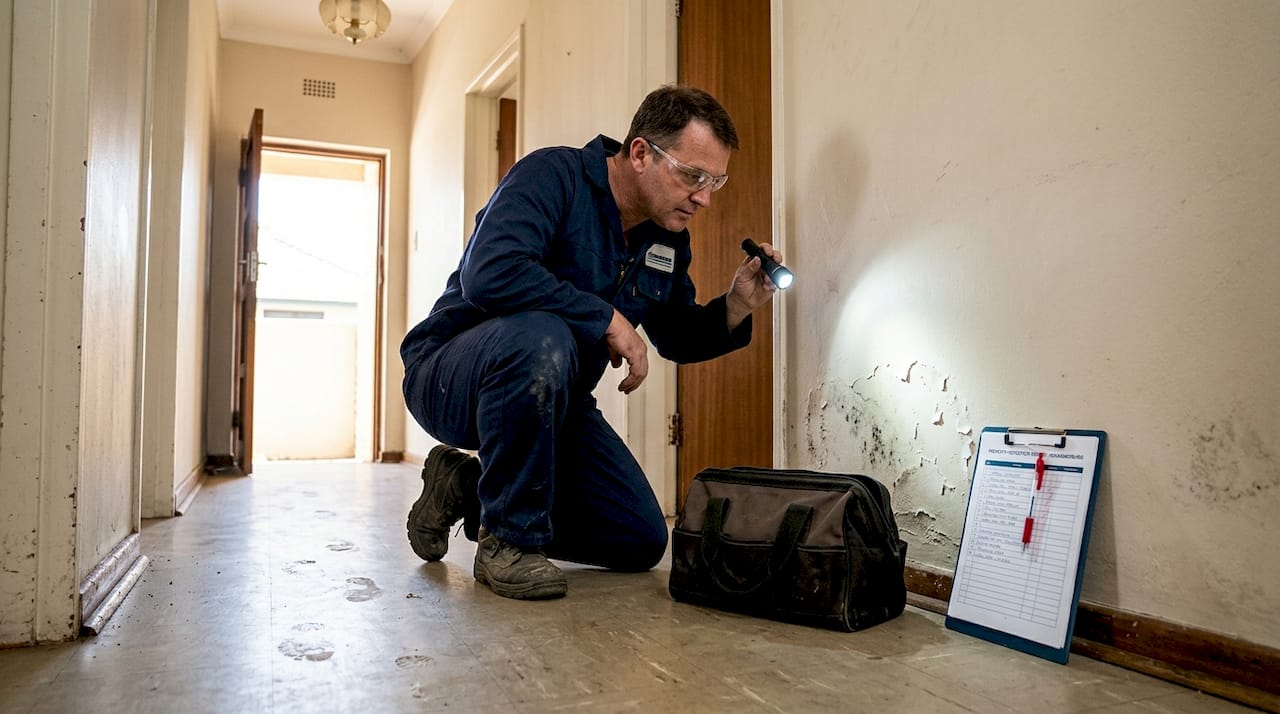
Unprotected properties can lose up to 30% of their market value due to water damage. For a property valued at R2 million, that represents a R600,000 loss. No waterproofing project costs anywhere near that figure. The maths are stark.
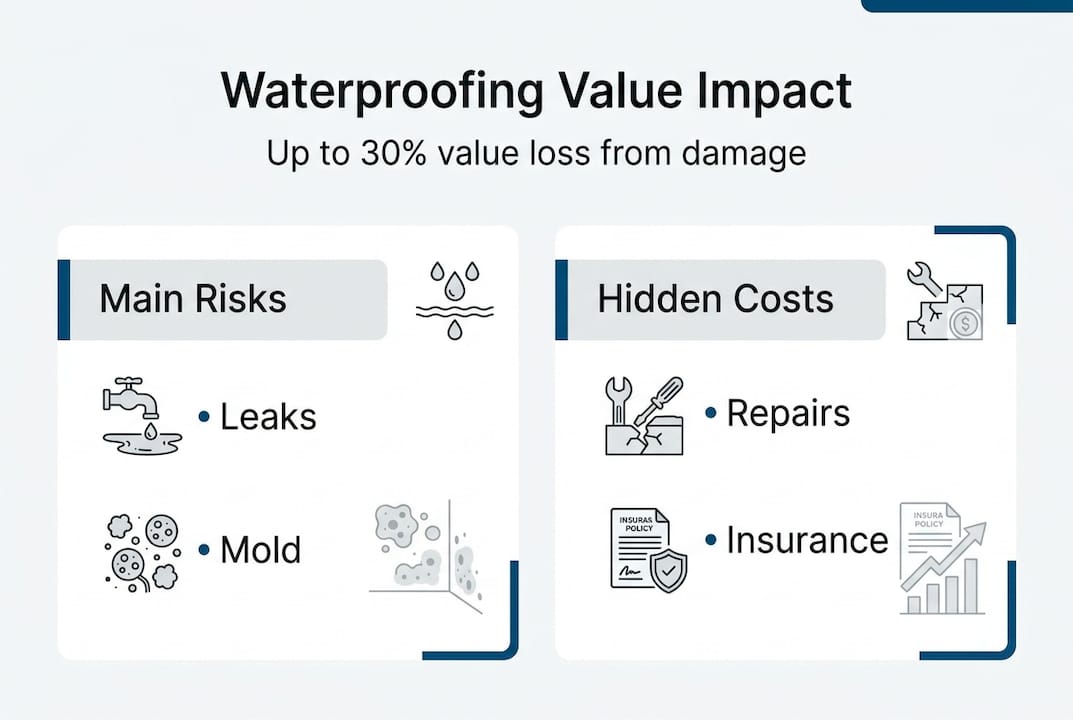
Beyond property value, there are layers of hidden costs that accumulate silently. Mould remediation is expensive and disruptive. Electrical systems damaged by water ingress require full replacement. Timber roof structures that have absorbed moisture over multiple seasons may need to be partially or fully rebuilt. Each of these secondary costs dwarfs the price of preventive waterproofing.
Insurance is another factor that property owners frequently underestimate. Insurers in South Africa increasingly scrutinise maintenance records when processing water damage claims. If your property shows evidence of neglected maintenance or inadequate waterproofing, your claim may be reduced or refused entirely. This leaves you carrying the full cost of repairs.
| Scenario | Typical cost range | Notes |
|---|---|---|
| Professional waterproofing (preventive) | R8,000 to R40,000 | Depends on area and product |
| Mould remediation | R15,000 to R60,000 | Recurring if source not fixed |
| Structural repair (water damage) | R50,000 to R200,000+ | Escalates with delay |
| Property value loss | Up to 30% of market value | Affects resale and rental income |
| Insurance claim refusal | Full repair cost unrecovered | Common with poor maintenance |
Understanding waterproofing cost factors before you budget helps you make a genuinely informed decision rather than a reactive one.
Pro Tip: Schedule your waterproofing assessment before the summer storm season begins, ideally in August or September. Contractors are less busy, prices are more competitive, and you avoid the scramble that follows the first major downpour.
The most expensive waterproofing project is the one you do after the damage has already occurred. Prevention is not just cheaper. It is categorically a different financial outcome.
Regular waterproofing maintenance is the bridge between a one-off installation and lasting protection. Without it, even the best initial application will eventually fail.
Best practices for effective waterproofing in Gauteng
Effective waterproofing is not simply a matter of applying a product and hoping for the best. It follows a clear sequence, and skipping any step introduces risk.
Here is the process that professional waterproofing contractors follow for Gauteng properties:
- Thorough assessment: Identify all high-risk zones including flat roofs, roof valleys, parapets, expansion joints, and basement walls. Do not assume the visible leak is the only problem area.
- Surface preparation: Remove all loose material, repair cracks, and ensure surfaces are clean and dry before any product is applied. Poor preparation is the leading cause of premature waterproofing failure.
- Product selection: Choose products appropriate for the specific substrate and exposure conditions. Highveld UV intensity demands UV-stable membranes or coatings.
- Professional application: Ensure installers are qualified. SANS 10400-Part L compliance and NQF Level 2 certification are legal requirements for waterproofing work in South Africa.
- Inspection and sign-off: A qualified installer should inspect the completed work and provide documentation, including a warranty.
- Scheduled aftercare: Book your first follow-up inspection within six months of installation.
DIY waterproofing efforts risk failure and do not carry the warranties that professional installations provide. For minor touch-ups, a competent handyman may suffice. For anything involving structural waterproofing, flat roofs, or basement tanking, professional installation is not optional.
Pro Tip: When vetting a contractor, ask specifically whether they hold NQF Level 2 certification and whether their work complies with SANS 10400-Part L. A reputable contractor will answer immediately and confidently. Hesitation is a red flag.
The waterproofing installation process for Gauteng homes has specific nuances that differ from other provinces. Familiarise yourself with South African waterproofing standards before engaging any contractor, and consider consulting a specialist on the role waterproofing consultants play in larger or more complex projects.
Maintenance and troubleshooting: Keeping waterproofing performing
Installation is the beginning, not the end. Gauteng’s climate means your waterproofing system is working hard every summer, and without regular attention, small issues compound into costly failures.
Ponding water, clogged valleys, and UV ageing are among the most common causes of waterproofing failure. Regular inspection is the single most effective tool for catching these problems before they escalate.
| Maintenance task | Frequency | Notes |
|---|---|---|
| Full roof and valley inspection | Every 6 months | After summer and winter seasons |
| Gutter and downpipe clearing | Every 3 months | More often near trees |
| Membrane and sealant visual check | Annually | Look for cracking, lifting, or bubbling |
| Basement and below-slab inspection | Every 6 months | Check for damp patches or efflorescence |
| Professional waterproofing assessment | Every 2 to 3 years | Or after any major storm event |
Know the red flags that demand immediate professional attention:
- Water stains on interior ceilings or walls after rain
- Peeling paint or bubbling plaster on exterior walls
- A musty or earthy smell in enclosed spaces
- Visible mould growth on walls, ceilings, or in cupboards
- Cracks appearing along parapet walls or around roof penetrations
- Standing water on flat roof sections more than 48 hours after rain
Pro Tip: Never seal a blocked roof valley. Clear the blockage instead. Sealing traps water behind the obstruction, which increases pressure and causes far worse damage than the original blockage. Cleaning is always the correct first response.
Your waterproofing maintenance guide should cover both external and internal surfaces. Inside wall waterproofing is often overlooked but is critical in properties with rising damp or basement moisture. Consistent attention to quality in waterproofing across all maintenance activities is what separates properties that hold their value from those that deteriorate.
Why most owners underestimate waterproofing: our experience
After working with hundreds of Gauteng property owners, a pattern becomes very clear. Most people act only once water appears on the ceiling or a wall turns visibly damp. By that point, the damage has usually been progressing for months, sometimes longer.
The uncomfortable truth is that surface cracks and minor seepage are not the problem. They are the symptom of a problem that has already taken hold beneath the surface. Waiting for visible signs is like waiting for smoke before checking for fire.
We have also seen the consequences of well-intentioned shortcuts. A property owner applies a consumer-grade sealant over a cracked parapet, feels reassured, and skips the professional inspection. Two seasons later, water has tracked behind the sealant and saturated the wall cavity. The repair cost is three times what a proper installation would have been.
Properties that fare best through Gauteng’s extreme weather share one characteristic: they are inspected and maintained consistently, not reactively. Quality in waterproofing is not about using the most expensive product. It is about applying the right product correctly, on a well-prepared surface, by a qualified installer, and then checking it regularly. That combination is what delivers genuine peace of mind.
Get expert waterproofing support for your property
Gauteng’s climate will not become more forgiving. If anything, storm intensity and UV exposure continue to challenge even well-maintained properties. The difference between a property that holds its value and one that quietly deteriorates often comes down to one decision: acting before the damage is visible.
Pro Waterproofing brings certified local expertise, regional knowledge of Gauteng’s specific conditions, and full compliance with SANS 10400-Part L requirements. Whether you need a free initial assessment, a full installation, or a maintenance programme ahead of the summer season, the team is ready to help you protect what matters. Do not wait for the next storm to reveal a problem that could have been prevented.
Frequently asked questions
How often should waterproofing be inspected in Gauteng?
Waterproofing should be inspected at least every six months, particularly after major storms. Active leakage control at six-month intervals is proven to minimise long-term costs and prevent escalation.
What are signs that my waterproofing is failing?
Look for interior water stains, peeling paint, musty odours, or damp patches on walls and ceilings. Neglected leaks escalate rapidly in Gauteng’s climate and cause significant internal damage if left unaddressed.
Is DIY waterproofing effective in Gauteng’s climate?
DIY waterproofing rarely meets the required standards and typically voids any product warranty. DIY efforts risk future failures and leave property owners without the protection that a professional installation guarantees.
Are there local waterproofing regulations in Gauteng?
Yes. SANS 10400-Part L mandates qualified installers and a minimum of five years’ performance for waterproofing systems. NQF Level 2 certification is required for legal compliance.
What special problems do Gauteng valleys and roofs face?
Roof valleys are highly susceptible to blockages from debris, which causes water to back up and penetrate the structure. Cleaning valleys rather than sealing them is the correct approach to avoid claim rejections and further damage.