

TL;DR:
- South African basements require external tanking or drainage systems due to the clay-heavy soils and high water tables. Relying solely on surface coatings is ineffective against hydrostatic pressure, which causes ongoing moisture and structural damage. Proper site assessment, drainage design, and professional installation are essential to ensure long-term waterproofing and property protection.
South African homeowners often assume a coat of waterproof paint on interior walls is enough to solve a damp basement. It is not. That approach treats the symptom while the root cause, water pressure building up outside your foundation, continues unchecked until real structural damage appears. South Africa’s clay-heavy soils, high seasonal water tables, and intense summer rainfall create conditions that demand far more than a surface fix. This article walks you through the expert-recommended waterproofing systems available locally, what they cost, and how to make the right choice before moisture turns into an expensive crisis.
Table of Contents
- Why basements in South Africa need specialist waterproofing
- What are the main basement waterproofing solutions?
- How to choose the right waterproofing system for your basement
- Getting professional results: Steps, costs, and what to avoid
- Beyond the basics: What most homeowners miss about basement solutions
- Take the next step towards a dry, safe basement
- Frequently asked questions
Key Takeaways
| Point | Details |
|---|---|
| Prioritise external tanking | For new builds, external tanking with proper drainage offers the longest-lasting waterproofing. |
| Cavity drain is key for retrofits | Existing basements are best protected using cavity drain membrane systems and effective drainage. |
| Cost varies by method | South African waterproofing solutions range from R300–R1,200 per square metre depending on system. |
| Site preparation is critical | Proper site and drainage prep matter more than brand or coating type for long-term results. |
| Professional input saves money | Expert assessment prevents costly mistakes and protects your property investment. |
Why basements in South Africa need specialist waterproofing
South African basements face a particularly tough combination of environmental pressures. Unlike temperate climates where groundwater moves slowly, the Highveld and coastal regions experience heavy rain events that rapidly saturate clay soils. Clay does not drain quickly. Instead, it holds water against your foundation walls for days, sometimes weeks, pushing moisture inward through the smallest cracks or imperfections. This is called hydrostatic pressure, and it is the main reason generic surface coatings fail repeatedly.
The consequences of untreated basement damp go well beyond a musty smell. Consider the three most serious risks:
- Mould and health hazards: Persistent moisture creates ideal conditions for black mould, which poses real respiratory risks for occupants, particularly children and the elderly.
- Structural damage: Water infiltration weakens concrete, corrodes steel reinforcement, and gradually undermines the integrity of your foundation walls. Repairs at this stage cost significantly more than prevention.
- Loss of property value: A damp basement is a red flag for any buyer or insurer. It can reduce your property’s market value and complicate property damage protection claims.
Many homeowners try to solve these problems with paint-on coatings applied to the inside of the basement wall. These products block visible moisture temporarily, but they cannot withstand sustained hydrostatic pressure from outside. When pressure builds, coatings simply delaminate or crack, and the damp returns within months.
“External waterproofing (tanking) is the gold standard for new builds in South Africa, involving waterproof membranes on foundation walls exterior, combined with perimeter drains.”
Understanding why your basement is vulnerable is the first step. Our waterproof basements guide goes deeper into local soil conditions and how they affect long-term moisture management.
What are the main basement waterproofing solutions?
Once you accept that surface coatings are insufficient, the real question becomes: which system is right for your specific basement? There are three primary categories used by professionals in South Africa, each with distinct advantages and limitations.
1. External tanking (membrane waterproofing)
This is the preferred method for new builds. A waterproof membrane, typically a bituminous sheet or liquid-applied barrier, is applied to the exterior face of the foundation walls before backfilling. Perimeter drains are installed to redirect groundwater away from the structure. Because the membrane sits on the outside, hydrostatic pressure is managed before it ever contacts your wall. The drawback is that it is difficult and costly to retrofit on existing buildings because it requires excavating around the entire foundation.
2. Cavity drain membrane systems
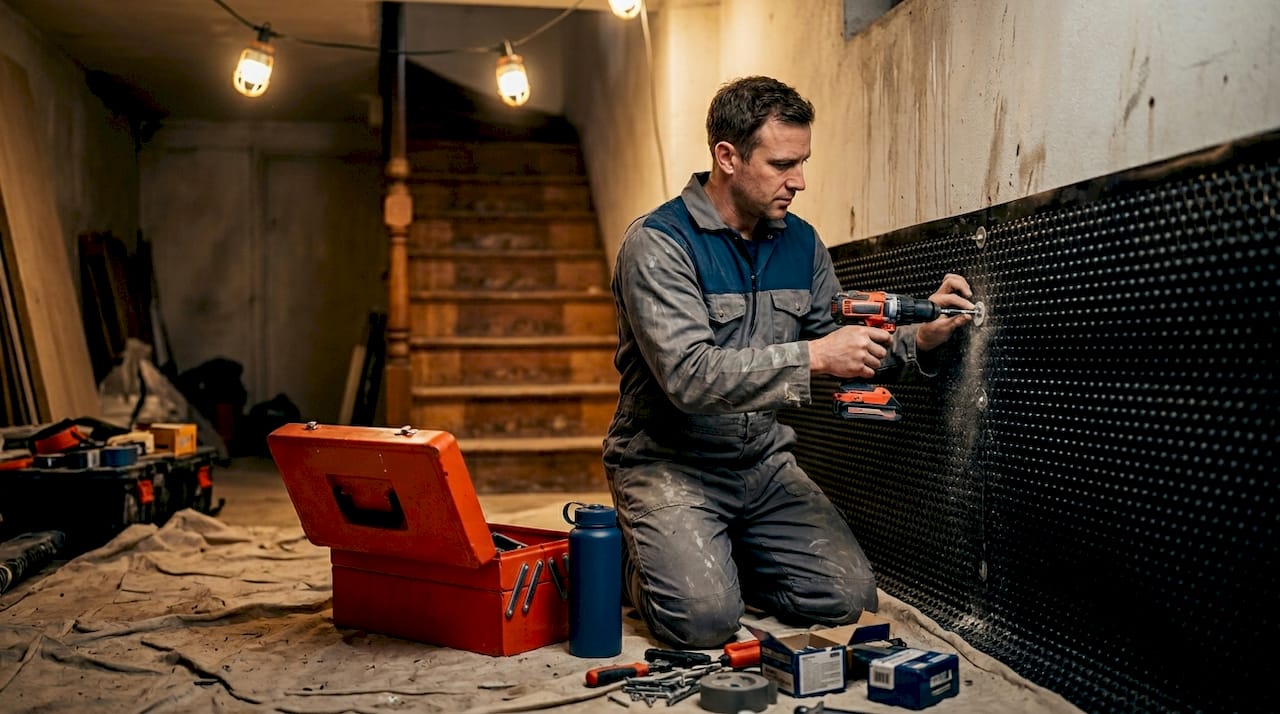
For existing basements, cavity drain systems are most popular. A dimpled plastic membrane is fixed to the interior walls and floor, creating a small air gap. Any water that penetrates the wall travels down this drained cavity and is channelled to a perimeter drain and a sump pump, which removes it from the building. This method does not stop water entering the structure, but it controls it effectively and prevents it from affecting the habitable space.
3. Crystalline and integral waterproofing
Crystalline systems react with concrete to form needle-like crystals that block pores and micro-cracks. Remarkably, this self-healing process continues over time: when new cracks form, the crystalline reaction re-activates. This method is well-suited to concrete structures but is less effective on brick or block. For new concrete pours, integral admixtures such as SikaControl-730 WT can be added directly to the mix, producing watertight concrete from the outset.
Here is a comparison of the three main systems to help you understand which might suit your project:
| System | Typical cost (per m²) | Best suited for | Key benefit |
|---|---|---|---|
| External tanking | R800 – R1,800 | New builds | Stops water at source |
| Cavity drain membrane | R600 – R1,200 | Existing basements | Controls ingress reliably |
| Crystalline waterproofing | R300 – R600 | Concrete structures | Self-healing properties |
Pro Tip: In South African clay conditions, drainage design matters more than the waterproofing product brand you choose. A cavity drain system paired with a properly sized sump pump and perimeter channel will outperform the most expensive coating applied without adequate drainage. Always compare waterproofing methods before committing to a product.
Another common misconception is that you can simply paint over an active leak. Paint products labelled “waterproof” are generally vapour barriers, not hydrostatic barriers. They cannot resist sustained water pressure. If your basement walls show efflorescence (white salt deposits), active seepage, or spalling concrete, you are already dealing with a pressure problem that no paint product will resolve. Understanding the role of cementitious waterproofing within a broader system can help clarify where these products fit correctly.
How to choose the right waterproofing system for your basement
Choosing the right system is not simply a matter of budget. The correct solution depends on a combination of site-specific factors that only a proper assessment can reveal. Here is what determines the best approach:
- Age and construction type of the basement: New concrete builds can accommodate external tanking or integral admixtures. Older brick basements typically require cavity drain systems.
- Soil type and drainage conditions: Clay soils with poor natural drainage create higher sustained hydrostatic pressure, favouring drainage-led solutions over coatings.
- Water table depth: A high seasonal water table means continuous pressure. This rules out negative-side coatings entirely.
- Existing damp damage: If reinforcement corrosion or significant cracking is already present, structural remediation is needed before waterproofing begins.
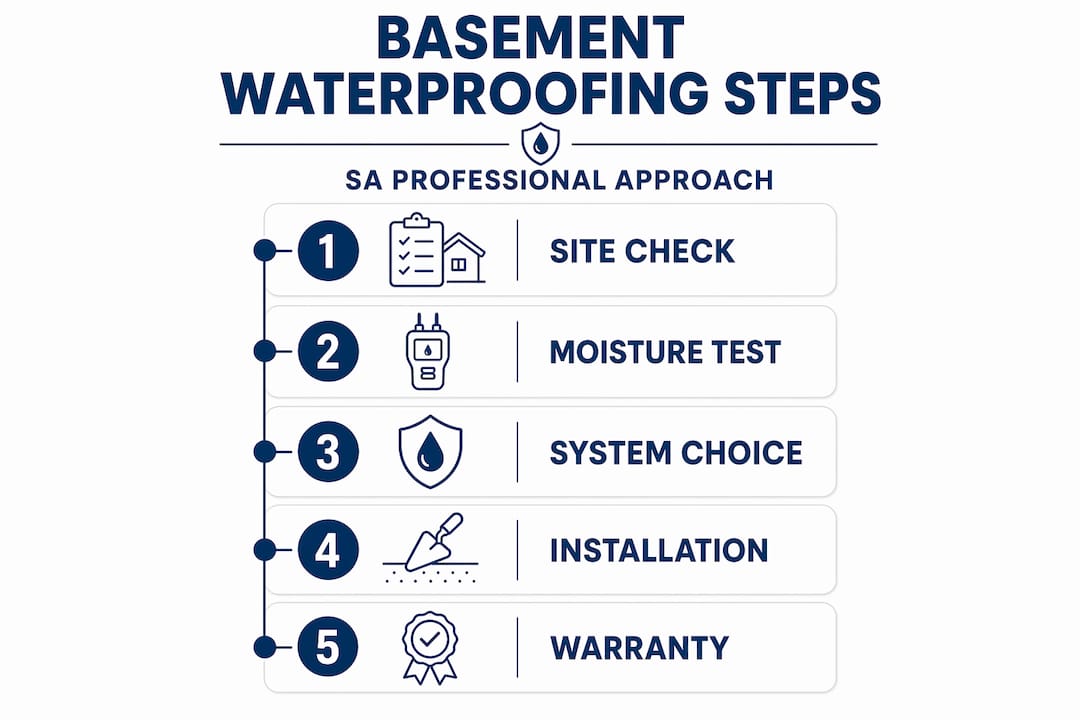
A professional site assessment typically involves visual inspection of all walls and the floor slab, moisture meter readings, and sometimes a drainage survey to establish where water is entering. The specialist will then recommend a system based on what the site actually needs, not simply what is easiest to install.
Here is a scenario-based overview to set realistic expectations:
| Scenario | Recommended method | Expected durability | Approximate cost (50m²) |
|---|---|---|---|
| New 50m² basement slab | External tanking + perimeter drain | 25+ years | R40,000 – R90,000 |
| Existing 50m² brick basement | Cavity drain + sump pump | 15–25 years | R30,000 – R60,000 |
| Existing 50m² concrete basement | Crystalline injection + drainage | 20+ years | R15,000 – R30,000 |
Professionals consistently advise to prioritise external systems for new builds and to choose cavity drain plus drainage over negative-side coatings for retrofits, particularly where clay soils or high water pressure are present. Understanding basement drainage solutions in detail will help you ask the right questions during your assessment.
There is also an important insurance dimension. Many South African building insurance policies include exclusions or complications if moisture damage is attributed to inadequate waterproofing rather than a sudden event. A professionally installed and warranted system with documentary evidence strengthens your position considerably. Familiarising yourself with current waterproofing standards helps you confirm that any contractor you engage is working to accepted industry benchmarks.
Getting professional results: Steps, costs, and what to avoid
Knowing what the installation process looks like helps you hold your contractor accountable and avoid unpleasant surprises. Here is what a professional basement waterproofing project typically involves:
- Detailed site assessment: The specialist inspects the basement, identifies ingress points, and assesses soil and drainage conditions.
- Surface preparation: Existing coatings are stripped, cracks are routed and filled with hydraulic cement or epoxy injection material, and the surface is cleaned.
- Drainage installation: Perimeter channels and, where necessary, a sump pit are installed before any membrane work begins.
- System installation: The chosen membrane, cavity drain, or crystalline product is applied according to manufacturer specification and industry standards.
- Sump pump installation and testing: The pump is connected, tested under load, and monitored for correct operation.
- Inspection and sign-off: The completed installation is inspected and a warranty document is issued.
In terms of timelines, a 50m² cavity drain installation typically takes three to five working days, excluding any structural repairs identified during preparation. Costs across South Africa for professionally installed systems generally fall between R600 and R1,800 per square metre depending on system complexity, access difficulty, and the extent of preparatory work required.
The cavity drain membrane approach remains the most widely used retrofit solution because it is system-based rather than product-dependent: even if a small amount of water penetrates the wall, the drainage layer manages it safely without the system failing catastrophically.
Pro Tip: Always ask for a written warranty that specifically covers the waterproofing system rather than just the labour. A reputable contractor will offer a minimum five-year warranty and will be willing to explain what voids it. If a company cannot clearly answer what their warranty covers, that is a serious warning sign.
The most common and costly mistakes homeowners make include: skipping drainage in favour of cheaper coating-only solutions, failing to address external grading so that rainwater drains toward rather than away from the house, and using a general builder rather than a specialist for a project that demands specific knowledge. For ideas on how to complete the basement space once it is properly protected, our waterproof basement flooring tips offer practical guidance. If you want a broader overview before reaching out to a specialist, our basement waterproofing advice section is a solid starting point. For landlords, it is also worth noting that unresolved moisture damage can trigger landlord legal expenses if tenants raise health or habitability concerns.
Beyond the basics: What most homeowners miss about basement solutions
After years working on South African basements, there is one pattern that stands out repeatedly: homeowners focus almost entirely on the product and almost not at all on the preparation and drainage design. They ask which membrane is best. They compare brand warranties. They request the cheapest quote. But the basement that fails after two years is almost never a product failure; it is a preparation failure.
A crystalline system applied to a basement wall without first addressing the source of hydrostatic pressure will self-heal cracks but cannot overcome sustained flooding from a blocked perimeter drain. A cavity drain installation on a site where surface water is still draining toward the house will overwhelm the sump pump in heavy rainfall. The product does not determine the outcome. The drainage design and site preparation do.
The uncomfortable truth is that budget constraints often drive homeowners toward the cheapest quote, which typically means the most minimal scope of work. A contractor offering to waterproof a 60m² basement for R8,000 is almost certainly omitting drainage. That saving becomes extremely expensive when the system fails within eighteen months and the entire installation must be redone.
Our perspective, earned through real project experience, is that the single most valuable investment you can make before any waterproofing work begins is a paid professional assessment. Not a free quote where the contractor is incentivised to sell a particular product. A genuine assessment by a specialist who will put their findings in writing. That document becomes your basis for comparing quotations fairly and holding contractors accountable.
“Site preparation and drainage management account for the majority of a waterproofing system’s long-term performance. The best membrane in the world cannot compensate for inadequate groundwater control.” — Experienced South African waterproofing specialist
Ask for photographs and references from similar local projects, not just a catalogue of product certifications. If a contractor cannot show you a completed basement project in comparable clay or high water table conditions, look elsewhere. Essential waterproofing methods covering local conditions gives you the background knowledge to evaluate what contractors propose critically.
Take the next step towards a dry, safe basement
Your basement is one of the most structurally critical parts of your home. Getting the waterproofing right protects your investment, your health, and your peace of mind for decades. The information in this article gives you a clear picture of the options, but every basement is different and the right system depends on your specific site conditions.
The team at Pro Waterproofing offers expert assessments across South Africa, covering everything from initial site inspection to system recommendation and full installation. There is no obligation to proceed after an assessment; you simply gain a clear, professional picture of what your basement needs and what it will cost. Reach out today to arrange an inspection and take the first step towards a genuinely dry, safe basement space.
Frequently asked questions
What is the most effective waterproofing method for new build basements in South Africa?
External tanking with a waterproof membrane and perimeter drains is the gold standard for new builds in South Africa because it addresses hydrostatic pressure at its source before it contacts the structure.
How much does basement waterproofing cost per square metre in South Africa?
Cavity drain membrane systems typically cost R600 to R1,200 per square metre for existing basements, while crystalline waterproofing ranges from R300 to R600 per square metre depending on the condition of the concrete.
Can I waterproof my basement myself or do I need a specialist?
DIY approaches using paint or basic coatings rarely produce lasting results because they cannot resist sustained hydrostatic pressure. Professional installation is strongly recommended, particularly for retrofit projects in clay conditions where drainage design is essential.
Which waterproofing products are proven for South African basements?
SikaControl-730 WT is a well-established hydrophobic admixture used in watertight concrete pours for South African basements, suitable for new construction where integral protection is required from the outset.
How can waterproofing affect my property’s value or insurance?
A professionally installed and warranted waterproofing system protects your property’s market value and provides documentation that strengthens your position during insurance assessments, particularly where moisture-related damage exclusions may otherwise apply.