
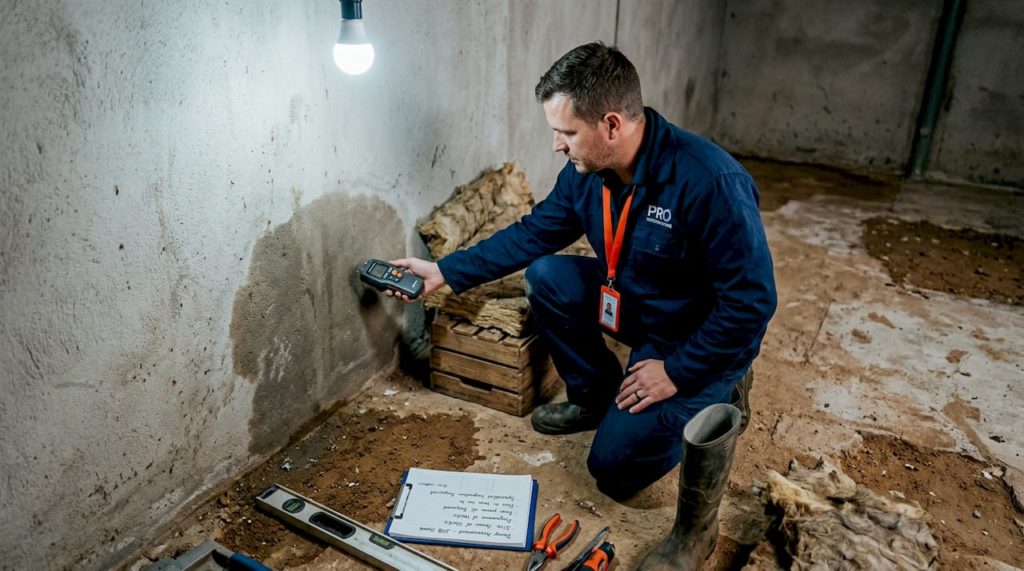
TL;DR:
- Most South African homeowners mistakenly think surface repairs suffice for damp basements, but effective waterproofing addresses underlying hydraulic pressures. Proper solutions involve systems like cavity drain membranes and external tanking tailored to the property’s age and water issues, with costs ranging significantly. Long-term durability depends on professional diagnosis, system integration, and ongoing maintenance, making expert assistance essential rather than DIY fixes.
Most South African homeowners assume a damp basement is a surface problem. Paint over it, seal a crack, throw down a dehumidifier, and call it done. It rarely is. When you start looking into what firms like basement solutions LLC actually do, you quickly realise that effective basement waterproofing is a system, not a patch. This guide breaks down the causes of basement water damage, the systems used to fix it properly, what they cost in South Africa, and how to choose the right professional for the job.
Table of Contents
- Understanding why basements need professional waterproofing
- Comparing common basement waterproofing systems in South Africa
- Budgeting for waterproofing: understanding cost factors and planning effectively
- Selecting the right basement waterproofing contractor in South Africa
- Maintaining your waterproofed basement for long-term durability
- Rethinking basement waterproofing: what most homeowners overlook
- Professional basement waterproofing solutions with Pro Waterproofing
- Frequently asked questions
Key Takeaways
| Point | Details |
|---|---|
| Professional assessment is essential | Expert evaluation identifies the root causes and best waterproofing system for your property. |
| System choice depends on property type | New-builds and existing basements require different approaches like external tanking or cavity membranes. |
| Costs vary by complexity | Budget realistically for membranes, pumps, drainage, and site conditions to avoid surprises. |
| Maintenance prolongs protection | Regular checks and upkeep prevent recurring water damage and costly repairs. |
| Choose certified contractors | Qualified professionals ensure effective, compliant waterproofing tailored to South African homes. |
Understanding why basements need professional waterproofing
Basement water problems in South Africa are far more common than most property owners expect. The combination of clay-heavy soils in Gauteng, seasonal rainfall in KwaZulu-Natal, and the rising water tables found near coastal developments creates conditions where groundwater is constantly pushing against your foundation walls. This force is called hydrostatic pressure, and it is relentless.
Basement waterproofing problems include far more than visible damp patches. Structural cracks, poor perimeter drainage, failed mortar joints, and elevated indoor humidity all work together to undermine your property over time. The consequence is not just an unpleasant smell. You are looking at mould growth that threatens respiratory health, foundation movement that drives up repair costs exponentially, and a measurable drop in property value.
The reason DIY fixes fail is not incompetence on the homeowner’s part. It is that surface treatments address the symptom rather than the source. If groundwater is pressing against a wall at a pressure equivalent to a column of water 1.5 metres tall, no paint or filler will hold for long. Professional waterproofing addresses the underlying hydraulic cause by managing how water moves around, through, and away from your structure.
Common basement water problems that require professional remediation:
- Hydrostatic pressure causing seepage through walls and floor slabs
- Hairline and structural cracks allowing water ingress at joints
- Failed drainage systems allowing water to pool against foundations
- Condensation and humidity buildup from inadequate ventilation
- Rising damp travelling upward through porous masonry
- Failed or absent tanking systems on older properties
Each of these issues needs a specific response. Treating them all with the same product is one of the most expensive mistakes a property owner can make.
Comparing common basement waterproofing systems in South Africa
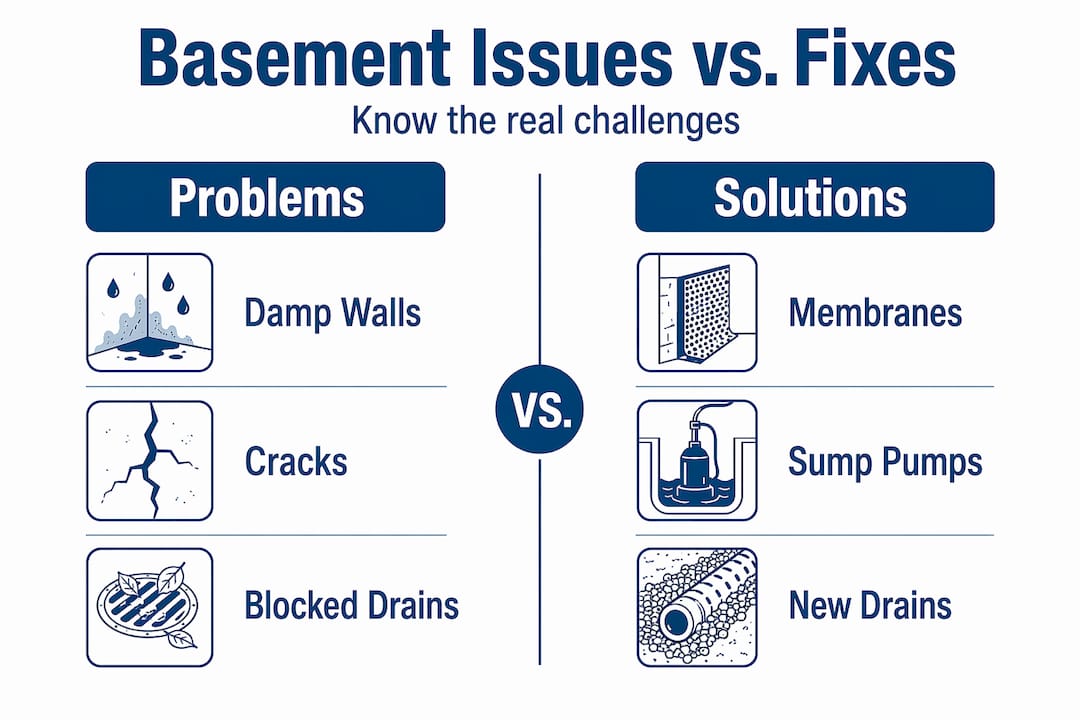
Choosing between waterproofing systems is not just a matter of budget. It is about matching the right technology to your property’s age, construction type, and the nature of the water problem. Here is how the main systems stack up.
| System | Best for | Approximate cost (per m²) | Notes |
|---|---|---|---|
| External tanking | New builds with excavation access | R400 to R800 | Applied to outside face of wall before backfilling |
| Cavity drain membrane | Existing basements, retrofit work | R600 to R1,200 | Most reliable for occupied properties |
| Crystalline waterproofing | New concrete structures | R300 to R600 | Less effective for complex ingress scenarios |
| Sump pump system | Complement to drainage | R5,000 to R15,000 (unit) | Does not replace membrane or tanking |
According to a detailed waterproofing cost guide, cavity drain membrane systems are the most reliable option for existing basements and are routinely combined with sump pump installations for active water management.
What each system actually does:
- External tanking involves applying a waterproof barrier to the outside of the foundation wall before soil is replaced. It works brilliantly on new builds but requires full excavation on existing properties, which adds considerably to cost.
- Cavity drain membranes are dimpled plastic sheets fixed to internal walls and floors that channel incoming water to a drainage channel and sump, rather than trying to stop it. Because they manage water rather than block it, they are far more forgiving of structural movement.
- Crystalline systems use chemical compounds that react with water and concrete to form crystals that block pores. They suit new builds well but struggle where cracks are active or water ingress is severe.
- Sump pumps sit in a pit at the lowest point of the drainage system and pump collected water away from the property. They are essential in high water table areas.
Pro Tip: When deciding between systems, assess whether your basement is a new build or a retrofit project first. That single factor narrows your options more than any other. External tanking without excavation is impractical; cavity membranes without adequate drainage are incomplete. Always look at the essential waterproofing methods specific to your property type before committing to a quote.
Budgeting for waterproofing: understanding cost factors and planning effectively
Budget shock is common in basement waterproofing because homeowners price individual components rather than the full system. A membrane alone costs one amount; add drainage channels, a sump pit, pump installation, and excavation where needed, and the figure changes substantially.
Cost budgeting must account for the full waterproofing stack: drainage, pumps, membrane or tanking, and site-specific factors including access difficulty and soil conditions.
Indicative cost breakdown for a 50 m² basement project in South Africa:
| Component | Estimated cost range |
|---|---|
| Cavity drain membrane (50 m²) | R30,000 to R60,000 |
| Internal drainage channel | R8,000 to R15,000 |
| Sump pit and pump installation | R5,000 to R15,000 |
| Crack injection or preparatory repairs | R3,000 to R10,000 |
| Total estimated range | R40,000 to R100,000+ |
These figures reinforce why understanding basement waterproofing as a whole-system investment matters. Skimping on drainage to save money on the membrane renders both less effective.
Steps to build a realistic waterproofing budget:
- Commission a professional site inspection before requesting any quotes
- Request itemised quotes that separate materials, labour, and drainage components
- Ask each contractor to specify the system stack they intend to install, not just a total price
- Identify whether excavation is required and cost it separately
- Plan for a contingency of at least 15% for unforeseen structural repairs uncovered during work
- Consider phasing work if the full project is financially prohibitive, starting with the highest-risk areas
“A quote without a specification is just a number. Before you commit to any waterproofing contractor, make certain the quote tells you exactly which system is going in, where, and why.”
Pro Tip: Obtaining a minimum of three itemised quotes is not just about finding the lowest price. Comparing system specifications reveals whether contractors are recommending the same solution, which tells you whether the diagnosis of your problem is consistent.
Selecting the right basement waterproofing contractor in South Africa
This is where many projects go wrong. A property owner, concerned about cost, accepts the cheapest quote from a contractor who arrives with a drum of bitumen paint and a caulking gun. Three years later, the problem is worse and the original spend is wasted.
Professional diagnosis combined with tailored waterproofing plans significantly reduces recurrence and improves long-term property protection. This is not opinion; it is what separates professional basement repair from cosmetic patching.
What to look for in a waterproofing contractor:
- Valid registration with the NHBRC (National Home Builders Registration Council) or equivalent industry body
- Specific experience with the system type your property requires
- Verifiable South African project references, not just testimonials on a website
- A written warranty covering both materials and workmanship
- Willingness to conduct a thorough site inspection before quoting
- Insurance covering liability and workmanship defects
A practical selection process:
- Shortlist at least three contractors with demonstrated local experience
- Request site visits from each, not just desktop quotes
- Review written specifications and compare system approaches, not just totals
- Check waterproofing regulations relevant to your municipality and confirm the contractor is compliant
- Ask specifically about their process for identifying and addressing structural cracks before waterproofing begins
- Confirm what happens if the waterproofing fails within the warranty period
Pro Tip: Be particularly cautious of contractors who offer a fixed quote before visiting the site. Proper waterproofing cannot be priced accurately without assessing the actual water table, soil conditions, and construction type in person.
Maintaining your waterproofed basement for long-term durability
Waterproofing is not a once-off installation. It is an ongoing commitment. The materials used are durable, but the environment they work in changes constantly. Soil shifts, drainage pipes block, sump pumps age, and new cracks can form from structural settlement or seismic activity.
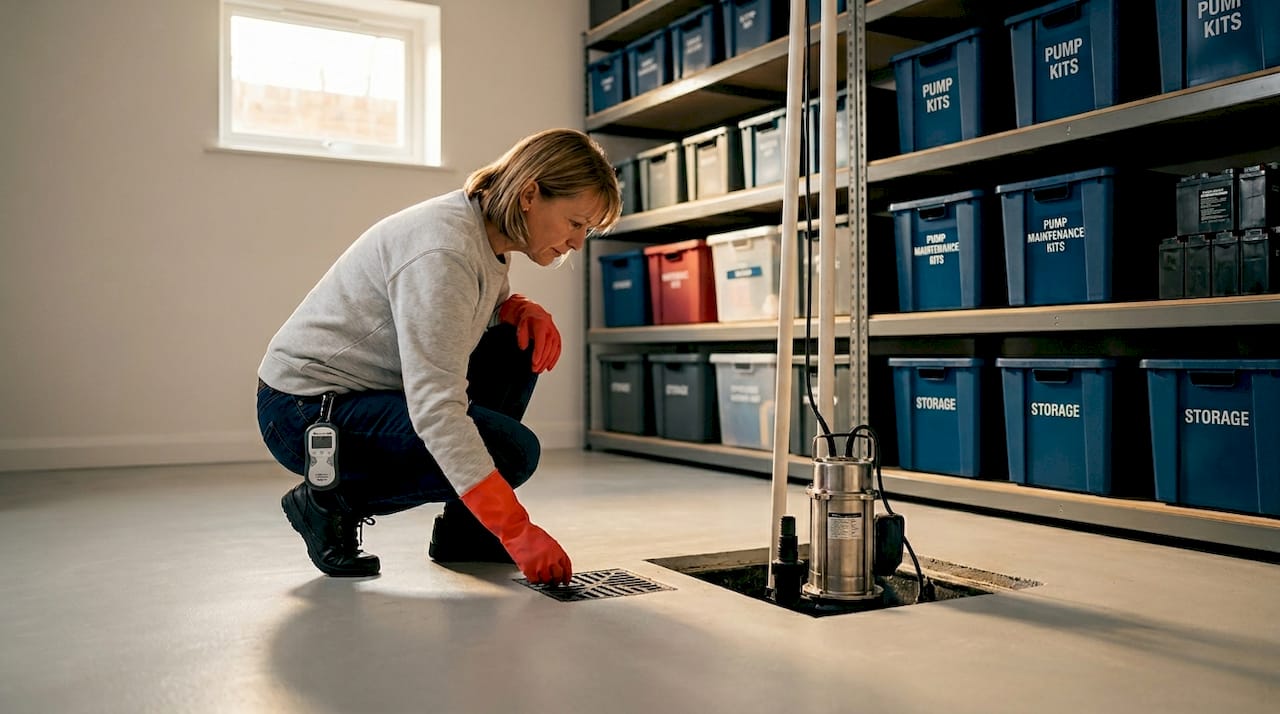
Regular basement checks and proper drainage maintenance sustain waterproofing integrity and prevent costly damage from escalating unnoticed.
Annual maintenance checklist for South African homeowners:
- Inspect all basement walls and floor slabs for new damp patches, efflorescence (white salt deposits), or cracks after each rainy season
- Clear all exterior drainage channels, gutters, and downpipes before the rainy season begins
- Test your sump pump by pouring water into the sump pit and confirming the float activates correctly
- Check that drainage channels inside the basement are clear of debris and sediment
- Inspect any exposed membrane sections for tears, lifting, or gaps at wall-floor junctions
Ongoing vigilance habits that protect your investment:
- Address any plumbing leaks above the basement immediately; they add moisture load the waterproofing system was not designed to carry
- Monitor humidity levels inside the basement with an inexpensive hygrometer; consistent readings above 70% relative humidity indicate a problem
- Keep vegetation and garden beds away from foundation walls; roots penetrate membranes and trap moisture against masonry
- After any significant structural work on your property, inspect the basement for knock-on cracking
Pro Tip: Schedule a professional waterproofing inspection every three to five years, even if no visible problems exist. Many failures begin as minor issues that are invisible from inside the basement but detectable during a proper external and drainage survey. See waterproof basement maintenance tips for Gauteng-specific guidance.
Rethinking basement waterproofing: what most homeowners overlook
Here is the insight that most waterproofing articles skip entirely. When homeowners see damp walls, they instinctively look at the wall. The real question is almost always about where the water comes from, how much of it there is, and how quickly the ground surrounding the basement drains after rainfall. The wall is just where the problem becomes visible.
The distinction between a new-build and a retrofit waterproofing project is not a minor technical detail. It fundamentally determines which system can physically be installed. Selecting waterproofing methods based on whether a property is a new build or an existing structure is the single most important decision in the whole process, and it is one that many homeowners delegate entirely to a contractor without understanding it themselves.
This matters because an uninformed client cannot evaluate the advice they receive. If a contractor recommends external tanking for an occupied existing property without mentioning the full excavation requirement, you need to know enough to ask the right questions.
The other gap we see repeatedly is the failure to think about drainage as a system. A cavity membrane channels water; a drainage channel moves it; a sump pit collects it; a pump expels it. Every one of these components must be sized and installed correctly relative to the others. Installing a high-specification membrane against a blocked or undersized drainage channel achieves almost nothing. The system is only as good as its weakest component.
Our strong view is that waterproofing specialists who work alongside structural engineers, rather than in isolation, consistently deliver better long-term outcomes. The structural and hydraulic elements of a basement are inseparable, and treating them as separate problems is why so many properties face repeated waterproofing failures. Find basement waterproofing insights that address both aspects together.
Professional basement waterproofing solutions with Pro Waterproofing
If what you have read here has made you realise your basement deserves a proper assessment rather than another temporary fix, you are in the right place.
Pro Waterproofing specialises in basement and foundation waterproofing for residential, commercial, and industrial properties across South Africa. Whether you need external tanking on a new build, a cavity drain membrane retrofit on an existing property, sump pump installation, or crawl space solutions, the team brings direct experience with South African soil conditions, seasonal rainfall patterns, and local construction standards. Every project begins with a free site assessment and a detailed, itemised quote so you understand exactly what is going in and why. Partnering with Pro Waterproofing means working with foundation repair specialists who will not recommend a system until they have properly diagnosed the cause.
Frequently asked questions
What is the most reliable waterproofing method for existing basements in South Africa?
Cavity drain membrane systems combined with sump pumps are considered the most reliable option for existing basements, as they manage water ingress rather than attempting to block it through ageing or potentially cracked masonry.
How much does basement waterproofing typically cost for a 50 m² South African property?
Costs range from R40,000 to over R100,000 for a 50 m² basement depending on the system stack selected, site accessibility, water table severity, and whether excavation is required.
Why should I choose a professional for basement waterproofing rather than DIY?
Professional diagnosis and tailored plans significantly reduce recurrence because professionals address the hydraulic cause rather than the visible symptom, which DIY surface treatments cannot do reliably.
How often should I maintain my waterproofed basement to ensure effectiveness?
Carry out your own seasonal basement checks after each rainy season and schedule a professional inspection every three to five years to identify hidden deterioration before it becomes a costly problem.
Are sump pumps alone sufficient for basement waterproofing?
No. Sump pumps complement drainage systems by removing collected water, but without a membrane or tanking system to manage ingress, a pump alone cannot prevent water from entering the structure.