

TL;DR:
- Interior basement waterproofing typically costs between £3,000 and £8,000, based on perimeter footage and water severity. Exterior excavation is more expensive, ranging from £8,000 to over £30,000, but offers direct water source prevention; interior systems are more cost-effective for moderate issues. Proper planning, multiple quotes, and including reintegration costs are essential to avoiding unexpected expenses and ensuring long-term effectiveness.
Interior basement waterproofing cost is the total expenditure involved in protecting a basement from water intrusion using internal drainage systems such as perimeter drains and sump pumps. For most standard residential properties, this work runs from approximately £2,500 to £8,000, though the final figure shifts considerably based on basement size, the severity of water problems, and the specific methods required. Common approaches include interior French drains, crack injection repairs, and sump pump installations. This guide breaks down every major cost driver, compares interior and exterior options, and gives you the tools to budget confidently and choose the right contractor.
What factors most influence interior basement waterproofing cost?
Interior waterproofing pricing is not calculated by floor area alone. Linear perimeter footage is the more accurate cost indicator because the work focuses on walls and wall-to-floor joints, not the open floor space. A 1,000-square-foot basement with 130 linear feet of perimeter typically costs between £4,500 and £11,000 for a full perimeter system. That distinction matters when you are comparing quotes, because a contractor pricing by square footage may be using a less precise method.
Several factors push that number up or down:
- Basement size. More linear footage means more drain channel, more concrete cutting, and more labour. Larger basements cost more, but the per-foot rate can drop slightly on bigger jobs.
- Severity of water intrusion. Active hydrostatic pressure through walls costs more to address than minor seasonal seepage through a single crack. The worse the problem, the more extensive the system required.
- Finished versus unfinished basement. An unfinished basement is straightforward to work in. A finished basement requires removing drywall, flooring, and skirting boards before work begins, then reinstating them afterwards.
- Waterproofing method. Crack injection is the cheapest targeted fix. A full perimeter drain with sump pump is the most thorough and most expensive solution.
- Additional components. Battery backup sump pumps and vapour barriers add cost upfront but reduce long-term risk significantly.
- Location and labour rates. Urban areas and regions with higher living costs command higher contractor rates. South African properties in Cape Town or Johannesburg will see different pricing than rural areas.
Pro Tip: Ask every contractor to quote by linear foot, not by job. It makes quotes directly comparable and reveals whether a low total bid is simply covering fewer metres of drain channel.
How do interior and exterior basement waterproofing costs compare?
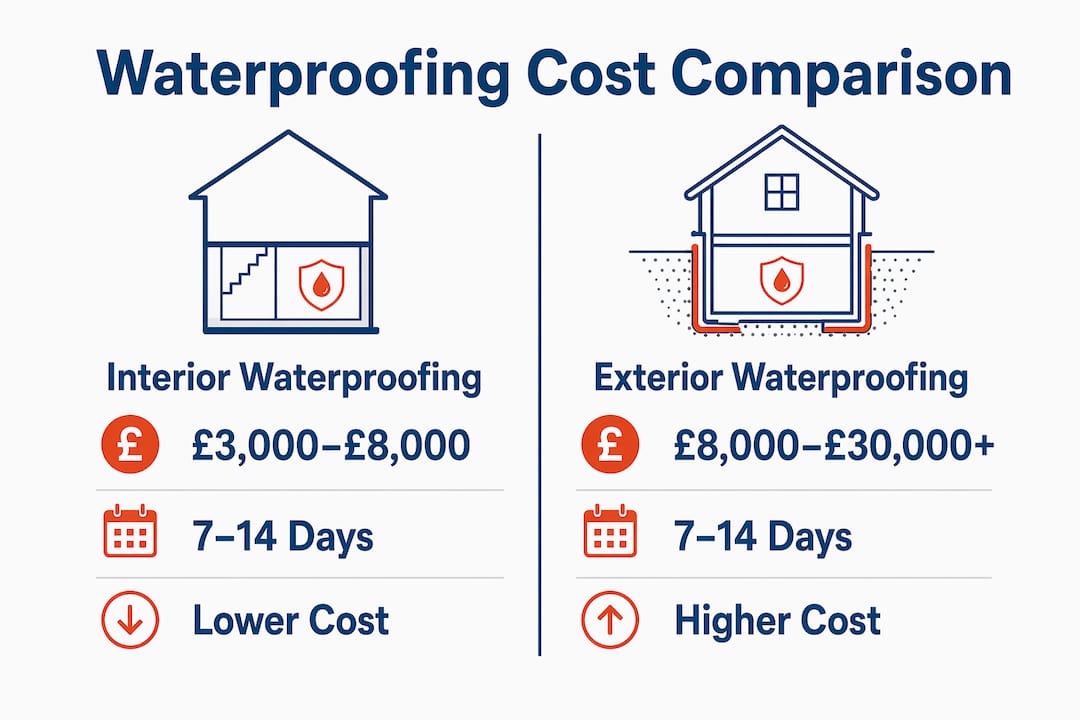
Interior waterproofing and exterior waterproofing solve the same problem from opposite directions, and the cost difference between them is substantial. Interior systems manage water once it enters the wall assembly, directing it to a sump pit for removal. Exterior systems stop water at the source by excavating around the foundation and applying waterproof membranes to the outer wall face.
Exterior excavation projects range from £8,000 to £30,000 or more and take 7–14 days to complete. Interior waterproofing typically runs £3,000–£8,000 and is finished in 1–3 days with far less disruption to your property. That gap exists because exterior work requires heavy machinery, significant labour, and full reinstatement of landscaping, driveways, or paving.
| Factor | Interior Waterproofing | Exterior Waterproofing |
|---|---|---|
| Typical cost range | £3,000–£8,000 | £8,000–£30,000+ |
| Project duration | 1–3 days | 7–14 days |
| Disruption level | Low (internal only) | High (excavation required) |
| Stops water at source | No | Yes |
| Best for | Ongoing water management | Severe structural water ingress |
| Landscaping impact | None | Significant |
Exterior waterproofing is the correct choice when foundation walls show structural cracking, when water is entering through the wall face rather than the floor joint, or when a property has a history of repeated interior system failures. For most residential basements with moderate water intrusion, interior systems deliver reliable results at a fraction of the cost.
Pro Tip: If a contractor recommends exterior excavation without first assessing whether interior drainage would suffice, get a second opinion. Many properties are over-specified, and homeowners pay for excavation they do not need.
What does each interior waterproofing component cost?
Understanding the individual components helps you read a contractor’s quote critically rather than accepting a single lump-sum figure.
Interior french drains and sump pump systems
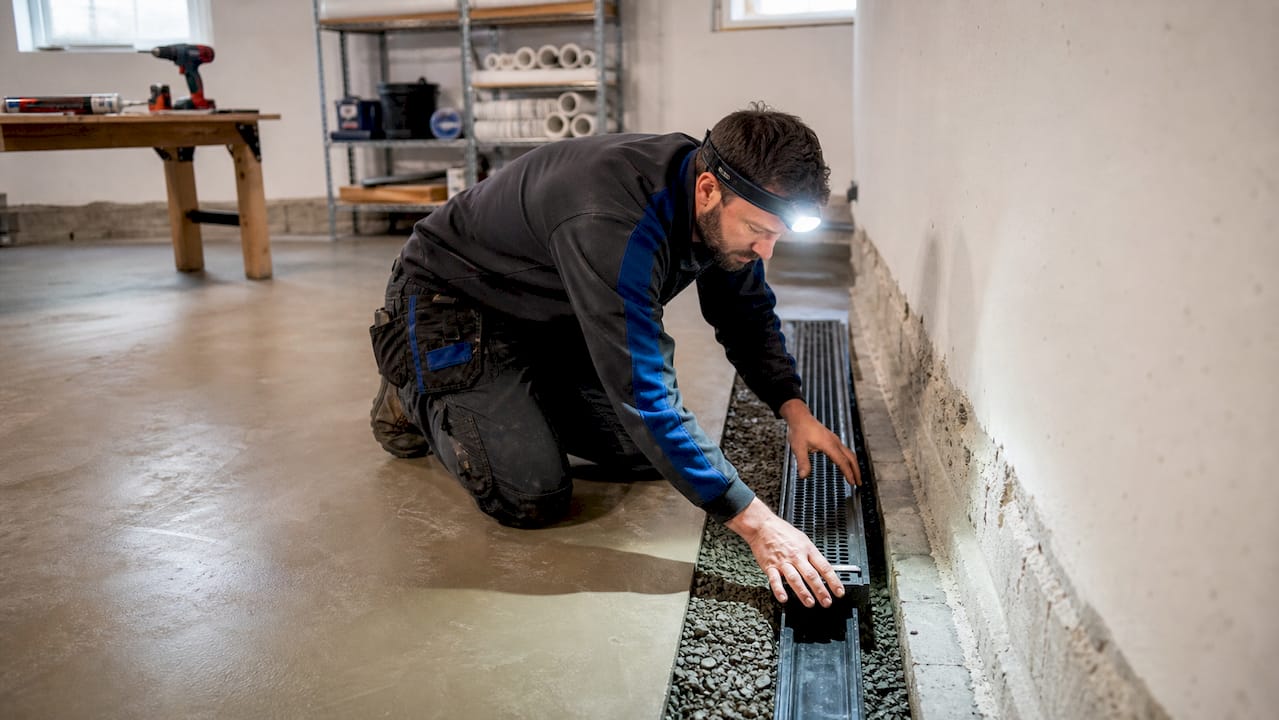
A full interior perimeter drain system, often called a French drain or channel drain, costs approximately £60–£120 per linear foot installed. This includes concrete cutting, drain channel installation, gravel backfill, and concrete reinstatement. Sump pump installation adds £800–£2,500 depending on pump quality and pit depth. Battery backup units and alarm systems add a further £400–£1,200 to that figure, but they are worth every pound. A battery-backed sump pump prevents flooding during power outages, which is precisely when heavy rain is most likely to overwhelm a system.
Crack injection repairs
Epoxy and polyurethane crack injections are targeted repairs for isolated wall cracks. Each crack costs £250–£1,200 to treat, depending on crack length, depth, and whether it is actively leaking. A project addressing two or three cracks can run £500–£2,500 in total. Crack injection is not a substitute for a full drainage system where water intrusion is widespread, but it is an effective and affordable fix for isolated structural cracks.
Waterproof coatings and vapour barriers
Interior waterproof paints and membrane coatings range from £1,500 to £4,000 for a standard basement. These products reduce moisture vapour transmission through walls but are not designed to handle active water flow. Vapour barriers, typically heavy-duty polyethylene sheeting fixed to walls before boarding, sit at the lower end of that range and are often included in full system quotes.
Finished basement restoration
This is the cost most homeowners overlook. Finish restoration after waterproofing adds £2,000–£6,000 to the total project cost. Removing and replacing drywall, flooring, skirting boards, and insulation is labour-intensive work that most waterproofing contractors do not include in their base quote. Always ask explicitly whether reinstatement is included, and if not, budget for it separately.
| Component | Typical Cost Range |
|---|---|
| Interior perimeter drain | £60–£120 per linear foot |
| Sump pump installation | £800–£2,500 |
| Battery backup sump pump | £400–£1,200 |
| Crack injection (per crack) | £250–£1,200 |
| Waterproof coatings/vapour barriers | £1,500–£4,000 |
| Finished basement restoration | £2,000–£6,000 |
How can you manage and reduce waterproofing costs effectively?
Reducing the overall spend on basement waterproofing starts before you call a contractor. Several preparatory steps can lower the scope of work required and prevent you from paying for solutions you do not need.
- Address exterior drainage first. Grading and drainage fixes cost £500–£2,000 and can resolve minor water intrusion entirely. Adjusting soil grade to slope away from the foundation by 150mm over 3 metres, and fitting downspout extensions to carry roof water at least 1.8 metres from the wall, are the two most cost-effective first steps any homeowner can take. Read more about best practice preparation before committing to interior work.
- Get at least three written quotes. Three detailed written quotes specifying methods, materials, and warranty terms are the minimum before signing anything. Contracts lacking this detail are a leading cause of post-installation disputes and repeat water problems.
- Prioritise engineering-backed solutions. Choosing the lowest bid without scrutinising the method is a false economy. Unengineered solutions frequently fail within 5–7 years, leaving you paying twice. Knowing how to choose a contractor is as important as knowing the cost. You can also review contractor reputation checks before signing any agreement.
- Plan for finished-area disruption costs. If your basement is finished, get a separate quote from a builder for reinstatement work. Do not assume the waterproofing contractor will cover it.
- Use low-cost preventative measures now. Cleaning gutters twice a year, fitting gutter guards, and extending downspouts costs under £200 and can prevent minor seepage from becoming a £6,000 problem.
Pro Tip: The single most common budgeting mistake is ignoring reinstatement costs. Ask every contractor: “Does your quote include removing and replacing my finished walls and floor?” If the answer is no, add £2,000–£6,000 to your mental budget before comparing prices.
Key takeaways
Interior basement waterproofing cost depends primarily on perimeter footage, water severity, and whether finished areas require reinstatement after installation.
| Point | Details |
|---|---|
| Cost is perimeter-based | Pricing runs £60–£120 per linear foot, not by floor area. |
| Interior systems cost far less | Interior work runs £3,000–£8,000 versus £8,000–£30,000+ for exterior excavation. |
| Restoration adds thousands | Finished basement reinstatement adds £2,000–£6,000 and is rarely included in base quotes. |
| Exterior prep reduces scope | Grading and drainage fixes at £500–£2,000 can eliminate minor intrusion before waterproofing begins. |
| Three quotes is the minimum | Written quotes specifying method, materials, and warranty protect you from disputes and poor results. |
Why i think most homeowners underprepare for this cost
Most clients I speak with arrive with a number in their head that covers only the waterproofing system itself. They have not factored in sump pump upgrades, battery backups, or the cost of putting their finished basement back together. When those figures land in the final invoice, the shock is real.
The other pattern I see repeatedly is homeowners choosing the cheapest contractor and discovering within a few years that the system was never properly engineered for their specific water table or soil conditions. A perimeter drain installed without proper gradient, or a sump pump undersized for the inflow rate, will fail. The repair bill is always higher than the saving made on the original quote.
My honest recommendation is to treat waterproofing as a structural investment, not a maintenance job. Budget for the full system, including backup power for the sump pump and reinstatement of any finished areas. Review the waterproofing steps in detail before your first contractor meeting so you can ask informed questions. In 2026, with material and labour costs continuing to rise, the gap between a properly specified system and a cheap one is wider than ever. The properties I see with dry, problem-free basements are almost always the ones where the owner invested properly the first time.
— Eben
Get an accurate quote from Prowaterproofing
Prowaterproofing specialises in interior basement waterproofing solutions for residential, commercial, and industrial properties across South Africa. Every assessment starts with understanding your specific water problem, not with a standard package price. The team provides detailed written quotes covering method, materials, and warranty so you know exactly what you are paying for and why. Whether you are dealing with active seepage, hydrostatic pressure, or a finished basement that needs careful handling, contact Prowaterproofing for a personalised assessment and quote tailored to your property and budget.
FAQ
What is the average cost to waterproof a basement interior?
Interior basement waterproofing costs typically range from £3,000 to £8,000 for a standard residential property, calculated at approximately £60–£120 per linear foot of perimeter. The final figure depends on basement size, water severity, and whether finished areas require reinstatement.
Is interior or exterior basement waterproofing better value?
Interior waterproofing delivers reliable water management at significantly lower cost for most residential basements. Exterior excavation is necessary only when structural wall damage or severe water ingress makes an interior system insufficient.
What hidden costs should i budget for?
Finished basement restoration is the most commonly overlooked cost, adding £2,000–£6,000 for removing and replacing drywall, flooring, and skirting boards. Battery backup sump pumps add a further £400–£1,200 and are rarely included in base quotes.
How long does interior basement waterproofing last?
A properly engineered interior drainage system with a quality sump pump typically lasts 20–30 years with routine maintenance. Systems installed without proper engineering or undersized for the water load often fail within 5–7 years.
Can i reduce waterproofing costs by doing some work myself?
Exterior grading, downspout extensions, and gutter cleaning are DIY-friendly tasks costing under £200 that can reduce or eliminate minor water intrusion. Interior drainage systems and crack injections require professional installation to be effective and to maintain any warranty.