
TL;DR:
- A basement sump system uses an electric pump to remove groundwater and prevent flooding. It works with French drains to actively eject water and requires proper sizing and maintenance, including a check valve and annual testing. Properly paired systems protect homes from most basement water issues, especially groundwater seepage.
A basement sump is an electric pump system installed in a pit within your basement floor that automatically removes accumulated groundwater to protect your home from flooding and moisture damage. The industry term is a sump pump system, and it is the most direct mechanical defence against water intrusion in any below-ground space. Despite 14.7 million owner-occupied homes reporting basement dampness in the last 12 months, only 26% have a sump pump installed. That gap represents an enormous number of properties at preventable risk. Brands like Zoeller manufacture both submersible and pedestal pump types, and understanding the difference between them is the first step to choosing the right system.
How does a basement sump system work?
A sump pump system has five core components: the sump pit, the float switch, the pump motor, the impeller, and the discharge pipe. Each part has a specific job, and a failure in any one of them stops the whole system.
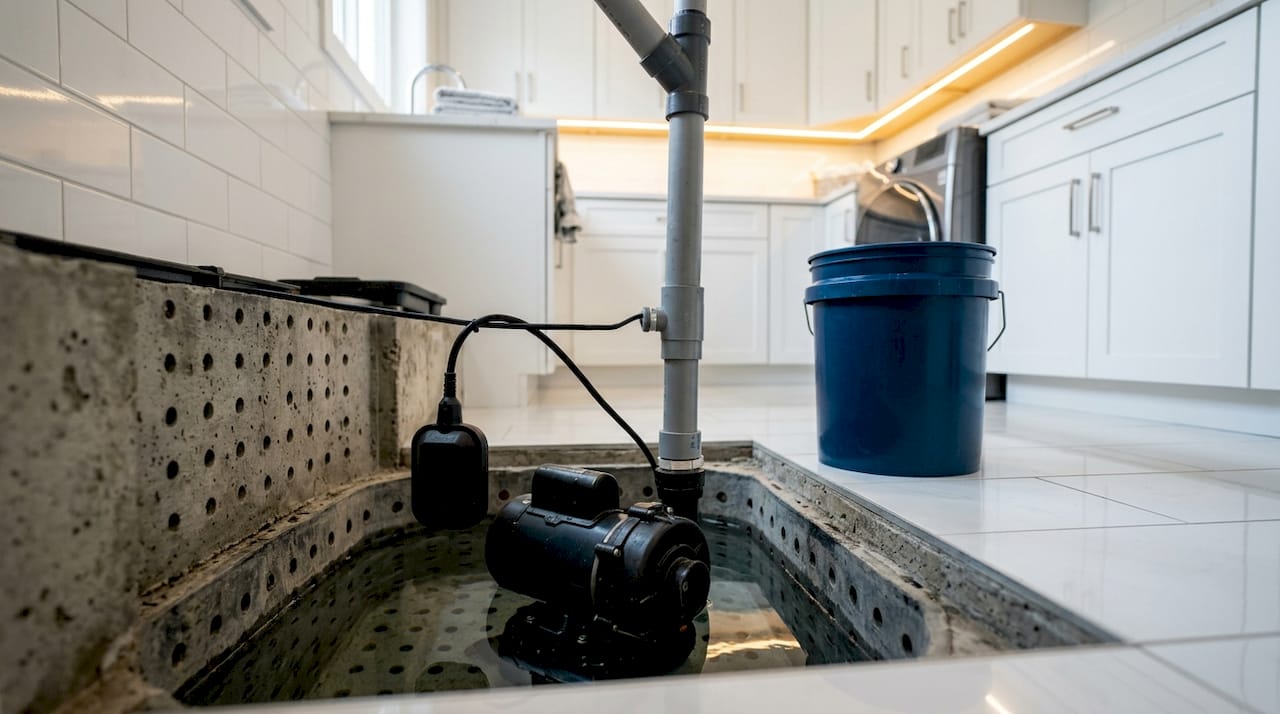
The sump pit is a hole dug into the lowest point of your basement floor, typically lined with a perforated basin. Groundwater seeps in through the perforations or drains in from a connected perimeter drain. When the water level rises, the float switch triggers the pump motor. The motor spins an impeller, which forces water up through the discharge pipe and out of the building, usually to a storm drain or a point well away from the foundation.
Submersible pumps sit inside the pit, fully submerged during operation. They run quieter and handle debris-laden water better than their counterpart. Pedestal pumps mount the motor above the pit on a vertical shaft, keeping the motor dry. Pedestal units are easier to service but noisier and less suited to pits with heavy sediment. For most South African homeowners dealing with seasonal groundwater surges, a submersible unit is the more practical choice.
The check valve is a component that many homeowners overlook entirely. Fitting it within 12 inches of the pump outlet stops discharged water from flowing back into the pit when the pump switches off. Without it, the pump restarts almost immediately, wearing out the motor far sooner than it should.
- Sump pit: collects groundwater passively
- Float switch: triggers the pump at a set water level
- Impeller: moves water up the discharge pipe
- Check valve: prevents backflow and unnecessary cycling
- Discharge pipe: carries water away from the foundation
Pro Tip: Choose a sump pit with a diameter of at least 24 inches. A larger pit diameter holds more water before the float switch triggers, reducing short-cycling and extending motor life significantly compared to the standard 18-inch pit.
What type of sump pump is best for your basement?
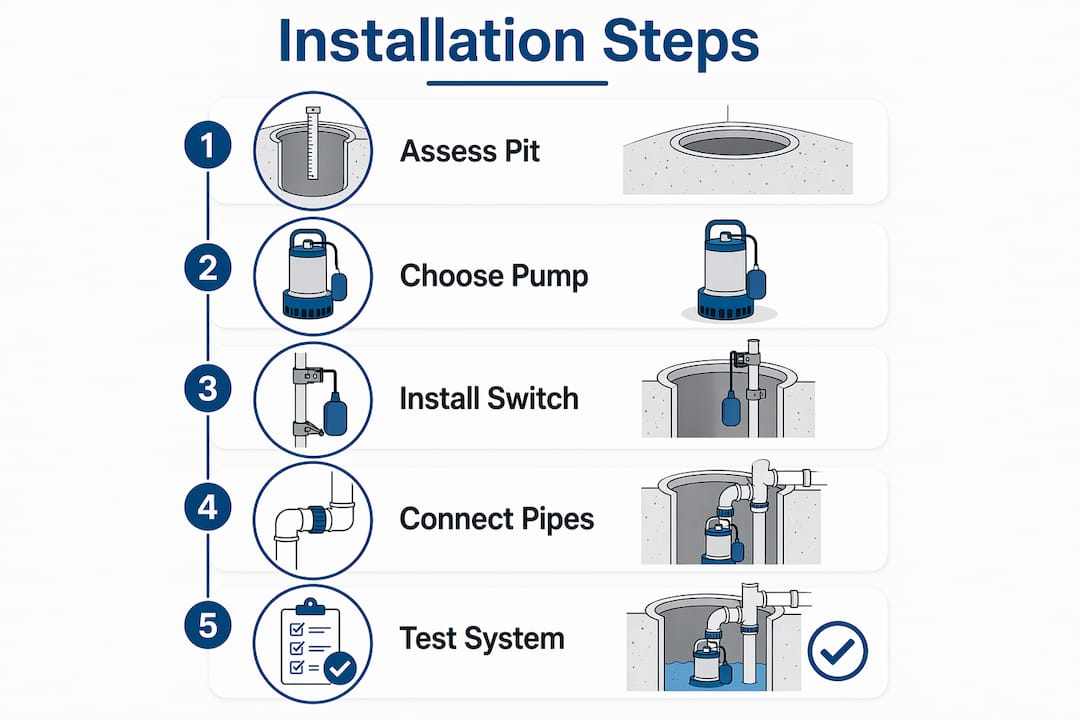
Choosing the right pump comes down to three factors: the volume of water your basement receives, the vertical distance the pump must push water, and whether you need a backup system for power cuts.
Horsepower ratings range from 1/4 HP for lightly affected basements up to 3/4 HP for properties with serious groundwater pressure. The recommended sizing for most residential basements is 1/2 HP, which delivers a flow rate of 3,500–5,000 gallons per hour at a 10-foot head. That covers moderate to heavy water volumes without over-specifying the motor.
| Pump type | HP rating | Flow rate (GPH at 10 ft) | Best for | Drawback |
|---|---|---|---|---|
| Pedestal | 1/4–1/3 HP | 1,500–2,500 | Light seepage, tight pits | Noisy, less debris-tolerant |
| Submersible | 1/3–1/2 HP | 2,500–4,500 | Most residential basements | Harder to service |
| Heavy-duty submersible | 3/4 HP | 5,000+ | High water tables, large basements | Higher cost |
| Battery backup | Varies | 1,000–2,000 | Power outage protection | Supplement only, not primary |
Battery backup units deserve particular attention. A power cut during a storm is precisely when your primary pump is most needed. A dedicated battery backup, or a water-powered backup connected to your mains supply, keeps the pit draining even when the electricity fails. Smart monitoring controls, available on units from brands like Wayne and Liberty Pumps, send alerts to your phone when the pump activates or the battery runs low. That kind of visibility is worth the additional cost.
- Match HP to your typical water volume, not your worst-case scenario
- Calculate discharge pipe length before buying; longer runs reduce effective flow rate
- Always install a battery backup in areas prone to storm-related power outages
- Check that the pump’s discharge port diameter matches your existing pipework
How do sump systems and French drains work together?
French drains and sump pumps are complementary systems, not alternatives. A French drain is a passive system: a perforated pipe buried in gravel that collects water and channels it by gravity toward a collection point. A sump pump is an active system: it physically ejects that collected water out of the building. Neither works as well without the other.
Hydrostatic pressure is the force that pushes groundwater through basement walls and floors. A French drain relieves that pressure by intercepting water before it builds up. The sump pit then receives the drained water and pumps it away. Professional contractors install French drains feeding directly into sump pits with battery backups as the industry standard for serious basement waterproofing.
Interior drainage systems have evolved considerably. Products like WaterGuard, GrateDrain, and Fast Track offer modular channel systems installed along the basement perimeter at floor level. They intercept water coming through wall-floor joints before it spreads across the floor. GrateDrain’s removable grate covers allow inspection and flushing without excavation, which reduces long-term maintenance costs and disruption. You can read more about basement drainage solutions that combine these approaches effectively.
Pro Tip: If your basement has a monolithic slab foundation, avoid cutting through the slab without professional advice. Specific installation methods like baseboard drainage systems exist precisely for this foundation type, preventing structural damage during installation.
- French drains: passive, gravity-fed, relieve hydrostatic pressure
- Sump pumps: active, electrically powered, eject collected water
- Interior channel systems: intercept wall-floor joint seepage before it spreads
- Modular systems like GrateDrain: allow maintenance without excavation
What does sump pump installation and maintenance cost?
Professional interior drainage systems like WaterGuard and GrateDrain cost between £4,500 and £13,000 installed, depending on basement size, foundation type, and the complexity of the drainage layout. That figure covers the channel system, the sump pit, and the pump itself. A standalone sump pump installation without interior drainage runs considerably less, though the exact figure varies by contractor and region.
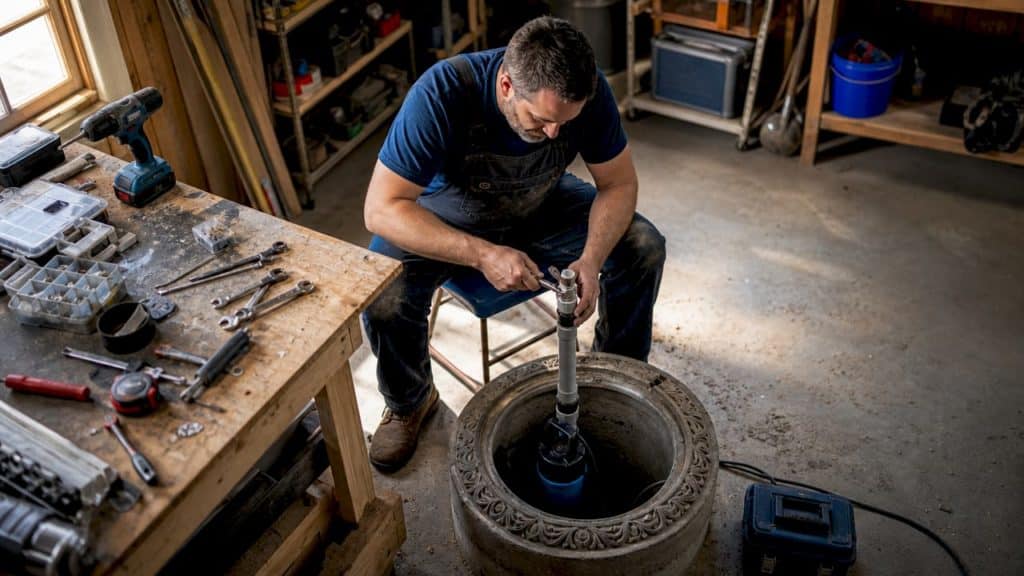
DIY installation is possible for straightforward pedestal pump replacements in an existing pit. Cutting a new pit into a concrete floor, however, requires a rotary hammer drill, proper pit liner installation, and knowledge of your local drainage codes. Most homeowners are better served by a qualified contractor for new installations, particularly where foundation type complicates the work.
Maintenance follows a clear annual routine:
- Pour 5 gallons of water into the pit to confirm the float switch triggers and the pump activates and discharges correctly.
- Inspect the check valve for signs of wear or leakage; replace it if it fails to hold back water after the pump stops.
- Remove the pump and clean the inlet screen of any sediment or debris that has accumulated.
- Flush the discharge pipe to clear any blockages, particularly after heavy rainfall seasons.
- Test the battery backup by disconnecting the primary power supply and repeating the water-pour test.
Pro Tip: Annual testing with 5 gallons of water is the single most reliable way to confirm your system works before you need it. Do this in early spring, before the wet season, not during a flood event.
For guidance on broader basement waterproofing techniques, combining sump systems with wall treatments and exterior drainage gives the most complete protection. You can also explore commercial drain maintenance practices for insights on keeping drainage systems clear over the long term.
Key takeaways
A sump pump system is the most effective active defence against basement flooding, and it works best when paired with a French drain and a battery backup.
| Point | Details |
|---|---|
| Define your risk accurately | FEMA flood maps miss groundwater seepage, which causes the majority of basement flooding events. |
| Size the pit correctly | A 24-inch pit diameter reduces short-cycling and extends motor life compared to an 18-inch pit. |
| Pair systems for best results | French drains and sump pumps work together; neither provides complete protection alone. |
| Install a check valve correctly | Fit the check valve within 12 inches of the pump outlet to prevent backflow and unnecessary cycling. |
| Test annually before wet season | Pour 5 gallons into the pit each spring to confirm activation, discharge, and battery backup function. |
What I have learned from watching homeowners get this wrong
Homeowners consistently underestimate two things: the size of the pit they need, and the importance of the check valve. I have seen brand-new pump installations fail within two years because the contractor used a standard 18-inch pit in a basement with significant groundwater flow. The pump short-cycled constantly, the motor burned out, and the homeowner assumed the pump was faulty. The pit was the problem.
The other mistake I see repeatedly is treating a sump pump as a standalone solution. A pump without a French drain is managing a symptom, not the cause. Hydrostatic pressure will find another path if you only address the lowest collection point. The combination of perimeter drainage feeding a properly sized pit with a battery backup is not over-engineering. It is the correct solution for any basement with recurring moisture.
FEMA flood maps track surface water flooding but miss groundwater seepage entirely, which accounts for the vast majority of basement flooding events. If your property is not in a designated flood zone, that does not mean your basement is safe. Groundwater responds to soil saturation, not flood zone boundaries. Treat your basement’s water risk independently of what any map tells you.
The homeowners who get this right are the ones who invest in a properly sized system, test it every spring, and pair it with interior drainage. The ones who struggle are the ones who install the cheapest pump available, skip the check valve, and wait for a problem before acting.
— Eben
Professional basement waterproofing from Prowaterproofing
Prowaterproofing works with residential and commercial property owners across South Africa to design and install complete basement water management systems.

Whether your basement needs a new sump pit, an interior drainage channel, or a full French drain and pump combination, Prowaterproofing’s team assesses your specific foundation type and water conditions before recommending a solution. Every installation is designed to handle your property’s actual groundwater load, not a generic specification. Visit Prowaterproofing to request a quote or speak with a waterproofing specialist about your basement. You can also read more about preventing basement water damage to understand the full range of protective measures available.
FAQ
What is a basement sump system?
A basement sump system is an electric pump installed in a pit within the basement floor that automatically removes accumulated groundwater. It activates via a float switch when water reaches a set level and discharges it away from the building.
How does a sump pump work with a French drain?
A French drain collects groundwater passively through a perforated pipe and channels it to the sump pit. The sump pump then actively ejects that water out of the building, making the two systems most effective when used together.
How often should I test my sump pump?
Test your sump pump at least once a year by pouring 5 gallons of water into the pit to confirm the float switch triggers and the pump discharges correctly. Early spring, before the wet season, is the best time to do this.
What size sump pump do I need for my basement?
Most residential basements require a 1/2 HP submersible pump with a flow rate of 3,500–5,000 gallons per hour at a 10-foot head. Larger basements or those with high water tables may need a 3/4 HP unit.
Are sump pumps effective against all types of basement flooding?
Sump pumps are highly effective against groundwater seepage and rising water tables, which cause the majority of basement flooding events. They are less effective against surface water flooding from burst pipes or direct rainfall entry, which requires separate waterproofing measures.