
TL;DR:
- Waterproof basement flooring options include SPC luxury vinyl plank, porcelain tile, epoxy coatings, rubber, and waterproof carpet tiles. Proper moisture testing and subfloor preparation are essential to prevent damage and ensure the longevity of these materials in wet environments. Addressing the basement’s moisture history and waterproofing the slab are critical before selecting and installing any flooring.
Waterproof basement flooring options are materials engineered to resist moisture damage in below-grade environments, where concrete slabs constantly emit vapour and flooding risk is real. The wrong floor in a basement does not just look bad. It warps, grows mould, and costs far more to replace than it did to install. Moisture vapour transmission through concrete slabs is the primary cause of basement floor damage, which means successful waterproof flooring requires moisture management underneath the surface, not just on top. Luxury vinyl plank with a stone plastic composite core, porcelain tile, and epoxy coatings are the three materials that consistently outperform everything else in below-grade conditions. Prowaterproofing recommends starting with a clear picture of your basement’s moisture history before committing to any material.
1. Why luxury vinyl plank with SPC core leads all waterproof basement flooring options
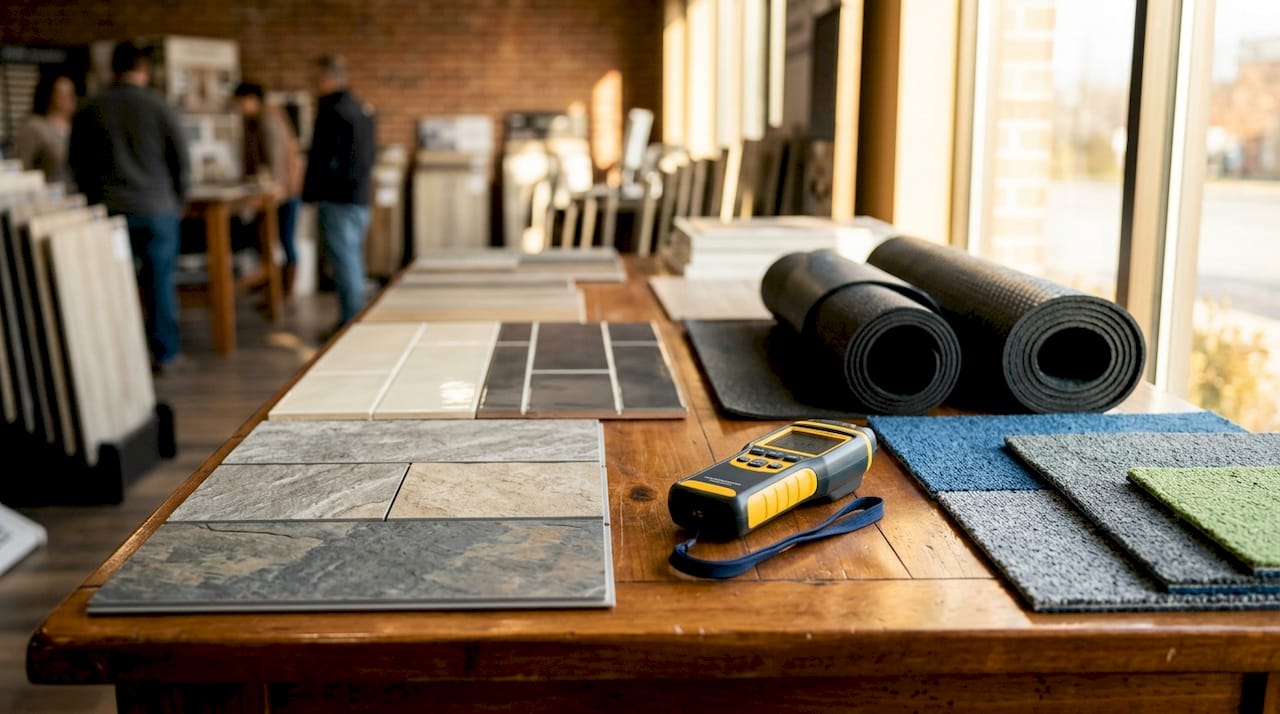
Luxury vinyl plank with a stone plastic composite core is the single best waterproof basement flooring choice for most homeowners. The rigid SPC core is 100% waterproof and dimensionally stable, meaning it does not expand or contract with humidity the way wood-based products do. It earns a durability rating of 9 out of 10 and installs as a floating floor, which makes it a genuine DIY option.
The key advantages of SPC luxury vinyl plank are:
- 100% waterproof core and surface. No water penetrates the plank itself.
- Floating installation. No glue required, which means no moisture-suppressing primer needed for most installs.
- Installed cost of $5.50–$11.00 per square foot, making it one of the most affordable professional-grade options.
- Wide range of finishes. Wood and stone looks are both available at this price point.
- Comfort underfoot. An attached underlayment adds cushioning and reduces the cold, hard feel of concrete.
Wood plastic composite, or WPC, is a softer variation of the same product. WPC offers more cushioning underfoot but is slightly less dimensionally stable than SPC in high-humidity conditions. For most basements, SPC is the better choice. For a finished living space where comfort is the priority and moisture is well controlled, WPC is worth considering.
Pro Tip: Check that your SPC luxury vinyl plank carries a waterproof warranty, not just a water-resistant rating. These are not the same thing, and the distinction matters if you ever make a warranty claim.
Engineered hardwood is sometimes marketed as suitable for basements, but solid hardwood and traditional laminate are poor choices below grade. Both absorb moisture, warp, and harbour mould when humidity rises.
2. Porcelain tile: the best waterproof flooring for wet or flood-prone basements
Porcelain tile is the only flooring material that earns a perfect 10 out of 10 durability rating for basement use. It is completely impervious to water, mould, and staining, which makes it the correct choice for basements with a flooding history. Installed costs range from $12.00 to $27.00 per square foot, placing it at the higher end of the market, but its lifespan justifies the investment.
Porcelain tile suits basement bathrooms, laundry rooms, and workshops particularly well. These are wet areas where even a 100% waterproof plank floor creates risk, because water can seep between planks during severe flooding. Porcelain, when correctly grouted and sealed, forms a genuinely monolithic surface.
The trade-offs are real. Porcelain is cold, hard underfoot, and unforgiving if you drop anything. Installation requires a professional tiler in most cases, which adds to the cost. Radiant underfloor heating solves the cold problem but adds further expense.
Pro Tip: Choose a porcelain tile with a slip-resistance rating of R10 or higher for basement floors. Wet concrete and smooth tile are a dangerous combination.
3. Epoxy coatings: seamless waterproof surfaces for challenging basements
Epoxy floor coatings create a seamless, waterproof surface that bonds directly to the concrete slab. There are no joints, no seams, and no gaps for water to penetrate. This makes epoxy the most reliable option for basements with a known flooding history, particularly where the floor level makes drainage difficult.
Installed costs for epoxy run from $3.00 to $12.00 per square foot, depending on the number of coats and the finish selected. Decorative flake or metallic finishes sit at the higher end. A basic two-coat system sits at the lower end and is within reach for homeowners on a tight budget.
The critical requirement for epoxy is subfloor preparation. Any moisture in the concrete slab at the time of application causes the coating to peel and fail. A thorough moisture test is not optional. Grinding or shot-blasting the concrete surface before application is standard practice for professional installers.
4. Rubber flooring: the right choice for home gyms and utility spaces
Rubber flooring handles moisture, heavy equipment, and constant foot traffic better than almost any other basement flooring material. It absorbs shock, provides grip, and does not harbour mould. These properties make it the standard choice for basement home gyms, utility rooms, and playrooms.
Rubber tiles or rolls are straightforward to install and can be laid directly over concrete. They are not the most attractive option, but function takes priority in utility spaces. The material is also highly durable and requires minimal maintenance beyond occasional mopping.
The main limitation is comfort in living spaces. Rubber is firm and has a distinctive smell when new, which fades over time but can be noticeable in enclosed basements. For finished living areas, SPC luxury vinyl plank or carpet tiles are more appropriate.
5. Carpet tiles with waterproof backing: warmth and replaceability
Modular carpet tiles with waterproof backing offer the highest thermal insulation among basement flooring options. They make a cold concrete basement feel genuinely warm and liveable. Installed costs range from $2.50 to $7.00 per square foot, placing them among the most affordable basement flooring ideas available.
The key advantage over broadloom carpet is replaceability. If a section gets wet or stained, you lift and replace individual tiles rather than the entire floor. This makes carpet tiles a practical choice for basements that are mostly dry but carry a small risk of occasional dampness.
- Waterproof backing prevents moisture from wicking up from the slab.
- Acoustic dampening reduces noise transmission, which matters in multi-storey homes.
- DIY installation requires no adhesive in most cases.
- Colour and pattern variety allows for creative basement flooring ideas without a large budget.
Traditional wall-to-wall carpet is not suitable for basements. It absorbs moisture, retains odours, and provides no protection against mould growth beneath the surface.
Pro Tip: Always install carpet tiles over a vapour barrier underlayment in basements. The waterproof backing on the tile itself is not a substitute for proper moisture management at slab level.
6. Water-resistant laminate: a cautious option for dry basements
Water-resistant laminate is a reasonable choice for basements with excellent moisture control and no flooding history. Modern laminate uses a high-density fibreboard core treated to resist surface moisture, but it is not waterproof. Prolonged exposure to standing water causes swelling and delamination.
For a detailed comparison of laminate options suited to below-grade installation, the distinction between water-resistant and fully waterproof products is critical. Laminate costs less than SPC luxury vinyl plank in most cases, which makes it attractive for homeowners on a strict budget. The trade-off is a narrower margin for error if moisture levels rise.
Laminate should only go into a basement after a successful plastic sheet moisture test confirms that vapour transmission from the slab is within acceptable limits. If the test shows any condensation, laminate is the wrong choice.
7. How to assess moisture and prepare your subfloor before installation
No waterproof floor performs as intended on a poorly prepared subfloor. A plastic sheet moisture test is the starting point for every basement flooring project. Tape a 600mm by 600mm sheet of plastic to the concrete slab, seal the edges, and leave it for 24–72 hours. Condensation beneath the sheet confirms active vapour transmission.
The preparation steps for a successful installation are:
- Conduct the plastic sheet test at multiple points across the slab, particularly near walls and drains.
- Address any active water ingress before laying any flooring. Waterproof flooring does not fix a leaking basement.
- Install a vapour barrier underlayment beneath all floating floors, including SPC luxury vinyl plank and laminate.
- Apply a moisture-suppressing primer to the concrete before any glue-down installation. Skipping this step voids most manufacturer warranties.
- Level the subfloor to within the tolerance specified by the flooring manufacturer, typically 3mm over 1.8 metres.
Waterproof flooring alone is not sufficient. A vapour barrier and correct installation technique are critical for preventing moisture damage and keeping manufacturer warranties valid.
“Ignoring moisture testing before basement flooring installation is the single most common and costly mistake homeowners make. The floor above may be perfectly waterproof. The problem is always what happens underneath it.”
For a thorough grounding in basement moisture control before you begin any flooring project, Prowaterproofing’s guidance covers the full process from testing to treatment.
8. Cost considerations: balancing budget with durability
Affordable basement flooring does not mean cheap basement flooring. The most affordable option over a ten-year period is the one that does not need replacing after the first flood or moisture event.
| Flooring type | Installed cost per sq ft | Durability rating | Best for |
|---|---|---|---|
| Carpet tiles | $2.50–$7.00 | Moderate | Dry living spaces |
| Epoxy coating | $3.00–$12.00 | Very high | Wet or utility basements |
| SPC luxury vinyl plank | $5.50–$11.00 | High (9/10) | Most basements |
| Porcelain tile | $12.00–$27.00 | Highest (10/10) | Flood-prone basements |
Epoxy and polished concrete are the most budget-friendly options for utility or storage basements. SPC luxury vinyl plank offers the best balance of cost, performance, and comfort for finished living spaces. Porcelain tile costs more upfront but lasts indefinitely with minimal maintenance.
DIY installation reduces costs significantly for floating floors like SPC luxury vinyl plank and carpet tiles. Epoxy and porcelain tile generally require professional installation to achieve the surface preparation and finish quality that warranties require. For a full breakdown of 2026 pricing, the 2026 cost guide from Prowaterproofing covers material and labour costs in detail.
Pro Tip: Get at least two installation quotes before committing. Labour costs for basement flooring vary widely, and the cheapest quote often excludes subfloor preparation, which is where most of the real cost sits.
Common homeowner errors when choosing basement flooring include underestimating subfloor preparation costs and selecting materials based on appearance alone without considering moisture risk.
Key takeaways
The best waterproof basement flooring combines the right material for your moisture risk level with correct subfloor preparation, because even a 100% waterproof floor fails without a vapour barrier and proper installation.
| Point | Details |
|---|---|
| SPC luxury vinyl plank leads | It is 100% waterproof, durable, and the most practical choice for most finished basements. |
| Porcelain tile for flood risk | Basements with flooding history need a sealed, monolithic surface that SPC planks cannot provide. |
| Moisture testing is non-negotiable | A plastic sheet test before installation prevents hidden mould and warranty-voiding failures. |
| Vapour barriers protect every floor | Floating floors need underlayment barriers; glue-down floors need moisture-suppressing primers. |
| Affordable options exist | Epoxy and carpet tiles deliver strong performance at the lower end of the cost range. |
What I have learned from years of basement flooring decisions
The mistake most homeowners make before they even choose a floor
The single biggest error I see is choosing a floor based on how it looks in a showroom, without ever asking what the basement has done in the past. Has it flooded? Does it smell damp in summer? Are there white mineral deposits on the walls? These are the questions that should determine your material choice, not the colour of the plank.
I have seen SPC luxury vinyl plank installed beautifully in a basement that flooded twice the following winter. The planks themselves were fine. The mould growing underneath them was not. The floor was waterproof. The installation was not. Nobody had tested the slab, nobody had laid a vapour barrier, and nobody had addressed the source of the water before laying the floor.
My honest view is that the flooring choice matters less than the preparation beneath it. A mid-range SPC plank over a properly prepared, moisture-tested, vapour-barrier-protected slab will outlast an expensive porcelain tile installation on a damp, untreated concrete floor. Get the subfloor right first. Then choose your material.
Matching the floor to the function of the space is the second principle I would insist on. A home gym needs rubber. A playroom needs carpet tiles. A laundry room needs porcelain. Using SPC luxury vinyl plank everywhere because it is easy and affordable is a reasonable default, but it is not always the right answer. Think about how the space will actually be used before you commit.
— Eben
Prowaterproofing: expert support for basement moisture control
Choosing the right floor is only half the work. The other half is making sure your basement is genuinely moisture-controlled before any material goes down.
Prowaterproofing provides professional basement waterproofing assessments and treatments for residential and commercial properties across South Africa. The team identifies active moisture sources, recommends appropriate vapour barriers and subfloor treatments, and ensures your chosen flooring has the best possible foundation. Whether you are dealing with a damp slab, a flooding history, or simply want confidence before a major flooring investment, expert waterproofing support from Prowaterproofing gives you a clear plan and lasting results. Contact Prowaterproofing for a site inspection and a customised moisture control recommendation before your next basement flooring project.
FAQ
What is the best waterproof flooring for a basement?
SPC luxury vinyl plank is the best waterproof basement flooring for most homes. It is 100% waterproof, durable, and costs $5.50–$11.00 per square foot installed.
Can I install waterproof flooring over a damp concrete slab?
No. Active moisture in the slab must be addressed before installation. A plastic sheet moisture test confirms whether vapour transmission is present, and a vapour barrier or moisture-suppressing primer is required before any floor goes down.
Is porcelain tile worth the extra cost in a basement?
Porcelain tile is worth the cost in flood-prone or wet basements. It is the only flooring rated 10 out of 10 for durability and forms a fully sealed surface that prevents water penetration beneath the floor.
Are carpet tiles suitable for basements?
Modular carpet tiles with waterproof backing are suitable for dry or mostly dry basements. They provide the highest thermal insulation of any basement flooring option and individual tiles can be replaced if damaged.
Does waterproof flooring prevent basement flooding?
Waterproof flooring resists moisture damage but does not prevent flooding. Addressing the source of water ingress through professional waterproofing is the correct solution. Flooring choice manages the consequences; waterproofing prevents the cause.