
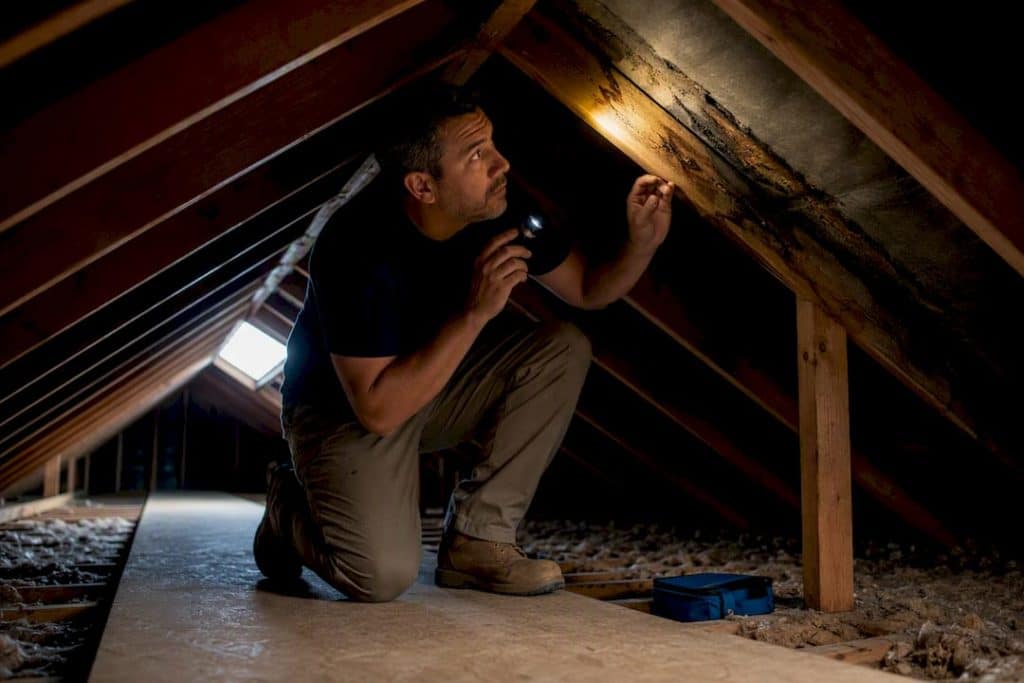
Roof leaks almost always come from one of a handful of localised faults: slipped or cracked tiles, failed flashing, a perished membrane, blocked gutters, or a poorly sealed pipe or vent. The wet patch on your ceiling is rarely directly beneath the actual defect, since water tends to travel along timbers and underlay before it drips. Most leaks are fixable without a full re-roof, but dripping near electrics or a sagging ceiling means you stop inspecting and get help immediately.
TL;DR:
- Most leaks originate from localized faults such as slipped tiles, failed flashing, or deteriorated membranes, which may not be directly beneath the ceiling stain.
- Water often travels along timbers and underlay, making accurate diagnosis crucial to target the real entry point rather than patching the visible wet patch.
- Immediate damage control involves draining trapped water, switching off affected electrical circuits, and photographing the damage for insurance and contractor claims.
- Full roof replacements are rarely necessary for small leaks; targeted repairs like replacing tiles or re-sealing flashings usually suffice if diagnosed correctly.
- Routine maintenance such as gutter cleaning, trimming overhanging branches, and checking flashings can prevent most leaks before they become emergencies.
Table of Contents
- Why is my roof leaking? Common causes by roof type
- How to trace the source of a roof leak safely
- What to do immediately once you spot active leaking
- When is a roof leak an emergency?
- Roof leak repair options, indicative costs and timelines
- Preventing roof leaks: a seasonal maintenance checklist
- Why you can trust this roof leak guidance
- Why diagnosis should always come before demolition
- Get a proper roof inspection instead of guessing
- Sources
- FAQ
Why is my roof leaking? Common causes by roof type
Pitched roofs and flat roofs fail in different ways, which is why the fix that worked for your neighbour’s tiled roof might be irrelevant to your flat-roofed extension.
On pitched roofs, the most frequently cited cause of leaks is simple: tiles or slates that have slipped, cracked, or gone missing after wind or age loosens their fixings. Underlay beneath those tiles can also tear or perish, especially in older properties where it was never designed to last 40 years.
Flashing is the second big culprit. The metal or lead strips sealing joints at chimneys, abutments, and valleys move slightly with every heat cycle. Over years, the seal cracks or the flashing lifts, and valleys in particular collect enough water volume to expose any weakness fast.
Flat and low-pitch roofs face a different set of problems. Membranes degrade with UV exposure, laps can separate, and ponding water sitting on a low spot will eventually find its way through even a small pinhole.
Then there are the causes homeowners overlook:
- Blocked gutters and downpipes force water to back up under the bottom course of tiles rather than draining away.
- Skylights, pipe collars, and vent seals dry out and crack, letting water track downward around the fitting.
- Poor loft ventilation causes condensation that mimics a leak without any actual ingress from outside.
- Storm damage (branches, hail, wind uplift) can create sudden, acute openings that behave differently from slow wear-and-tear failures.
Our guide on what causes roof leaks in South African homes covers regional weather patterns worth knowing if you’re trying to narrow down a cause before calling anyone out.
How to trace the source of a roof leak safely
Water rarely drips straight down from where it enters. It travels along the underside of underlay, follows battens, and runs along rafters before finding a gap in your ceiling, sometimes metres from the actual defect. That single fact explains why so many DIY fixes fail: people patch the spot above the stain, not the spot where water actually got in.
Here’s a sensible order to work through it:
- Check the loft or attic first. Look for mould, a white powdery residue on timber, damp insulation, or a visible drip trail leading away from the ceiling stain.
- Follow the trail upward. Trace damp timber or staining back toward its highest point. That’s your rough target area on the roof.
- Inspect from ground level. Use binoculars to check for missing tiles, rusted fixing nails, lifted flashing, or gutters sagging with debris.
- Run a controlled hose test if the source still isn’t obvious. Start low on the roof and work upward in stages, checking indoors after each stage rather than soaking the whole roof at once.
- Stop and call a professional if access is unsafe. Steep pitches, wet tiles, or anything requiring a ladder above single-storey height isn’t worth the risk.
A methodical pass through junctions, flashings, valleys, and abutments in a fixed order beats guesswork every time; sealing the nearest visible gap often just moves the drip rather than stopping the ingress. Our article on how to identify roof leaks walks through the water tracking pattern in more detail.
Pro Tip: Photograph every stage of your inspection, even the boring bits. A timeline of dated photos is worth more to a contractor or insurer than a verbal description of “it got worse after that storm”.

What to do immediately once you spot active leaking
Once water is visibly coming through, the priority shifts from diagnosis to damage control.
- Place a bucket or basin under the drip and move furniture, rugs, and electronics well clear of the wet area.
- Switch off the circuit affected by the leak at the consumer unit and never touch light fittings or switches near a wet ceiling.
- If the ceiling is bulging or sagging, carefully pierce it from below with something like a screwdriver to let trapped water drain into a bucket, rather than letting the weight collapse the whole section.
- Photograph the damage from multiple angles and note the date and weather conditions when it started.
- Temporary measures like roofing tape or patch compound can slow a leak but rarely stop it for good, and shouldn’t be treated as a fix.
Homeowners who catch water, photograph damage, and switch off affected circuits immediately after a storm tend to have a much easier time with both insurance claims and contractor quotes. That documentation habit alone can shave days off getting a claim approved. For a fuller walkthrough, see what to do right now when your roof is leaking and our guide to dealing with a wet ceiling.
When is a roof leak an emergency?
Not every leak needs a contractor at 9pm on a Sunday, but some genuinely can’t wait.
Treat these as emergencies:
- Water dripping through or near light fittings, switches, or any electrical fixture.
- A ceiling that’s visibly sagging or bulging under the weight of trapped water.
- Any structural timber exposed after storm damage, particularly if it looks split or rotted.
Recurring leaks that keep reappearing in slightly different spots, or damage spreading across a wide area of ceiling and insulation, are less urgent but still worth scheduling promptly rather than patching repeatedly. A proper professional inspection should include a clear diagnosis method (not just a visual guess), an explanation of access requirements, and a written scope with a guarantee attached. Getting that diagnosis right the first time is what stops you paying for the same “fix” three times in two years.
Roof leak repair options, indicative costs and timelines
Repair scope depends almost entirely on how localised the fault is, which is why an accurate diagnosis matters more than the size of the visible stain.
- Small, targeted repairs — replacing a handful of tiles, re-bedding a short flashing run, or patching a section of membrane. These are usually completed in a single visit.
- Medium repairs — replacing a full valley strip, extending flashing runs, or re-roofing a section after storm damage. Expect this to run over several days depending on access and weather.
- Major interventions — a full membrane re-lay or complete roof replacement, generally reserved for roofs with widespread failure across multiple areas rather than one isolated defect.
- Flat roofs specifically need a different call: a fresh coating can extend the life of a sound membrane, while ponding that keeps recurring usually points to a drainage fall problem that coating alone won’t solve.
Costs vary significantly by region, roof pitch, material, and access difficulty, so treat any figure you’re quoted as specific to your property rather than a fixed national rate. Most leaks are localised and manageable if found early, and identifying the actual root cause, say a single damaged flashing detail, usually means a targeted repair rather than a full roof replacement. For the technical side of sealing and detail work, our piece on lasting roof repairs is worth reading before you sign off on any quote.
Preventing roof leaks: a seasonal maintenance checklist
A little routine maintenance heads off most of the causes covered above before they become an emergency call.
- Clear gutters and downpipes at least twice a year, and more often if you’ve got overhanging trees. Blocked gutters are one of the most overlooked causes of leaks, and clearing them is inexpensive enough to do yourself or schedule cheaply.
- Trim back branches that touch or overhang the roof, since they scrape tiles loose and drop debris straight into gutters.
- Inspect flashing and ridge pointing annually, particularly around chimneys, and re-bed or reseal anything showing cracks before winter.
- Check loft ventilation and insulation to rule out condensation building up and masking or mimicking a genuine leak.
- Walk the roof line after every serious storm and get any damage looked at within days rather than waiting for the next dry spell to remind you.
For a version you can keep on hand, our roof waterproofing checklist covers the same ground in a printable format, and our guide to weatherproofing before storm season is worth reading before the next heavy rain warning.
Why you can trust this roof leak guidance
This guide draws on established roofing diagnosis practice and Pro Waterproofing’s own body of educational content on residential, commercial, and industrial waterproofing across South Africa.
- Author Eben brings hands-on familiarity with waterproofing diagnosis and repair scoping to this guidance, rather than generic advice repeated from elsewhere.
- Pro Waterproofing’s site includes detailed articles, real project imagery, and service area coverage that back up the practical steps described here.
- For visual reference, our gallery of examples of leaky roofs helps match your symptoms to a likely cause.
- Pro Waterproofing’s expertise is most useful for complex cases: flat roof membranes, warranty-backed repairs, and situations where a first inspection hasn’t found the actual entry point.
Why diagnosis should always come before demolition
The instinct to replace an entire roof after one bad leak is usually wrong. Most leaks trace back to a single localised fault, and a contractor who diagnoses properly before quoting will almost always come in cheaper and faster than one pitching a full re-roof on day one.
When comparing quotes, favour the contractor who explains their diagnosis method and itemises the repair rather than the one offering a flat “replace it all” figure. Full replacement is justified when failure is genuinely widespread, not when a stain has simply reappeared in a slightly different spot after a patch job. Ask what specifically failed, not just what they plan to do about it.
— Eben
Get a proper roof inspection instead of guessing
Chasing a leak yourself with a torch and a ladder only gets you so far, especially once water has been tracking along timbers for weeks. Professional waterproofing services offer a more direct route: a site visit that traces the actual entry point rather than patching the nearest visible gap, followed by a written estimate covering scope and warranty terms before any work starts.

Inspections can cover the failure modes this guide has walked through, from flashing and valleys on pitched roofs to membrane and ponding issues on flat roofs, and the scope quoted reflects what’s actually found on the roof rather than a generic package. If you’ve spotted a stain, traced a possible source, or you’re simply unsure where to start, our fix damaged roofs and protect your property page explains what a typical repair scope looks like. Request a quote through Prowaterproofing and get a written estimate before committing to anything.
Sources
For deeper reading on specific failure modes and repair techniques, see The Top 19 Causes of Roof Leaks, how flat roof membranes degrade over time, and waterproofing coating options for exposed surfaces. Internally, our guide on waterproofing methods for roofs expands on membrane choices mentioned above.
- Repair tips | How to find and fix a roof leak – Home Owners, Advice
- The Top 19 Causes of Roof Leaks
- Why is my roof leaking? – Town & Country Roofing
- Roof leaking? What to do right now (and what it costs to fix) | FlowLeads Roofing
- How to find a roof leak and repair it yourself – Build it
FAQ
What should I do if my roof is leaking?
Catch the water, move belongings clear, switch off any affected electrical circuit, and photograph the damage before arranging an inspection to trace the actual source.
Why does my roof only leak during heavy rain?
Heavy rain overwhelms marginal defects, like slightly lifted flashing or a hairline crack, that don’t leak under light rain because water simply doesn’t reach or pool at that point otherwise.
Is it normal for a roof to leak a little?
No leak is truly “normal”, even a small one signals a defect that will worsen with time, weather cycles, and repeated wetting and drying of timber and insulation.
Why does my roof leak sometimes and not others?
Wind direction, rain intensity, and the angle water hits a specific junction all affect whether a marginal fault actually lets water through on any given day.