
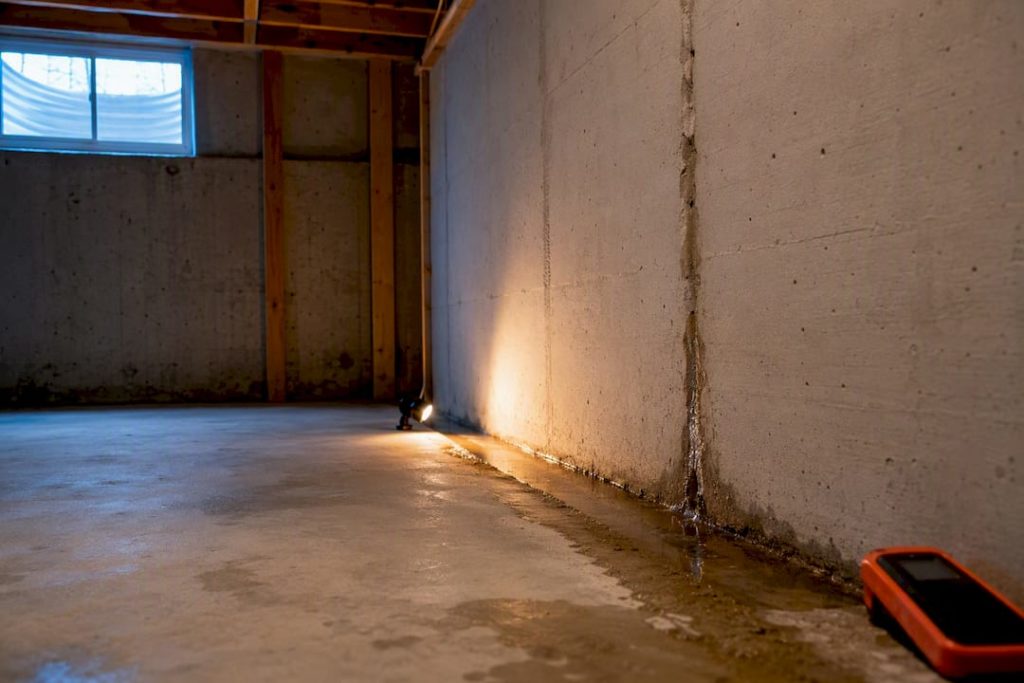
A small crack injection typically runs a few hundred pounds in the UK, several hundred to a few thousand Canadian dollars in Canada, or a few thousand rand in South Africa, with mid-range interior drainage retrofits and full external waterproofing costing several times as much depending on region and scope. Currency and local labour rates shift these numbers significantly, so treat them as starting points, not quotes. Always confirm pricing with a local contractor, and get at least three itemised quotes before committing.
TL;DR:
- Crack injection is the most affordable and limited repair, costing between £150 and £500 in the UK or R2,500 to R6,000 in South Africa, suitable only for isolated non-structural cracks.
- External tanking offers the most permanent fix but can cost R900 to R1,600 per square meter in South Africa and involves significant excavation and landscaping disruption.
- Full interior waterproofing with a drainage system and sump pump typically costs £4,000 to £8,000 in the UK or CA$5,000 to CA$8,000 in Canada, especially when hydrostatic pressure is involved.
- Costs vary significantly depending on leak severity, access, materials, and local labor rates, which can shift quotes by 20 percent or more.
- A detailed, itemized quote should specify diagnosis, material specs, labor breakdown, guarantees, and payment stages to avoid hidden expenses and ensure accurate comparison.
Table of Contents
- How much does it cost to fix basement leaks in the UK, Canada and South Africa?
- Cost by repair method: injection, drainage, tanking and pumps
- What actually drives the price of a basement leak repair?
- What do real basement waterproofing jobs actually cost?
- How do contractors calculate quotes, and what should you ask?
- What hidden costs catch homeowners out?
- How long does basement leak repair actually take?
- Eben and waterproofing practitioner experience: how practical knowledge shaped these figures
- Get a like-for-like inspection and quote from Prowaterproofing
- Sources
- FAQ
How much does it cost to fix basement leaks in the UK, Canada and South Africa?
Basement leak repair costs vary more by country, and even by region within a country, than most homeowners expect. Labour rates, groundwater conditions and the going rate for excavation all move the needle, so a headline figure from one market rarely transfers cleanly to another.
In the UK, Checkatrade’s cost data puts basement waterproofing at roughly £40 to £250 per square metre, with £120/m² a reasonable mid-point for a standard retrofit. Average completed jobs land around £8,000, though a single crack repair can cost a fraction of that.
In Canada, HomeStars reports typical basement leak repairs falling between CA$2,000 and CA$8,000, with interior repairs averaging closer to CA$5,000. Exterior excavation work pushes towards the top of that range, particularly in older homes with clay soil or high water tables.
In South Africa, per-square-metre bands are the norm rather than flat job totals. ServiceLink SA’s guide lists new-build external membranes at R400 to R800/m², cavity drain membrane retrofits at R600 to R1,200/m², and sump pump systems adding a further R5,000 to R15,000 depending on capacity and battery backup.
A few things to check before comparing any of these figures against your own quote:
- Whether the quoted price includes VAT or South African sales tax, since some contractors quote net figures.
- Whether labour is charged as a day rate or folded into the per-m² price.
- Whether the quote covers reinstatement of landscaping or flooring disturbed during the work.
- Regional labour rates in your specific city or town, which can swing totals by 20% or more.
For a deeper look at what South African contractors typically charge locally, a guide on basement leak repair near you breaks down the same bands with more local context.
Cost by repair method: injection, drainage, tanking and pumps
The method a contractor recommends drives the price more than almost any other single factor. Four approaches dominate quotes, and each solves a different kind of leak.
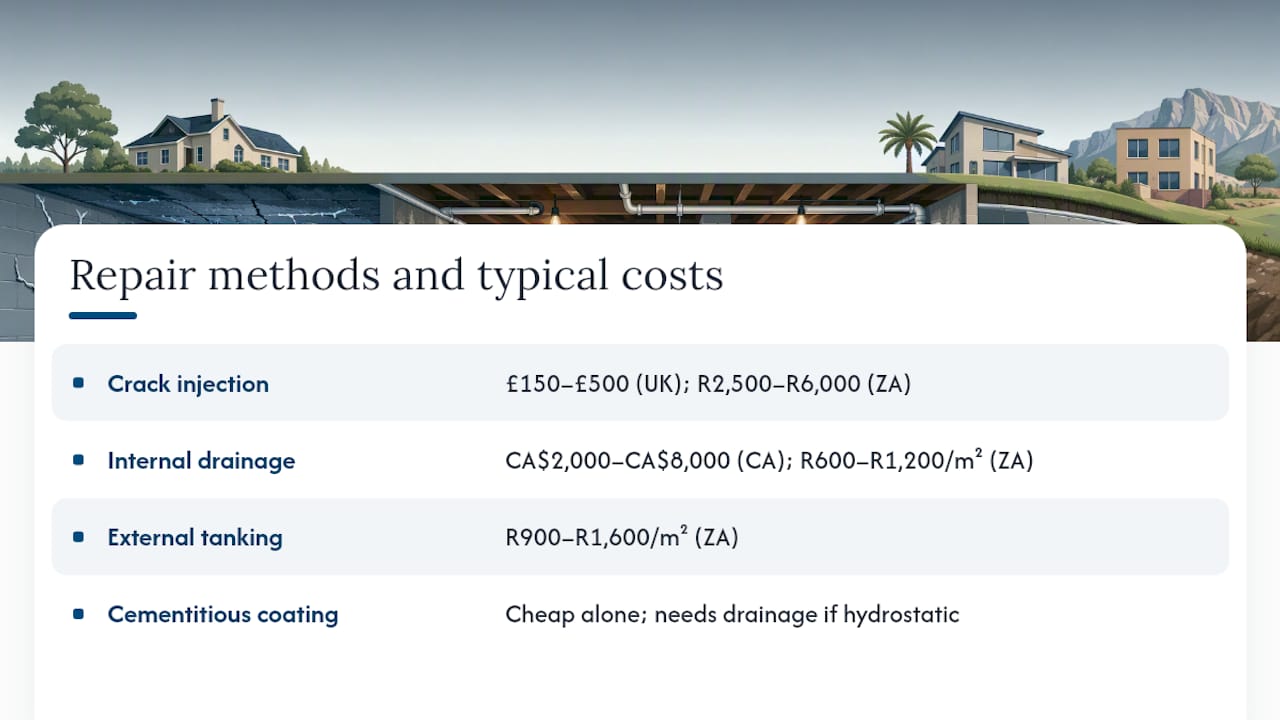
Crack injection is the cheapest fix and the most limited. A contractor injects epoxy or polyurethane resin into an isolated crack in the foundation wall, sealing it from the inside. This works well for a single, non-structural crack with no ongoing hydrostatic pressure, and typically costs £150 to £500 in the UK or R2,500 to R6,000 in South Africa per crack. It does nothing for a wall that is seeping across a wide area or under constant groundwater pressure.
Internal drainage with a sump pump is the most common mid-range fix. A drainage channel is cut around the interior perimeter of the basement floor, directing water to a sump pit where a pump ejects it outside. According to Checkatrade, this approach manages water after it has already entered, rather than stopping it at the wall, which keeps costs down but adds a mechanical component that needs maintenance. Expect CA$2,000 to CA$8,000 in Canada, or R600 to R1,200/m² for the membrane and drainage element alone in South Africa, before pump costs.
External tanking is the most expensive and, when done properly, the most permanent. It involves excavating around the foundation, applying a waterproof membrane or coating to the exterior wall, and backfilling. Because it stops water before it reaches the concrete, it handles hydrostatic pressure far better than interior fixes. Excavation, landscaping disruption and labour intensity push this towards R900 to R1,600/m² in some South African metro areas, according to Builders in Gauteng’s local pricing data.
Cementitious or crystalline coatings sit between these options: cheap to apply on their own, but not a standalone fix once hydrostatic pressure is present — they need pairing with drainage or an external membrane. Battery backup for sump pumps and water alarms typically add a modest amount on top of any interior system.
What actually drives the price of a basement leak repair?
Two basements with identical square footage can generate wildly different quotes, and the reason almost always comes down to a handful of variables contractors weigh before pricing a job.
- Source and severity of the leak. An isolated hairline crack is a different job entirely from a wall under constant hydrostatic pressure from a high water table. The latter usually rules out injection alone and forces a drainage or tanking solution.
- Access and ground conditions. A basement with easy exterior access costs less to excavate than one boxed in by a driveway, patio or neighbouring wall. Rocky or unstable soil adds machinery and time.
- Materials and specification. A ten-year warranty on a premium membrane costs more upfront than a budget product with a two-year guarantee, but it usually saves money over the life of the building.
- Labour rates and permits. Urban labour costs more than rural in every market covered here, and some jurisdictions require permits or inspections for structural excavation work.
- Specialist reports. If a contractor flags structural movement, you may need a geotechnical or structural engineer’s report before work proceeds, which is a separate line item.
Pro Tip: Ask your contractor to separate diagnosis costs from repair costs in the quote. A proper diagnosis, including checking for hydrostatic pressure versus a simple isolated crack, should cost a small fixed fee. If a contractor skips diagnosis and jumps straight to a quote for the most expensive method, get a second opinion.
What do real basement waterproofing jobs actually cost?
Numbers in the abstract only help so much. Here is how four common scenarios typically play out, assuming reasonable access and no hidden structural repairs.
- Small crack repair. A single vertical crack, no active water table pressure, standard access. Scope: diagnosis, epoxy or polyurethane injection, surface finish. Typical cost: £150 to £500 in the UK, R2,500 to R6,000 in South Africa.
- Localised internal drainage. One damp wall section, moderate seepage, no full perimeter system needed. Scope: partial interior drain channel, connection to existing drainage or a small sump. Typical cost: £1,500 to £3,000, or CA$2,500 to CA$4,500.
- Full cavity membrane and sump pump retrofit. Whole basement affected, evidence of hydrostatic pressure. Scope: full perimeter drainage channel, cavity drain membrane on walls, sump pit and pump, battery backup. Typical cost: £4,000 to £8,000, CA$5,000 to CA$8,000, or R600 to R1,200/m² for the membrane plus R5,000 to R15,000 for the pump system in South Africa.
- Conversion to habitable space. Full waterproofing plus insulation, plastering, flooring and electrical work to make the basement usable as a room. Scope: everything above, plus finishing trades. Typical cost: £10,000 to £20,000-plus, since finishes and building regulations compliance add substantially on top of the waterproofing itself.
Each example assumes standard access, no structural repairs, and a single contractor managing the whole job. A guide to interior basement waterproofing costs walks through the drainage-and-pump scenario in more depth if that’s the route your basement needs.
How do contractors calculate quotes, and what should you ask?
A proper quote is a breakdown, not a single number. If a contractor hands you one lump figure with no itemisation, that is your first red flag.
- Diagnosis and scope. The quote should state clearly whether the leak is an isolated crack or a wider hydrostatic pressure issue, since that determines the method.
- Materials specified by name. “Waterproof membrane” is not a specification; the product name, thickness and warranty period should appear.
- Labour, excavation and reinstatement. Separate line items for digging, backfilling and restoring landscaping or flooring.
- Drainage and pump costs, itemised separately from the membrane or coating work, including battery backup if included.
- Guarantees and insurance. Ask for the warranty period in writing and confirm the contractor carries liability insurance for the duration of the job.
- Payment stages. A staged payment schedule tied to completed work is normal; a large upfront deposit before any work starts is not.
Compare scope first, price second. A £3,000 quote that skips drainage entirely is not cheaper than a £4,500 quote that includes it, it is just incomplete. As a rough benchmark, mid-range interior repairs commonly land around CA$5,000 in Canadian data, which is a useful sanity check against any quote that seems dramatically higher or lower for comparable scope. For structural or geotechnical reports, verify the professional holds a recognised qualification such as MRICS or relevant CIOB membership before paying for their assessment.
What hidden costs catch homeowners out?
The headline quote rarely covers everything. Budget for these separately:
- Landscaping or driveway reinstatement after exterior excavation.
- Structural or plumbing repairs discovered once walls are opened up.
- Internal redecoration, plastering and flooring once waterproofing work is finished.
- Sump pump running costs and periodic battery backup replacement.
- Permits, specialist engineering reports, and applicable local taxes such as VAT or sales tax.
Buildingpricessouthafrica’s cost tables specifically recommend itemised quotes that separate preparation, treatment and re-finishing, precisely because these extras are where budgets quietly blow out.
How long does basement leak repair actually take?
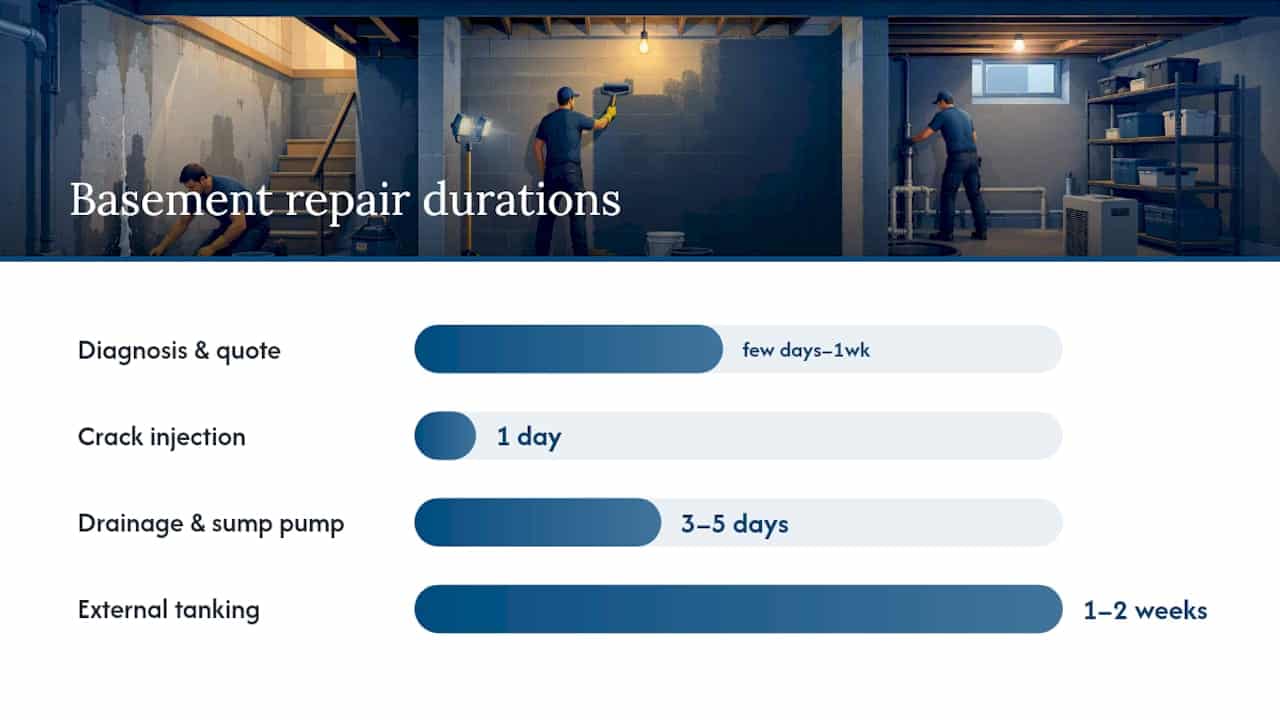
Diagnosis and quoting usually take a few days to a week. A single crack injection is often finished in a day. Interior drainage and sump pump installs typically run three to five days depending on basement size. External tanking, with excavation and backfilling, can stretch to one to two weeks, plus drying and commissioning time for pumps and membranes. Weather, difficult access, and any structural repairs found mid-job will extend all of these timelines.
Eben and waterproofing practitioner experience: how practical knowledge shaped these figures
These cost bands draw on practical experience from waterproofing work across residential and commercial projects, cross-checked against UK, Canadian, and South African cost guides. South African contractor pricing informed several of the bands above, and regional checking against your own local contractors remains essential since ground conditions and labour rates shift so much between towns. For method-by-method detail, see a guide to basement waterproofing methods.
— Eben
Get a like-for-like inspection and quote from Prowaterproofing
Comparing quotes on paper only gets you so far. Some waterproofing providers offer on-site diagnosis to work out whether your basement needs a simple crack repair, an internal drainage and sump pump system, or full external waterproofing, rather than defaulting to the most expensive option before checking the actual source of the leak.
The team covers diagnosis, internal and external system installation, and sump pump setup, and can talk you through what a proper itemised quote should include before you sign anything. If you’re weighing up quotes and want a second opinion or a straightforward inspection, request a quote through a waterproofing service site and get a scope you can actually compare against what other contractors have offered.
Sources
For UK per-square-metre guide prices and example job totals, see Checkatrade’s basement waterproofing cost guide. Canadian averages and mid-range interior repair figures come from HomeStars’ 2026 basement leak repair cost guide. South African per-m² bands and sump pump pricing are detailed in ServiceLink SA’s basement waterproofing guide and in Buildingpricessouthafrica’s damp-proofing cost tables. For homeowners wanting to vet a contractor before hiring, a guide on finding trusted basement leak repair companies covers credentials and red flags in more detail.
- Basement waterproofing costs
- How Much Does Basement Leak Repair Cost in 2026?
- The Ultimate Guide to Basement Waterproofing: Costs, Systems & Solutions for SA Homes | ServiceLink SA
- Damp proofing prices South Africa – cost guide
FAQ
What is the average cost to fix a leaking basement?
It depends heavily on method and region: a simple crack injection can cost as little as £150 in the UK, while a full interior drainage and sump pump retrofit typically runs £4,000 to £8,000 or CA$5,000 to CA$8,000 in Canada.
How can I damp proof my basement?
Damp proofing methods range from cementitious or crystalline coatings on interior walls to full internal drainage systems or external tanking, with the right choice depending on whether the damp comes from surface moisture or active hydrostatic pressure. A step-by-step guide to fixing a basement leak walks through the diagnosis process homeowners should expect.
How much does a plumber charge for fixing a leak?
Plumbers typically charge for locating and repairing a specific pipe or fitting leak, which is a different job from foundation waterproofing; basement leak repair costs quoted throughout this guide cover waterproofing contractors rather than general plumbing call-out rates.
Can a leaking basement be fixed?
Yes, in the vast majority of cases, though the right fix depends on the leak’s cause: an isolated crack often needs only injection, while a wall under constant groundwater pressure needs a combined drainage and pump solution or external membrane rather than a coating alone.