

TL;DR:
- Dampproofing resists moisture vapour and is suitable only where hydrostatic pressure is absent, unlike waterproofing, which withstands water under pressure. External waterproofing methods are ideal for new builds, while interior systems suit retrofits and existing structures, depending on site conditions. Effective basement waterproofing requires addressing drainage issues and employing a system of materials and installations tailored to South African soil and climate challenges.
Searching for a reliable basement waterproofing methods pdf is a sensible starting point, but most guides skip a critical fact: dampproofing and waterproofing are not the same thing, and confusing the two can cost South African homeowners tens of thousands of rands in repairs. Water enters basements through multiple pathways, each requiring a different solution. Whether you are protecting a new build in Johannesburg or retrofitting a damp basement in Cape Town, understanding which method suits your specific conditions is what separates a permanently dry basement from one that floods every rainy season.
Table of Contents
- Understanding basement water problems and waterproofing basics
- Comparing interior and exterior basement waterproofing methods
- Key basement waterproofing methods and how they work
- Cost considerations and choosing the right solution in South Africa
- Practical DIY tips, common mistakes, and when to call a pro
- Rethinking basement waterproofing: expert views and overlooked truths
- Discover professional basement waterproofing solutions in South Africa
- Frequently asked questions
Understanding basement water problems and waterproofing basics
To choose the right method, you first need to understand how water affects your basement and what waterproofing really means.
Water enters basements in three main ways: surface runoff that seeps through foundations, hydrostatic pressure from groundwater rising around the structure, and internal plumbing leaks. Each source demands a different response. Surface runoff is often manageable through grading and drainage adjustments. Groundwater pressure is a different beast entirely and one that catches many homeowners off guard.
The distinction between dampproofing and waterproofing is fundamental. Dampproofing uses a thin bituminous or asphalt-based coating to resist moisture vapour, but it cannot withstand water under pressure. Dampproofing suits only areas where hydrostatic pressure will not occur; waterproofing is required wherever groundwater can press against the structure. Applying dampproofing when hydrostatic pressure exists is one of the most expensive mistakes a homeowner can make.
Common materials used in proper waterproofing include:
- Bituminous coatings: Affordable and widely available, suitable for low-pressure moisture control
- Rubberised membranes: Flexible sheets applied to exterior walls, providing excellent resistance to water under pressure
- Cementitious coatings: Rigid, cement-based products bonded directly to masonry or concrete
- Elastomeric coatings: Flexible enough to bridge hairline cracks while forming a watertight surface film
- Crystalline compounds: Penetrate concrete chemically, forming crystals that block pores and self-heal minor cracks over time
Understanding these materials helps you read product specifications, assess contractor quotes, and avoid being oversold on a method your basement does not require. For a practical starting point, reviewing basic waterproofing steps gives you a clear framework before speaking to any supplier.
Comparing interior and exterior basement waterproofing methods
With the basics covered, let us compare the two main categories of waterproofing methods to find what fits your property best.
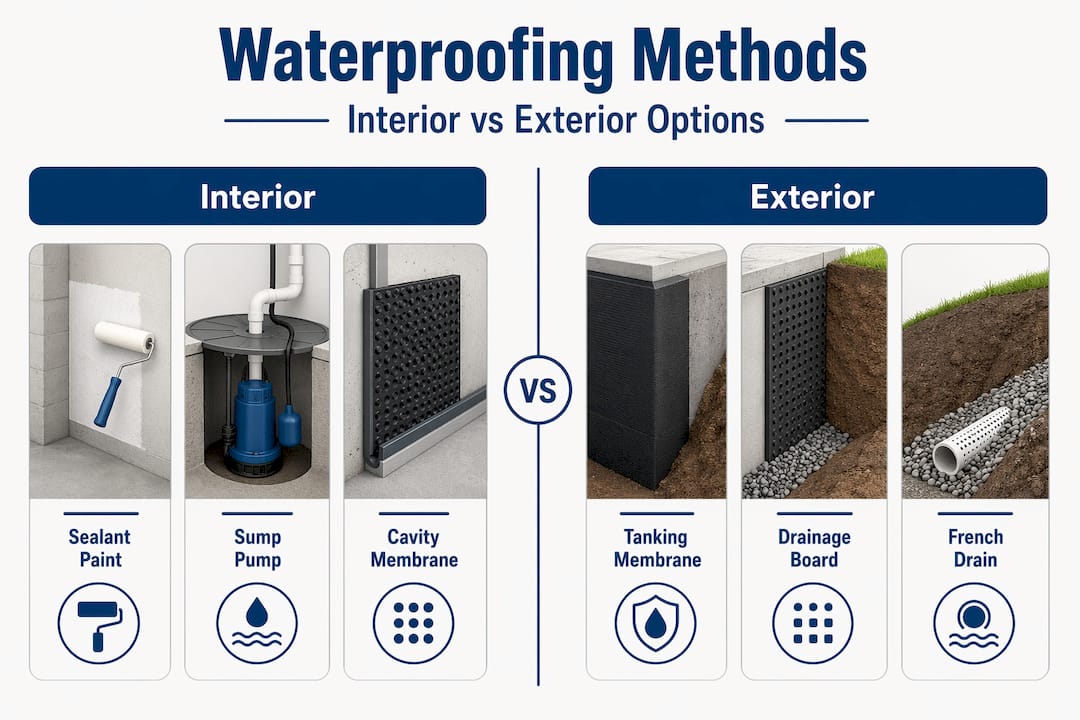
Exterior waterproofing involves excavating around the foundation and applying membranes, drainage boards, or bentonite panels directly to the outside wall. It stops water before it ever contacts the structure. This is the gold standard for new builds but is expensive and disruptive for existing homes. Interior waterproofing manages water that has already entered the wall or floor zone, redirecting it harmlessly to a drainage point. It suits retrofits where excavating the foundation is not practical.
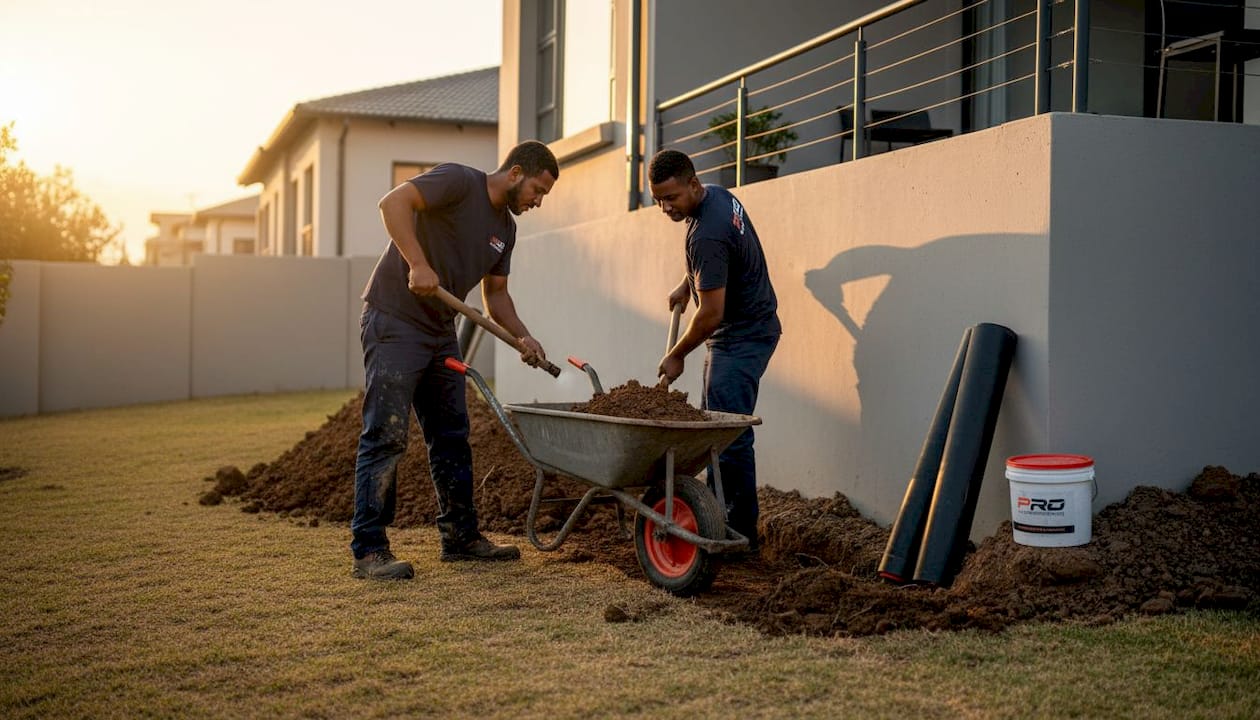
External methods best serve new builds; internal systems manage water inside and are well suited to retrofits on existing South African homes.
| Feature | Exterior waterproofing | Interior waterproofing |
|---|---|---|
| Best for | New builds | Existing/retrofit basements |
| How it works | Stops water outside the structure | Manages water already entering |
| Cost | Higher (excavation needed) | Lower upfront |
| Disruption | Major | Minor |
| Longevity | Very high if installed correctly | High with regular maintenance |
| Access required | External foundation walls | Internal basement walls |
Factors that influence which approach suits your home:
- Severity of water ingress (minor seepage vs. active flooding)
- Whether you have access to the external foundation wall
- Soil type and water table depth at your property
- Budget available for materials, labour, and any follow-on drainage work
- Whether the basement is habitable space or merely storage
For properties across South Africa, reviewing SA waterproofing solutions tailored to local soil and rainfall conditions is worthwhile before committing to any system. You can also compare the range of waterproofing options to match your specific situation.
Pro Tip: Before requesting quotes, dig a small test hole adjacent to your foundation wall after heavy rain. If water pools within 600 mm of the surface within 24 hours, hydrostatic pressure is likely and exterior or combined solutions become a priority.
Key basement waterproofing methods and how they work
Now that you have seen the main categories, here are detailed descriptions of individual waterproofing methods and their typical applications.
-
External tanking membranes: Sheet or liquid-applied membranes bonded to the outside of foundation walls before backfilling. These handle sustained hydrostatic pressure and are the backbone of waterproofing for new South African builds in high water table areas.
-
Bentonite panels: Sheets filled with natural sodium bentonite clay that swells when wet, sealing gaps and penetrations automatically. Popular for commercial basements and high-rise developments where long-term reliability matters.
-
Drainage boards: Dimpled plastic sheets installed against external membranes to channel water downward to a perimeter drain, preventing water from building up pressure against the wall.
-
Cavity drain membranes: Cavity drain systems create an internal drained cavity inside walls, managing water ingress for retrofits and directing it to sump pumps. This is arguably the most versatile solution for South African homeowners converting existing basements into usable space.
-
Crystalline waterproofing compounds: Products like Xypex or Krystol are brush-applied to concrete, where they react chemically to form insoluble crystals blocking pores. They cannot handle major hydrostatic pressure alone but are excellent for reducing minor seepage and protecting against carbonation.
-
French drains: Perforated pipes surrounded by gravel installed at the base of the foundation to relieve hydrostatic pressure by diverting groundwater away from the structure. They must always be paired with a waterproofing membrane to be effective.
-
Sump pump systems: Electric pumps installed in a pit at the lowest point of the basement floor, automatically removing accumulated water. They work best as a last line of defence alongside cavity drain membranes rather than as a standalone measure.
For more on drainage system pairings, the guide on basement drainage solutions covers the combinations that perform best in South African conditions.
Pro Tip: When installing a sump pump, always specify a battery backup unit. Johannesburg and Cape Town storms that cause basement flooding are the same storms that knock out mains power.
Cost considerations and choosing the right solution in South Africa
Understanding costs and local factors helps you make an informed decision fitting your home’s needs and your finances.
Costs vary considerably depending on method, build status, and site conditions. External tanking runs roughly R400 to R800 per m² for new builds, while cavity drain membrane retrofits cost between R600 and R1,200 per m² installed. These figures exclude drainage improvements, sump pump installation, and any structural repairs.
| Method | Approximate cost (per m²) | Best suited to | Key variable |
|---|---|---|---|
| External tanking membrane | R400–R800 | New builds | Soil access and depth |
| Cavity drain membrane | R600–R1,200 | Retrofits | Basement size |
| Cementitious coating | R150–R350 | Minor seepage, no pressure | Surface condition |
| Crystalline compound | R200–R450 | Concrete structures | Crack severity |
| French drain installation | R600–R1,500 per m run | High water table sites | Soil permeability |
Before selecting any system, these factors should be assessed on-site:
- Water table depth: A geotechnical assessment or basic perc test reveals whether groundwater is a genuine threat
- Soil type: Clay-heavy soils retain water longer and increase hydrostatic pressure, common across the Highveld
- Crack mapping: Documenting existing cracks determines whether structural repair is needed before waterproofing
- Drainage audit: Existing gutters, downpipes, and surface grading all affect how much water reaches your foundation
Combining proper drainage with waterproofing consistently produces better long-term results than either measure alone. The local waterproofing costs breakdown for South African regions provides more detail on regional pricing variation.
Practical DIY tips, common mistakes, and when to call a pro
With cost and method knowledge in place, here are practical tips and warnings to help you navigate DIY waterproofing successfully.
The most effective DIY actions focus on redirecting water before it reaches your foundation. Grading soil, sealing small cracks, and maintaining gutters are legitimate first steps; professional intervention is essential for drainage systems and membranes under pressure. These basics are also the most neglected. A blocked downpipe that deposits water within a metre of the foundation wall negates any internal treatment you apply.
Actions you can take yourself:
- Grade soil so it falls away from the foundation at a minimum 25 mm drop per 300 mm of distance
- Clean gutters and extend downspouts at least 1.5 metres from the structure
- Fill hairline cracks (under 1 mm wide) with a penetrating epoxy or polyurethane injection kit
- Apply an elastomeric or cementitious coating to interior walls as a temporary measure against minor seepage
- Install basic ventilation to reduce condensation, which is frequently misdiagnosed as seepage
Common mistakes homeowners make include:
- Painting over damp walls with standard paint, which simply traps moisture and causes the coating to blister within weeks
- Applying interior coatings without addressing the source of water, guaranteeing a repeat problem
- Relying on a single product where a system (membrane plus drainage plus pump) is required
- Ignoring the floor-to-wall joint, one of the most common entry points for water in any basement
Reviewing a full waterproofing steps guide and practical basement waterproofing tips before starting any work helps you avoid the most costly errors.
Pro Tip: Tape a piece of plastic sheeting firmly to your basement wall for 48 hours. If condensation forms on the room-side surface, your problem is humidity. If moisture appears behind the sheet, against the wall, water is penetrating from outside and DIY coatings will not solve it.
Rethinking basement waterproofing: expert views and overlooked truths
Most waterproofing failures share a common cause: the diagnosis was skipped. Homeowners see a damp patch and reach for a tin of waterproof paint. Contractors, under pressure to quote quickly, sometimes do the same. The damp patch is a symptom. The cause might be 50 metres away where a storm drain overflows onto a neighbour’s property and seeps laterally under the soil toward your foundation.
The decisive factor is whether hydrostatic pressure can be relieved at the foundation interface. Sealing surfaces without addressing drainage almost always results in failure, sometimes worse failure than before because trapped water finds a new, less visible path through the structure.
What experienced waterproofing professionals know, and what pdfs and product guides rarely say plainly, is that no single product fixes a basement. Effective waterproofing is a system: site drainage, appropriate membrane or coating, and a reliable means of removing any water that does penetrate. Each element compensates for the limitations of the others.
South Africa adds specific complications. Clay-rich soils on the Highveld expand when wet and exert extraordinary lateral pressure on foundations. Coastal properties in KwaZulu-Natal and the Western Cape face high humidity and salt-laden groundwater that degrades certain membranes faster than manufacturers’ datasheets suggest. These are not details you will find in a generic international guide.
The best outcomes come from combining interior and exterior solutions where budgets allow, treating drainage as primary rather than supplementary, and getting a proper site assessment before spending a rand on materials. Understanding lasting waterproofing techniques specific to South African conditions is the foundation of any plan that will still be performing in twenty years.
DIY enthusiasm is genuinely useful for surface preparation, crack sealing, and drainage maintenance. For anything involving external membranes, drainage system installation, or structural repairs, professional installation is not a luxury. It is what separates a ten-year fix from one that lasts the life of your building.
Discover professional basement waterproofing solutions in South Africa
Understanding methods is one thing. Getting the right system installed correctly is another entirely.
At Pro Waterproofing, we provide professional basement waterproofing assessments and installations tailored specifically to South African soil types, rainfall patterns, and building conditions. Whether you need external tanking for a new build, a cavity drain membrane retrofit, or a complete sump pump system, our team evaluates your site before recommending any solution. We work across residential, commercial, and industrial properties, offering warranties and quality assurance that protect your investment. Getting the diagnosis right from the start means you pay for the right solution once, rather than paying for the wrong one repeatedly.
Frequently asked questions
What is the difference between dampproofing and waterproofing?
Dampproofing resists moisture vapour where no water pressure exists, while waterproofing fully blocks water even under hydrostatic pressure. Dampproofing is appropriate only where hydrostatic conditions will not develop; waterproofing is required everywhere else.
Can I waterproof my basement myself?
Simple tasks like grading soil, sealing small hairline cracks, and clearing gutters are viable DIY work. Major structural or drainage work requires professional installation to ensure durability and avoid costly failures.
Which basement waterproofing method is best for new builds in South Africa?
External tanking with membranes and proper perimeter drainage is the preferred choice for new builds, particularly on sites with high water tables. External tanking for new builds typically costs R400 to R800 per m² installed in South Africa.
What does a cavity drain membrane system do?
It lines the interior of basement walls with a studded membrane that channels any infiltrating water to a floor drain and sump pump, keeping the habitable space completely dry. Cavity drain membranes direct water to pumps and are the leading retrofit solution for existing South African basements.
How important is drainage in basement waterproofing?
Drainage is the most underestimated element of any waterproofing system. Draining water away reduces pressure against foundation walls significantly, preventing both seepage and structural stress that even good membranes cannot handle alone.