
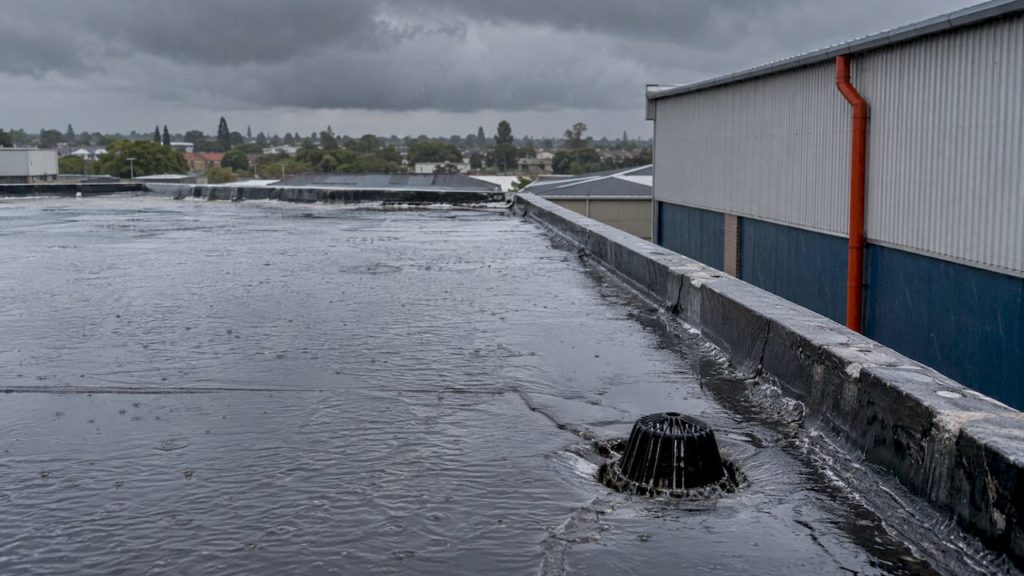
The Highveld rain waterproofing challenge is the test that heavy summer storms put every roof, wall and balcony through: a short, violent downpour, sometimes with hail, finds every weak seam, blocked outlet and tired coating on a building. If your waterproofing has a flaw, Highveld rain is how you find out. The sensible answer is to have the roof inspected and sealed by a qualified contractor before the storm season, not after the first ceiling stain. We connect property owners with vetted waterproofing professionals who can do exactly that.
This article explains what the challenge is, what rain does to roofs, how to spot early warning signs, what to do when a leak appears mid-storm, and how to choose a contractor you can trust.
TL;DR
- The “challenge” is the stress that intense Highveld storms, hail and ponding put on waterproofing, especially on flat and low-slope roofs.
- Water that cannot drain away is the root of most failures: ponding, blocked gutters and lap joints that draw water in.
- Stains, bubbling paint, soft spots and musty smells are the signs to act on, but the stain is often far from the real entry point.
- Do not apply coatings in or just before rain. Surfaces must be dry and clean, which is a job for a trained applicator.
- Choose a contractor on quality, experience, licensing and warranty, and get a written quote before the season starts.
Table of Contents
- What the Highveld rain waterproofing challenge actually means
- Why flat and low-slope roofs struggle most
- Where roofs leak first: the usual weak points
- Warning signs inside and outside
- Can waterproofing be applied in the rain?
- Choosing the right system for a roof that has to cope with heavy rain
- How the challenge differs between Gauteng and the Western Cape
- What to do when a leak appears during a storm
- Choosing a contractor before the storm season
- Our perspective
- Get your roof quoted before the next storm
- FAQ
- Sources
What the Highveld rain waterproofing challenge actually means
The Highveld is the high-lying inland plateau that includes Johannesburg, Pretoria and much of Gauteng. Its summer rain tends to arrive as intense thunderstorms rather than gentle, steady drizzle. A roof that stays dry for months can suddenly be asked to shed a large volume of water in minutes, often with hail and wind behind it.
That is the challenge. Waterproofing is rarely tested by light rain. It is tested by volume, speed and debris: more water than the drainage was sized for, leaves and hail blocking outlets, and fixings and seams stressed by wind and temperature swings. A membrane or coating that looked fine in dry weather shows its flaws within one afternoon.
For owners, this matters for three reasons:
- Damage is fast. Water entering a ceiling cavity can ruin insulation, boards, electrics and paintwork in a single storm.
- Damage is hidden. Leaks often stay out of sight until staining, mould or a sagging ceiling appears.
- Repairs in storm season are rushed. Contractors are busiest after the first big storms, and coatings cannot be applied properly in wet weather.
Why flat and low-slope roofs struggle most
Pitched roofs shed water quickly. Flat and low-slope roofs, very common on South African homes, shops, warehouses and factories, depend on a gentle fall and working drainage points. When either fails, water stands on the surface. That standing water is called ponding.
Ponding puts constant pressure on seams, upstands and the coating itself, and it speeds up ageing of the surface. Because the water sits on the same spot, every tiny defect gets a long, steady test. Our own guides on flat roof waterproofing for South African owners and flat roof waterproofing in Gauteng go into the systems in more detail.
Slope and drainage capacity
Slope makes a measurable difference. The South African Institute of Steel Construction’s technical article on cladding reports that a roof inclined at 10° has a drainage capacity 36% greater than one at 5°. For a metal-sheeted industrial building, a few degrees of pitch decide how well a heavy storm clears.
Hail and side-lap leaks on sheeted roofs
The same SAISC article describes what happens after Highveld hailstorms. Fine hail can accumulate on pierce-fixed roofs to a depth of 40 to 50 mm, which reduces the cladding’s ability to carry water and creates a capillary siphon at the side-laps between sheets. In other words, water is drawn sideways through the overlap, even where the roof looks sound.
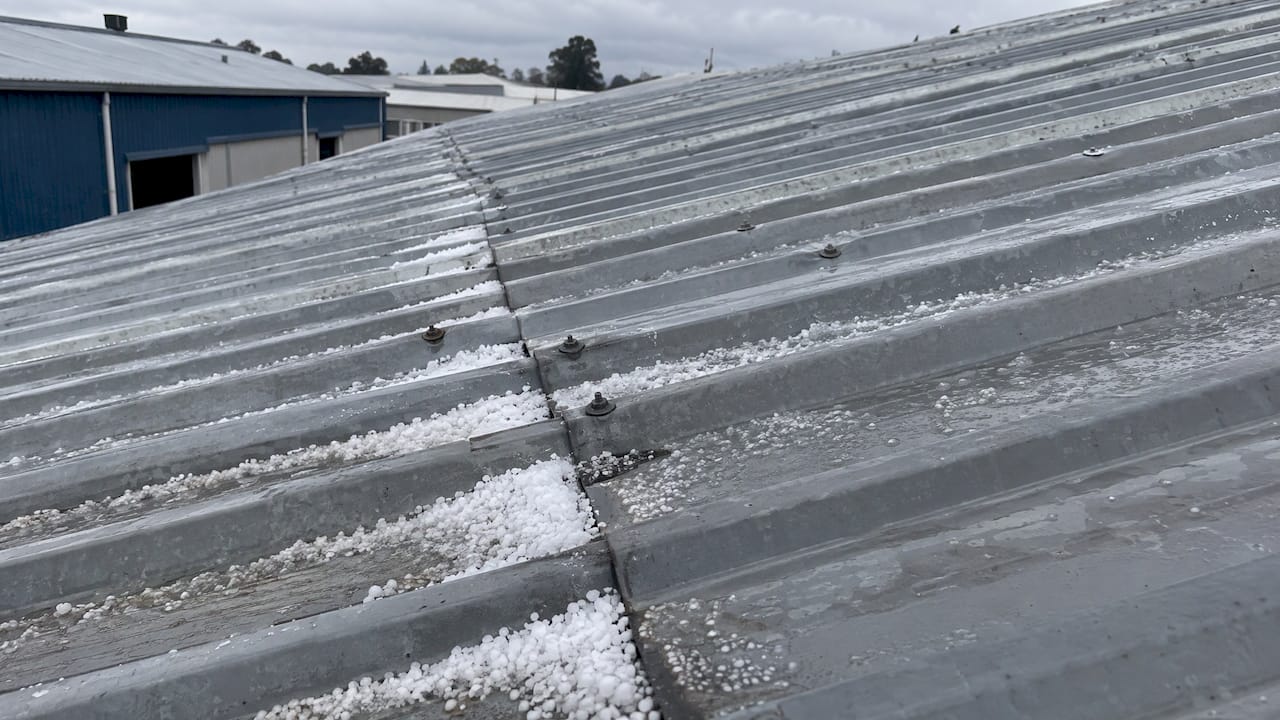
The remedy it describes is a butyl-based sealer strip on the weather side of the fasteners along the lap joint, with stitching screws at no more than 600 mm centres. For a factory or warehouse owner, the practical point is that lap joints and fixings deserve inspection after every serious hailstorm, not just when a leak is visible.
Concrete decks and parapets
Concrete flat roofs fail differently. Hairline cracks open as the structure moves with heat and cold, parapet and wall junctions lose their seal, and old coatings blister or peel. Water finds these routes fast under storm conditions. Our article on flat concrete roof waterproofing and a 15 to 20 year roof life explains how a properly specified system is meant to deal with them.
Where roofs leak first: the usual weak points
Whether the building is a townhouse in Johannesburg or a distribution centre in Midrand, the same details give way first. The Florida Division of Emergency Management’s guidance on membrane roofs lists the areas to check on low-slope roofs: cracks, holes, gaps, buckling, ponding, roof penetrations, wall junctions, roof edges, damaged flashing and open seams. Though written for another country, the physics of a flat roof is the same.
In practice, look at:
- Penetrations: pipes, vents, aerials, solar mounts and air-conditioning supports.
- Junctions: where the roof meets a wall, parapet or chimney.
- Edges and gutters: where water leaves the roof.
- Seams and laps: where one sheet or membrane joins another.
- Outlets and downpipes: the points that have to carry the water away.
Blocked drainage is the quietest culprit. The same Florida guidance advises checking that roof drainage is not blocked, and NC State Extension’s maintenance guidance recommends checking gutters, downspouts, hangers and strainers, cleaning them if needed, and checking them for leaks and rust. Add trimming back any branches that overhang or scrape the roof, since they drop leaf litter straight into outlets.
Warning signs inside and outside
Most owners notice a leak from indoors. The National Roofing Contractors Association of America lists ceiling or upper-wall stains, bubbling paint, soft spots, musty odours and damp insulation as warning signs, with missing, cracked or lifted roof coverings and loose or rusted flashing as exterior clues. The Florida guidance adds cracked paint, discoloured boards and peeling wallpaper.
Two cautions help you read those signs correctly:
- The stain is not always under the leak. Water can travel along a slab, board or sheet before it appears, so the mark on your ceiling may be some distance from where the water got in. A proper inspection traces the route rather than patching the stain.
- Not every ceiling stain is a roof leak. The Florida guidance notes that condensation from air-conditioning ducts can cause similar stains, so a professional assessment saves you from fixing the wrong thing.
A simple after-storm check
After a heavy storm, from the ground and indoors only, look for:
- Water still standing on the roof surface a day or more after the rain.
- New marks, bubbling or peeling paint on ceilings and upper walls.
- Overflowing gutters or debris dumped around outlets.
- Damp smells in rooms below the roof, or in a roof void.
- Loose, lifted or rusted flashing and sheets you can see from the ground.
Do not climb onto a wet roof to investigate. Photograph what you see, with dates, because clear records help both the contractor and any insurance claim.
Can waterproofing be applied in the rain?
No. This is one of the most common questions, and the answer shapes how you plan. Coatings and membranes bond to a clean, dry surface. Manufacturers’ application guidance consistently asks for dry substrates, surface temperatures safely above the dew point and no rain expected soon after application, and the exact limits differ from product to product. A rushed job in damp conditions can look finished and still fail early through poor adhesion, blistering or trapped moisture.
That has a direct consequence for Highveld owners. The best window for waterproofing work is the dry season, before the storms return. Leaving it until the first big downpour means you are booking a contractor at the busiest time, and any work that cannot start until the roof dries delays the repair further.
Preparation matters as much as the coating
A good job starts with the surface: loose material and contamination removed, cracks and joints repaired, penetrations and upstands sealed, and the roof fully dry. Cleaning is part of this stage, and a specialist guide to flat roof cleaning before coating explains why contamination left on a roof undermines what goes on top of it. When you hire through us, preparation and the correct product for your roof type are matters for the contractor to specify and quote, which is why we ask you to compare written scopes and not only prices.
Choosing the right system for a roof that has to cope with heavy rain
There is no single best product. The right choice depends on roof type, slope, how long water stands on it, how much foot traffic it takes and the age of the existing layer. Our guides on the best waterproofing material for your roof, roof waterproofing types in South Africa and comparing waterproofing methods set out the main options.
Questions a good contractor will work through with you:
| Question | Why it matters in heavy rain |
|---|---|
| What is the roof made of and what is its slope? | Slope decides how fast water clears and where it will pond. |
| Where does water collect after a storm? | Ponding areas need a system suited to standing water, or a drainage fix. |
| What is the condition of the existing layer? | Loose or blistered material has to be removed or repaired first. |
| Which details are weakest: penetrations, parapets, laps? | Most leaks begin at details, not in the open field of the roof. |
| How much movement does the structure have? | Cracks and joints need a system that can flex. |
| What warranty comes with the work? | It shows what the contractor will stand behind. |
Sealants have their place too, particularly for localised details; our practical guide to waterproof sealant for flat roofs and the one on waterproof flat roof coatings explain when each makes sense.
How the challenge differs between Gauteng and the Western Cape
The two regions put different demands on a building. On the Highveld, the pattern is sharp summer storms: fast runoff, hail, ponding on flat roofs and strong sun and temperature swings between storms. In the Western Cape, the wet season is the cooler winter, and the problem is more often prolonged wetting and wind-driven rain than a single violent burst. Waterproofing in either region needs to suit the local weather pattern as well as the building.
For Gauteng owners, that means prioritising drainage capacity, robust seams and details that can survive hail and rapid temperature change. For Western Cape owners, it means continuous protection of walls, joints and roofs through a long wet season, so repairs should be completed before winter arrives. In both places the principle is the same: fix it while the weather is dry.
What to do when a leak appears during a storm
A contractor cannot waterproof in the rain, but you can limit the damage until they can. Based on a leak-response checklist from Duffy Engineering, the priorities are to keep people clear of electrical, slipping and ceiling hazards, contain the water, document the damage, and contact a qualified professional.
- Stay safe first. Switch off power to affected areas if water is near lights or sockets, and keep away from ceilings that bulge or sag. Call a qualified electrician if you are unsure about the wiring.
- Contain the water. Use buckets, towels or sheeting, and move furniture and valuables.
- Photograph everything before cleaning up, for your insurer.
- Do not go onto a wet roof. Steep, wet or multi-storey roofs make DIY repairs dangerous.
- Request a professional assessment as soon as the weather clears.
Temporary measures are a stopgap. Once the roof is dry, the real repair has to follow, and the sooner it is quoted and booked, the less chance the next storm finds the same weakness.
Choosing a contractor before the storm season
A waterproofing job is only as good as the people who do it, and the warranty is only as good as the company that issues it. When you compare contractors, ask:
- Experience: how long have they worked on your type of roof, and can they show comparable completed projects?
- Licensing and registration: are they a registered business, properly insured, and able to say so in writing?
- Scope: does the quote name the preparation, the product, the number of coats and the detailing at penetrations and parapets?
- Warranty: how long does it run, what does it cover, and who stands behind it in writing?
- Timing: when can they work in dry conditions, and what is the plan if weather interrupts?
These are the same questions we encourage every property owner to put to any contractor. For a building manager or investor with several properties, the same checklist makes quotes comparable across sites.
Our perspective
Every year we see the same pattern in the questions owners ask: nobody thinks about their roof until water is coming through the ceiling. By then the storm has already chosen the timing, and the repair has to wait for dry weather anyway.
Our view is that the Highveld rain challenge is a planning problem. Inspect the roof, clear the drainage, and have waterproofing work specified and quoted while the weather is dry. A flat roof that sheds water properly, with sound seams and details, is a roof that gets through the storm season without drama.
That is why we put so much weight on the questions that separate good contractors from poor ones: quality, experience, licensing and warranties. We give you region-specific information so you can decide with confidence, and we connect you with vetted waterproofing professionals for homes, commercial buildings and industrial properties.
Eben
Get your roof quoted before the next storm
If you own or manage a home, shop, office or industrial building in Gauteng or the Western Cape, a quote request is the easiest first step. We cover roof, basement, bathroom, foundation and concrete deck waterproofing for residential, commercial and industrial properties, and we connect you with vetted waterproofing professionals. Tell us about the property and what you have noticed, and request your quote on the Pro Waterproofing site.

The earlier you ask, the more choice you have of start dates in dry weather.
FAQ
Can you do waterproofing in the rain?
No. Coatings and membranes need a clean, dry surface, and most manufacturers also require that no rain is expected for a set period after application. Work done on a damp roof risks poor adhesion and early failure. Book the work for dry weather, ideally before storm season.
What is the first sign that my roof is failing in heavy rain?
Usually a stain, bubbling paint or a damp smell on a ceiling or upper wall. Outside, look for water that stays on a flat roof long after the storm, or for blocked gutters and outlets. Because water can travel before it appears, have the roof inspected rather than just repainting the stain.
Why do flat roofs leak more in Highveld storms?
A flat or low-slope roof relies on a gentle fall and clear outlets. In an intense storm, water arrives faster than it drains, so it pools and tests every seam, penetration and junction. Slope matters: SAISC reports that a 10° roof drains 36% better than one at 5°.
How do I protect my building until the roof can be repaired?
Stay clear of electrical and ceiling hazards, contain the water, move belongings and photograph the damage for your insurer. Keep off wet roofs. Then arrange a professional assessment as soon as the weather clears.
Sources
- Cladding vs. the Weather, SAISC
- Information About Membrane and Built-up Roofs, Florida Division of Emergency Management
- Preventative Home Maintenance, NC State Extension
- Got Leaks? What your roof isn’t telling you, NRCIA
- First 24 Hours Leak-Response Checklist, Duffy Engineering
- Flat Roof Cleaning for Property Managers