

Poor installation can cut your waterproofing lifespan by 50%, costing South African property owners thousands in premature repairs. Understanding how long waterproofing lasts under local conditions helps you plan maintenance, protect your investment, and avoid expensive failures. This guide explains lifespan expectations across materials, climates, and installation standards specific to South Africa.
Table of Contents
- Types Of Waterproofing And Their Expected Lifespans
- Environmental Factors Impacting Waterproofing Durability
- Installation Quality And Its Critical Role In Waterproofing Lifespan
- Maintenance Practices To Maximise Waterproofing Lifespan
- Common Misconceptions About Waterproofing Lifespan
- Comparison Of Traditional Versus Modern Waterproofing Methods
- Practical Guide For Property Owners: When To Inspect, Repair, Or Reapply Waterproofing
- Protect Your Property With Expert Waterproofing Services
- Frequently Asked Questions
Key takeaways
| Point | Details |
|---|---|
| Lifespan varies by material and environment | Waterproofing systems last 5 to 30 years depending on material type, local climate exposure, and installation quality. |
| Coastal conditions accelerate degradation | Salt air, humidity, and UV radiation in coastal regions reduce waterproofing lifespan by 20 to 30% compared to inland areas. |
| Installation quality is decisive | Poor workmanship can halve waterproofing effectiveness, making certified professional installation essential for durability. |
| Maintenance extends protection | Regular inspections and timely repairs increase waterproofing lifespan by 30 to 40%, preventing costly replacements. |
| Modern methods outlast traditional approaches | Polymer membranes typically last 15 to 30 years, significantly longer than cementitious coatings at 5 to 10 years. |
Types of waterproofing and their expected lifespans
Choosing the right waterproofing material starts with understanding how long each system protects your property. Roof waterproofing systems in South Africa typically last between 10 to 25 years depending on material quality and installation standards. Your climate, property type, and maintenance habits significantly influence these ranges.
Liquid applied membranes offer flexibility and seamless coverage, lasting up to 15 years under optimal conditions. Bituminous torch-on sheets provide robust protection for flat roofs, with lifespans ranging from 10 to 25 years when properly installed. Cementitious coatings suit internal wet areas and foundations, typically lasting 5 to 10 years before requiring reapplication.
| Material Type | Expected Lifespan | Best Applications | Key Features |
|---|---|---|---|
| Liquid membranes | 10-15 years | Roofs, balconies, complex shapes | Seamless, flexible, easy repairs |
| Bituminous sheets | 10-25 years | Flat roofs, foundations | Durable, heat resistant, proven track record |
| Cementitious coatings | 5-10 years | Bathrooms, basements, retaining walls | Breathable, cost effective, simple application |
| Polymer membranes | 15-30 years | Commercial roofs, high exposure areas | Superior durability, UV resistant, low maintenance |
| Acrylic coatings | 8-12 years | Roof maintenance, metal surfaces | Reflective, quick application, moderate lifespan |
Material performance varies dramatically based on your property’s exposure to South African climate conditions. Coastal properties face harsher degradation from salt and humidity, whilst inland sites experience temperature extremes that stress waterproofing systems differently.
Material selection considerations:
- Assess your property’s specific climate zone and exposure levels
- Match material lifespan with your maintenance budget and planning horizon
- Prioritise quality over initial cost to avoid premature failures
- Consider how essential waterproofing methods align with your property type
Pro Tip: For coastal South African properties, invest in polymer membranes with enhanced UV stabilisers and salt resistance to maximise lifespan despite aggressive environmental conditions.
Environmental factors impacting waterproofing durability
South Africa’s diverse climate zones create distinct challenges for waterproofing longevity. Coastal regions accelerate material breakdown through relentless environmental assault. Coastal regions pose heightened risks with humidity, salt air, and UV exposure accelerating material degradation by 20 to 30% compared to inland properties.
Salt laden air penetrates waterproofing membranes over time, causing chemical reactions that weaken protective layers. Combined with high humidity levels exceeding 80% for extended periods, this moisture trapped within materials creates ideal conditions for premature failure. UV radiation in South Africa ranks among the world’s highest, gradually breaking down polymer chains in waterproofing membranes through photodegradation.
Inland properties face different stresses. Temperature swings from freezing nights to 35°C days cause expansion and contraction cycles that stress membrane joints and adhesion points. These thermal movements create micro cracks that grow into leaks without proper material flexibility and installation technique.
South African climate factors affecting waterproofing lifespan:
- Salt concentration in coastal air corroding protective layers and fasteners
- UV radiation intensity breaking molecular bonds in exposed membranes
- Temperature fluctuation ranges stressing material flexibility and adhesion
- Rainfall patterns creating pooling water and extended moisture exposure
- Wind driven rain forcing water into vulnerable seams and flashings
Properties within 5 kilometres of the South African coastline typically require waterproofing replacement 5 to 7 years earlier than equivalent inland properties using identical materials and installation methods.
Understanding your property’s environmental exposure helps you set realistic expectations for waterproofing performance. Regular maintenance of waterproofing systems becomes more critical in harsh climates to catch degradation before complete failure occurs.
Installation quality and its critical role in waterproofing lifespan
Even premium waterproofing materials fail prematurely without proper installation. Poor workmanship reduces effective protection duration by up to 50%, turning a 20 year system into a 10 year problem. Surface preparation, membrane adhesion technique, and curing protocols determine whether your waterproofing reaches its potential lifespan.
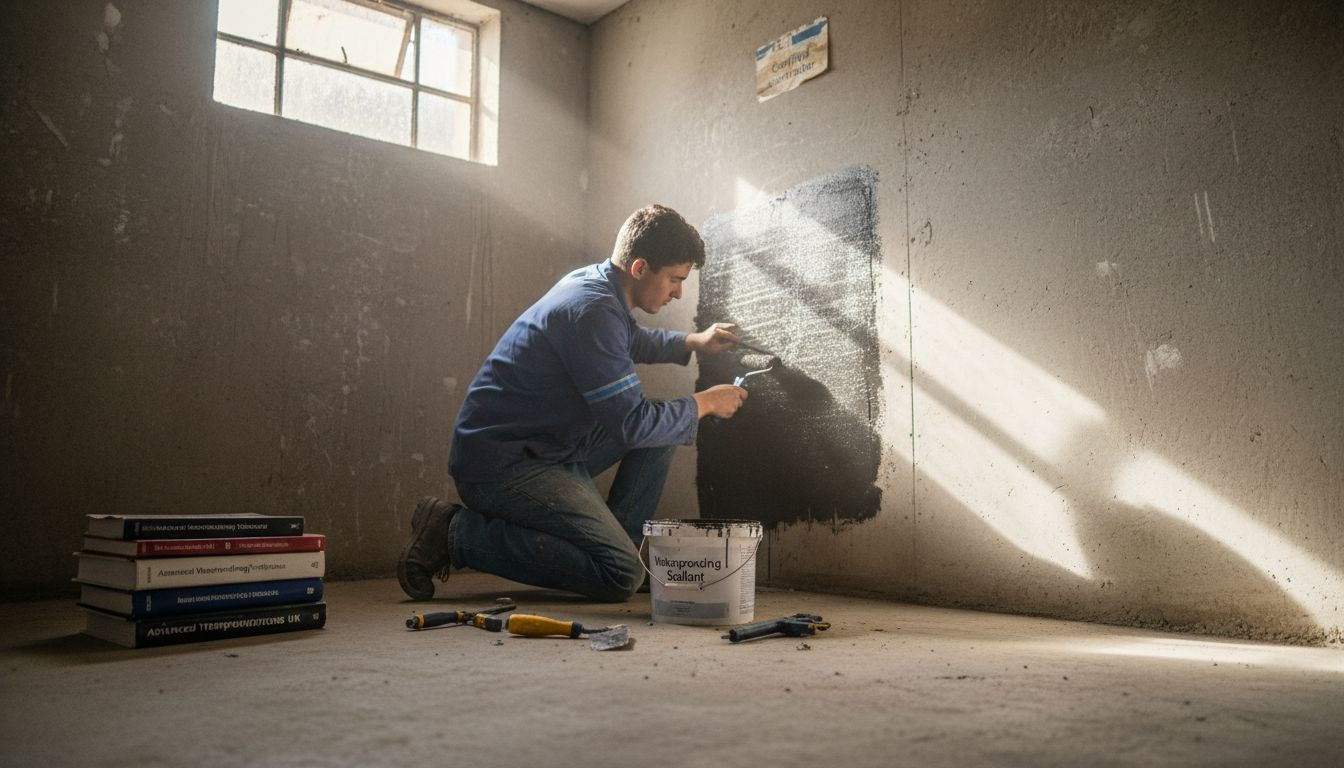
Proper substrate preparation creates the foundation for waterproofing success. Installers must remove all contaminants, repair cracks, and achieve specified moisture levels before applying membranes. Rushing this stage creates adhesion failures that manifest as bubbling, peeling, or complete delamination within months.
Membrane application requires precision. Overlaps must meet manufacturer specifications, typically 100mm minimum, with proper sealing at every joint. Primers must cure fully before membrane application. Torch temperatures for bituminous sheets need careful control to avoid under heating or burning.
The South African National Certificate for Waterproofing provides quality assurance by certifying installers meet industry standards. Certified professionals understand local climate challenges, material behaviour, and proper sequencing of waterproofing layers.
Common installation failures reducing lifespan:
- Inadequate surface cleaning allowing poor membrane adhesion
- Incorrect primer selection or application for substrate type
- Insufficient overlap at seams creating water ingress points
- Improper detailing around penetrations, edges, and transitions
- Inadequate curing time before exposing system to traffic or weather
Pro Tip: Always verify your waterproofing contractor holds current South African National Certificates, request references from projects at least 5 years old, and insist on site supervision by certified technicians rather than unqualified labourers during critical application stages.
Investing in quality installation protects your waterproofing investment far more effectively than choosing premium materials with substandard workmanship. The importance of waterproofing maintenance multiplies when installation quality is compromised.
Maintenance practices to maximise waterproofing lifespan
Proactive maintenance extends waterproofing protection by 30 to 40% beyond baseline expectations. Regular attention catches small issues before they escalate into expensive failures requiring complete system replacement. Your maintenance strategy should match your material type and environmental exposure.
Effective waterproofing maintenance schedule:
- Conduct visual inspections quarterly, checking for cracks, bubbling, or discolouration indicating degradation.
- Clear drainage outlets monthly to prevent water pooling that accelerates membrane breakdown.
- Schedule professional evaluations annually to assess membrane integrity and identify hidden damage.
- Repair minor cracks and punctures immediately using compatible materials to prevent water ingress.
- Clean surfaces semi annually with pH neutral solutions, avoiding harsh chemicals that damage membranes.
- Document all maintenance activities with photos and notes to track degradation patterns over time.
Inspection timing matters. Conduct thorough checks after severe weather events, as storms expose weaknesses through wind driven rain and debris impact. Pay special attention to flashings, penetrations, and joints where movement creates vulnerability.
Prompt repairs prevent cascade failures. A small crack allows water beneath membranes, causing adhesion loss across larger areas. What starts as a minor repair becomes a major replacement project within months if ignored.
Maintaining waterproofing systems requires understanding which cleaning products are safe. Petroleum based solvents, strong acids, and alkaline cleaners break down waterproofing membranes. Always test products on small inconspicuous areas first.
Pro Tip: Create a property maintenance calendar linking waterproofing inspections with other routine tasks like gutter cleaning, and keep a dedicated file with installation warranties, product specifications, and maintenance records to streamline professional evaluations and warranty claims.
Integrating waterproofing maintenance with broader property care, including preventing invasive root spread near foundations, protects your investment comprehensively.
Common misconceptions about waterproofing lifespan
Misunderstandings about waterproofing durability lead property owners to neglect maintenance or make poor material choices. Clearing these misconceptions helps you plan realistic protection strategies and budget appropriately for long term property care.
Many believe waterproofing is permanent once installed. No waterproofing system lasts indefinitely without maintenance. Environmental exposure, building movement, and material ageing gradually reduce effectiveness regardless of initial quality. Even the most durable polymer membranes require eventual replacement.
Another common myth suggests all waterproofing types offer similar lifespans. Material chemistry creates dramatic performance differences. Cementitious coatings typically last 5 to 10 years, whilst polymer membranes can protect for 15 to 30 years under identical conditions. Your material choice fundamentally determines protection duration.
Some property owners assume cheap waterproofing suffices for all applications. Budget products may work for low risk internal areas, but exterior roofs and coastal properties require premium materials to achieve acceptable lifespans. False economy leads to frequent replacements costing more than investing properly initially.
Waterproofing misconceptions versus reality:
- Myth: Waterproofing lasts forever / Reality: All systems degrade and require eventual replacement
- Myth: All materials perform similarly / Reality: Lifespan varies from 5 to 30 years by material type
- Myth: Installation quality doesn’t matter much / Reality: Poor workmanship can halve system lifespan
- Myth: Maintenance is unnecessary / Reality: Regular upkeep extends protection by 30 to 40%
- Myth: Cheapest option saves money / Reality: Premium materials prevent expensive premature failures
Understanding realistic expectations helps you budget for waterproofing as an ongoing property protection strategy rather than a one time expense. Plan for periodic inspections, maintenance, and eventual replacement as part of responsible property ownership.
Comparison of traditional versus modern waterproofing methods
Waterproofing technology has evolved significantly, with modern systems offering superior durability and reduced maintenance compared to traditional approaches. Understanding these differences helps you select the most cost effective long term solution for your South African property.
| Feature | Traditional Cementitious | Bituminous Sheets | Modern Polymer Membranes |
|---|---|---|---|
| Typical lifespan | 5-10 years | 10-25 years | 15-30 years |
| Maintenance frequency | Every 2-3 years | Every 4-5 years | Every 5-8 years |
| UV resistance | Poor | Moderate | Excellent |
| Coastal suitability | Limited | Good | Excellent |
| Application complexity | Simple | Moderate | Requires expertise |
| Initial cost | Low | Moderate | High |
| Long term cost | High due to frequent replacement | Moderate | Low due to extended lifespan |
Traditional cementitious waterproofing appeals through low initial cost and simple application. However, its porous nature allows gradual water penetration, and brittleness causes cracking under building movement. These limitations result in shorter effective lifespans requiring more frequent reapplication, especially in demanding environments.
Bituminous torch on membranes provide proven mid range performance. Their heat resistance and robust construction suit South African conditions well. Proper installation achieves reliable 15 to 20 year lifespans on flat roofs, making them a balanced choice for budget conscious property owners.
Modern polymer membranes, including PVC, TPO, and polyurethane systems, deliver superior long term value despite higher upfront costs. Their flexibility accommodates building movement without cracking. Enhanced UV stabilisers resist South African sun exposure. Some advanced formulations include antimicrobial properties preventing algae growth that accelerates degradation.
Method selection considerations:
- Coastal properties benefit most from polymer membranes with salt and UV resistance
- Budget conscious inland projects may find bituminous sheets offer optimal cost performance
- High traffic areas require durable membranes resisting puncture and abrasion damage
- Complex roof geometries favour liquid applied systems conforming to intricate shapes
Understanding waterproofing versus damp proofing distinctions helps you select appropriate protection levels. Learning about waterproofing system types and uses clarifies which modern approaches suit your specific property needs.
Practical guide for property owners: when to inspect, repair, or reapply waterproofing
Knowing when to act on waterproofing maintenance prevents small issues becoming expensive disasters. Watch for warning signs indicating your system needs attention, and follow material specific timelines for proactive care.
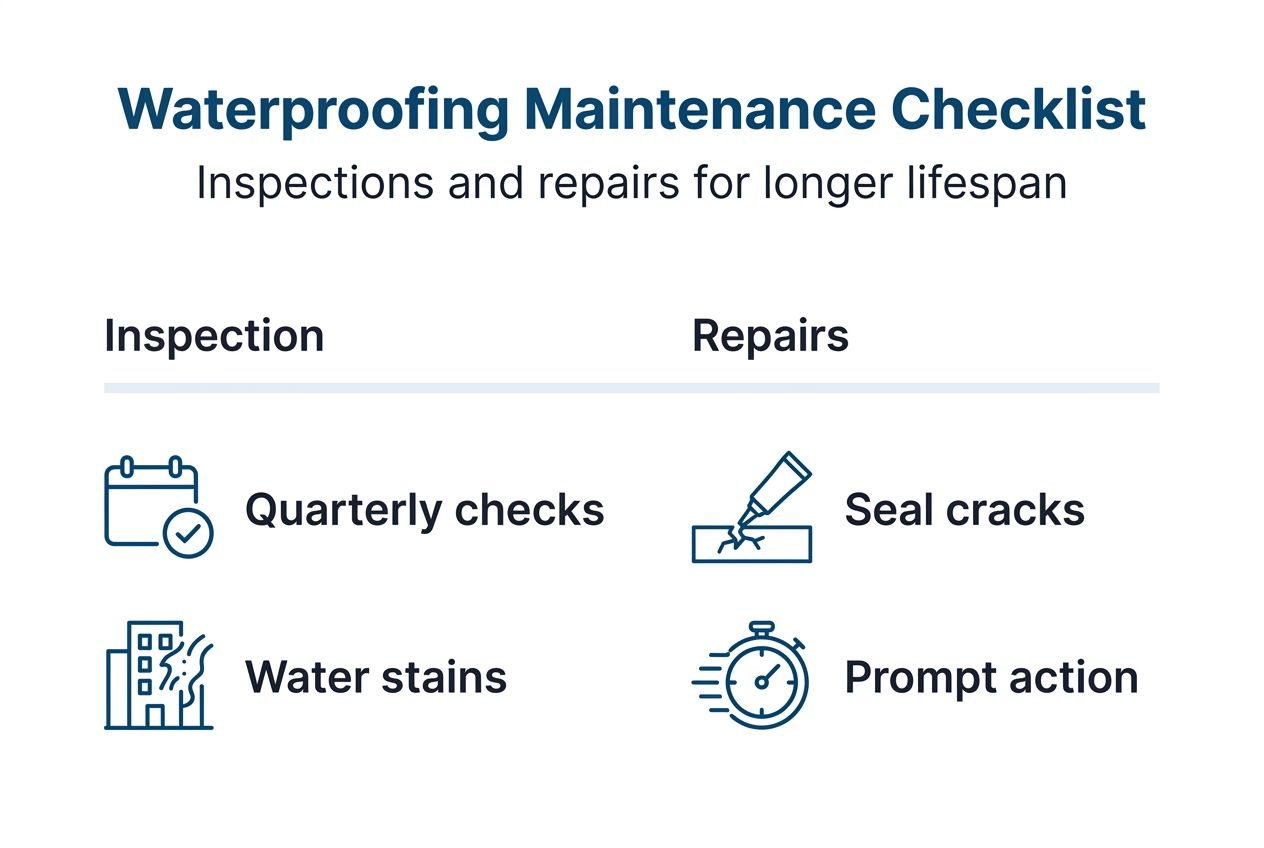
Visible water stains on ceilings or walls signal waterproofing failure requiring immediate investigation. Damp patches, even without active leaking, indicate moisture penetration compromising your building structure. Musty odours suggest hidden water accumulation behind walls or under floors, often from failed waterproofing.
Cracks wider than 1mm in waterproofing membranes allow water ingress and require prompt repair. Bubbling or peeling membranes indicate adhesion failure needing professional assessment. Ponding water remaining more than 48 hours after rain suggests drainage problems accelerating waterproofing degradation.
Reapplication intervals by material and climate:
- Cementitious coatings: 5 to 8 years in sheltered areas, 4 to 6 years coastal exposure
- Bituminous membranes: 12 to 20 years inland properties, 10 to 15 years coastal locations
- Polymer membranes: 20 to 25 years inland, 15 to 20 years coastal with regular maintenance
- Liquid applied systems: 10 to 15 years depending on product quality and UV exposure
Professional inspections provide more accurate assessments than visual checks alone. Specialists use moisture meters detecting hidden dampness, infrared cameras revealing thermal anomalies from water infiltration, and core sampling analysing membrane condition beneath surface layers.
Maintenance action steps aligned with lifespan insights:
- Schedule professional inspections annually regardless of visible problems
- Address repairs within two weeks of detecting damage to prevent escalation
- Budget for waterproofing replacement at 75% of expected material lifespan
- Keep detailed records of all maintenance, repairs, and professional assessments
- Plan reapplication during dry seasons for optimal curing conditions
Acting promptly on maintenance needs protects your property value and prevents structural damage far exceeding waterproofing costs. Certified professionals ensure repairs use compatible materials maintaining system integrity rather than creating new failure points.
Protect your property with expert waterproofing services
Achieving maximum waterproofing lifespan requires professional expertise tailored to South African climate challenges. Certified specialists deliver proper installation, effective maintenance, and timely repairs that extend your property protection well beyond baseline expectations. Pro Waterproofing connects you with experienced professionals who understand coastal salt exposure, inland temperature extremes, and material selection optimised for your specific location. Whether you need new waterproofing installation, system inspections, or repairs addressing early degradation signs, working with qualified experts protects your property investment and delivers peace of mind through proven durability.
Frequently asked questions
How long does waterproofing typically last on roofs in South Africa?
Waterproofing lifespan varies from 10 to 25 years depending on material type, installation quality, and environmental exposure. Polymer membranes typically outlast cementitious coatings by 10 to 15 years.
What environmental factors most affect waterproofing lifespan here?
Coastal properties face accelerated degradation from salt air, humidity exceeding 80%, and intense UV radiation reducing lifespan by 20 to 30%. Inland areas experience thermal stress from temperature swings causing membrane expansion and contraction.
How often should I inspect or maintain waterproofing to avoid failures?
Conduct visual inspections quarterly and schedule professional evaluations annually to catch problems early. Perform repairs immediately upon detecting damage, as delays allow small issues to escalate into complete system failures.
Can poor installation really shorten waterproofing lifespan by half?
Yes, inadequate surface preparation, improper membrane application, and insufficient curing frequently halve effective protection duration. Hiring certified professionals with South African National Certificates ensures proper installation technique maximising material lifespan.