
TL;DR:
- South African properties face diverse weather challenges requiring tailored waterproofing solutions.
- Choosing the right system depends on building use, environmental exposure, and proper drainage.
- Long-term durability and compliance with standards outweigh initial lower costs.
South African properties face a relentless barrage of weather extremes, from scorching UV radiation on the Highveld to coastal salt spray in Cape Town and seasonal flooding in KwaZulu-Natal. Water intrusion is one of the most destructive forces a building can endure, quietly compromising structural integrity and triggering expensive repairs. Yet many property owners and facility managers feel overwhelmed when confronted with the sheer variety of waterproofing systems available. This guide cuts through the confusion by explaining how each system works, where it performs best, and how to select the right one for your specific building and environment.
Table of Contents
- How to choose the right waterproofing system in South Africa
- Types of waterproofing: key methods explained
- Comparison of waterproofing systems: lifespan, cost and best use
- Critical factors and common pitfalls in waterproofing
- Why the cheapest waterproofing often costs more in South Africa
- Speak to a waterproofing expert and protect your property
- Frequently asked questions
Key Takeaways
| Point | Details |
|---|---|
| Match system to needs | Choose waterproofing methods based on your building use, risks, and climate. |
| Invest for the long term | Modern, higher-spec systems save money over time by reducing repairs and replacements. |
| Integration is crucial | Combine membranes with reliable drainage and professional detailing for lasting protection. |
| Comply with regulations | Ensure all work meets SANS 10400-Part L and NHBRC standards to avoid future problems. |
How to choose the right waterproofing system in South Africa
Selecting a waterproofing system is not a one-size-fits-all exercise. The right choice depends on several intersecting factors that are specific to your building type, location, and intended use.
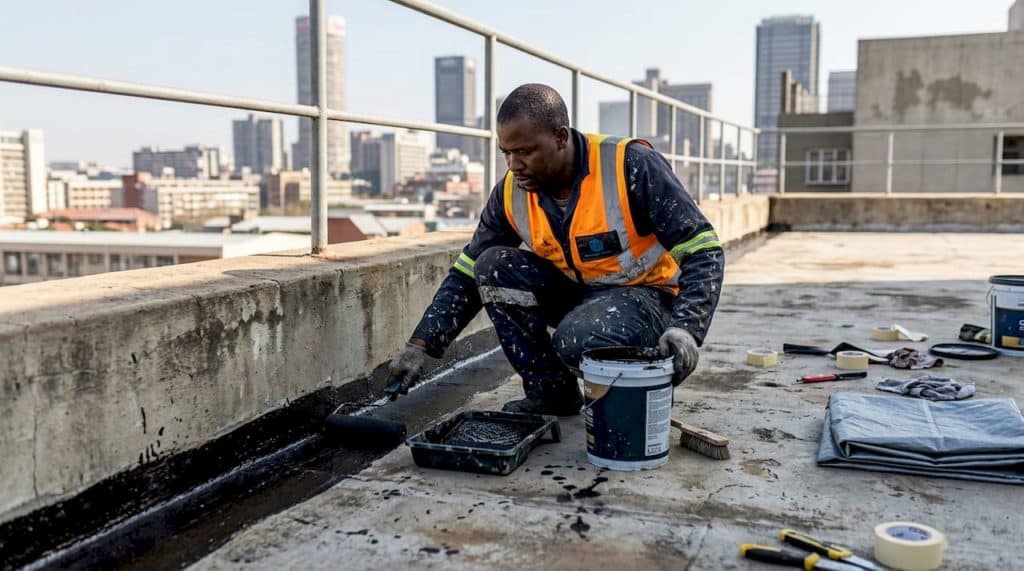
Start by evaluating building use. A residential home in Pretoria has different exposure risks compared to a commercial warehouse in Durban or an industrial facility near a coastal harbour. Residential properties typically prioritise bathrooms, balconies, and flat roof sections, while commercial and industrial buildings often have larger flat roof areas, underground tanks, and basements that require more robust solutions.
Next, identify your key risk areas:
- Flat roofs and parapets (pooling water and UV exposure)
- Basements and below-grade slabs (hydrostatic pressure and ground moisture)
- Wet rooms, bathrooms, and shower enclosures
- Balconies and podium decks
- Water tanks and reservoirs
Local climate conditions matter enormously. Properties in Gauteng experience intense UV and thermal cycling, while those along the Western Cape coastline face salt-laden air and high wind-driven rain. High water-table areas demand solutions that resist sustained hydrostatic pressure. As best practices for waterproofing confirm, matching the system to the environment is not optional, it is essential.
Regulatory compliance is equally important. South African building work must meet SANS 10400-Part L requirements, and new residential construction registered with the NHBRC must carry a five-year watertight guarantee. Non-compliance can void insurance and reduce property value significantly.
A factor that is frequently underestimated is drainage. As waterproofing specialists note, no waterproofing system works in isolation because all require consideration of drainage, exposure, and detailing. A membrane without proper falls and outlet design will fail under prolonged water loading, regardless of its quality. Reading up on preparing for waterproofing projects before you start can prevent costly oversights.
Pro Tip: Always insist on certified installers who apply systems in multiple layers with correct detailing at upstands, penetrations, and joints. A single-layer application at the centre of a roof counts for nothing if the edges are poorly finished.
Types of waterproofing: key methods explained
Understanding your options is the foundation of a sound decision. The main waterproofing systems in South Africa include cementitious coatings, bituminous membranes, liquid applied membranes, sheet membranes, and crystalline admixtures. Each has a distinct application logic.
Cementitious coatings are rigid, cement-based products that are brushed or sprayed onto surfaces. They bond well to concrete and masonry, making them ideal for water tanks, swimming pools, basement walls, and internal wet areas. They are relatively affordable and easy to apply, but their rigidity means they cannot accommodate structural movement or cracking. Read more about cementitious waterproofing explained to understand when this system is the right fit.
Bituminous (torch-on) membranes are layered sheets of modified bitumen applied with a gas torch. They are robust and widely used on flat commercial roofs. Their weakness is UV vulnerability; without a protective screed or aluminium facing, bituminous membranes degrade faster under South Africa’s intense sun.
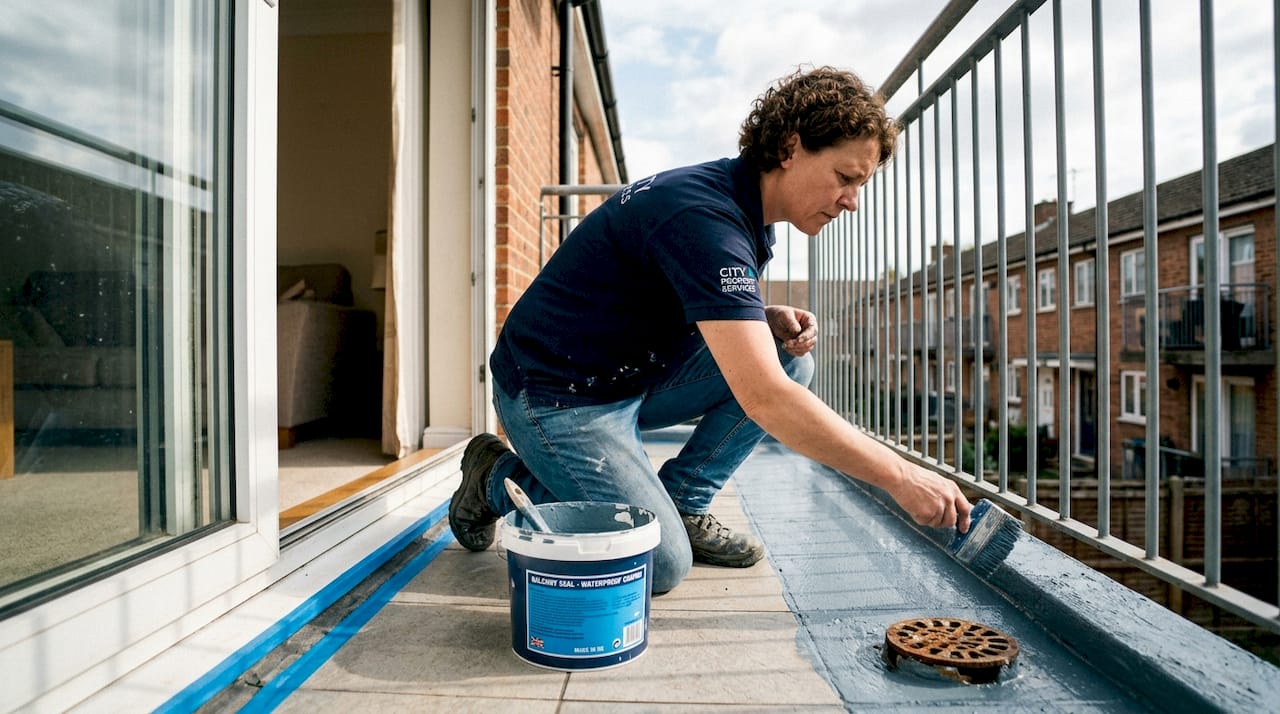
Liquid applied membranes (polyurethane and acrylic systems) are some of the most versatile options available. Applied as a liquid, they cure to form a seamless, flexible barrier that bridges hairline cracks and conforms to complex roof geometries. Liquid applied membranes are particularly well suited to balconies, inverted roofs, and areas with foot traffic overlays.
Sheet membranes such as EPDM (ethylene propylene diene monomer) and TPO (thermoplastic polyolefin) offer outstanding durability. They resist UV radiation, ozone, and thermal cycling exceptionally well, making them a strong match for South Africa’s climate extremes. When comparing traditional versus modern methods, sheet membranes consistently outperform older bituminous systems in longevity.
Crystalline admixtures work differently from surface-applied membranes. Added to concrete during the mix or applied as a coating, they form insoluble crystals within the concrete matrix that block moisture pathways. They are ideal for new construction, basement slabs, and below-grade retaining walls.
Industry guidance consistently recommends a minimum five-year watertight performance standard for all installed waterproofing systems in South Africa, aligned with SANS 10400-Part L and NHBRC requirements.
A quick at-a-glance summary of pros and cons:
- Cementitious: Low cost, rigid, good for tanks and internal walls; not suitable for moving structures
- Bituminous: Robust and proven for flat roofs; requires UV protection
- Liquid PU/Acrylic: Flexible, seamless, high-performance; cost varies by product grade
- EPDM/TPO sheet: Longest lifespan, excellent climate resistance; higher installation skill required
- Crystalline: Integral protection for concrete; limited to cementitious substrates
Comparison of waterproofing systems: lifespan, cost and best use
Now that each major type is clear, it helps to see how they stack up side by side for South African property applications.
| System | Key use | Typical lifespan | Cost rating | Flexibility | UV resistance |
|---|---|---|---|---|---|
| Cementitious | Tanks, basements, wet rooms | 5 to 20 years | Low | Rigid | Low |
| Bituminous (torch-on) | Flat commercial roofs | 10 to 25 years | Medium | Low to medium | Medium (needs facing) |
| Liquid PU/Acrylic | Roofs, balconies, decks | 10 to 25 years | Medium to high | High | High |
| EPDM/TPO sheet | Large flat roofs, exposed areas | 20 to 30+ years | High | High | Excellent |
| Crystalline admixture | Below-grade concrete, slabs | 15 to 25 years | Medium | N/A | N/A |
These lifespan benchmarks reflect real-world performance in South Africa’s climate, where acrylic lasts 5 to 10 years, cementitious 5 to 20 years, bitumen and PU systems 10 to 25 years, and EPDM or TPO membranes 20 to 30+ years.
Brands with a proven track record in South Africa include Sika (polyurethane and cementitious systems), Derbigum (torch-on and self-adhesive membranes), and PUDLO (crystalline waterproofing for concrete). Choosing a reputable brand matters because product consistency directly affects long-term performance.
For below-grade applications where hydrostatic pressure is a constant concern, refer to the detailed below-grade waterproofing guidance for specification advice. Understanding what waterproofing standards 2026 require will also ensure your chosen system remains compliant.
Pro Tip: Never select a system solely on unit price per square metre. Factor in expected maintenance cycles, recoating intervals, and the cost of disruption if the system fails prematurely. A system that lasts 25 years at a higher upfront cost almost always beats one that needs replacing every 8 years.
Critical factors and common pitfalls in waterproofing
Understanding the available systems is only half the solution. Ensuring lasting results requires knowing where and why waterproofing fails in practice.
Drainage integration is as critical as the membrane itself. Water that cannot escape will find a way through even a well-installed barrier. Falls must be designed to direct water to outlets, and those outlets must be kept clear of debris.
Edge situations and penetrations are the most common failure points. Pipes, drains, rooflights, and parapet walls interrupt the continuity of any membrane. Each penetration must be carefully detailed with reinforcing strip, collar, or flashing. Skipping this step is where most installations eventually fail.
Four pitfalls to avoid:
- Installing waterproofing over a damp or poorly prepared substrate
- Neglecting upstand heights at walls and parapets (minimum 150 mm is standard)
- Applying a single coat where two or three are specified
- Choosing a system without considering thermal movement in the substrate
Remediation is significantly more expensive than prevention. Poorly planned waterproofing commonly fails due to poor drainage, inadequate surface preparation, UV degradation, and thermal movement, and remediation typically costs three to five times more than proper upfront prevention. Reading about common waterproofing failures gives property owners a practical picture of what goes wrong and why.
Biannual inspections are strongly recommended. A certified inspector can identify early signs of delamination, cracking, or pooling before water has a chance to penetrate the structure. This is especially important for waterproofing maintenance importance on ageing flat roofs and below-grade structures.
“No membrane is effective against constant hydrostatic pressure alone. Drainage relief is non-negotiable for below-grade waterproofing.”
For complex edge case waterproofing scenarios such as retaining walls and split-level foundations, always consult a structural waterproofing specialist rather than relying on standard product datasheets.
Why the cheapest waterproofing often costs more in South Africa
After seeing the pitfalls, it is clear why a longer-term approach to waterproofing is essential. There is a temptation, especially in cost-constrained projects, to choose the lowest-priced option and move on. In South Africa’s climate, that decision almost always backfires.
Traditional bituminous and basic acrylic systems are cheaper upfront, but they are also the systems most likely to require replacement or repair within five to ten years when they are improperly specified for the exposure conditions. Every time you strip and relay a failed system, you are spending far more than the price difference between a mid-grade and a high-performance option.
Modern PU and EPDM systems are pricier upfront but superior in lifecycle cost and durability, particularly for South Africa’s UV-intense, thermally active environments. On a commercial roof of 1,000 square metres, the cost difference between systems may be modest when amortised over 25 years, but the cost of business disruption caused by a leaking roof is not.
For large assets and critical infrastructure, value lies in lifecycle savings rather than the line item on the initial invoice. Using a waterproofing checklist for durability during the specification phase is one of the most practical ways to shift the conversation from price to performance.
Speak to a waterproofing expert and protect your property
Choosing the right waterproofing system is a decision that will affect your property for decades. Getting it right means balancing system type, local conditions, drainage design, and installer competence in a way that meets South African regulatory standards and protects your investment over the long term.
At Pro Waterproofing, our specialists work with residential, commercial, and industrial property owners across South Africa to identify the most effective, standards-compliant solution for each unique application. Whether you need a full roof membrane assessment, a basement waterproofing specification, or advice on SANS 10400-Part L compliance, we can guide you from consultation through to certified installation. Contact us today for an inspection or to request a no-obligation quote tailored to your property.
Frequently asked questions
How long do different waterproofing systems last in South Africa?
Lifespans vary by system: acrylic and cementitious last 5 to 20 years, bitumen and PU systems 10 to 25 years, and EPDM or TPO membranes can protect a building for 20 to 30 years or more under South African conditions.
Which waterproofing system is cheapest in South Africa?
Cementitious and bituminous coatings carry the lowest upfront cost, but as traditional methods confirm, they tend to be more maintenance-intensive and may need earlier replacement compared to modern liquid or sheet membrane systems.
What standards must waterproofing comply with in South Africa?
SANS 10400-Part L requires professional installation and a minimum five-year watertight performance, and NHBRC compliance mandates a five-year guarantee on all new residential waterproofing work.
What can cause waterproofing systems to fail?
The most common causes include poor drainage, incorrect installation, UV degradation, and movement cracks, and repairs typically cost three to five times more than investing in proper preventive measures from the outset.