
TL;DR:
- Epoxy waterproofing creates a seamless, chemically bonded barrier that resists water and chemicals.
- It is ideal for basements, parking decks, flat roofs, and industrial areas in South Africa.
- Proper surface preparation and expert installation are essential for long-lasting, effective waterproofing.
Many South African property owners invest in waterproofing only to find damp patches reappearing within a few seasons. Conventional solutions such as torch-on bitumen or basic cementitious coatings often fall short on complex surfaces or in areas with high chemical exposure. Epoxy waterproofing offers a fundamentally different approach, forming a rigid, seamless bond with the substrate rather than sitting as a removable layer on top. This guide explains precisely what epoxy waterproofing is, where it performs best, how it compares to alternatives, and what you need to know to get a lasting result on your property.
Table of Contents
- Understanding epoxy waterproofing: What it is and how it works
- Where epoxy waterproofing is used in South Africa
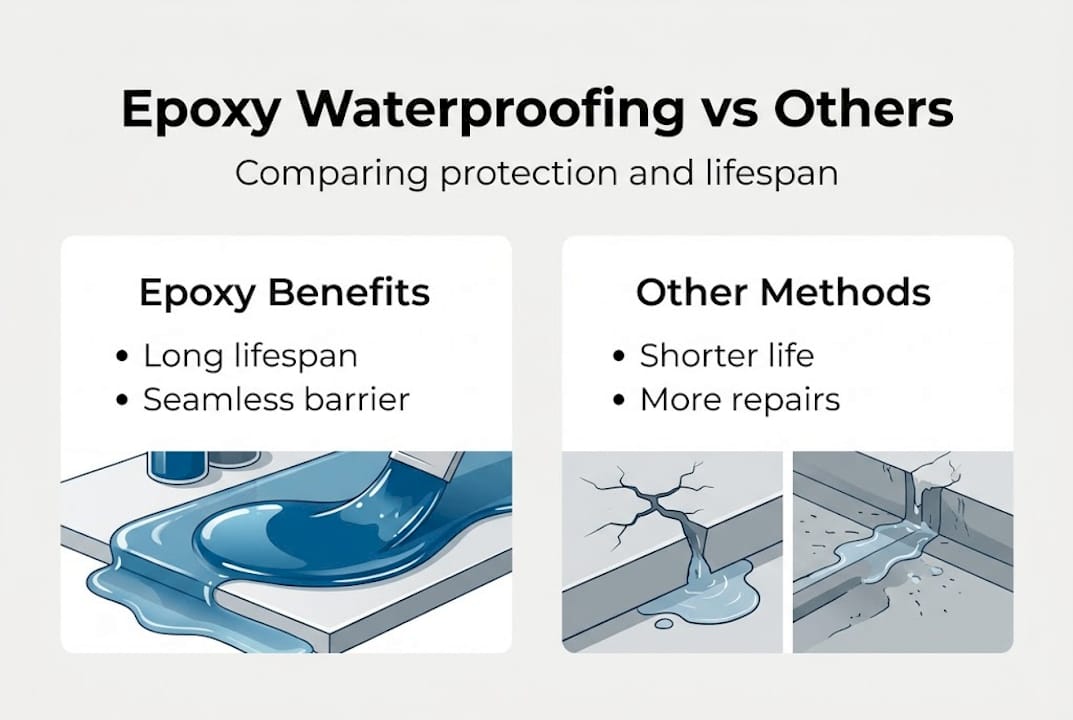
- Epoxy waterproofing vs other waterproofing methods
- Best practices for installing and maintaining epoxy waterproofing
- A practical perspective on epoxy waterproofing in South Africa
- Connect with experts for your epoxy waterproofing needs
- Frequently asked questions
Key Takeaways
| Point | Details |
|---|---|
| Seamless water barrier | Epoxy waterproofing offers a seamless, strong, and reliable barrier against moisture. |
| Versatile applications | It’s ideal for basements, roofs, parking areas, and high-moisture sites across South Africa. |
| Outperforms many alternatives | Compared with traditional systems, epoxy offers better durability and lower maintenance demand. |
| Professional installation matters | Success depends critically on high-quality prep, application, and regular inspections by experts. |
Understanding epoxy waterproofing: What it is and how it works
Epoxy waterproofing is a two-component system made up of an epoxy resin and a hardener. When mixed together, these two components undergo a chemical reaction that produces an extremely hard, cross-linked polymer. This cured material bonds tenaciously to concrete, masonry, and steel, creating a surface that water simply cannot penetrate under normal conditions.
The chemistry matters because it explains the performance. Unlike paint or a surface film, cured epoxy becomes part of the structure. It does not peel away under hydrostatic pressure (the force water exerts when it is trapped against a surface). It resists a wide range of chemicals, oils, and cleaning agents. And because it is applied as a liquid before curing, it flows into surface pores and micro-cracks, sealing them from the inside out.
Key characteristics that set epoxy apart include:
- Seamless coverage: No joints or overlaps means no weak entry points for water.
- High adhesion: Bonds strongly to concrete, brick, and metal substrates.
- Chemical resistance: Handles oils, acids, and cleaning agents far better than most membrane systems.
- Hygienic surface: Non-porous finish resists mould and bacteria growth.
- Load-bearing capacity: Hard-wearing enough for vehicle and foot traffic areas.
As epoxy coatings create a seamless, impervious barrier that resists water penetration in various building applications, this makes them especially useful in South Africa where seasonal heavy rains combine with high humidity to accelerate water ingress in porous structures.
“The climate in coastal and inland regions of South Africa places enormous stress on building envelopes. A waterproofing solution that forms a chemical bond with the substrate is inherently more reliable than one that relies solely on adhesion at the surface.”
Pro Tip: Surface preparation is the single most important factor in how well epoxy performs. Concrete must be clean, dry, and free of oils, dust, and loose particles before application. Skipping this step is the number one reason epoxy systems fail prematurely. Professionals typically use mechanical grinding or shot-blasting, and understanding protecting concrete with epoxy begins with getting this step right.
Where epoxy waterproofing is used in South Africa
Epoxy is not a one-size-fits-all product, but its versatility across building types makes it one of the most widely applied waterproofing solutions in the country. Knowing where it excels helps you decide whether it is the right fit for your project.
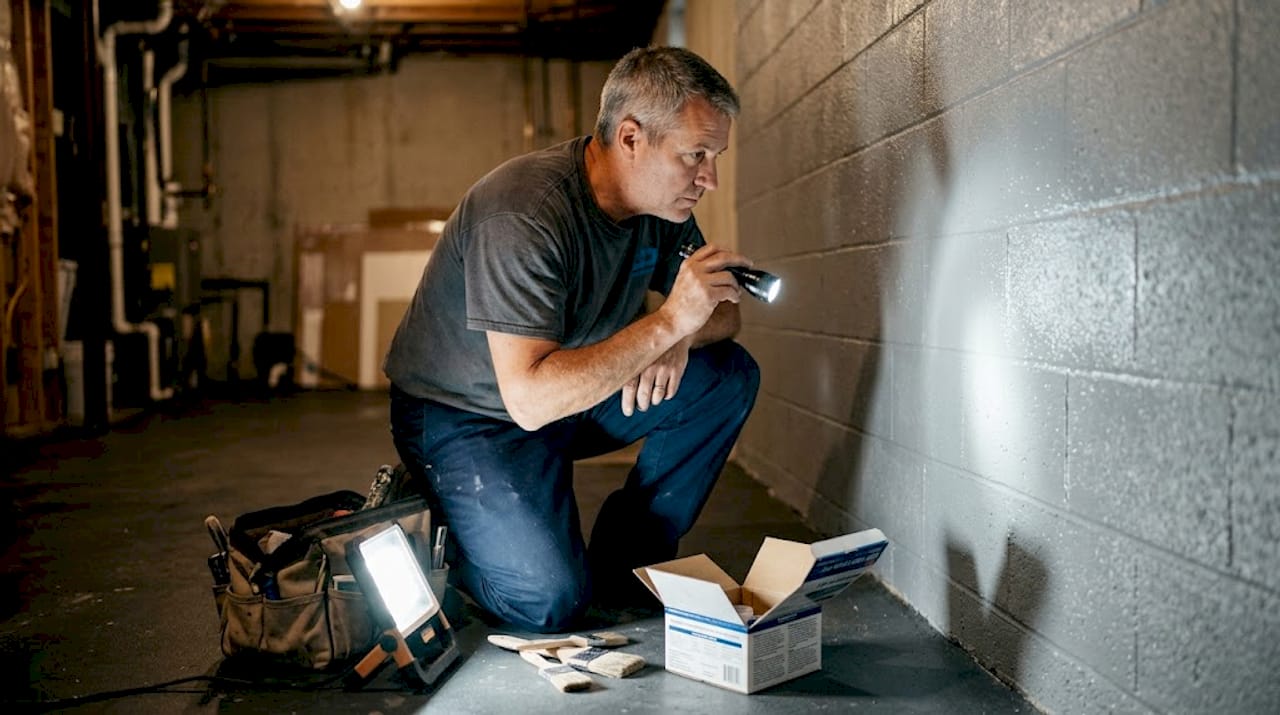
Basements and below-ground walls are perhaps the most critical application. Rising damp and lateral groundwater pressure are common problems in South African homes and commercial buildings, particularly in areas with clay-rich soils. Epoxy applied to interior basement walls creates a negative-side barrier that holds back groundwater effectively.
Parking decks and ramps face a combination of mechanical wear from tyres and chemical attack from oil and fuel spills. Standard membranes can crack under these conditions. Epoxy holds firm, and its seamless surface prevents pooling that accelerates concrete deterioration.
Flat roofs in South Africa experience intense UV radiation and rapid temperature swings that degrade many coating types. With a UV-resistant topcoat applied over the epoxy base, flat roofs gain robust protection against heavy summer downpours without the seams that torch-on bitumen sheets are prone to developing.
Wet rooms, showers, and commercial kitchens benefit from the non-porous, hygienic surface epoxy provides. Grout lines between tiles are notorious entry points for moisture. An epoxy-waterproofed substrate underneath tiles eliminates that risk entirely.
Industrial facilities including food-processing plants, chemical storage areas, and warehouses require a floor and wall coating that can handle aggressive cleaning chemicals and spills without degrading. Epoxy is the standard choice for these environments.
Common applications at a glance:
- Basement walls and floors
- Parking garages, ramps, and podium decks
- Flat and low-pitch roofs
- Showers, bathrooms, and wet rooms
- Commercial kitchens and food preparation areas
- Industrial floors and containment bays
As noted in commercial epoxy applications, epoxy waterproofing is widely used in basements, parking garages, rooftops, and high-moisture commercial environments. For a deeper look at how requirements differ across sectors, the commercial vs residential uses of epoxy reveal important distinctions in specification and thickness.
Epoxy waterproofing vs other waterproofing methods
Choosing the right system means understanding the real differences between options, not just price. Here is how epoxy compares to the most common alternatives used in South Africa.
| Method | Typical service life | Maintenance needs | Best application |
|---|---|---|---|
| Epoxy coating | 10 to 20 years | Low, periodic inspection | Basements, wet areas, floors |
| Torch-on bitumen | 8 to 15 years | Moderate, seam checks | Flat roofs |
| Cementitious coating | 5 to 10 years | Moderate | Below-ground walls |
| Polyurethane membrane | 10 to 15 years | Low to moderate | Roofs, balconies, movement joints |
Where epoxy wins:
- It is seamless. Torch-on bitumen relies on overlapping sheets with seams that eventually lift or crack.
- It bonds chemically, unlike cementitious coatings that merely adhere to the surface.
- It resists chemical attack far better than polyurethane membranes in industrial settings.
- Maintenance demands are lower once the system is correctly installed.
Where epoxy has limits:
- Structures with significant movement (expansion joints or flexible connections) need a polyurethane or hybrid system that can flex without cracking.
- Epoxy requires a dry substrate at installation. In areas with active water ingress, a cementitious plug or crystalline treatment may be needed first.
- UV exposure without a protective topcoat can cause chalking or yellowing over time.
Epoxy often outperforms membranes and bitumen in durability, chemical resistance, and minimal maintenance. Reviewing the full method comparisons for South African properties will help you weigh the right choice for your specific structure.
Statistic to note: Epoxy systems, when correctly applied, consistently deliver service lives of 10 to 20 years, compared to the 8 to 15 years typical of torch-on bitumen systems, which often require seam repairs within five years in areas exposed to thermal cycling.
Best practices for installing and maintaining epoxy waterproofing
Getting epoxy waterproofing right is not simply a matter of rolling on a product. The installation process follows a strict sequence, and deviating from it undermines the entire system.
Step-by-step installation process:
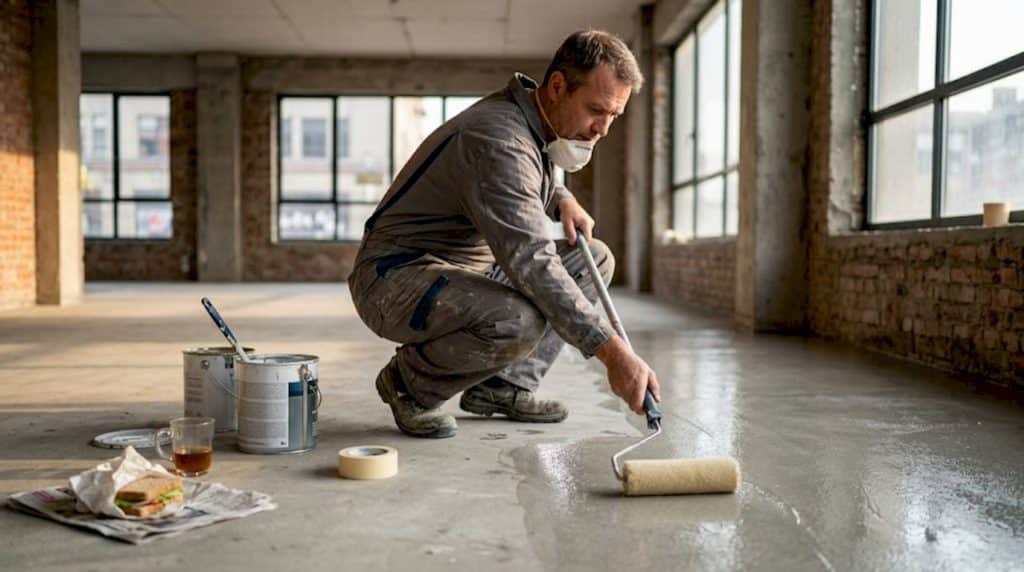
- Surface preparation: Mechanical grinding, scarifying, or shot-blasting removes laitance (the weak, powdery top layer of concrete), contamination, and loose material. As proper surface preparation is critical to epoxy performance, this step is non-negotiable.
- Priming: A low-viscosity primer penetrates the substrate and creates a bonding layer for the main coat.
- Mixing: The resin and hardener are combined in the exact ratio specified by the manufacturer. Incorrect ratios produce soft, uncured material.
- Application: Coats are applied by roller, brush, or squeegee. Most systems require a minimum of two coats to achieve the specified dry film thickness.
- Curing: Epoxy must cure undisturbed, typically for 24 to 72 hours depending on temperature and humidity. Cold weather slows curing; high humidity can interfere with the chemical reaction.
Maintenance schedule:
| Activity | Frequency |
|---|---|
| Visual inspection for cracking or delamination | Every 6 months |
| Cleaning with appropriate chemical-neutral products | As needed |
| Targeted spot repairs on damaged areas | As soon as detected |
| Full re-coat evaluation | Every 10 to 15 years |
For ongoing care, following advice on maintaining epoxy systems will extend the service life considerably. Always address small cracks or lifting edges immediately; water that gets beneath the coating accelerates delamination rapidly.
Common mistakes to avoid:
- Applying epoxy to a damp substrate
- Skipping the primer coat to save time or money
- Applying coats too thick, causing solvent entrapment and bubbling
- Using incompatible cleaning agents that attack the cured surface
Pro Tip: In coastal regions such as Durban or Cape Town, salt-laden air accelerates surface degradation. Specify a marine-grade or UV-stable topcoat, and ensure your installer has experience with surface prep essentials in high-humidity coastal conditions.
A practical perspective on epoxy waterproofing in South Africa
After years of working on South African buildings, ranging from Cape Town’s moisture-saturated coastal suburbs to Johannesburg’s high-altitude summer downpours, a clear pattern emerges. The projects that fail are rarely the ones where the wrong product was chosen. They are the ones where the cheapest installer was chosen.
Epoxy is only as good as the preparation beneath it. We have seen beautifully mixed and applied epoxy fail within two years because the concrete surface had residual moisture or surface contaminants that no one bothered to test for. That repair bill was far larger than what proper preparation would have cost originally.
What most guides miss is that South African building substrates are highly variable. Older buildings especially tend to have carbonated concrete (chemically altered by decades of CO2 exposure) or masonry with inconsistent density. These conditions demand experienced assessment before any product is selected. Lessons from durability lessons for concrete make this very clear. A specialist who tests the substrate and matches the system to real conditions will always outperform a generalist offering a standard solution.
Connect with experts for your epoxy waterproofing needs
If this guide has clarified the potential and the demands of epoxy waterproofing, the next step is getting the right team to assess your property. Epoxy systems deliver exceptional longevity only when they are properly specified and installed by experienced professionals who understand local conditions.
At Pro Waterproofing, we work with property owners and building managers across South Africa to provide expert assessments, honest recommendations, and high-quality application. Whether you are dealing with a damp basement, a leaking roof, or planning a new industrial facility, our team will match the right epoxy waterproofing solutions to your specific structure and budget. Contact us today for a no-obligation consultation and protect your investment for decades to come.
Frequently asked questions
How long does epoxy waterproofing last?
With proper installation and maintenance, epoxy waterproofing can last 10 to 20 years in South African conditions, making it one of the longer-lasting systems available.
Can epoxy waterproofing be repaired if damaged?
Yes, small damaged areas can be repaired locally by cleaning, priming, and reapplying fresh epoxy. Epoxy repairs are cost-effective when issues are addressed early rather than left to spread.
Is epoxy waterproofing suitable for exterior applications?
Epoxy works well on flat roofs, balconies, and industrial exteriors, provided appropriate UV-resistant topcoats are applied to protect the base coat from solar degradation.
What surfaces are best for epoxy waterproofing?
Concrete, cement screeds, and masonry are the ideal substrates. Substrate compatibility affects overall performance significantly, and wood is generally not recommended due to its movement and moisture absorption characteristics.