

TL;DR:
- Most water damage claims in South Africa result from geyser failures rather than storm-related events. Regular maintenance of appliances, pipes, and gutter systems can prevent gradual and costly water damage. Proactive waterproofing and inspections lower insurance risks and protect properties from hidden, ongoing leaks.
Most South African homeowners assume heavy storms are their biggest water damage threat. The reality is far more surprising: geyser issues alone account for roughly 70% of all household insurance claims in the country. That single statistic should shift how you think about protecting your home. Water damage is rarely dramatic. It is usually quiet, gradual, and entirely preventable when you know where to look. This guide walks you through the most common causes, how to spot them early, and what practical steps will keep your property safe.
Table of Contents
- Burst and leaking pipes: The silent structural threat
- Faulty appliances: Why geysers and machines dominate insurance claims
- Clogged gutters and downspouts: The overlooked menace
- Weather and municipal surges: The unpredictable external risks
- Maintenance matters: How neglect amplifies risks and costs
- What most guides miss: Insurance limits and proactive planning
- Protect your property with expert waterproofing solutions
- Frequently asked questions
Key Takeaways
| Point | Details |
|---|---|
| Geysers drive most claims | South African household insurance claims are dominated by faulty geysers, so proactive checks are vital. |
| Pipe failures are structural threats | Ageing and surges in pipes often go unnoticed but quickly lead to costly property damage. |
| Maintenance prevents major losses | Up to 25% of building damage is avoidable with regular waterproofing and routine checks. |
| Municipal boundary matters | Water meter location determines the responsibility split for repairs and insurance. |
| Most gradual damage isn’t insured | Insurance policies generally do not cover leaks or issues from neglected maintenance. |
Burst and leaking pipes: The silent structural threat
Pipes are the circulatory system of any building. When they fail, the consequences spread far beyond the immediate leak. Burst or leaking pipes are among the leading causes of water damage in South African homes, driven by aging infrastructure, corrosion, excessive pressure, and fluctuations in the municipal supply.
South Africa’s municipal water network is under considerable strain. Ageing pipes in older suburbs carry water at inconsistent pressures, and when pressure surges from municipal issues hit a weakened section of your internal plumbing, the result can be a sudden burst that floods a ceiling, wall cavity, or subfloor. Many homeowners only discover the damage weeks later, once mould appears or plaster starts to bubble.
There is also a clear boundary you need to understand: municipal responsibility for water infrastructure ends at your property’s water meter. Everything from that point inward is your financial and legal responsibility. A pipe failure inside your walls is yours to fix, regardless of what triggered it.
The most common pipe failure drivers in South African homes include:
- Corrosion in older galvanised steel or copper pipes, especially in properties built before the 1990s
- Age-related brittleness in unplasticised polyvinyl chloride (uPVC) pipes exposed to heat cycles
- Excessive water pressure beyond the recommended 400 to 500 kilopascals for residential systems
- Thermal expansion caused by hot water pipes expanding and contracting over years of use
- Tree root intrusion into underground supply or drainage lines, common in older gardens
“The most dangerous leaks are the ones you cannot see. A slow seep inside a wall cavity can saturate insulation, rot timber framing, and feed mould colonies for months before you notice a single visible stain.”
Understanding waterproofing maintenance as part of your broader property care routine is the most effective way to catch pipe-related issues before they escalate. The role of waterproofing in protecting wall and floor assemblies becomes critical once any pipe leak introduces moisture into structural elements.
Pro Tip: Inspect visible pipe runs under sinks and in utility areas every six months. Look for green or white mineral deposits around joints, soft spots on ceilings below bathrooms, and unexplained spikes in your water bill. These are early warning signs that a slow leak is already at work.
Faulty appliances: Why geysers and machines dominate insurance claims
Pipes are only part of the story. Next, consider appliances, the hidden source of an enormous proportion of insurance claims across South Africa.
Faulty appliances including geysers, washing machines, and dishwashers cause significant water damage through worn hoses, degraded seals, and unexpected overflows. Geyser failures alone account for roughly 70% of household insurance claims nationally, making them the single most important appliance to monitor.
Why are geysers so problematic? Most South African homes rely on pressurised storage geysers, typically mounted in ceiling spaces or on external walls. These units operate under constant pressure and temperature stress. Over time, the sacrificial anode rod that prevents tank corrosion depletes, the drip tray beneath the unit fills and overflows, and the pressure relief valve can fail silently. By the time the geyser bursts or overflows, ceilings are already soaked and plaster board is damaged beyond repair.
| Appliance | Primary failure mode | Average claim frequency |
|---|---|---|
| Geyser | Tank corrosion, pressure valve failure | Very high (70% of claims) |
| Washing machine | Inlet hose burst, pump seal failure | Moderate |
| Dishwasher | Door seal degradation, drain hose overflow | Lower, but costly |
| Refrigerator with ice maker | Supply line crack or loose fitting | Low but often undetected |
The good news is that appliance-related damage is highly preventable with a structured routine. Here is a practical maintenance sequence to follow annually:
- Have a registered plumber inspect your geyser’s pressure relief valve and anode rod every 12 to 18 months.
- Replace washing machine inlet hoses every five years, or sooner if you notice cracking, bulging, or discolouration.
- Check dishwasher door seals monthly by running your finger along the rubber gasket. Any crumbling or tearing should be addressed immediately.
- Verify that the drip tray beneath your geyser is clean, connected to a functional overflow pipe, and not already holding standing water.
- Inspect the area around all appliances after each seasonal weather change, as temperature fluctuations accelerate hose and seal degradation.
“Most geyser failures are not sudden catastrophic explosions. They are slow, progressive failures that a trained plumber would spot in five minutes during a routine check. The tragedy is that most homeowners wait until the ceiling collapses.”
Knowing how to prevent water damage in South African homes means treating geyser inspections as non-negotiable rather than optional. Reviewing waterproofing failures examples from real properties will also give you a clearer picture of what happens when appliance leaks go undetected in ceiling and wall cavities.
Clogged gutters and downspouts: The overlooked menace
Well-maintained appliances are just one line of defence. The next issue is roofing and gutter systems, which far too many South African homeowners ignore until the rainy season arrives and the damage is already done.
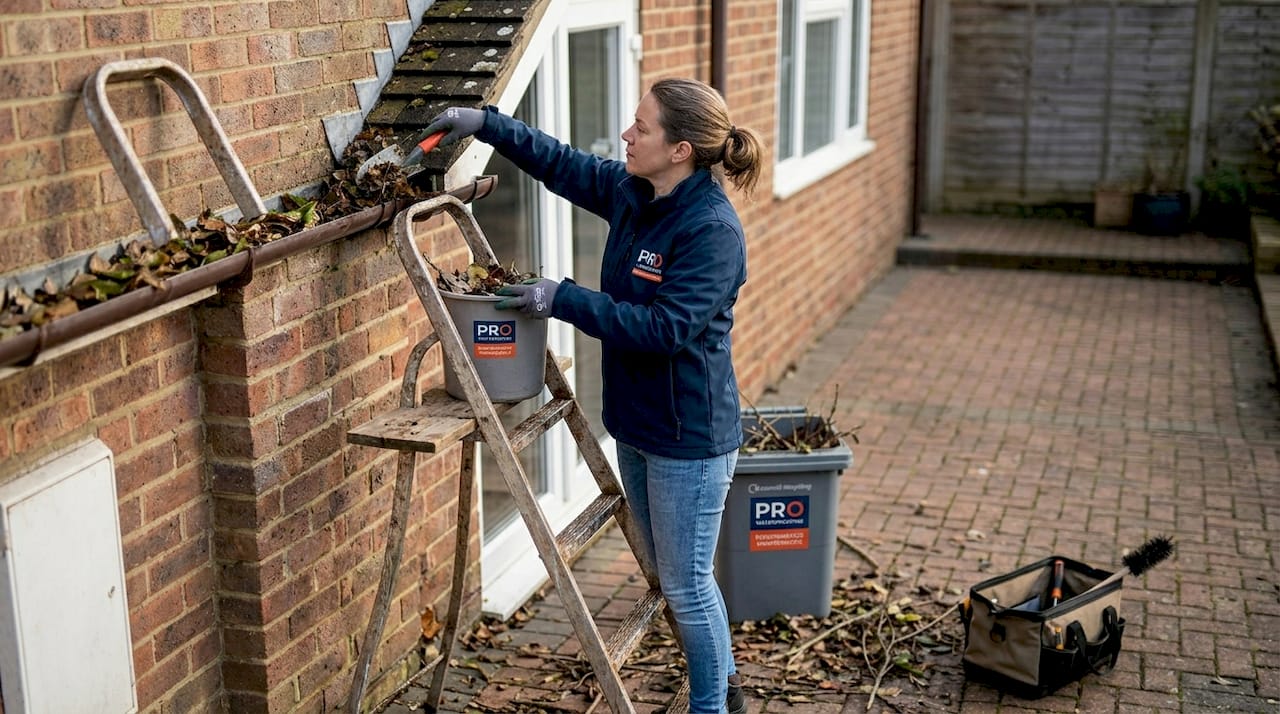
Clogged gutters and downspouts cause overflow, foundation pooling, and wall seepage, leading to long-term structural deterioration that compounds year after year. When gutters are blocked by leaf debris, bird nests, or soil buildup, rainwater has nowhere controlled to go. It backs up, spills over the gutter lip, and runs directly down your exterior walls or pools against your foundation.
The difference between a maintained and neglected gutter system becomes starkly clear when you compare outcomes:
| Condition | During heavy rain | 12 months later | 5 years later |
|---|---|---|---|
| Clean and functional | Water directed safely to drain | No structural impact | Property value maintained |
| Partially blocked | Overflow at low points | Damp patches on walls | Rising damp established |
| Fully blocked | Sheet overflow along fascia | Foundation pooling begins | Structural repairs required |
The hidden cost of neglecting gutters is particularly insidious. Water that pools against a foundation gradually saturates the soil, increasing hydrostatic pressure (the force exerted by water against a structure) against basement walls and ground-floor slabs. In South Africa’s clay-heavy soils, this can cause heaving and cracking in foundations over time.
A practical gutter maintenance routine includes:
- Clearing debris at least twice per year, typically in autumn after leaf fall and in spring before the rainy season
- Flushing downspouts with a garden hose to confirm water flows freely from gutter to drain
- Checking for sags or separations in the gutter run, which indicate bracket failure and pooling inside the gutter itself
- Inspecting downspout extensions to ensure water is being directed at least one metre away from the building’s foundation
Knowing how to maintain waterproofed areas is directly relevant here, because even excellent waterproofing on your walls and roof will be undermined if gutters are directing water back against the structure.
Weather and municipal surges: The unpredictable external risks
Beyond routine maintenance, uncontrollable external events also pose serious water damage concerns for South African property owners and managers.
South Africa’s weather is increasingly unpredictable. Severe weather, storms, and flooding overwhelm drainage systems, cause exterior damage and water intrusion, and create sudden pressure surges in municipal supply lines that burst internal pipes without warning. KwaZulu-Natal, the Western Cape, and Gauteng have all experienced extreme rainfall events in recent years that caused widespread property damage.
The key risks in this category include:
- Flash flooding from inadequate municipal stormwater infrastructure overwhelming floor-level entry points
- Wind-driven rain penetrating roof tile laps, ridge caps, and deteriorated flashing around chimneys or skylights
- Municipal pressure events during supply restoration after outages, which create sudden high-pressure surges
- Soil saturation around foundations after prolonged rainfall, driving moisture through basement walls and ground-level slabs
- Debris impact from storms damaging gutters, downspouts, or roof surfaces, creating unprotected entry points
Key statistic: Properties without functioning stormwater management systems face significantly higher damage costs during extreme weather events. Roof and drainage integrity are your first and most cost-effective line of defence.
For property managers overseeing commercial or multi-unit buildings, a structured commercial waterproofing checklist is an invaluable tool for identifying vulnerabilities before a weather event exposes them. Understanding commercial waterproofing best practices will also help you prioritise upgrades to flat roofs, basement walls, and below-grade structures that are most vulnerable during sustained rainfall.
Maintenance matters: How neglect amplifies risks and costs
The thread running through every water damage cause covered in this guide is consistent, structured maintenance. When it is absent, costs multiply rapidly.
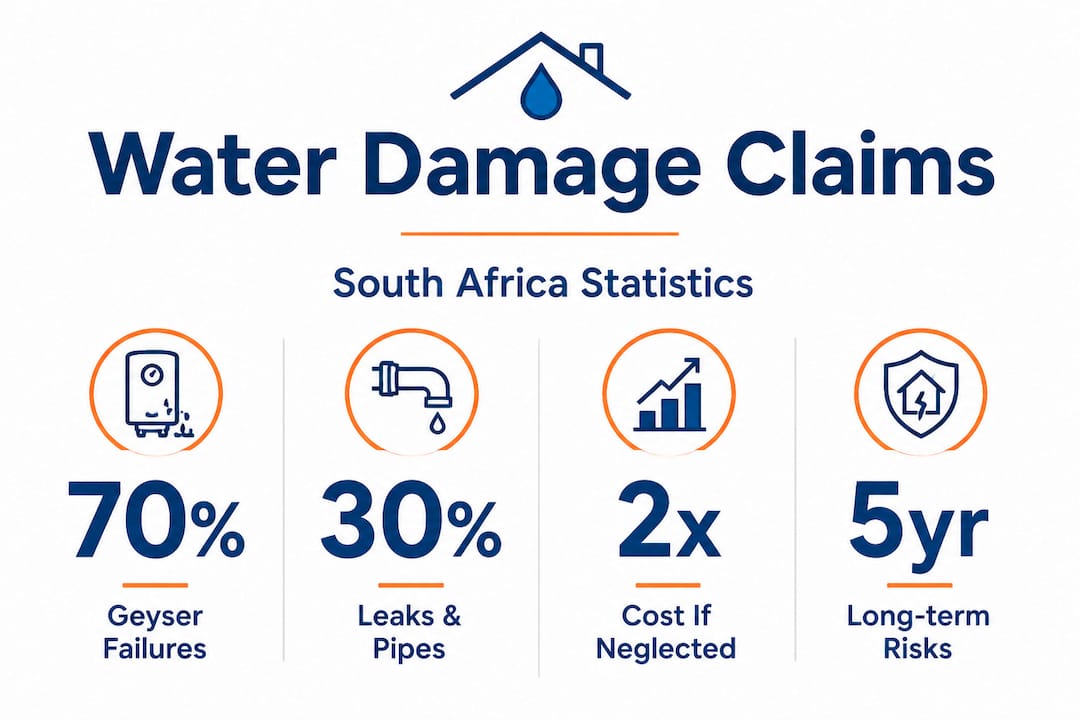
The numbers are sobering. Geyser failures drive 70% of household insurance claims. Undetected leaks contribute to roughly 40% of structural water damage. When waterproofing systems fail due to lack of maintenance, they can account for up to 80% of associated repair costs. A study on building maintenance methodology found that inadequate maintenance is responsible for approximately 25% of all building damage, a figure that underscores how much of the risk sits entirely within your control.
Here is a practical maintenance framework built around the most common failure points:
| Area | Recommended check | Frequency |
|---|---|---|
| Geyser and water heater | Pressure valve, anode rod, drip tray | Every 12 to 18 months |
| Pipes and joints | Visual inspection, water bill monitoring | Every 6 months |
| Gutters and downspouts | Clear and flush | Twice yearly |
| Roof and flashing | Visual check for cracks, lifted tiles | After every major storm |
| Waterproofing membranes | Check for blistering, cracking, or delamination | Annually |
| Appliance hoses and seals | Replace worn components | Every 3 to 5 years |
Additional actions that reduce cumulative risk include:
- Installing a water pressure regulator if your supply pressure regularly exceeds 500 kilopascals
- Using a geyser timer or smart controller to reduce thermal cycling and extend tank life
- Applying waterproofing sealant around window frames and door thresholds every three years
- Ensuring all tiled wet areas have functioning drainage and intact grout lines
Understanding why waterproofing is not negotiable becomes much clearer when you see the cost of deferred maintenance. Learning how to maintain waterproofing systems actively gives you a structured approach rather than a reactive one.
Pro Tip: Set calendar reminders for each maintenance task with a brief log of what you checked and any issues noted. This record becomes invaluable when making insurance claims, because it demonstrates active maintenance and distinguishes sudden damage from gradual neglect in the insurer’s assessment.
What most guides miss: Insurance limits and proactive planning
Having explored the main causes, there is one critical area that most homeowner guides handle poorly: the gap between what you think your insurance covers and what it actually pays out.
The distinction is straightforward but frequently misunderstood. Sudden and accidental damage such as a pipe that bursts without warning is typically covered by household insurance. Gradual damage caused by a slow-dripping pipe, a deteriorating geyser, or neglected waterproofing is almost universally excluded. Insurers interpret gradual damage as a maintenance failure, and they are within their rights to do so.
This creates a dangerous false sense of security. Many homeowners assume that if they have insurance, water damage is “covered.” In practice, the most common and costly forms of water damage, specifically the ones that build up slowly over months, are precisely the ones insurers will decline to pay out on.
The municipal responsibility boundary adds another layer of complexity. Your municipality is accountable for the network up to your water meter. A mains burst in the street is their problem. A pipe failure anywhere on your side of the meter is yours, regardless of whether a municipal pressure surge caused it. This is not an abstraction. It is a practical financial reality that affects how you plan maintenance and where you invest in pipe protection.
Proactive care, which means regular inspections, timely replacements, and professional waterproofing maintenance, is genuinely more effective than any insurance arrangement. A claim pays for repairs after damage occurs. Maintenance prevents the damage from occurring at all. Understanding how to maintain waterproofing for lasting protection reframes spending on maintenance as a cost-saving measure rather than an added expense.
The most resilient property owners we work with do not think in terms of “if something leaks.” They think in terms of scheduled checks, planned replacements, and building-wide assessments that find problems before they find them.
Protect your property with expert waterproofing solutions
If prevention is the best defence against water damage, then investing wisely in professional protection is your next practical step.
Most of the damage scenarios covered in this guide, from failed geyser trays to saturated foundation walls and compromised roof membranes, are entirely preventable with the right waterproofing systems in place. At Pro Waterproofing, we work with homeowners and property managers across South Africa to identify vulnerabilities, apply lasting solutions, and keep buildings dry through every season. Whether you need a full assessment of an older property or guidance on maintaining waterproofed areas, our team is equipped to help you protect your investment with confidence. Contact us today for a professional quote.
Frequently asked questions
What is the most common cause of water damage in South African homes?
Faulty geysers are the leading cause, responsible for nearly 70% of claims in South African households. Many homeowners are unaware of this until they experience a failure firsthand.
Does insurance cover gradual water damage from leaks or appliance failures?
Typically, only sudden accidental damage is covered. Gradual leaks, slow deterioration, or damage attributable to poor maintenance are almost always excluded from household insurance policies.
Where does municipal responsibility for water damage end in South Africa?
Municipal responsibility ends at the water meter. From that point inward, the homeowner is accountable for all pipes, fittings, and fixtures on the property.
How often should gutters be cleaned to prevent water damage?
Gutters should be inspected and cleared at least twice a year. The ideal times are autumn after leaf fall and spring before the rainy season, as clogged gutters directly lead to foundation pooling and wall seepage.
What percentage of building damage is caused by inadequate maintenance?
Inadequate maintenance is responsible for approximately 25% of all building damage, according to relevant methodology studies. This figure confirms that a significant share of costly repairs is avoidable with consistent upkeep.
Recommended
- Top ways to prevent water damage in SA homes
- Spot the signs of water damage early and save
- Identify Structural Water Damage – Why Early Action Matters
- 7 Essential Waterproofing Tips for Homeowners in South Africa
- How to detect water leaks and protect your home in 2026
- Why fix a water leak? Protect your home and save money