

TL;DR:
- Expansion joints are essential for managing building movement caused by temperature and ground settlement. Neglecting waterproofing can lead to water ingress, causing steel corrosion, mould, and structural damage. Regular inspection and professional waterproofing of joints protect property value and reduce costly repairs.
Cracks near a wall junction or along a floor seam rarely look alarming at first glance. Most property owners assume they are cosmetic, seal them with ordinary filler, and carry on. What they miss is that those gaps are often unprotected expansion joints, and without proper waterproofing, they become a direct pathway for water to attack the heart of a building. This guide explains what expansion joints are, what happens when they are left exposed, and what you can do right now to protect the long-term value of your property.
Table of Contents
- What are expansion joints and why do they matter?
- The risk: What happens when expansion joints are not waterproofed
- How waterproof expansion joints protect your property
- Maintaining waterproof expansion joints: Practical steps for property owners
- Our take: Why waterproof expansion joints are the unsung hero of building durability
- Safeguard your property with professional expansion joint waterproofing
- Frequently asked questions
Key Takeaways
| Point | Details |
|---|---|
| Essential building protection | Waterproof expansion joints protect against structural damage that leads to unsafe and costly repairs. |
| Reduces long-term costs | Proper joint waterproofing slashes maintenance bills by stopping water penetration and corrosion early. |
| Boosts property value | Structures with well-maintained waterproofing retain their market value better than neglected ones. |
| Prevention is easier than repair | Routine inspections and targeted maintenance prevent most problems before they start. |
What are expansion joints and why do they matter?
All buildings move. Temperature swings across South Africa, from the icy Highveld winters to the humid coastal summers, cause building materials to expand and contract every single day. Settlement in the ground adds more movement. Without a planned break in the structure to absorb that stress, concrete, brickwork, and screeds would crack or warp under the pressure.
Expansion joints are deliberate gaps built into a structure for exactly this purpose. They allow independent sections of a building to shift slightly without transferring damaging stress to the surrounding materials. As expansion joint explanation confirms, expansion joints are vital for managing structural movement in buildings. They are not optional add-ons or cosmetic features. They are load-bearing safety valves built into the design.
You will find expansion joints in several locations across a typical South African building:
- Floor joints: Between concrete slabs in large floors or podium decks
- Wall joints: Vertical gaps dividing long stretches of brickwork or precast panels
- Roof joints: Separating roof sections to prevent warping or membrane tearing
- Facade joints: Running up the face of multi-storey buildings between structural frames
“An expansion joint that is visible but unprotected is not a design feature. It is a vulnerability waiting to be exploited by water, debris, and biological growth.”
The critical misunderstanding we see repeatedly is that building owners assume someone else already dealt with the waterproofing. In reality, unless a qualified contractor has specifically applied a waterproof system to each joint, those gaps remain open. Understanding the basics of joint waterproofing basics is the first step toward making an informed decision about your building.
The risk: What happens when expansion joints are not waterproofed
With a solid understanding of expansion joints, it is important to explore why neglecting their waterproofing can be disastrous.
Water does not need a large gap to cause serious damage. It follows gravity and capillary action through any available crack or opening, and an unsealed expansion joint gives it a direct route into the structural core of a building. As expansion joint material risks highlight, water can easily penetrate unprotected expansion joints, leading to corrosion and costly repairs.
The consequences escalate quickly:
- Corrosion of steel reinforcement: Once moisture reaches the rebar inside concrete, rust begins forming. Rust expands, and that expansion causes the surrounding concrete to crack and spall outward, weakening the slab or wall from the inside.
- Mould and biological growth: Damp voids created behind walls or under floors are ideal conditions for mould, particularly in South Africa’s wetter regions. Mould is a health risk and degrades organic building materials.
- Spalling and delamination: The freeze-thaw cycle in colder regions, or simply the pressure from absorbed moisture, causes the surface layer of concrete to peel away, exposing fresh material to further attack.
- Subfloor and foundation damage: Water that reaches the subfloor can compromise the bearing capacity of the soil beneath, especially in expansive clay soils common across the Gauteng and KwaZulu-Natal regions.
The cost of repair is dramatically higher than the cost of prevention. Replacing a corroded slab section, remediating mould throughout a building, or underpinning a compromised foundation runs into hundreds of thousands of rands. The commercial waterproofing examples illustrate how quickly commercial buildings suffer when these joints are overlooked during construction or handed over without proper sealing.
Pro Tip: Schedule a professional inspection of all expansion joints before the wet season begins. In most of South Africa, that means acting before October. Catching a failing sealant early is a fraction of the cost of repairing the damage water leaves behind.
South Africa’s rainfall patterns add particular urgency to this issue. The summer rainfall regions experience intense convective storms that deliver large volumes of water in a short time. That sudden surge overwhelms any marginal protection and drives water into every available gap. Buildings near the coast face salt-laden moisture that accelerates steel corrosion even further. The risk is not theoretical. It is a measurable, seasonal threat.
How waterproof expansion joints protect your property
Having established the downsides of neglected joints, let us highlight how waterproofing prevents these risks and preserves your assets.
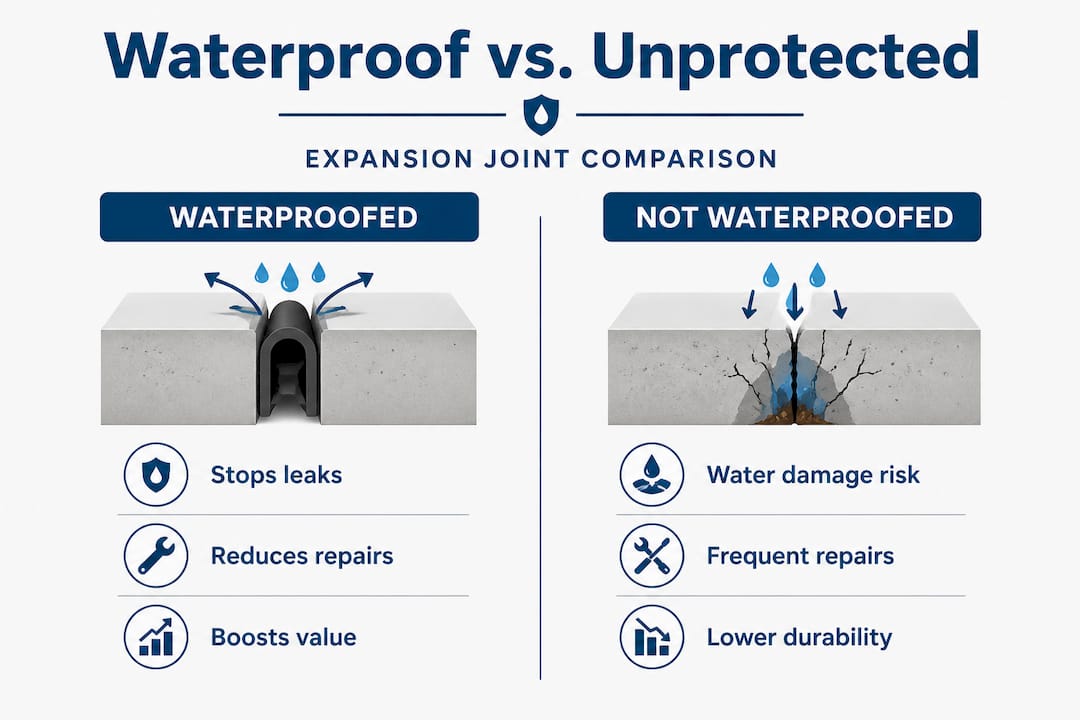
A properly waterproofed expansion joint does something elegant. It allows the structural movement the joint was designed for, while simultaneously blocking water, dust, and contaminants from entering that gap. The waterproofing system moves with the joint, stretching and compressing without cracking or delaminating. That flexibility is what separates a quality waterproofing installation from a basic sealant application.
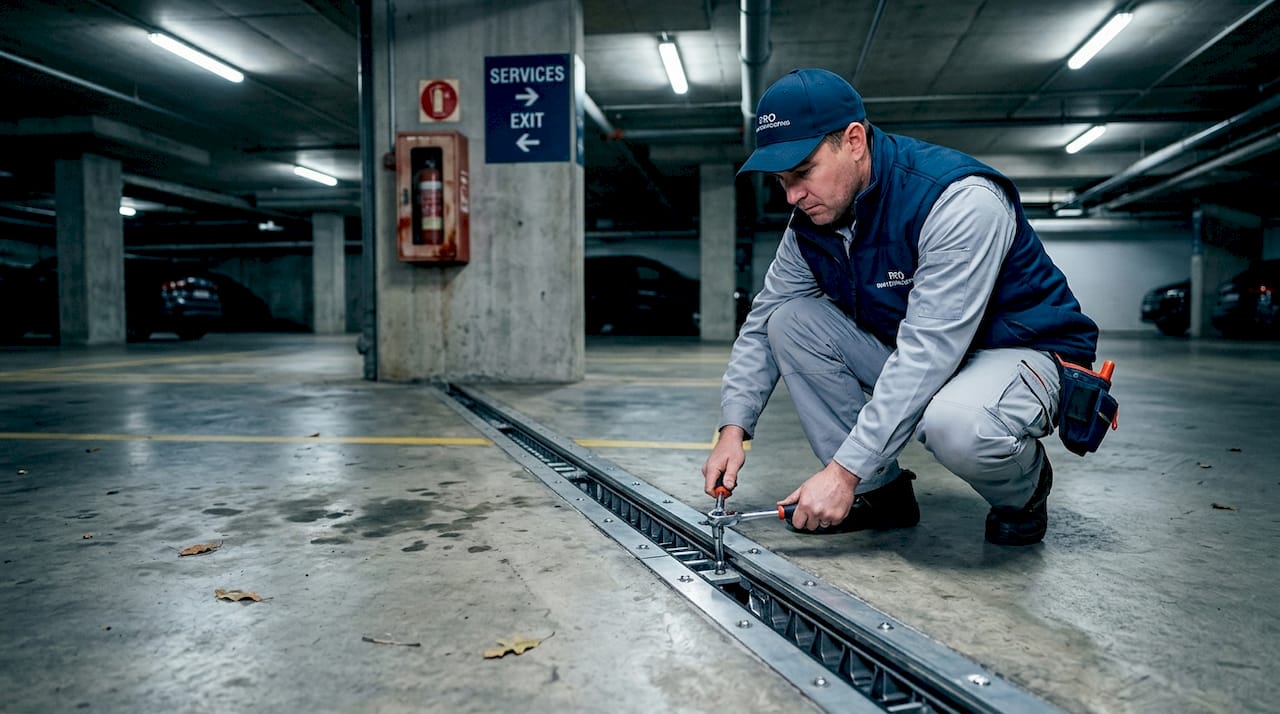
As waterproofing checklist confirms, properly waterproofed expansion joints prevent water ingress, reduce maintenance needs, and safeguard property value. The financial case is straightforward: invest modestly in waterproofing now, or invest substantially in structural repairs later.
Waterproofed vs. non-waterproofed expansion joints
| Feature | Waterproofed joint | Non-waterproofed joint |
|---|---|---|
| Water resistance | High, continuous barrier | None, open to ingress |
| Structural integrity | Preserved long term | Compromised over time |
| Maintenance frequency | Low, periodic inspection | High, reactive repairs |
| Repair costs over 10 years | Low | Very high |
| Property value impact | Positive | Negative |
| Risk of mould or corrosion | Minimal | Significant |
Choosing the right waterproofing materials matters enormously. Polyurethane sealants, modified bitumen systems, and flexible polyurea coatings each suit different joint widths, movement tolerances, and exposure conditions. A flat roof joint faces UV radiation and ponding water. A basement floor joint faces hydrostatic pressure. The correct best waterproofing materials for one location may be entirely wrong for another. This is precisely why generic solutions fail and why specifying the correct product for each joint type is a professional task.
A professional installation typically follows these steps:
- Joint assessment: The contractor measures the joint width, depth, and movement range, and checks for existing damage or contamination.
- Surface preparation: All loose material, old sealant, and contaminants are removed. The joint faces are cleaned and primed where necessary.
- Backer rod installation: A compressible foam backer rod is inserted to control the depth of sealant and prevent three-sided adhesion, which would restrict movement.
- Waterproofing membrane or sealant application: The chosen system is applied in the correct thickness, ensuring full adhesion to both joint faces.
- Inspection and testing: The finished joint is checked for voids, pinholes, or adhesion failures before the area is returned to use.
Pro Tip: During a property handover or before signing a building completion certificate, always request documentary proof that expansion joints have been waterproofed. Ask for the product data sheets and the contractor’s application method statement. This simple step can save you from inheriting someone else’s problem.
Using waterproof adhesives that are compatible with your joint system also matters at transition zones, particularly where entrance matting or flooring meets a structural joint.
Maintaining waterproof expansion joints: Practical steps for property owners
Now that you are convinced of the value of waterproofed expansion joints, here is how you can ensure they last and perform as promised.
Waterproofing does not last forever without attention. Sealants age, membranes can be physically damaged, and debris accumulation can hold moisture against the joint face and accelerate deterioration. Regular inspection and maintenance of expansion joints is essential to prevent leaks and structural issues. In South African conditions, at least one thorough inspection per year is the minimum standard, with a second check after any extreme weather event.
Signs of joint failure and recommended action
| Warning sign | What it indicates | Recommended action |
|---|---|---|
| Visible cracking in sealant | Sealant has aged or dried out | Reseal with compatible product |
| Water staining on surfaces below | Active water ingress through joint | Immediate professional inspection |
| Mould growth near joint | Sustained moisture presence | Mould treatment and resealing |
| Rust streaks from joint area | Steel reinforcement corroding | Structural assessment required |
| Sealant pulling away from face | Adhesion failure | Strip and reapply with primer |
| Debris or vegetation in joint | Joint is open to contamination | Clear debris and inspect membrane |
Proactive maintenance follows a straightforward routine:
- Clear debris regularly: Leaves, soil, and construction waste pack into expansion joints and trap moisture. Clear them at least twice a year, more often in areas with significant tree cover.
- Inspect sealant condition: Look for cracking, hardening, or shrinkage. A healthy sealant should still feel slightly flexible and show no adhesion gaps.
- Check for water staining: Staining on walls or ceilings below a joint indicates that water has already entered. Act immediately rather than waiting for the next scheduled inspection.
- Test drainage paths: Ensure that water falling onto horizontal joints has a clear path to drain away. Ponding water on a joint accelerates sealant breakdown.
- Document everything: Keep a maintenance log with dates, photographs, and any remedial work done. This record is invaluable for warranty claims and for the next owner of the property.
Pro Tip: Keep a maintenance log that records every inspection date, what was found, and what action was taken. If a joint fails prematurely and you need to make a warranty or insurance claim, that documented history is your strongest evidence.
For ongoing guidance, both the waterproofing maintenance resource and the maintenance guide South African properties offer detailed frameworks tailored to local conditions and climate zones. South Africa’s diversity of climates means that a coastal property in Durban and a commercial building in Johannesburg require meaningfully different maintenance schedules and product choices.
Our take: Why waterproof expansion joints are the unsung hero of building durability
Stepping back from the practicalities, there is a broader lesson worth considering. In over a decade of working with South African property owners and building managers, we have observed a consistent pattern. Expansion joints are ignored until water is already running down an interior wall, or until a floor slab lifts and tiles crack across an entire section of a building.
The reason is understandable. Expansion joints are not glamorous. They do not appear in marketing photographs of beautiful new developments. Nobody showcases the quality of their joint waterproofing the way they showcase a polished concrete floor or a feature facade. Yet that invisible layer of protection, correctly specified and properly installed, is what allows the rest of the building to perform as designed for decades.
What we find particularly frustrating is the assumption that waterproofing is something you only need to worry about after a problem appears. That is the most expensive way to approach it. By the time you see water damage on a ceiling or rust streaking down a wall, the ingress has usually been happening for months. The visible damage is the end of a long process, not the beginning.
Contractors who specialise in waterproofing play a vital role in ensuring long-term building durability, and that expertise extends specifically to knowing how different joint types behave, what products are compatible, and how to install a system that will genuinely move with the building rather than debond after the first wet season. A general builder who applies a bead of standard sealant is not delivering the same outcome, regardless of how tidy the finish looks.
Our most direct advice: treat expansion joint waterproofing as a non-negotiable part of building commissioning, not as an optional extra. If you are buying an existing property, make joint waterproofing a specific item on your pre-purchase inspection list. The cost of addressing it proactively is predictable and manageable. The cost of addressing structural damage caused by years of water ingress is neither.
Safeguard your property with professional expansion joint waterproofing
If this article has prompted you to look more closely at your building’s expansion joints, that is exactly the right response. Whether you are managing a commercial building, an industrial facility, or a residential complex, getting a professional assessment is the most practical next step you can take right now.
At Pro Waterproofing, we provide tailored assessments and solutions across South Africa, covering every type of expansion joint from basement floors to rooftop decks. Our team can identify vulnerabilities before they become failures, recommend the correct waterproofing system for your specific conditions, and carry out installations that are built to last. Do not wait for water stains to appear on your ceiling before acting. Reach out today and let us help you protect your investment before the next rainy season arrives.
Frequently asked questions
What is the main purpose of waterproofing expansion joints?
Waterproofing expansion joints stops water from entering structural gaps, preventing corrosion and deterioration and avoiding the costly repairs that follow when moisture attacks reinforcement steel or concrete.
How often should expansion joints be checked?
It is best to inspect expansion joints at least once a year, with a particular focus before the rainy season. Regular inspection is crucial for long-term protection against leaks and catching failures before water ingress occurs.
Can waterproofing expansion joints increase property value?
Yes, protecting joints prevents structural damage and keeps the building in sound condition. Waterproofing reduces maintenance costs and protects property value, making it an investment that pays back in both avoided costs and marketability.
What signs show that my expansion joint needs attention?
Look for visible cracks in the sealant, water stains on nearby surfaces, mould growth, rust streaks, or sealant pulling away from the joint face. These are warning signs of failure that require immediate professional attention.