

TL;DR:
- Verify contractor credentials with recognized bodies like CIDB and CWP before hiring.
- Assess experience with local South African conditions through recent similar projects.
- Don’t rely solely on quotes; conduct thorough site inspections and check references.
Hiring the wrong concrete waterproofing contractor in South Africa can cost you far more than the original project budget. Persistent leaks, structurally compromised walls, and work that fails to meet building regulations are not hypothetical outcomes. They are the real consequences that property owners and managers face when contractor selection goes wrong. This article gives you a practical, expert-backed framework of must-ask questions and evaluation criteria, designed specifically for South African conditions. Whether you are managing a residential property in Cape Town or overseeing a commercial building in Johannesburg, these tools will help you hire with confidence.
Table of Contents
- Key credentials to check before hiring
- Essential questions to gauge experience and expertise
- Comparing quotations and on-site assessments
- Choosing for your project: references and local suitability
- Our view: what most miss when hiring a concrete contractor
- Ready to choose the right partner?
- Frequently asked questions
Key Takeaways
| Point | Details |
|---|---|
| Check credentials and memberships | Always verify the contractor’s CWP and CIDB status to ensure standards and accountability. |
| Demand detailed quotes and inspections | Insist on thorough written quotations and on-site assessments before committing. |
| Ask about local experience | Ensure your contractor has a proven track record navigating South African climate and site challenges. |
| Contact recent references | Speak directly with previous clients for honest feedback on performance and reliability. |
Key credentials to check before hiring
Professional credentials are your first line of defence when evaluating any contractor. They are not just pieces of paper. They are evidence that the person quoting on your project has met industry standards, carries the right insurance, and operates within a framework of accountability.
Start by confirming whether the contractor is registered with recognised professional bodies. You should verify CIDB and CWP registration before any further conversation takes place. The Corporation of Waterproofing Professionals (CWP) and the Construction Industry Development Board (CIDB) are the two most important bodies for South African waterproofing and concrete projects. Membership signals competence and compliance with local standards, not just good marketing.
The CIDB grading system is particularly useful because it tells you exactly what scale of project a contractor is qualified to handle. CIDB grades indicate project value limits, so a Grade 1 contractor is authorised to work on projects valued up to R200,000, while higher grades are required for larger commercial work. Asking for a contractor’s CIDB grade number is not an insult. It is sound project management.
For residential projects, CWP membership is often sufficient as an indicator of quality. For commercial or industrial work, you need a contractor with a higher CIDB grading and ideally additional industry-specific memberships. Some larger projects may also require contractors to hold membership with DWASA (Decorative, Waterproofing and Allied Sealants Association) or WTASA, both of which further reinforce professional standing.
“A contractor who hesitates to share their credentials verbally, let alone in writing, is telling you something important about how they operate.”
Key credentials to request upfront include:
- CWP membership certificate (current year)
- CIDB registration and grade number
- Public liability insurance policy (minimum R1 million cover)
- Tax clearance certificate for larger contracts
- Proof of workers’ compensation (to protect you from liability on site)
Understanding how concrete formwork best practices influence project outcomes is also useful context when speaking with contractors about structural work, as it reveals whether they understand the technical side of the job.
Pro Tip: Always request copies of registration documents, not just a verbal assurance. A reputable contractor will hand these over without hesitation. If they stall or offer excuses, walk away.
Reviewing these essential questions for contractors alongside credentials gives you a complete first-round evaluation. You can also cross-reference with a broader set of critical contractor questions to ensure nothing is missed.
Essential questions to gauge experience and expertise
Credentials confirm that a contractor has met minimum standards. They do not confirm that the contractor has the specific experience your project requires. That distinction matters enormously, particularly in South Africa where regional conditions, soil types, and climate patterns vary widely across provinces.
Begin with recent project history. Ask the contractor to describe three projects completed in the past 18 months that are similar in scope and type to yours. Ask specifically about the challenges encountered and how they were resolved. A contractor who can speak clearly and in detail about past problems and solutions demonstrates real experience. Vague or evasive answers suggest limited hands-on competence.
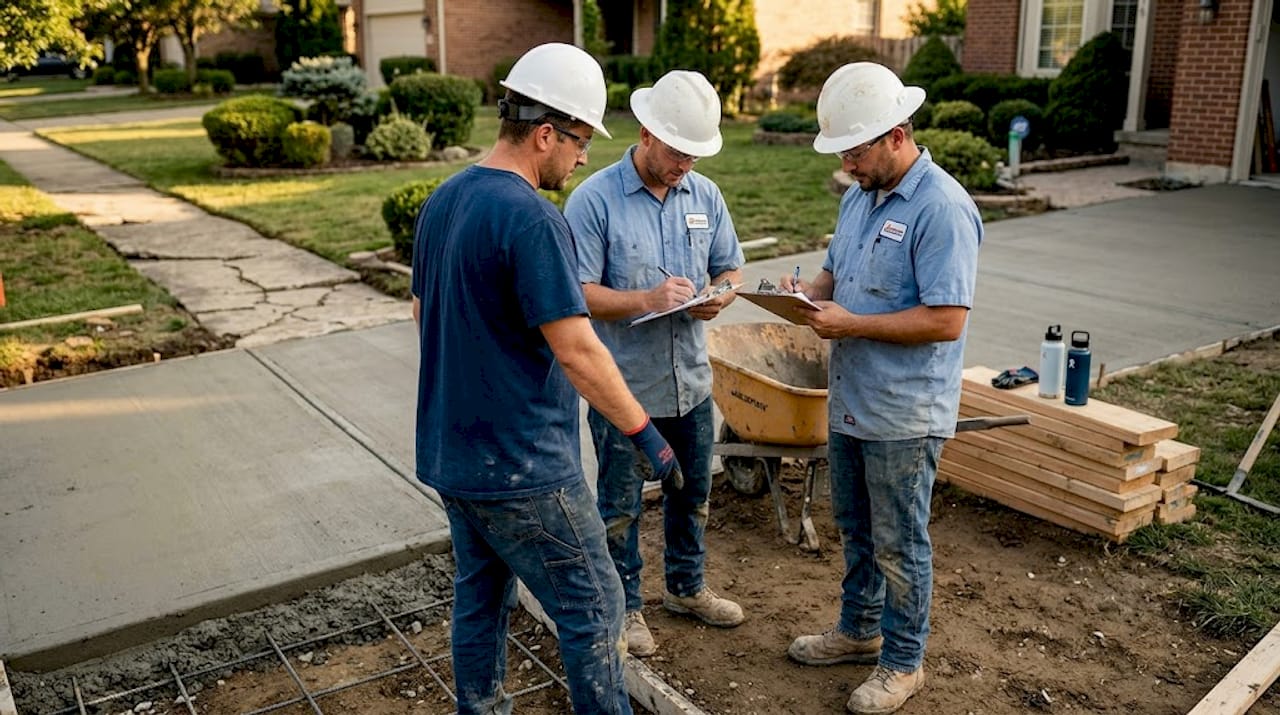
For concrete-specific projects, you should question experience with local conditions including soil composition, reinforcement placement, curing processes, and repair methods for defects such as honeycombing or spalling. These are not obscure technicalities. Honeycombing (voids in concrete caused by improper compaction) and spalling (surface crumbling often caused by moisture ingress) are among the most common defects on South African building sites. A contractor who cannot explain how they identify and address these issues has a significant knowledge gap.
Use this numbered list as a guide for your experience interview:
- Can you describe a recent waterproofing project on a property with similar soil conditions to mine?
- How do you handle concrete defects discovered during or after application?
- What waterproofing systems or membranes do you prefer, and why are they suited to this climate?
- Who will be on site daily, and what is their experience level?
- How do you manage work during the rainy season or in coastal humidity?
- What concrete repair techniques do you rely on when existing structure is compromised?
The answer to question four often surprises homeowners. Many contractors who present well in consultation send less experienced teams to site. Asking specifically who manages day-to-day execution helps you assess whether the person you are hiring is the person actually doing the work.
Pro Tip: Ask for photographic evidence of completed projects, particularly close-up images of finished joints, membrane applications, and any repair work. This gives you a practical window into quality standards that verbal claims cannot provide.
You can also explore specific questions for waterproofing contractors to refine your interview approach, and review what homeowners typically overlook when they ask their waterproofing contractor the wrong questions.
Comparing quotations and on-site assessments
A quotation tells you far more than the price. It reveals how professionally a contractor operates, how thoroughly they have assessed your property, and how accountable they are willing to be if things go wrong. Never compare quotes on price alone.
A professional written quotation should always include the full scope of work, specific material brands and product codes, a project timeline with key milestones, payment terms, and a validity period. You should demand a detailed written quotation covering all of these elements before signing anything. Without this detail, disputes over what was and was not included become almost inevitable.
The site visit is equally non-negotiable. Skipping a site inspection before quoting is a red flag that signals poor assessment and a contractor who does not fully understand the scope of work they are pricing. Any contractor quoting remotely based solely on photographs is guessing, and you will pay for that guesswork later.
Here is a simple comparison of what to expect from a detailed versus a generic quote:
| Element | Detailed quote | Generic quote |
|---|---|---|
| Scope of work | Step-by-step breakdown | “Waterproof roof and parapet” |
| Materials | Brand, product code, thickness | “Waterproofing membrane” |
| Timeline | Start date, key milestones, completion | “Approximately 2 weeks” |
| Payment terms | Deposit, progress payments, final | “50% upfront” |
| Validity period | Stated expiry date | Not mentioned |
| Site visit done | Yes, noted in quote | Not confirmed |
“If a contractor’s quote fits on a single page and lacks material specifications, it is not a quote. It is a number.”
Questions to ask during the site inspection itself:
- What specific problems have you identified that others might miss?
- Are there areas that require preparation work before waterproofing can begin?
- What is your approach if hidden damage is found once work starts?
- How will the site be protected and cleaned up during and after the project?
Use the waterproofing inspection checklist to walk through your own pre-project assessment, and review contractor interview questions to prepare for the site visit conversation.
Choosing for your project: references and local suitability
References are one of the most underused tools in contractor selection. Most homeowners ask for them and then never follow up. That is a missed opportunity, because a ten-minute conversation with a previous client can reveal information that no credential or quote ever will.
When you request recent references from similar projects, make sure they are genuinely similar. A contractor with a strong track record in residential flat roof waterproofing may not be the right fit for a complex commercial basement or a coastal property facing salt air corrosion. Ask the contractor specifically for references from projects matching your property type and location.
When you contact those references, ask about three things: whether the work was completed on time, how the contractor handled problems that arose, and whether they would hire the same contractor again. The answer to the middle question is the most revealing. Every project encounters some difficulty. The difference between a reliable contractor and a problematic one is almost always how they respond when things do not go according to plan.
South Africa’s regional diversity means local suitability is a genuine consideration, not just a talking point. Here is a practical guide:
| Project type | Key suitability factors | Questions to prioritise |
|---|---|---|
| Coastal residential | Salt air, humidity, corrosion resistance | Materials for marine environments, past coastal work |
| Gauteng commercial | Storm water, clay soils, fast-build timelines | Drainage solutions, structural reinforcement knowledge |
| Cape winter rainfall | Prolonged wet seasons, wind-driven rain | Membrane performance data in wet conditions |
| High-rise or industrial | Load considerations, regulatory compliance | CIDB grade, insurance levels, project management |
For concrete reinforcement strategies on larger structural projects, the contractor’s understanding of load bearing and post-tensioning decisions can be highly relevant, particularly in commercial settings.
Key questions to ask about post-project support:
- What warranty period do you offer, and what does it specifically cover?
- Who do I contact if a problem appears six months after completion?
- Do you carry out a formal post-project inspection?
- Are your warranties transferable if I sell the property?
Pro Tip: A contractor offering a written, signed workmanship guarantee of at least five years is signalling genuine confidence in their own work. Short or verbal-only guarantees are warning signs.
You will find practical guidance on contractor selection decisions in these hiring contractors tips, and for broader construction context, reviewing questions for builders can help you extend this framework.
Our view: what most miss when hiring a concrete contractor
In our experience working with South African property owners across residential and commercial projects, the biggest mistake is not failing to check credentials. Most people do that. The real gap is in what happens after credentials are confirmed.
Homeowners often stop at the piece of paper and assume competence follows automatically. It does not. We have seen fully registered, CIDB-graded contractors produce remedial work so poor it required complete removal and reapplication. What separated those projects from successful ones was not the certificates on the wall but the quality of communication on site and the honesty of the initial inspection.
Ask about essential contractor hiring questions and you will quickly sense whether a contractor is confident in specifics or hiding behind generalities. Push for real answers. Ask them what can go wrong on a project like yours and how they would handle it. A contractor who gives you a genuine, detailed response to that question has earned a closer look. One who tells you nothing will go wrong has just told you everything you need to know.
Post-project support is the other area where clients consistently leave value on the table. They negotiate the price, scrutinise the quote, and then sign off without asking about what happens after the job is done. Warranties that are verbal, vague, or limited to materials only (not workmanship) are not worth the paper they are not written on.
Ready to choose the right partner?
Applying this framework takes time and preparation, but it dramatically reduces the risk of costly mistakes.
At Pro Waterproofing, we work exclusively with vetted specialists who carry the credentials, local experience, and accountability that South African property owners deserve. Whether your project is a residential flat roof in Pretoria or a commercial basement in Durban, our team can match you with the right contractor for the job. Explore our full guide on the questions to ask contractors before your next meeting, and get in touch for an obligation-free quote tailored to your property.
Frequently asked questions
Which credentials should I prioritise when hiring a waterproofing contractor in South Africa?
Prioritise CWP and CIDB registration above all else, as these confirm that the contractor meets competence standards and complies with South African industry regulations.
How do I spot a red flag in a contractor’s quotation?
Be cautious of vague scopes, missing material specifications, and absent timelines. If the contractor skipped a site visit before quoting, that alone is a serious warning sign.
Why are site inspections so important before quoting a waterproofing project?
A site inspection allows contractors to fully assess existing conditions and identify hidden problems. Skipping an on-site inspection means the quote is based on assumptions rather than accurate assessment, which almost always leads to disputes or budget overruns.
What project references should I ask a concrete contractor for?
Ask for recent references from similar projects matching your property type and location, then contact those references directly to ask about timeliness, communication, and how problems were handled.
What makes a contractor suitable for South African climate challenges?
Local experience with specific regional conditions such as coastal humidity or Gauteng storms is essential. Contractors unfamiliar with these environments often underspecify materials, leading to early failure and expensive remedial work.